Showing posts with label Puget Sound. Show all posts

Monday, September 9, 2019

Cleaning up: Bellingham community active in Waterfront cleanup outreach


View from the air looking toward a waterfront and city and a snow-capped mountain in the distance.t
Cleaning up Central Waterfront site is transforming Bellingham Bay
Stroll along the Bellingham waterfront today and you’ll see changes – a new public park with an award-winning restored beach, a restored Granary Building, and a new downtown city block complete with new roads, sidewalks, and bike paths.

All of these changes were made possible by first addressing contamination from a history of industrial activity. 

Contamination cleanup work continues at multiple sites along the Bellingham waterfront, which will foster more changes over the coming years. One of those sites is the Central Waterfront site.

An aerial view of Central Waterfront site
Center of it all
The Central Waterfront site is located on the waterfront between two waterways. Four other Ecology cleanup sites are in the area: two in-water sediment sites (Whatcom Waterway and I & J Waterway) and two upland sites (Georgia-Pacific West and the Holly Street Landfill).

“Win-Win” outreach partnerships
RE Sources for Sustainable Communities hosted a walking tour of the Central Waterfront site on July 10. They shared information about cleanup activities and connected the community with agency staff managing the cleanup efforts. On this rainy, overcast July weekday, about 40 curious folks joined RE Sources, Ecology, the Port of Bellingham, and City of Bellingham as we all toured the site. We saw the working waterfront in action, learned of previous cleanup work, and discussed planned cleanup work.

We award Public Participation Grants to individuals and nonprofit organizations like RE Sources who do outreach about contaminated sites. They received a grant starting July 1 and hit the ground running just days later with a Central Waterfront site tour. Opportunities like this enable the community to see a cleanup site in person while having conversations with the people managing a cleanup. It’s a “win-win”  for us, other agencies and organizations, and most importantly for the community.

Adults and children gathered outside listening to someone talk.
Our Public Participation Grants allow communities groups to do outreach,
like providing tours of cleanup sites on Bellingham Bay.
Future generations
We were lucky to have many youth join in the tour conversation. It served as a perfect reminder of why we do such cleanups, for current AND future generations.

Our youngest tour members innocently asked how they could help clean up the site while we walked. A great reminder to keep an eye out for litter while we work to address the chemical contamination.

A middle school group studying environmental and social justice in their summer program also attended the tour and learned how cleanups involve an entire community.

Public participation
Washington’s environmental cleanup law, the Model Toxics Control Action (MTCA), began as a public-initiated law and it turns 30 this year. Many steps of the MTCA cleanup process involve public participation. Your comments help inform Ecology’s management decisions.

Ecology invites you to review and comment on a draft Cleanup Action Plan and associated documents for the Central Waterfront site. The plan calls for a combination of removing and capping contaminated soil, monitoring conditions, and restricting uses.

During our first 30-day comment period, we received several requests for a public meeting, so we’ve scheduled a meeting for 6-8 p.m. on September 18 at  Bellingham Technology Development Center, 1000 F St., Bellingham. See this map for directions. 

You can submit comments online during our second 30-day comment period from September 16 – October 15, 2019.

Cleanup site information


By Ian Fawley, Community Outreach and Environmental Education Specialist, Toxics Cleanup Program

Wednesday, August 21, 2019

Ecology considers General Permit to control nutrients in Puget Sound

Excess nutrients are hurting Puget Sound

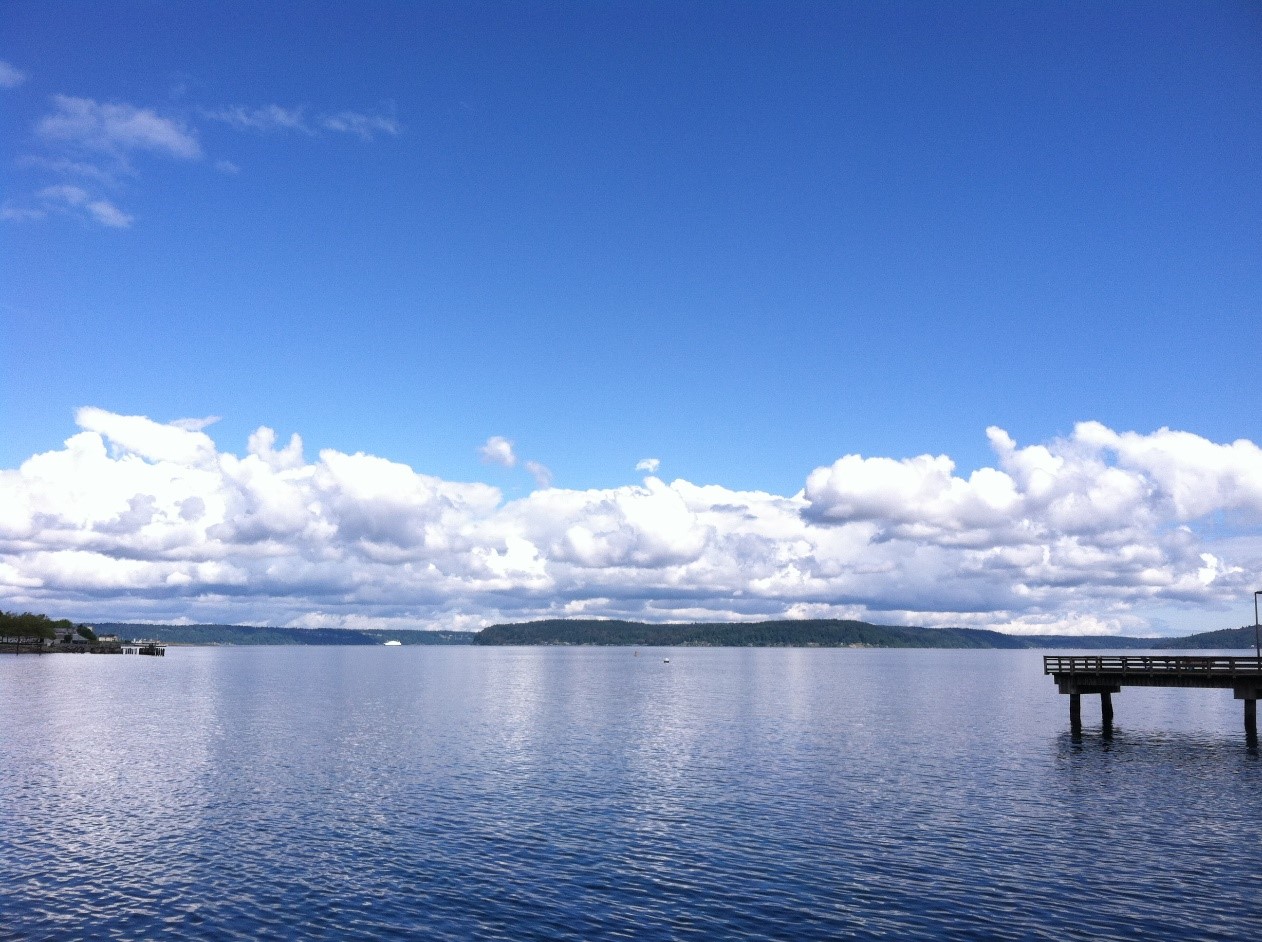
waterscape with dock and land
Puget Sound is the nation’s second largest estuary 
and faces many challenges, including population 

growth, development, and pollution.
Excess levels of nutrients from human sources are harming Puget Sound’s water quality. Excess nutrients can cause too much plant and algae growth that ultimately leads to low levels (below natural levels) of dissolved oxygen in many parts of Puget Sound. These low levels of dissolved oxygen are causing stress on marine life and making it difficult for aquatic organisms to thrive. Many areas in Puget Sound have dissolved oxygen levels below our state’s water quality criteria and Ecology is required to take action.

To improve and protect water quality in Puget Sound, we are focused on finding solutions for improving levels of dissolved oxygen in Puget Sound. Domestic wastewater treatment plants (WWTPs), or sewage treatment plants, are a major human source of nutrients to Puget Sound and are significantly contributing to low oxygen levels (read our Salish Sea Modeling reports for more info). With our region’s growing population, and recognizing that WWTP improvements to limit nutrients will take time, we need to start work now to protect and restore Puget Sound. To keep Puget Sound clean, Ecology must require WWTPs to control nutrients and we have made a preliminary determination to use a General Permit to accomplish this.

Controlling nutrients from WWTPs with a Puget Sound Nutrients General Permit

Aerial view of a wastewater treatment plant
Wastewater is the water that leaves our businesses and
 homes from sources like sinks, showers, and toilets. 
There are two permitting options to control nutrients at WWTPs:

  • New General Permit: Require nutrient limits for WWTPs that discharge to Puget Sound (in addition to their existing individual permits that cover other limits).
  • Individual Permits: Include nutrient limits in each individual permit for WWTPs that discharge to Puget Sound.

We have made a preliminary determination that a general permit is the best tool for addressing excess nutrients in Puget Sound. A Puget Sound Nutrients General Permit would:

  • Create a single coordinated public engagement process, allowing more stakeholder collaboration during permit development. 
  • Place WWTPs on a similar schedule instead of staggered permit requirements based on different individual permit schedules. 
  • Provide a foundation for communities to work together to achieve nutrient controls across Puget Sound.

General vs. Individual permits

All wastewater treatment plants require a water quality permit to operate, specifically to discharge to surface water. We use permits to limit pollutants that may enter our waterways. Both types of permits (general and individual) are issued on 5-year cycles, allowing us to adapt requirements in response to new information and technologies.

A general permit covers a group of dischargers that have similar qualities within a similar region. We can use a general permit to satisfy any or all state and federal water quality permit requirements. General permits are a cost-effective way to regulate numerous dischargers under a single permit. It allows us to hold a single permit development and implementation process per 5-year cycle for all the facilities together. This process includes stakeholder and permittee engagement.

The other permitting option is using individual permits, which we tailor to individual facilities. We issue each individual permit on independent schedules consistent with facility-specific permit renewal and reissuance dates, and a public comment process.

How would a Nutrients General Permit work? 

A Puget Sound Nutrients General Permit would apply to nearly 70 WWTPs that discharge to marine and estuarine waters of Puget Sound. A Nutrients General Permit would focus only on controlling nutrients. All WWTPs already have individual permits that regulate other pollutants. Therefore, WWTPs would have two permits.

We are at the earliest stage of a general permit process and it is too soon to know the exact permit conditions. If we move forward with the general permit, the permit development process will determine:

  • Which WWTPs will be included in the general permit.
  • How to cap nutrient loading.
  • What planning will be needed to meet nutrient reduction targets, starting with optimizing nutrient reduction with existing infrastructure, the feasibility of infrastructure upgrades, or other water quality improvement efforts.

Public comment period for the Preliminary Determination to Develop a Nutrients General Permit

We are accepting comments from Aug. 21 until Oct. 21, 2019 on our preliminary determination to develop a Nutrients General Permit. You may submit comments online.

We welcome your feedback on whether a general permit is the appropriate tool to control and reduce nutrients in discharges from WWTPs to Puget Sound. This public comment period is also an opportunity to provide us other relevant information about WWTPs and Puget Sound water quality.

For more information on the nutrients problem, the permit proposal, and how to comment, read our focus sheet. We do not currently have draft permit language. However, if we move forward with a general permit, we will prepare draft permit language and hold another public comment period.

You can find all of this information and additional materials on our General Permits webpage.

Other States with general permits for nutrients

Other states have used general permits to reduce the impacts of nutrients on their coastal waters.  In March, our Puget Sound Nutrient Forum hosted water quality experts from Chesapeake Bay and Long Island Sound to hear about their general permit process and other strategies they used to reduce nutrients in their waterways. Both of these estuaries have experienced success in cleaning up excess nutrients in their waterways and are on their way to improved water quality and restored marine habitats. Read our previous blog to learn more about how other states manage nutrients in their coastal estuaries.

What else is Ecology doing to reduce nutrients?

People raising their hands in a large meeting room
The Nutrient Forum, a large public advisory 
committee, meets regularly to provide input 


on how to reduce human sources of nutrients.
Limiting nutrients at WWTPs is one important element of Ecology’s Puget Sound Nutrient Reduction Project, but this alone will not solve Puget Sound’s low dissolved oxygen problem.  In order to improve Puget Sound and build resiliency back into our iconic water, we will also need to reduce nutrients from other human sources. We are working with the Puget Sound Nutrient Forum to develop a comprehensive Puget Sound Nutrient Management Plan to find the right solutions for reducing nutrients in Puget Sound. As we develop the plan, we will continue to hold our Puget Sound Nutrient Reduction Forum meetings and encourage everyone interested in this work to attend the meetings and sign up for our listserv.

More information:

To receive email updates about this potential general permitting effort, register for the Nutrients Permit listserv.

To receive updates on the broader Puget Sound Nutrient Reduction Project, register for the Puget Sound Nutrient Reduction listserv or visit www.ecology.wa.gov/PSNRP.

By Kelly Ferron, Water Quality Program


Thursday, August 8, 2019

New app shows softer side of Puget Sound

Photo of bulkhead at Luhr Beach along Nisqually River delta in south Puget Sound.
Timber bulkhead at Luhr Beach along the Nisqually River delta in south Puget Sound. Photo courtesy Hugh Shipman.
We are pleased to announce we have created a new online tool showing examples of Puget Sound beaches where traditional “hard shoreline armoring” has been removed and more environmentally friendly solutions were installed.

Our new “Examples of Puget Sound Soft Shore and Armor Alternative Projects” application shows a map of Puget Sound with 29 different beachfront projects that have employed “soft” shoreline design techniques.

Users can view before-and-after photos of project sites, like the photos of Luhr Beach above and below, using the tool or by visiting our Flickr page.

Photo of Luhr Beach after log bulkhead removed and construction of new gravel beach.
Luhr Beach after log bulkhead removed and construction of new gravel beach. Photo courtesy Hugh Shipman.
The web tool is designed to spread the word about alternatives to hard armoring to homeowners, our local government partners, and anyone interested in the health of Puget Sound shorelines.

What is shoreline ‘armoring?’ 

Throughout Washington, shoreline property owners have often installed concrete bulkheads and rock revetments to help stabilize the shoreline, control erosion and protect—or “hard armor”—coastal development.
Photo of Cornet Bay in Island County with shoreline bulkhead still in place.
Cornet Bay in Island County before removing bulkhead. 
Photo courtesy Hugh Shipman
Shoreline erosion occurs naturally in Puget Sound, the nation’s second largest marine estuary. Physical process such as winds, waves, storms, tides, and plate tectonics all work to constantly shape and reshape the Sound’s 2,600 miles of marine coastline.

The majority of Puget Sound shorelines experience low to moderate levels of erosion. However, about 700 miles of marine shoreline—27 percent of the estuary’s entire coastline—currently has some type of hard armoring in place.

Most shoreline armoring was built decades before the state adopted tighter shoreline management regulations. Today, proposals for new armoring are carefully evaluated to determine if the structure is needed.

Big deal about bulkheads

While bulkheads and similar structures can reduce erosion and protect upland development from flooding, they can have serious consequences for coastal ecosystems and the long-term preservation of Puget Sound beaches.

Photo of Cornet Bay shoreline after bulkhead removed and other shoreline improvements made.
Cornet Bay after bulkhead removed, shoreline regraded, 
beach nourished, backshore vegetation planted, and anchored
wood placed on beach. Photo courtesy Hugh Shipman.
Armoring can disrupt natural patterns of sediment movement along the shoreline, resulting in erosion and the loss of the beach.

Historically, many armoring structures in Puget Sound were constructed far out onto the beach. This approach covered up backshore beach areas and disrupted shoreline ecosystem processes.

Beaches play an important role in the lives of forage fish, a key food source for salmon. Bulkheads and rock walls block forage fish from spawning on the beach, leaving fewer fish for salmon to eat.
Endangered southern resident killer whales in Puget Sound eat salmon almost exclusively, so restoring forage fish spawning grounds has impacts across the ecosystem.

These structures also limit human uses of the beach. Concrete walls make it difficult to stroll down to the beach, and climbing over sharp and slippery rock revetments can be dangerous. At some places, water comes right up to the bulkhead during high tide, leaving no room for walking.

Encouraging ‘soft’ shorelines

Nowadays, there are a variety of techniques that can be employed to “soften” the shoreline by removing rigid walls and using materials naturally found on the beach. These techniques can reduce erosion while protecting ecosystem functions.

Photo of King County's Seahurst Park before shoreline bulkhead has been removed.
Seahurst Park in King County with bulkhead in place. Photo by Hugh Shipman.
At some sites, it can be as easy as simply removing the hard armoring and letting nature take its course.

Should a site need some erosion control measures, there are several options to mimic a natural beach.
For example, fish-friendly sand and gravel can be placed on the beach—sometimes called beach nourishment—to provide extra material and elevate the shoreline.

Another approach is placing logs and woody debris on the shoreline to reduce wave energy and hold sediment on the beach. In some cases, the wood needs to be anchored in place.

The applicability of these techniques depends on the specific conditions and concerns of the site. More and more, these soft shore projects are being installed throughout the Puget Sound region.

Why softening the shoreline matters

Photo of Seahurst Park after bulkhead removed and other shoreline actions.
Seahurst Park after bulkhead removed and historic fill excavated. 
Photo courtesy Hugh Shipman.
Removing hard structures from the beach and using more environmentally-friendly erosion control techniques allows Puget Sound shorelines to return to a more natural state. When natural erosion and sediment movement are allowed to occur, beach processes and habitats are restored. Once disconnected, the forested uplands and marine ecosystems can function again in harmony.


With fewer obstacles in the way, it’s easier for all beachgoers—fish, birds, and humans alike—to make use of Puget Sound’s treasured coast.

Give us your feedback!

Let us know what you think of our new tool. To provide feedback, please use this survey link.

Tuesday, July 30, 2019

The striped nudibranch: Don’t mess with this ferocious sea slug!

Eyes Under Puget Sound’s Critter of the Month


Microscope footage of the sea slug, Armina califorica.
A striped nudibranch, Armina californica,
collected from Nisqually Reach,
Washington, March 2019.
July’s critter may be cute as a button, but don’t let the squishy sea slug face fool you. This voracious hunter strikes fear into the hearts of tiny invertebrates everywhere!

Slug of the sea

Genus: Armina; Species: Armina californica.Nudibranchs, or sea slugs, are the more elegant, marine-dwelling cousins of the slimy brown slugs you find in your garden. The striped nudibranch can get fairly large (up to 8 cm) and should be easy to spot. You won’t find one on a beach walk or tidepooling session though. They prefer the sandy or muddy seafloor anywhere from the low intertidal zone to 80 meters deep. We collect them in our Puget Sound sediment samples from Nisqually Reach, Everett, and Sinclair Inlet … often co-occurring with their favorite food, sea pens.

The pen is NOT mightier than the slug

Striped nudibranchs feed primarily on colonial animals called sea pens. In Puget Sound, their two main prey species are the orange sea pen, Ptilosarcus gurneyi and the slender sea pen, Stylatula elongata

In the southern part of their range (California to Panama), they also feed on the sea pansy, Renilla koellikeri. These species can bioluminesce, or give off light, when disturbed, so munching by sea slugs can set off a tiny underwater fireworks display!

Night terrors

Four sea slugs eating an orange sea pen.
Striped nudibranchs swarm and consume an orange sea pen until
only the white skeletal rod remains (visible in upper right corner).
Photo by Neil McDaniel.* 
Striped nudibranchs cleverly let the routine of their prey determine their activity schedule. Instead of wasting time crawling around during the day when sea pens are buried in the sand, they stay buried too, with only their rhinophores, or sensory structures, protruding. 

The rhinophores help the nudibranchs “smell” chemicals in the water that indicate food is nearby, and they can detect changes in light with a pair of tiny eyes. When night falls they emerge, searching for fleshy victims to devour. The nudibranchs use suction to ingest pieces of the sea pen’s tender polyps, pulling the tissue off and leaving only the hard white rachis, or skeleton, behind.

Microscope image of sea slug.Pretty with poison

You would think plenty of animals would be happy to give the striped nudibranch a taste of its own medicine in the predation department, but even the ravenous sun star, which eats pretty much everything in its path, gives this little nudibranch a wide berth. In fact, the striped nudibranch has very few natural predators. So, what makes this slow-moving nudibranch so unappetizing? It can incorporate chemicals from the tissue of its sea pen prey into its own body, making it toxic to consume.
The underbelly of the sea slug.
This lateral (side) view shows the groove on the right side of
the animal, with the anus to the left (posterior) and the gonopore
(reproductive opening) to the right (anterior). Image courtesy of
Dave Cowles, wallawalla.edu.

In the groove

While the striped nudibranch may be the stuff of nightmares to a sea pen, it’s a daydream for a mollusk taxonomist. Most nudibranchs are difficult to identify, but the distinct long white ridges and dark background of this species are very distinct. It has no appendages on its top surface except for the rhinophores, which project out of a notch on its head; everything else is tucked away in a groove running down the side of the animal’s body. Hidden away in these folds are flap-like gills, the anus, and the reproductive opening.

Doing it all

Like other sea slugs, striped nudibranchs are hermaphroditic (possessing both male and female sex organs). Any two individuals can mate by connecting the reproductive “ports” on the right sides of their bodies. Eggs are laid in brownish spirals, and larvae hatch out into the water column to eventually settle and become tiny striped terrors in their own right!

By: Dany Burgess & Angela Eagleston, Environmental Assessment Program


Critter of the Month

Dany and Angela out on a research vessel. Our benthic taxonomists, Dany and Angela, are scientists who identify and count the benthic (sediment-dwelling) organisms in our samples as part of the Marine Sediment Monitoring Program. We track the numbers and types of species we see in order to understand the health of Puget Sound and detect changes over time.
Dany and Angela share their discoveries by bringing us a Benthic Critter of the Month. These posts will give you a peek into the life of Puget Sound’s least-known inhabitants. We’ll share details on identification, habitat, life history, and the role each critter plays in the sediment community. Can't get enough benthos? See photos from our Eyes Under Puget Sound collection on Flickr.

This work is licensed under a Creative Commons Attribution-Noncommercial-Share Alike 4.0 License.

Wednesday, June 26, 2019

Fecal Matters: No-contact advisory issued for Golden Gardens, King County

BEACH program update


June 27 update: The estimated amount of sewage overflow near Golden Gardens Park is 165,000 gallons. Additional water samples were taken on June 26 by Seattle Public Utilities and results are anticipated  on June 27. 

You can get more updates by following Seattle Public Utilities' Twitter account. 

----------------------------------
June 26

Seattle and King County Public Health issued a no-contact health advisory on June 26 at Golden Gardens due to a 16,500 gallon sewage overflow. Signs have been posted at public access points, and the public is advised to avoid contact with the water in the affected area.

Contact with fecal contaminated waters can result in gastroenteritis, skin rashes, upper respiratory infections, and other illnesses. Children and the elderly may be more vulnerable to waterborne illnesses.

Stay updated on water quality at your beaches by following our Fecal Matters blog posts, connecting on Facebook, or joining our listserv.

Julianne Ruffner, our BEACH Program Manager, is available to answer questions:

Phone: 360-407-6154

Email: julianne.ruffner@ecy.wa.gov


Monday, January 14, 2019

Ecology seeking comment on Clallam County's proposed shoreline master program revisions


Shoreline along Lake Sutherland, located 17 miles west of Port Angeles in Clallam County, Washington.
Shoreline along Lake Sutherland, about 17 miles west of Port Angeles in Clallam County
Starting today, we are accepting public comment until Thursday, Feb. 28, about significant revisions Clallam County is seeking to make to its shoreline master program (SMP).

The locally-tailored set of land-use policies and regulations is designed to protect and guide how Clallam County will develop, restore, and preserve more than 600 miles of marine and freshwater shorelines in the county, including:

  • Approximately 130 miles of marine shoreline including a portion of the Pacific Ocean coastline, Strait of Juan de Fuca, and numerous saltwater inlets such as Clallam, Crescent, Dungeness, Freshwater, and Sequim bays.
  • More than 480 miles of freshwater shoreline along the Bogachiel, Calawah, Elwha, Quillayute, and Sol Duc rivers.
  • About 1,500 shoreline acres around six lakes in the county including Beaver, Crescent, Dickey, Elk, Pleasant, and Sutherland.

Clallam County last amended its SMP in 1992. The revised SMP will replace the county’s current master program and is designed to:

  • Prioritize water-oriented uses and development in Clallam County.
  • Provide for public access to public waters and shorelines.
  • Support restoration actions consistent with the county’s shoreline restoration plan.
  • Incorporate critical area regulations to ensure environmentally-sensitive areas within the county’s shoreline jurisdiction are protected.

Shoreline along Elwha River in Clallam County
Shoreline along the Elwha River in Clallam County.
Draft SMP documents available for review online or by appointment

Electronic copies of the county's draft SMP documents are available for review and comment through our website while printed copies are available for review, by appointment, at Ecology and Clallam County. To arrange a time to view printed documents at Ecology, please contact Michelle McConnell. Her phone number is 360-407-6329 and Ecology's physical address is:

Washington Department of Ecology
Southwest Regional Office
300 Desmond Dr.
Lacey, WA 98504

To review the draft SMP documents at Clallam County, please contact Steve Gray. His phone number is 360-417-2520 and the county office is located at:

Clallam County
Department of Community Development
223 E. 4th Ave., Suite 5
Port Angeles, WA 98362

How to submit public comments

Comments only need to be provided once before the Feb. 28 deadline at 5 p.m.. While we prefer public comments be submitted through our online comment form, we also will accept comments by mail sent to:

Michelle McConnell
Washington Department of Ecology
Southwest Regional Office
PO Box 47775
Olympia, WA 98504-7775

Next steps

Once the public comment period closes Feb. 28, Ecology will compare Clallam County's proposed SMP to requirements under the state Shoreline Management Act and Shoreline Master Program Guidelines. Based on the comparison, we will decide whether to:
  • Approve Clallam County’s proposed SMP as is.
  • Approve the updated SMP with recommended changes.
  • Send the proposed SMP back to Clallam County with required changes to meet statutory and rule requirements. Recommended changes may also be included with the required changes.

Wednesday, December 19, 2018

Eyes Under Puget Sound: Critter of the month — dove snails

Left: White Dove by Sander van der Wel (Netherlands).  Center: Alia carinata collected from Puget Sound.
Right: Close-up of the shell of Astyris gausapata, showing microscopic vertical lines called axial striations.


The holidays are in full swing – and what could capture the spirit of the season better than the dove – the universal symbol for peace, love, and goodwill? You might not know it, but a different kind of beautiful dove lives under the wintry waters of Puget Sound.

Birds of a feather?

Dove snails don’t look much like their avian namesake – except for the teardrop shape of their shells (and the opening, or aperture, might be able to pass for a wing if you’re feeling creative). Perhaps the diverse patterns of sculpture and color on their shells reminded some naturalist long ago of a dove’s mottled feathers.

Taxonomists can’t always trust these color patterns when trying to distinguish similar-looking species. For example, the two species of dove snails we encounter most commonly in Puget Sound are the nearly identical Alia carinata (the carinate dove snail) and Astyris gausapata (the shaggy dovesnail). Both species have white, orange, and brown markings, so it’s their shell texture that gives them away. A. carinata has a smooth shell, while A. gausapata has fine vertical raised lines called axial striations.


Lip reading

Did you know that snails have lips? Well, maybe not true lips like we have, but the flared part of the opening in a snail’s shell is called the outer lip, and it can be another clue for a taxonomist trying to tell similar species apart. A. carinata has a carinate shoulder, meaning that the top part of the upper lip is pronounced and sticks out. In addition, A. carinata’s outer lip is much thicker and darker in color with heavier, more noticeable “teeth” on the interior edge. 

Left: Aperture (opening) of Astyris gausapata. Center: Aperture of Alia carinata. Right: Gastropod radula: Hershler R. & Liu, H.P. (2011).

Sharp-tongued

Dove snails don’t use the teeth on their shells for chewing – like most mollusks, they have a much more specialized feeding tool. A tongue-like projection called the radula helps the snail scrape up food before it swallows. The dove snail’s radula is covered in tiny serrations that are replaced as they wear down. Puget Sound’s dove snails are carnivores; they use their radulas to chew up marine worms and crustaceans, or to grind down the shells of other mollusks. So much for peace on Earth!  If they can’t find enough prey, detritus (decomposing organic material) is their second choice.

Shut the front door

This shaggy dove snail has its operculum
 pulled closed for protection.
Like all mollusks, dove snails build their shells around themselves using calcium carbonate found in the environment. The coiled shell allows the animal to withdraw inside when it is threatened. It even has a “front door” it can open and close. As the snail retracts, it pulls the soft tissue of its muscular foot behind it. Attached to the end of the foot is a protective plate called the operculum that seals the aperture up tight.

When doves cry

Sometimes a hard shell and an operculum aren’t enough to protect from predators. In some parts of the world, humans collect dove snails for their colorful shells, making them into souvenir necklaces or even using them as a food source.

The Puget Sound species are too tiny for people to eat, but shore birds and fish eat them by picking them off intertidal rocks, kelp, and eelgrass. The empty shells of the unlucky snails make perfect dwellings for tiny hermit crabs – so even after they are gone, the dove snails are able to give other animals the precious gift of a home.


By: Dany Burgess & Angela Eagleston, Environmental Assessment Program
Our benthic taxonomists, Dany and Angela, identify and count sediment-dwelling organisms as part of the Marine Sediment Monitoring Program. They track the numbers and types of species they see in order to understand the health of Puget Sound and detect changes over time.

Dany and Angela share their discoveries by bringing us a benthic Critter of the Month. These posts will give you a peek into the life of Puget Sound’s least known inhabitants. Can't get enough benthos? See photos from our Eyes Under Puget Sound collection on Flickr.


Thursday, November 29, 2018

Oak Harbor has Puget Sound’s future in mind


The city of Oak Harbor is about to bring Puget Sound’s newest wastewater treatment plant online. It’s designed to fit alongside a revitalized downtown park, service the community’s needs for many years, and contribute to continuing efforts to restore and protect water quality in the Sound.  

The administration building at Oak Harbor's new wastewater treatment
plant will include an interpretive center and multi purpose space. 
Oak Harbor dedicated its new plant, located on the Whidbey Island city’s namesake inlet, today. We couldn’t be happier to be part of the celebration. 

We’ve provided over $105 million dollars in financial assistance, through low interest loans and grants, for design and construction of the $128 million dollar project.

New capacity

The plant will be able to treat up to 5 million gallons of wastewater per day. The city’s current daily volume is about 1.5 million gallons, serving about 22,300 people.

“I want to commend the city for its early and ongoing proactive community outreach and communication. The city went to great lengths to ensure that information was shared with its citizens from planning through construction,” said Jeff Nejedly, who oversees Ecology’s Water Quality grants and loans, at the ribbon-cutting event.

Jeff Nejedly, financial assistance supervisor, and Shawn McKone,
municipal wastewater treatment plant permit manager, were among
Ecology's staff who helped the city develop the new facility.
The new all-indoor plant replaces two outdated facilities. One was a smaller city-owned plant that was located near the new plant site. The other is a large wastewater lagoon plant located at Naval Air Station Whidbey – Seaplane Base.

Advanced technology

Oak Harbor’s new system treats wastewater with membrane bioreactors, or “MBRs.” The advanced technology uses ultra-filtration membranes to remove solids left over after beneficial microbes digest the city’s sewage. The result is water that has had most of its impurities removed and residual solids that can be further processed for beneficial use as a fertilizer.

“This advanced wastewater treatment system is capable of producing high-quality “Class A” reclaimed water that can be used for irrigation in parks and in other public areas. This can reduce dependence on drinking water sources for activities that don’t require drinkable water,” said Nejedly.

Oak Harbor's new treatment plant, upper right, nears completion
next to Windjammer Park, center, undergoing its own upgrade.

Re-usable water

The first planned use for the plant’s reclaimed water will be irrigation for the adjacent Windjammer Park, which the city is redeveloping in tandem with the treatment plant project.  The city is in the process of finalizing a proposal to divert a portion of the water produced at the facility for these purposes.

The MBR technology is capable of producing water that contains lower levels of nutrients, such as nitrogen and phosphorus, than conventional wastewater treatment systems. Excess nitrogen can cause conditions that upset the Puget Sound food web. Maintaining healthy conditions promotes the recovery of salmon, which are the natural prey of Puget Sound’s southern resident orcas.

Oak Harbor’s work on the new plant dates back to 2010 and earlier, when city staff and elected officials determined that the city’s growth would exceed the existing treatment plants’ capacity. Staff from our Water Quality Program provided technical review and assistance on sizing and designing the new system, in addition to the financial assistance.

 Get more information from Oak Harbor’s Clean Water Facility Project website.

By Larry Altose, communications manager, Northwest Regional Office