Showing posts with label general permit. Show all posts

Wednesday, August 21, 2019

Ecology considers General Permit to control nutrients in Puget Sound

Excess nutrients are hurting Puget Sound
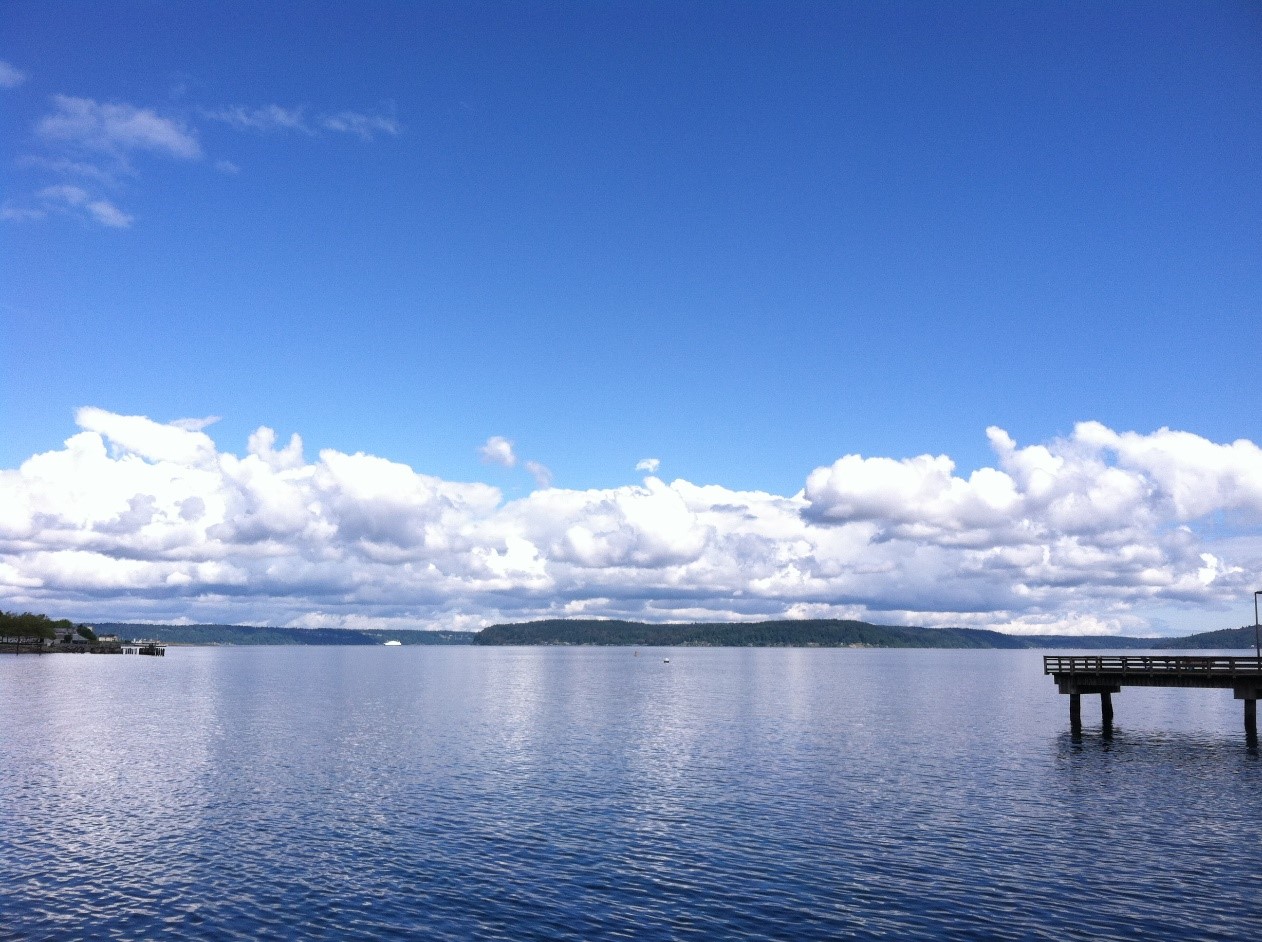
waterscape with dock and land
Puget Sound is the nation’s second largest estuary 
and faces many challenges, including population 

growth, development, and pollution.
Excess levels of nutrients from human sources are harming Puget Sound’s water quality. Excess nutrients can cause too much plant and algae growth that ultimately leads to low levels (below natural levels) of dissolved oxygen in many parts of Puget Sound. These low levels of dissolved oxygen are causing stress on marine life and making it difficult for aquatic organisms to thrive. Many areas in Puget Sound have dissolved oxygen levels below our state’s water quality criteria and Ecology is required to take action.

To improve and protect water quality in Puget Sound, we are focused on finding solutions for improving levels of dissolved oxygen in Puget Sound. Domestic wastewater treatment plants (WWTPs), or sewage treatment plants, are a major human source of nutrients to Puget Sound and are significantly contributing to low oxygen levels (read our Salish Sea Modeling reports for more info). With our region’s growing population, and recognizing that WWTP improvements to limit nutrients will take time, we need to start work now to protect and restore Puget Sound. To keep Puget Sound clean, Ecology must require WWTPs to control nutrients and we have made a preliminary determination to use a General Permit to accomplish this.

Controlling nutrients from WWTPs with a Puget Sound Nutrients General Permit

Aerial view of a wastewater treatment plant
Wastewater is the water that leaves our businesses and
 homes from sources like sinks, showers, and toilets. 
There are two permitting options to control nutrients at WWTPs:

  • New General Permit: Require nutrient limits for WWTPs that discharge to Puget Sound (in addition to their existing individual permits that cover other limits).
  • Individual Permits: Include nutrient limits in each individual permit for WWTPs that discharge to Puget Sound.

We have made a preliminary determination that a general permit is the best tool for addressing excess nutrients in Puget Sound. A Puget Sound Nutrients General Permit would:

  • Create a single coordinated public engagement process, allowing more stakeholder collaboration during permit development. 
  • Place WWTPs on a similar schedule instead of staggered permit requirements based on different individual permit schedules. 
  • Provide a foundation for communities to work together to achieve nutrient controls across Puget Sound.

General vs. Individual permits

All wastewater treatment plants require a water quality permit to operate, specifically to discharge to surface water. We use permits to limit pollutants that may enter our waterways. Both types of permits (general and individual) are issued on 5-year cycles, allowing us to adapt requirements in response to new information and technologies.

A general permit covers a group of dischargers that have similar qualities within a similar region. We can use a general permit to satisfy any or all state and federal water quality permit requirements. General permits are a cost-effective way to regulate numerous dischargers under a single permit. It allows us to hold a single permit development and implementation process per 5-year cycle for all the facilities together. This process includes stakeholder and permittee engagement.

The other permitting option is using individual permits, which we tailor to individual facilities. We issue each individual permit on independent schedules consistent with facility-specific permit renewal and reissuance dates, and a public comment process.

How would a Nutrients General Permit work? 

A Puget Sound Nutrients General Permit would apply to nearly 70 WWTPs that discharge to marine and estuarine waters of Puget Sound. A Nutrients General Permit would focus only on controlling nutrients. All WWTPs already have individual permits that regulate other pollutants. Therefore, WWTPs would have two permits.

We are at the earliest stage of a general permit process and it is too soon to know the exact permit conditions. If we move forward with the general permit, the permit development process will determine:

  • Which WWTPs will be included in the general permit.
  • How to cap nutrient loading.
  • What planning will be needed to meet nutrient reduction targets, starting with optimizing nutrient reduction with existing infrastructure, the feasibility of infrastructure upgrades, or other water quality improvement efforts.

Public comment period for the Preliminary Determination to Develop a Nutrients General Permit

We are accepting comments from Aug. 21 until Oct. 21, 2019 on our preliminary determination to develop a Nutrients General Permit. You may submit comments online.

We welcome your feedback on whether a general permit is the appropriate tool to control and reduce nutrients in discharges from WWTPs to Puget Sound. This public comment period is also an opportunity to provide us other relevant information about WWTPs and Puget Sound water quality.

For more information on the nutrients problem, the permit proposal, and how to comment, read our focus sheet. We do not currently have draft permit language. However, if we move forward with a general permit, we will prepare draft permit language and hold another public comment period.

You can find all of this information and additional materials on our General Permits webpage.

Other States with general permits for nutrients

Other states have used general permits to reduce the impacts of nutrients on their coastal waters.  In March, our Puget Sound Nutrient Forum hosted water quality experts from Chesapeake Bay and Long Island Sound to hear about their general permit process and other strategies they used to reduce nutrients in their waterways. Both of these estuaries have experienced success in cleaning up excess nutrients in their waterways and are on their way to improved water quality and restored marine habitats. Read our previous blog to learn more about how other states manage nutrients in their coastal estuaries.

What else is Ecology doing to reduce nutrients?

People raising their hands in a large meeting room
The Nutrient Forum, a large public advisory 
committee, meets regularly to provide input 


on how to reduce human sources of nutrients.
Limiting nutrients at WWTPs is one important element of Ecology’s Puget Sound Nutrient Reduction Project, but this alone will not solve Puget Sound’s low dissolved oxygen problem.  In order to improve Puget Sound and build resiliency back into our iconic water, we will also need to reduce nutrients from other human sources. We are working with the Puget Sound Nutrient Forum to develop a comprehensive Puget Sound Nutrient Management Plan to find the right solutions for reducing nutrients in Puget Sound. As we develop the plan, we will continue to hold our Puget Sound Nutrient Reduction Forum meetings and encourage everyone interested in this work to attend the meetings and sign up for our listserv.

More information:

To receive email updates about this potential general permitting effort, register for the Nutrients Permit listserv.

To receive updates on the broader Puget Sound Nutrient Reduction Project, register for the Puget Sound Nutrient Reduction listserv or visit www.ecology.wa.gov/PSNRP.

By Kelly Ferron, Water Quality Program


Wednesday, November 1, 2017

Give your input on Washington’s first statewide water quality permit for wineries

The Winery General Permit will ensure Washington wineries
protect water quality as they cultivate sustainable practices.
We are proposing a new statewide water quality permit for wineries, called the Winery General Permit. This permit will establish practices for managing winery wastewater. The comment period opens today and we will accept comments until Feb. 14, 2018.

We are also holding four public hearings: two online webinars, one in-person meeting in Eastern Washington, and one in-person meeting in Western Washington. See below for more details.

Helping Washington wineries be more sustainable

Washington is the second-largest wine-producing state in the nation. Because the wine production in Washington has increased greatly over the past decade, we decided to develop a general permit that establishes good waste management practices.

Washington state is the second-largest
producer of wine in the United States. 
This permit will help protect our waters from potential pollution. A general permit allows businesses that have a similar function to have a unified approach. Instead of each winery applying for water quality permits separately, they can apply for coverage under the one statewide general permit.

General permits simplify the permitting process – which saves both the facility and the state time and resources.

Working with the wine industry to create a solid permit

We have been working with the wine industry since 2014. We formed an advisory group to advise us. We heard from representatives of wineries that the vast majority of Washington wineries have very low annual production volumes and are already heavily regulated.

In the proposed draft we included flexibility, compliance options, benchmarks, and scaled requirements for small producers and existing facilities. The draft permit focuses on best management practices and data collection.

Wineries protect water quality and the environment
when they properly manage their wastewater.

Why is winery wastewater a concern for water quality?

The wastewater made from winemaking facilities has the potential to contaminate groundwater, which is where many Washingtonians get their drinking water.

Contamination can occur if a winery’s septic tank and drainfield system fails, if their wastewater lagoon leaks, or if they use too much untreated wastewater to irrigate their crops. Winery wastewater can have high amounts of organic matter and solids, and extreme pH ranges.

Wastewater discharges like those from winemaking facilities can:
  • Pollute groundwater aquifers that supply drinking water and the water used to make wine.
  • Kill aquatic organisms.
  • Overwhelm wastewater treatment plants causing untreated sewage to be discharged to Puget Sound and rivers.

    How can you comment?

    You can find the documents on our website. We are accepting comments from Nov. 1, 2017 to Feb. 14, 2018 on the:
    • Draft Winery General Permit
    • Revised Fact Sheet
    • Notice of Intent (application)
    • Economic Impact Analysis

        Join us online at one of our webinars:

        Join us for in-person hearings:

        Prosser
        Bellevue
        Tuesday, Jan. 30 at 10:30 a.m.
        Benton County P.U.D. - Prosser
        250 Gap Road
        Prosser, WA 99336
        Friday, Feb. 2 at 1:30 p.m.
        South Bellevue Community Center
        14509 SE Newport Way
        Bellevue, WA 98006

        Submit written comments

        We will accept written comments on the draft permit, fact sheet, and supporting documentation until 11:59 p.m. on Feb. 14, 2018. We prefer comments be submitted through our online comment form. Comments should reference specific permit text when possible.

        Submit comments

        What’s next?

        We will respond to comments and include them as an appendix in the fact sheet of the permit. If comments cause a large change in the permit, we may hold another public comment period. If there are no major changes, we expect to issue the permit in the summer of 2018.

        Check out our website for more info: www.ecology.wa.gov/winerypermit

        By: Stacy Galleher, Water Quality communications specialist
        and Stacey Callaway, Water Quality permit writer