Showing posts with label Water Quality. Show all posts

Wednesday, August 21, 2019

Ecology considers General Permit to control nutrients in Puget Sound

Excess nutrients are hurting Puget Sound
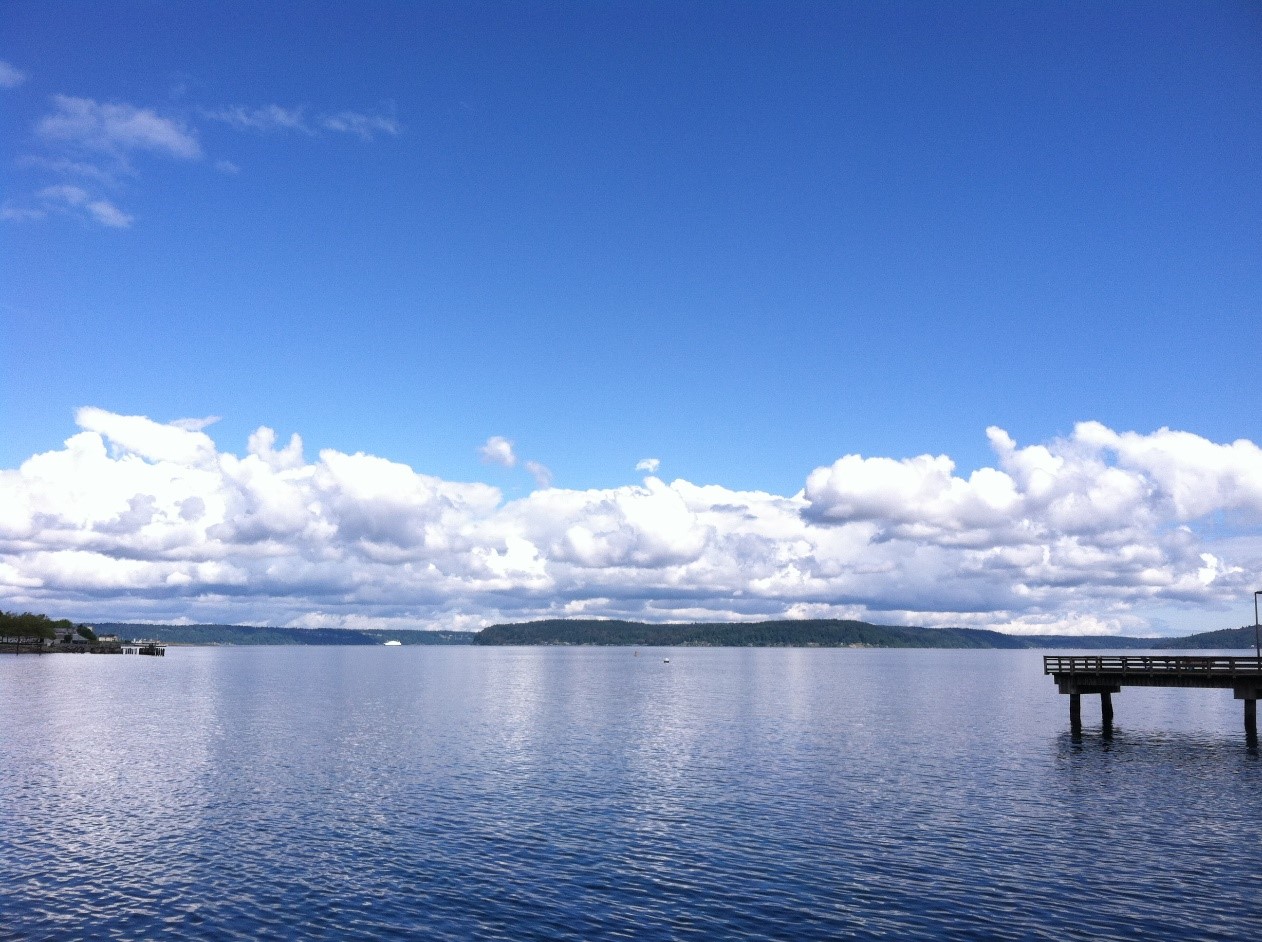
waterscape with dock and land
Puget Sound is the nation’s second largest estuary 
and faces many challenges, including population 

growth, development, and pollution.
Excess levels of nutrients from human sources are harming Puget Sound’s water quality. Excess nutrients can cause too much plant and algae growth that ultimately leads to low levels (below natural levels) of dissolved oxygen in many parts of Puget Sound. These low levels of dissolved oxygen are causing stress on marine life and making it difficult for aquatic organisms to thrive. Many areas in Puget Sound have dissolved oxygen levels below our state’s water quality criteria and Ecology is required to take action.

To improve and protect water quality in Puget Sound, we are focused on finding solutions for improving levels of dissolved oxygen in Puget Sound. Domestic wastewater treatment plants (WWTPs), or sewage treatment plants, are a major human source of nutrients to Puget Sound and are significantly contributing to low oxygen levels (read our Salish Sea Modeling reports for more info). With our region’s growing population, and recognizing that WWTP improvements to limit nutrients will take time, we need to start work now to protect and restore Puget Sound. To keep Puget Sound clean, Ecology must require WWTPs to control nutrients and we have made a preliminary determination to use a General Permit to accomplish this.

Controlling nutrients from WWTPs with a Puget Sound Nutrients General Permit

Aerial view of a wastewater treatment plant
Wastewater is the water that leaves our businesses and
 homes from sources like sinks, showers, and toilets. 
There are two permitting options to control nutrients at WWTPs:

  • New General Permit: Require nutrient limits for WWTPs that discharge to Puget Sound (in addition to their existing individual permits that cover other limits).
  • Individual Permits: Include nutrient limits in each individual permit for WWTPs that discharge to Puget Sound.

We have made a preliminary determination that a general permit is the best tool for addressing excess nutrients in Puget Sound. A Puget Sound Nutrients General Permit would:

  • Create a single coordinated public engagement process, allowing more stakeholder collaboration during permit development. 
  • Place WWTPs on a similar schedule instead of staggered permit requirements based on different individual permit schedules. 
  • Provide a foundation for communities to work together to achieve nutrient controls across Puget Sound.

General vs. Individual permits

All wastewater treatment plants require a water quality permit to operate, specifically to discharge to surface water. We use permits to limit pollutants that may enter our waterways. Both types of permits (general and individual) are issued on 5-year cycles, allowing us to adapt requirements in response to new information and technologies.

A general permit covers a group of dischargers that have similar qualities within a similar region. We can use a general permit to satisfy any or all state and federal water quality permit requirements. General permits are a cost-effective way to regulate numerous dischargers under a single permit. It allows us to hold a single permit development and implementation process per 5-year cycle for all the facilities together. This process includes stakeholder and permittee engagement.

The other permitting option is using individual permits, which we tailor to individual facilities. We issue each individual permit on independent schedules consistent with facility-specific permit renewal and reissuance dates, and a public comment process.

How would a Nutrients General Permit work? 

A Puget Sound Nutrients General Permit would apply to nearly 70 WWTPs that discharge to marine and estuarine waters of Puget Sound. A Nutrients General Permit would focus only on controlling nutrients. All WWTPs already have individual permits that regulate other pollutants. Therefore, WWTPs would have two permits.

We are at the earliest stage of a general permit process and it is too soon to know the exact permit conditions. If we move forward with the general permit, the permit development process will determine:

  • Which WWTPs will be included in the general permit.
  • How to cap nutrient loading.
  • What planning will be needed to meet nutrient reduction targets, starting with optimizing nutrient reduction with existing infrastructure, the feasibility of infrastructure upgrades, or other water quality improvement efforts.

Public comment period for the Preliminary Determination to Develop a Nutrients General Permit

We are accepting comments from Aug. 21 until Oct. 21, 2019 on our preliminary determination to develop a Nutrients General Permit. You may submit comments online.

We welcome your feedback on whether a general permit is the appropriate tool to control and reduce nutrients in discharges from WWTPs to Puget Sound. This public comment period is also an opportunity to provide us other relevant information about WWTPs and Puget Sound water quality.

For more information on the nutrients problem, the permit proposal, and how to comment, read our focus sheet. We do not currently have draft permit language. However, if we move forward with a general permit, we will prepare draft permit language and hold another public comment period.

You can find all of this information and additional materials on our General Permits webpage.

Other States with general permits for nutrients

Other states have used general permits to reduce the impacts of nutrients on their coastal waters.  In March, our Puget Sound Nutrient Forum hosted water quality experts from Chesapeake Bay and Long Island Sound to hear about their general permit process and other strategies they used to reduce nutrients in their waterways. Both of these estuaries have experienced success in cleaning up excess nutrients in their waterways and are on their way to improved water quality and restored marine habitats. Read our previous blog to learn more about how other states manage nutrients in their coastal estuaries.

What else is Ecology doing to reduce nutrients?

People raising their hands in a large meeting room
The Nutrient Forum, a large public advisory 
committee, meets regularly to provide input 


on how to reduce human sources of nutrients.
Limiting nutrients at WWTPs is one important element of Ecology’s Puget Sound Nutrient Reduction Project, but this alone will not solve Puget Sound’s low dissolved oxygen problem.  In order to improve Puget Sound and build resiliency back into our iconic water, we will also need to reduce nutrients from other human sources. We are working with the Puget Sound Nutrient Forum to develop a comprehensive Puget Sound Nutrient Management Plan to find the right solutions for reducing nutrients in Puget Sound. As we develop the plan, we will continue to hold our Puget Sound Nutrient Reduction Forum meetings and encourage everyone interested in this work to attend the meetings and sign up for our listserv.

More information:

To receive email updates about this potential general permitting effort, register for the Nutrients Permit listserv.

To receive updates on the broader Puget Sound Nutrient Reduction Project, register for the Puget Sound Nutrient Reduction listserv or visit www.ecology.wa.gov/PSNRP.

By Kelly Ferron, Water Quality Program


Monday, August 5, 2019

These wastewater treatment plants earn an A+ in clean water

110 facilities recognized for their top performance 

Be honest, have you ever flushed a disposable wipe down the toilet? Did you pour the leftover grease from cooking down the kitchen drain? If you answered yes and are connected to the local sewer system, we suggest you thank a wastewater treatment plant operator!

LOTT - Lacey, Olympia, Tumwater, and Thurston County - 
Wastewater Treatment Plant is one of this year's award winners. 
Why? Because wastewater treatment plants – the place where anything that goes down the drain or toilet at homes and businesses ends up – deal with everything we put down the pipes that aren’t supposed to be there. These facilities keep Washington’s waters clean, by keeping pathogens, chemicals, trash, and sewage out of our water. 

Keeping a wastewater treatment plant in top-performing condition can be a tough job,  so every year we recognize these top-notch facilities and their operators. 

Thank you to Washington’s Wastewater Treatment Plant Operators

Our Deputy Directory, Polly Zehm, knows first-hand the challenges operators face. Early in her career, Polly was a wastewater treatment plant operator.

What this award means

We talked to employees at a few wastewater treatment plants to get a better sense of what this award means to them. Here’s what they had to say:

“The Outstanding Performance Award is important to all the personnel who work in and around the WWTP. It signifies the WWTP operators, Collection crews, staff, and management are collaborating as a team, paying attention to detail and supporting one another. It means that from the newest WWTP Operator to the Crewleader that ideas are valued for the successful operation of our plant,” said Dean Bugher, City of Kennewick’s Wastewater Services Crewleader. “Staying knowledgeable about our craft and up-to-date on compliance issues along with properly maintaining our equipment aids in our success. This in turn helps us to achieve a quality effluent which everyone can be proud of, knowing that we have done our part in keeping the aquatic environment around us clean, healthy and safe for all who use and enjoy.”

Matt Jenkins, the Public Works Manager for the City of La Center shared similar sentiments, saying “The positivity and pride that the operators get from achieving the award permeates through the entire organization. This award is one of the major goals we as a staff set for ourselves every single year. The staff strives to get the five year plaque on the horizon and the annual award is a fantastic affirmation of that effort.”

For some facilities, the award sparks some friendly competition. Mike Henry, the Operator in Responsible Charge of the Olympic Corrections Center said “We have won the award quite a few times and I think everyone is determined to win the award because they don’t want to be the first group of operators to not win it. The operators are proud of the awards. We have them hanging in the lab, except for the ones hanging in our administration building. That makes me think that our administration is as proud of our achievements as we are.”

This year’s winners
Here are a few highlights from this year’s awards. The full list of awardees is available online. 
Facilities with the most consecutive years of outstanding performance: 
  • Manchester (Kitsap Co.) 24 years 
  • Port Townsend WWTP 23 years 
The Sedro-Woolley team has won this award 17 times. 
Facilities with more than 15 years of outstanding performance, not necessarily consecutive: 
  • Newport, 19 years 
  • Salmon Creek (Discovery Clean Water Alliance), 19 years 
  • Vancouver Marine Park and Westside, 18 years
  • Sedro-Woolley, 17 years
  • Lake Mayfield, 16 years
  • Penn Cove Water & Sewer District, 16 years
  • Seattle City Light – Diablo, 16 years 
This year we have a number of first time winners: 
  • Seashore Villa Mobile Home Park 
  • Enumclaw 
  • Ione
  • King County South Plant
  • Sekiu
  • Snoqualmie
  • WA State Patrol Fire Training Academy 
Congratulations to these facilities and all 110 facilities for their hard working in protecting Washington’s waters. 

The Asotin Wastewater Treatment Plant is another one 
of this year's winners

Be a part of the solution

Ecology oversees the certification program for wastewater operators. Given our state’s growing population, we need to treat more and more wastewater. This is a great field, with growth opportunities. If you have experience as a welder, machinist, mechanic, operator at other similar facilities, laboratory technician, or engineer, you might have the right type of experience for this field! Check out our certification program website for more information. 

By: Colleen Keltz, Communications Manager for Water Quality

Monday, April 15, 2019

We oppose federal proposal to redefine 'waters of the United States'

Salmon leaps from the water at Port of Tacoma's Upper Clear Creek wetland mitigation site.
Salmon leaping from the water at Port of Tacoma's Upper Clear Creek wetland mitigation site. Washington's streams and wetlands offer important habitat for fish and wildlife while helping clean our water, and control flooding and erosion.
Today, we sent our official response to the Trump administration opposing its draft rule to redefine the scope of “waters of the United States” that would be protected and regulated under the 1972 federal Clean Water Act. As the primary federal law governing water pollution, the Clean Water Act is instrumental in protecting Washington’s water.

We are gravely concerned the draft rule, proposed jointly by EPA and U.S. Army Corps of Engineers, will eliminate federal protection for classes of streams and wetlands highly valued by Washingtonians. In Thurston County alone, we estimate the federal proposal would remove between 2,000 and 11,000 acres of wetlands from federal protection.

The rule change, if finalized, would remove federal protections for:
  • Streams in upland ditches as well as water in most ditches.
  • Wetlands behind dikes with no surface connection to a river, as well as wetlands along irrigation canals.
  • Wetlands close to, but not touching, marine waters.
  • Streams that only flow in response to rainfall—also called “ephemeral” streams.
  • Wetlands in a floodplain that receive floodwaters on a less than annual basis and lack a surface connection to a stream.
  • Prior converted croplands, wetlands under agricultural production when they are proposed to be changed to non-agricultural uses.


Healthy streams and wetlands = healthy Washington

These waters help our state maintain a healthy, safe and vibrant economy and environment by:
  • Providing and supporting important habitat for salmon that southern Puget Sound resident orca need to survive.
  • Filtering and cleaning our drinking water.
  • Controlling flooding and erosion.
  • Offering habitat and refuge for fish and other wildlife.
  • Providing places for boating, fishing, and other recreation activities.
Coweeman wetland mitigation bank in Cowlitz County a year after being created in 2016.
Coweeman River Wetland and Conservation Bank in Cowlitz County, a year after being established in 2016. Wetland mitigation banks help private and public developers restore and preserve wetland functions in river basins across the state. 

Federal proposal too flawed to be adopted

According to the proposed rule language, the federal government is seeking to change the definition of waters of the United States to increase the predictability and consistency when implementing the Clean Water Act and reduce the scope of federally-protected waters.
We find this approach to be significantly flawed because it:
  • Would put Washington’s water quality at risk. Federal protection would be rolled back to cover only certain stream reaches instead of the entire water body.
  • Creates an artificial divide between state and federal waters, allowing the federal government to shirk its responsibility to protect the physical, chemical, and biological integrity of the nation's waters under the federal Clean Water Act.
  • Ignores years of science, upheld by numerous court decisions, that Washington’s surface streams and wetlands are often directly connected to underground sources of water. Surface water pollution puts state drinking water aquifers at risk.
  • Creates a need for a new state permitting program. Public and private developers seeking to build projects that would impact certain classes of wetlands now file a single state/federal application. We currently apply state requirements as part of the federal permitting process. Without federal involvement, the state would need legislation to create and fund its own wetland permitting process. Without such a program, projects could experience delays and economic losses. 


Washingtonians expect their waters to be protected

Time and again, Washingtonians have been clear about the importance of protecting, restoring, and conserving state waters and wetlands. They demand safe drinking water, expect healthy places for recreation, and support a vibrant natural resource economy supported by clean water.

Our state laws reflect this mandate:
  • Water Pollution Control Act, passed by the state legislature in 1945, outlines the state’s interest in controlling pollution and protecting water quality in all state waters and wetlands.
  • Shoreline Management Act, passed by voter referendum in 1972, protects and manages development along the state’s 28,000 miles of stream, river, lake, and marine shorelines.
  • Growth Management Act, passed by lawmakers in 1990. Under the act, local governments protect all wetlands and streams by adopting critical areas ordinances.


Rule would negatively reshape relationship with federal partners

Chehalis River swamps Centralia and Chehalis during catastrophic 2007 flood.
Chehalis River swamps Centralia and Chehalis during 2007 catastrophic flood.
The proposal to change the definition of waters of the United States will need to go through the federal rule-making process before it can take effect. We are concerned the rule could:
  • Significantly reshape the working relationship we have with the U.S. Army Corps of Engineers and EPA to help protect our waters.
  • Sow confusion among local communities seeking help from our federal partners.
  • Mean more work for communities and state agency partners like us.
  • Result in accidental violations of local and state laws.
While we don’t know what the final changes will be to the federal proposal, we will continue to protect all Washington waters and wetlands from being lost or degraded.

By Curt Hart, Ecology communications

Wednesday, March 27, 2019

Reclaimed water in Sammamish Valley to benefit community

A new reclaimed water permit reminds us to use the right water for the right use

All water on earth is recycled, thanks to nature. Several sewage treatment plants in Washington are using their own process, instead of nature’s, to produce high-quality reclaimed water suitable for local use. Although reclaimed water has been around in Washington for more than 20 years, Ecology issued the state’s first administrative rule last year – the Reclaimed Water Rule (WAC 173-219). All new and reissued permits now follow our new requirements.

Map showing brighwater facility location and purple pipes to Sammamish Valley areas where water is being used. Reclaimed — or recycled — water starts out as domestic wastewater, but is then highly-treated through systems designed to produce water that is safe for many beneficial uses. King County’s Brightwater treatment plant is designed to be the largest reclaimed water producer in the state. Brightwater will receive one of the first new permits issued under the new reclaimed water rule and will be effective on May 1, 2019. The permit renews authority we granted to King County in 2011 to produce, distribute, and use reclaimed water. It also adds requirements based on the new rule. King County supplies reclaimed water from the Brightwater treatment plant for landscape irrigation at the Brightwater Education Center, at a golf course, a soccer complex, and a tree farm in the Sammamish valley. Water is also supplied for toilet flushing at the Brightwater Education Center. 

The Brightwater facility serves 67 square miles, stretching from the north end of Lake Sammamish to the City of Mill Creek in Snohomish County. The facility treats sewage from about 205,000 residents as well as wastewater from local businesses and factories. This relatively new facility was built to help with the population growth in the area and to help prevent overflow into Lake Washington.
 

Many facilities are using reclaimed water to meet community water needs

In late December 2018, we reissued a permit under the new rule to the Holmes Harbor Sewer District. This small facility outside of Freeland on Whidbey Island exclusively produces reclaimed water to use for irrigation of the Holmes Harbor Golf Course. During the winter, when the golf course does not need the water, the facility stores the reclaimed water in large lagoons until the summer.   

We currently have 29 facilities across the state producing reclaimed water (see map below) for a variety of irrigation uses, groundwater recharge, and other environmental benefits such as wetland enhancement. Over the next year we will work on renewing the permits for more than half of those facilities. Also, several other communities across the state are looking at adding reclaimed water as one of their tools meet their long-term water needs.

Map of all reclaimed water facilities across the state as of 2018


Reclaimed Water Rule first anniversary

After an extensive public process that started in 2006, we finalized the Reclaimed Water Rule in early 2018. This collaborative effort with the State Department of Health (Health) relied on many important partners across the state, including existing reclaimed water producers, tribal representatives, water utility representatives, consultants from engineering and other technical areas, and interested residents. After finalizing the rule, we worked with many of the same partners to complete our guidance manual for reclaimed water facilities – a document we call the Purple Book

We work with Heath to protect public health and the environment as we implement the new rule. We work together in reviewing proposals for new reclaimed water projects and in the development of permits for new and existing facilities. Safeguards in the new rule and in the reclaimed water permits are designed to match the water quality requirements with the planned uses. This ensures that water used in public areas is safe for public contact, while allowing use of lower quality water in areas with restricted access. The safeguards also protect drinking water sources by preventing cross-connections for reclaimed water to mix with drinking water supplies.


How is reclaimed water treated so it is safe?

Modern sewage treatment plants do a good job at removing most of the stuff people flush down a toilet or send to a sewer system. They typically remove more than 85% of the solids and biodegradable pollutants that enter the facility and disinfect the water to kill most pathogens. While the treated wastewater is generally safe to discharge and meets appropriate water quality standards, it is not necessarily safe to reuse, especially in areas with direct public contact.

Reclaimed water facilities take the treated domestic wastewater and apply higher levels of treatment to remove more solids and destroy more pathogens. The highest class of reclaimed water – Class A – is processed through filtration systems to remove nearly all solids and disinfected to a level that removes 99.99% of the viruses that may be in treated domestic wastewater. The high level of treatment is enough to turn what was once a wastewater into something that is no longer a waste – it is now a valuable resource ready for a beneficial use.

Brightwater Treatment Plant uses a process called a
Membrane Bioreactor or MBR to produce
Class A reclaimed water.
Reclaimed water treatment processes may differ across the state but there are two common types of treatment – filtration through sand or filter fabrics and filtration using membranes. These systems are followed by disinfection using intense ultraviolet light or chlorine. King County’s Brightwater Treatment Plant uses a process called a Membrane Bioreactor or MBR to produce Class A reclaimed water. This process combines typical treatment processes for a modern sewage treatment plant with an ultrafine membrane to produce water that is free of most pollutants.

By using the right water for the right use, reclaimed water is one way that Washington can help preserve our water supplies. If you are interested in receiving updates on reclaimed water in Washington, sign up for our listserv.

Visit King County’s reclaimed water website for more information on their facilities. 

Thursday, November 29, 2018

Oak Harbor has Puget Sound’s future in mind


The city of Oak Harbor is about to bring Puget Sound’s newest wastewater treatment plant online. It’s designed to fit alongside a revitalized downtown park, service the community’s needs for many years, and contribute to continuing efforts to restore and protect water quality in the Sound.  

The administration building at Oak Harbor's new wastewater treatment
plant will include an interpretive center and multi purpose space. 
Oak Harbor dedicated its new plant, located on the Whidbey Island city’s namesake inlet, today. We couldn’t be happier to be part of the celebration. 

We’ve provided over $105 million dollars in financial assistance, through low interest loans and grants, for design and construction of the $128 million dollar project.

New capacity

The plant will be able to treat up to 5 million gallons of wastewater per day. The city’s current daily volume is about 1.5 million gallons, serving about 22,300 people.

“I want to commend the city for its early and ongoing proactive community outreach and communication. The city went to great lengths to ensure that information was shared with its citizens from planning through construction,” said Jeff Nejedly, who oversees Ecology’s Water Quality grants and loans, at the ribbon-cutting event.

Jeff Nejedly, financial assistance supervisor, and Shawn McKone,
municipal wastewater treatment plant permit manager, were among
Ecology's staff who helped the city develop the new facility.
The new all-indoor plant replaces two outdated facilities. One was a smaller city-owned plant that was located near the new plant site. The other is a large wastewater lagoon plant located at Naval Air Station Whidbey – Seaplane Base.

Advanced technology

Oak Harbor’s new system treats wastewater with membrane bioreactors, or “MBRs.” The advanced technology uses ultra-filtration membranes to remove solids left over after beneficial microbes digest the city’s sewage. The result is water that has had most of its impurities removed and residual solids that can be further processed for beneficial use as a fertilizer.

“This advanced wastewater treatment system is capable of producing high-quality “Class A” reclaimed water that can be used for irrigation in parks and in other public areas. This can reduce dependence on drinking water sources for activities that don’t require drinkable water,” said Nejedly.

Oak Harbor's new treatment plant, upper right, nears completion
next to Windjammer Park, center, undergoing its own upgrade.

Re-usable water

The first planned use for the plant’s reclaimed water will be irrigation for the adjacent Windjammer Park, which the city is redeveloping in tandem with the treatment plant project.  The city is in the process of finalizing a proposal to divert a portion of the water produced at the facility for these purposes.

The MBR technology is capable of producing water that contains lower levels of nutrients, such as nitrogen and phosphorus, than conventional wastewater treatment systems. Excess nitrogen can cause conditions that upset the Puget Sound food web. Maintaining healthy conditions promotes the recovery of salmon, which are the natural prey of Puget Sound’s southern resident orcas.

Oak Harbor’s work on the new plant dates back to 2010 and earlier, when city staff and elected officials determined that the city’s growth would exceed the existing treatment plants’ capacity. Staff from our Water Quality Program provided technical review and assistance on sizing and designing the new system, in addition to the financial assistance.

 Get more information from Oak Harbor’s Clean Water Facility Project website.

By Larry Altose, communications manager, Northwest Regional Office

Tuesday, October 9, 2018

Finding common ground for clean water and healthy farms

Bill Dewey new co-chair of our Ag/Water Quality committee 

Livestock producers, crop growers, shellfish farmers, environmental groups and Ecology are sitting at the table – together – finding common ground on protecting clean water and supporting a healthy agricultural industry.

Bill Dewey on his clam farm
Bill Dewey, committee co-chair, on his clam farm on Samish Bay.
Most recently, the Agriculture and Water Quality Advisory Committee came together on October 3 in Union Gap to discuss a number of statewide and local issues, as well as welcome Bill Dewey of Taylor Shellfish as the new co-chair. Dewey has served on the advisory committee since it began in 2014 and brings more than 35 years of shellfish farming experience.

“I believe the best approach to our complex challenges is to work in partnership,” says Bellon. “I’m grateful that the agricultural community is willing to continue our work together to make meaningful strides toward identifying lasting solutions that keep working lands productive in an environmentally friendly way.”

Ecology Director Maia Bellon first created the advisory committee to improve our working relationships with the agricultural community. The group provides a forum for open dialogue about complex issues that affect the industry and how they intersect with efforts to prevent water pollution.

 “Our state is making huge strides through collaboration, which allows us to reduce conflict and have open dialogue on difficult issues. Bringing people together leads to solutions that stick,” said Dewey at the October meeting. As a shellfish farmer, Dewey brings a unique perspective to the group as part of an industry that is directly affected by pollution flowing downstream but who also understands the daily challenges of farming.

Dewey's boat, the clamdango, bringing his tractor back to land
Clam farms need tractors, too.
Dewey's boat, The Clamdango, is used to bring a tractor back to land.
Polluted runoff from our streets, forested lands and farms can carry nutrients, bacteria and other pollution into our lakes, streams and rivers. Preventing this type of pollution is our greatest challenge to restoring the health of Washington’s waters – a public resource.

Bellon relies on the committee to connect with real farmers and ranchers who provide valuable feedback on our work.
Since the group’s inception, they’ve discussed many topics, including:


The meeting is also an opportunity to talk about priorities for future years and share local success stories. Committee members don’t always agree, yet the group remains committed to exploring innovative ways to ensure clean water for farms, clean water for communities, and a healthy agricultural industry.

top of Steptoe Butte looking at farm hills in the Palouse region
Views of another type of Washington farming:
on top of Steptoe Butte looking at farm hills in the Palouse region.
 “One of the most important aspects of this committee is the opportunity for face-to-face interactions. Personally engaging with those directly affected pays tremendous dividends to all of us. I recognize and value that it’s not enough to simply talk about what needs to be done. The how can be just as important. I believe we’ve made real progress,” Bellon said.

For more information on the committee and the meeting schedule visit our Agriculture and Water Quality Advisory Committee webpage.

Colleen Keltz, Communications Manager, Water Quality

Thursday, August 16, 2018

111 Washington wastewater treatment plants win outstanding performance awards

Wenatchee wastewater treatment plant
Wastewater treatment plant operators are unsung heroes. Not many people question where the water goes after they flush a toilet, but your local wastewater operator makes sure the water from our sinks, baths and toilets is treated properly so public health and the environment are protected. Because their work is so critical, Ecology honors our state’s top-performing wastewater treatment facilities with our annual Wastewater Treatment Plant Outstanding Performance Award. We recognized 111 wastewater treatment plants  across Washington that achieved full compliance with their water quality permits in 2017. That’s about a third of the state’s wastewater treatment plants. 

Manchester Wastewater Treatment Plant in Kitsap County has 23 years of outstanding performance 

In picking the winners, we evaluated all of the plants in Washington for compliance with meeting pollution limits, monitoring and reporting requirements, spill prevention planning, pretreatment, and overall operation.

The Manchester wastewater treatment plant has earned an Outstanding Performance Award every year since the program began in 1995.

Cedar Creek receives its award from Ecology program
manager Heather Bartlett
Port Townsend Wastewater Treatment Plant has had perfect performance for 20 years. Six plants now have perfect performance for 10 years in a row:

  • Clallam Bay Corrections Wastewater Treatment Plant
  • Forks Wastewater Treatment Plant 
  • Moses Lake Larson Wastewater Treatment Plant 
  • Cle Elum Wastewater Treatment Plant
  • Community of Klickitat Wastewater Treatment Plant
  • Okanogan Wastewater Treatment Plant
  • Omak Wastewater Treatment Plant


A complete list of the award winners for 2017 listed by county is on our website.

Funding available

Treatment plants that did not make the list may apply for state funding to help communities upgrade their aging systems and improve functionality so the plants can operate successfully.

Ecology recently offered $96 million in grants and loans to 26 wastewater treatment facility projects. In addition, Ecology provides technical assistance to many small plants to help them operate successfully.

Want to help protect water and get paid? Maybe wastewater operator is the right job for you!

Along with funding and awards, we oversee the certification program for wastewater operators.

“Washington’s growing population creates a greater need for wastewater treatment every day,” said Heather Bartlett, Ecology’s Water Quality Program Manager. “There are jobs to be had, and we encourage people to go into this field to help serve the public and protect the environment.”

Find out more about the state’s wastewater operator certification program at Ecology’s website.

Wednesday, August 15, 2018

Ecology seeks comments on draft permits for municipal stormwater


Stormwater runoff is a leading pollution threat to lakes, rivers, streams and marine water bodies in urban areas of Washington State. As rain and snowmelt runs off rooftops, paved streets, highways, and parking lots, it increases in speed and volume, and can pick up pollution such as oil, fertilizers, pesticides, soil, trash, and animal manure. These pollutants are carried into local bodies of water, where they can impact water quality and habitat.

Under federal and state laws, the Department of Ecology issues permits to control harmful runoff pollution that can affect rivers, lakes, and groundwater across the state. The most-populated cities and counties have stormwater permits aimed at reducing stormwater pollution at its source, treating it, and controlling volume and flow, so cleaner water goes into our creeks, lakes, groundwater and Puget Sound.

You can submit comments on the draft permits from Aug. 15 through Nov. 14, 2018. Find all draft permits, supporting documents, and information on how to submit comments on our reissuance webpage.

Three stormwater permits

Municipal stormwater permits are divided into three categories: Phase I, Western Washington Phase II, and Eastern Washington Phase II. Permits are divided based on population and by geography. We separate the Phase II permits into east and west because differences in climate and how the land absorbs water require different stormwater management measures. We review and update these permits every five years to add new science and clarify requirements.

What’s changing from the last versions?


Differences from the current permits include adding requirements for comprehensive stormwater planning and controlling sources of stormwater from existing businesses. We also refined language throughout to clarify: operations and maintenance, public education, controlling runoff for new and redevelopment, structural stormwater controls, and improving annual reporting. We also revised and added any new applicable Total Maximum Daily Load requirements.


Listening to stakeholders throughout the process 


We’ve gotten feedback from many stakeholders throughout this update process. In 2016, permittees, non-governmental organizations, and other interested parties organized a series of committee meetings to develop recommendations for permit revisions prior to starting the writing process.

From February to April 2017, we hosted listening sessions in both western and eastern Washington, and we gathered email and online comments with more specific input. We considered these comments as we developed the permit revisions.

In western Washington, we also provided an additional public review opportunity in the fall of 2017 with an informal public comment session on preliminary draft permit language for specific topics. This extra step in the public process provided valuable input from a wide range of interested parties. We considered those comments as we developed these draft permits.

How to comment


Now we’ve begun our formal comment period, and we invite comments on the formal draft documents from Aug. 15 through Nov. 14, 2018. You can find all three draft permits and supporting documents, as well as information on how to submit comments, on our reissuance webpage.

We will also be holding a series of workshops and public hearings. Information on workshops and public hearings can be found on our public events page.

Once we end the comment period, we will review and respond to comments. Our response to comments will be included in the final permit documents. We intend to reissue the final permits July 1, 2019.


Thursday, August 2, 2018

Beach poop is everyone's business!


When the long-awaited warm weather finally makes its way to western Washington, people head to the beach…in droves. You pack the car with towels, chairs, a picnic, and the kids. The last thing you want to see when you get there is a “closed to swimming” sign.


Beaches close because of high levels of enterococci in the water. Enterococci are indicators of fecal bacteria and as you might have guessed, swimming in fecal bacteria is not only gross but can make you sick.

These bacteria are found in the intestinal tract of humans and animals. Fecal bacteria can make you sick when you ingest them or get them on your skin. If we find high levels of enterococci in the water that are above the safe swimming standard, we issue beach closures. We also inform the public that there is an increased risk of illness if they make contact with the contaminated water.

Know before you go!


We monitor select saltwater beaches weekly during the summer to help ensure that beachgoers stay healthy and are able to enjoy the water while at the beach. This summer, we’ve already had some beaches close due to elevated levels of fecal bacteria in the water. Before you head out to your favorite beach, go to our beach closure map to make sure that the water is safe for swimming!
Snapshot of Ecology's beach closure map.
Ecology's beach closure map.

Help keep poop off the beach

Fecal bacteria in the water can rise to unhealthy levels for many reasons. Here are some things you can do to help keep your beach clean:

Scoop the poop

If you bring your dog to the beach, pick up its poop, bag it, and throw it in the trash.

Bathroom breaks and swim diapers

Give children frequent bathroom breaks and put young children in swim diapers.


Don’t feed the birds

Pick up your trash and don’t feed the wildlife! While feeding the birds may be fun, it encourages birds to congregate in large numbers. This increases bird poop at the beach, which can effect water quality.

If you’re sick, stay out of the water

Swim only when well! Swimming while ill, especially with diarrhea, can transmit illness-causing bacteria to others.

Wednesday, July 18, 2018

Water quality standards update

Proposed changes could better protect human health and the environment


This time of year, most of us can’t wait to get into or on the water. Our state water quality standards are in place to make sure we can safely swim and boat in our waterbodies. Historically, we’ve kept Washington waters clean by measuring the presence of fecal coliform bacteria at beaches, lakes, rivers and streams. Fecal coliform has been used as an indicator of contaminants that can make us sick, like viruses and parasites.

Good water quality is important to all
who enjoy the outdoors in our great state.
However, there are now more precise bacteria testing methods available to identify when harmful pathogens are present, and we need your thoughts on making a change to how we measure water quality to keep our waterbodies safe for swimming and other recreation.

The U.S. Environmental Protection Agency, and many other states, have moved from fecal coliform testing to different bacteria standards. The Department of Ecology is following suit, proposing a transition to E. coli testing in freshwater and enterococci bacteria in saltwater. These tests are a more precise indicator of contaminants that can affect human health and the environment.


What’s affected, what isn’t

Water quality standards are used to determine compliance with the state’s wastewater discharge rules, permitting, monitoring, and prioritizing cleanup plans for waterbodies. The standards are not related to beach closures, which are managed by local health departments.

This rule update will not change the water quality testing for shellfish used by the Washington State Department of Health to classify shellfish as safe for consumption. Fecal c
oliform bacteria will continue to be measured in saltwater to protect shellfish harvesting areas, using standards set by the U.S. Food and Drug Administration.


Advisory committee feedback

Last October, Ecology announced the idea of changing the water quality standards and reached out to interested parties to weigh-in on the issue. Based on those responses, we convened a technical advisory team in January made up of members from regulated industries, environmental groups, and tribes.

Two children explore a beach in Birch Bay
The team assessed the current standards and recommended moving to the new standards. The team also helped Ecology anticipate what education and outreach will be needed as Washington transitions to the new testing methods.

We are now seeking comments from the public on the transition. The comment period is open now and runs through Sept. 14, 2018. There will be five public hearings for this rule proposal, including online webinars and in-person meetings in Tukwila and Spokane.

For a complete listing of the hearing dates and details, as well as the proposed language, visit Ecology’s Recreational Use Criteria rulemaking webpage.

Visit the water quality webpage for more on water quality standards and updates to these standards.

Thursday, June 7, 2018

Puget Sound Nutrient Watch: Algal Blooms

Welcome to our fourth installment of “Puget Sound Nutrient Watch,” an ongoing series of blogs that will focus on the problem of excess nutrients in Puget Sound.

Noctiluca scintillans bloom at Saltwater State Park in Des Moines June 4, 2018. Photo by Laura Hermanson.

During the first week of June, Laura Hermanson from the Department of Ecology BEACH Program noticed a red algae – Noctiluca – bloom during regular weekly bacteria monitoring at Saltwater State Park in Des Moines. 

Other blooms were also recently reported to Ecology. There was one reported to us at Seattle’s Alki Beach on June 2. And staff from our marine monitoring program, Eyes Over Puget Sound, also found presence of Noctiluca blooms present at Budd Inlet, Central Basin and Whidbey Basin during their regular fly overs of Puget Sound.

So what is this tomato soup looking stuff near our shorelines? What causes it? Is it harmful? 
Is this part of a natural cycle or abnormal?

We learned in our third installment of “Puget Sound Nutrient Watch: What is the Problem with Nutrients?” that excess nutrients can cause an explosion of algae growth called algal blooms. This rapid growth of algae can starve the aquatic environment of light and dissolved oxygen, compromising its ability to support aquatic life.

What causes these spring and summer blooms?

Each spring, Puget Sound receives an influx of fresh water from melting snow fueling our rivers. This less dense fresh water flows into the Puget Sound mixes with salt water to create a warm, nutrient-rich, surface layer that supports growing plankton populations. Spring and summer in the Pacific Northwest are marked by long days, warmer temperatures, and few storms. All of these factors contribute to slow circulation of water and an increase in layering within the water, called stratification.

Extra nitrogen and other nutrients that enters Puget Sound from human and natural sources, help feed these plankton populations until their populations grow to a bloom. Eventually the plankton bloom will use all the nutrients in the surface waters, their growth will slow until they die and sink deeper and some to the ocean floor to decay.

Budd Inlet taken from an Eyes over Puget Sound flight June, 2018.

Is this harmful?

An increase in the abundance of Noctiluca is an indication of an unbalanced system, and while the plankton is not toxic itself, their presence creates a cascade of effects in the marine food web. 

Please visit the National Oceanic and Atmospheric Administration website if you are interested or have concerns about Harmful Algal Blooms or other Marine Biotoxins.

What is it?

Noctiluca is a single-celled organism, in a group called dinoflagellates, that eats smaller phytoplankton and planktonic larvae that make up the base of a healthy marine food chain. Noctiluca contains high concentrations of ammonia which make them unappetizing prey in the food chain. Studies have shown this ammonia has a negative impact on juvenile fish within the population.

An Ecology study conducted from 2011-2015 explored the conditions in the Puget Sound that led to Noctiluca blooms by affixing sensors to ferry vessels to continuously measure plankton populations between Seattle and Victoria B.C.. When large blooms of Noctiluca exist in Puget Sound, their ravenous feeding patterns lead to a boom-and-bust of the plankton populations. 

While Noctiluca are naturally occurring and blooms have been observed and recorded in Puget Sound since the 1940’s, there is growing concern that human-caused nutrient over-enrichment is increasing the intensity, changing the timing, and increasing the spatial distribution of Noctiluca blooms.

What is being done?

Eyes over Puget Sound takes to the air once a month to obtain high-resolution aerial photographs, record observations, and gather water quality data at 37 remote marine monitoring stations to track and record how weather and climate are shaping Puget Sound water quality. Their June monitoring showed Noctiluca blooms present in Budd Inlet, Central Basin and Whidbey Basin. This recording and communication of large scale influence and impacts has helped inform Ecology’s nutrient reduction work.

The Puget Sound Nutrient Reduction Project aims to use science and collaboration to develop a plan to restore and protect Puget Sound water quality from local human sources of nutrient over-enrichment which feed algae growth. The Puget Sound Nutrient Forum is a collaborative stakeholder process that is actively seeking additional community involvement. To learn more and sign up for updates regarding the Puget Sound Nutrient Forum, visit our website

To learn more about Noctiluca and eutrophication, read “Dead plankton leave clues to a food-web mystery” by Christopher Dunagan at the Encyclopedia of Puget Sound.

By: Samantha Russell, Water Quality Program

Thursday, May 31, 2018

2019 funding awarded to support clean water in Washington’s communities

Back hoe digging a hole for a new septic system drain field at the waters edge.
Drainfields sometimes need to be replaced
 to help prevent pollution from reaching the water.
Ecology is offering more than $155 million in financial assistance for 69 high-priority clean water projects across Washington state. Our funding supports local communities by helping them upgrade sewage treatment systems, manage polluted stormwater runoff, and complete a variety of projects to prevent pollution.

We received a few comments during our draft funding list comment period and have now finalized the list of recipients.

View our interactive map of funded projects.

See the full offer list online.

The funding is binned into three major categories:
  • Funding to reduce nonpoint pollution that comes from widespread, hard-to-trace activities. 
  • Wastewater treatment projects such as upgrading sewer collection systems. 
  • Projects that reduce stormwater pollution that ultimately help us reduce the pollution that runs into our rivers and streams.    

Construction workers holding a pipe that is coating the inside of a manhole.
Chehalis Public Works manhole liner replacement helps reduce stormwater in the sewer. 
See our previous blog about the draft list to learn about a few of the project highlights.

Find out more information about water quality grants and loans.

By Stacy Galleher, Water Quality Program

Wednesday, May 30, 2018

Reflections on first Puget Sound Nutrient Forum

Next forum on May 30 continues conversation on finding water quality solutions

Padilla Bay
On April 25, key decision makers, scientists, and practitioners met at the first Puget Sound Nutrient Forum to form an advisory workgroup, to learn about what’s threatening Puget Sound water quality, and suggest ways to reduce human sources of nutrients.

“There were a lot of questions on the science.  What is the science saying about the problem and why do we need to do something about it? It was very encouraging to hear,” said Ecology’s Dustin Bilhimer.

Bilhimer is our manager for the Puget Sound Nutrient Source Reduction Project.  The project aims to use science and collaboration to develop a plan to restore and protect Puget Sound water quality with respect to nutrient over-enrichment.

What’s the problem?
Stormwater runoff containing fertilizers, human waste leaking from septic tanks, and outfalls of sewage, processed or not, creates a nutrient-rich environment in Puget Sound that feeds algae growth and chokes out important aquatic life.

As our regional population continues to grow, our impacts on the Sound intensifies. We are seeing signs throughout Puget Sound. And the situation will only worsen unless we take steps over the next decade to address growth and development in ways that won’t degrade water quality and impair the ability of marine species to survive and thrive.

We must support and improve the ecological systems that make Puget Sound more resilient to the effects of population growth and climate change.

Puget Sound and Seattle
Looking for collaborative solutions
The workgroup includes of members of the wastewater treatment plant and stormwater regulated community, environmental groups, tribes as well as local, state, and federal agencies. Many members of the public also attended.

By convening the first forum, Bilhimer hoped to create a space for collaboration on options for nutrient reductions in the Sound. He was pleased there was so much interest in the first meeting and knows this is only the beginning.

“The feedback was all very good.  Folks appreciated the opportunity for input. They appreciated the method we were using to get feedback from the public, industry and tribes. I want to make sure the meetings are meaningful and we get meaningful feedback from the participants. We are using that feedback to structure the next meeting.”

Bilhimer is encouraging anyone who is interested to be a part of the next event, scheduled for 10 a.m. to 3 p.m. May 30th at the SeaTac Red Lion. He is looking for people from local areas, industry, tribes, recreational groups, conservation districts, salmon recovery groups, or anyone else.

“We need to keep educating people so they understand why nutrients are a problem what is needed to correct that problem, and to be a part of the solution. We want to bring scientists from Ecology and from other places together to help get the full picture of what is happening in the Sound. It’s going to be a long process.”

The next series of forum gatherings will include more on the science of Puget Sound, including trends, aesthetic uses, and climate change impacts, the food web, and acidification. Future meetings will also look at what we are doing about the nutrient issue, including modeling, measuring recovery, source control options, permitting, learning from similar efforts in other states, implementing solutions, affordability and funding sources.

All forums are open to the public and we will be posting materials on our website.  Those who can’t attend in person can participate via webinar.

 “Ideally at the end of this project we will have a plan, supported by stakeholders, that Ecology can implement through our regulatory authority and that achieves our water quality improvement goals and meets standards,” said Bilhimer.

For more information on the Puget Sound Nutrient Forum, visit our website.

The Sound at sunset