Showing posts with label public comment. Show all posts

Wednesday, August 21, 2019

Ecology considers General Permit to control nutrients in Puget Sound

Excess nutrients are hurting Puget Sound
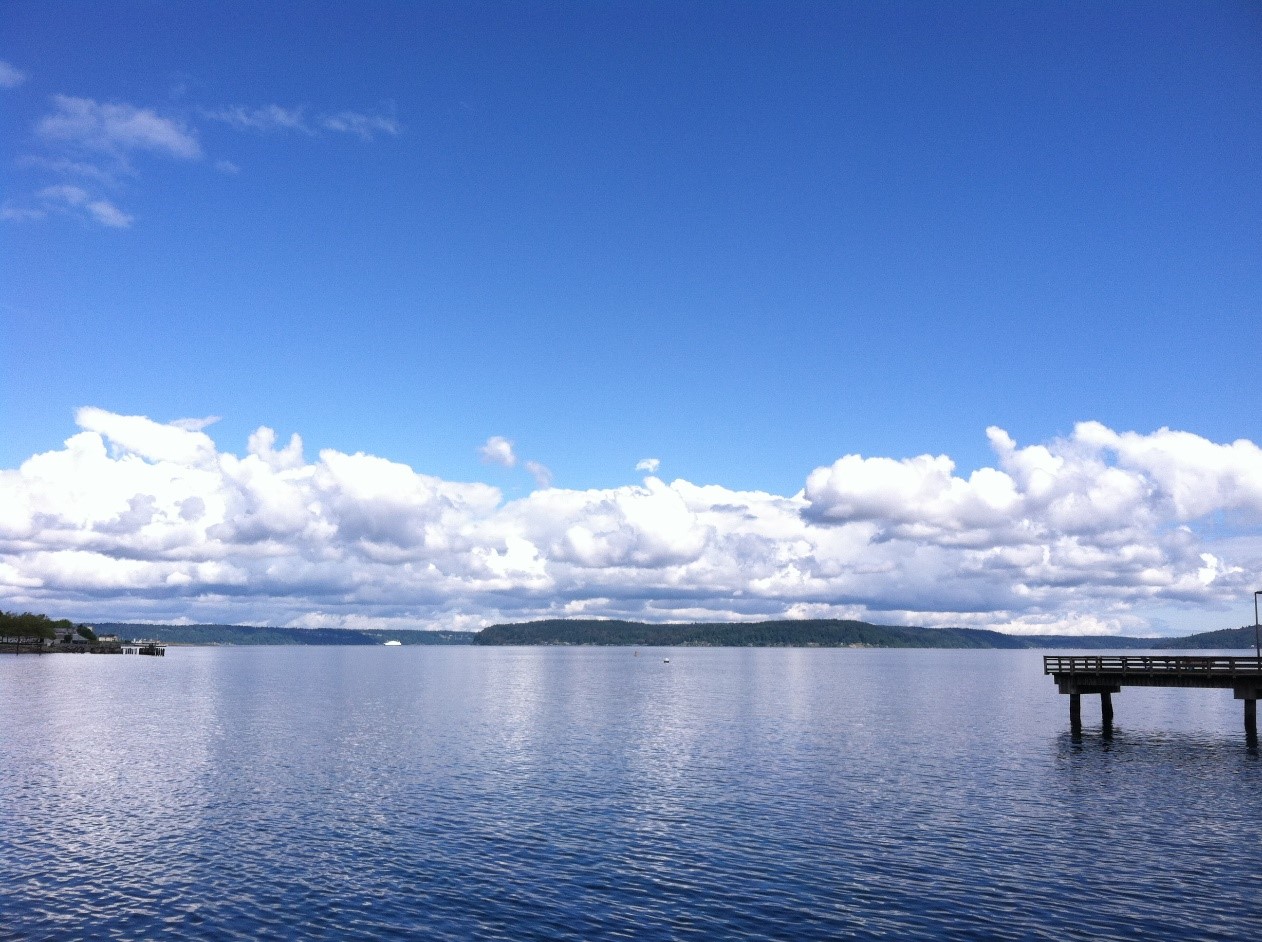
waterscape with dock and land
Puget Sound is the nation’s second largest estuary 
and faces many challenges, including population 

growth, development, and pollution.
Excess levels of nutrients from human sources are harming Puget Sound’s water quality. Excess nutrients can cause too much plant and algae growth that ultimately leads to low levels (below natural levels) of dissolved oxygen in many parts of Puget Sound. These low levels of dissolved oxygen are causing stress on marine life and making it difficult for aquatic organisms to thrive. Many areas in Puget Sound have dissolved oxygen levels below our state’s water quality criteria and Ecology is required to take action.

To improve and protect water quality in Puget Sound, we are focused on finding solutions for improving levels of dissolved oxygen in Puget Sound. Domestic wastewater treatment plants (WWTPs), or sewage treatment plants, are a major human source of nutrients to Puget Sound and are significantly contributing to low oxygen levels (read our Salish Sea Modeling reports for more info). With our region’s growing population, and recognizing that WWTP improvements to limit nutrients will take time, we need to start work now to protect and restore Puget Sound. To keep Puget Sound clean, Ecology must require WWTPs to control nutrients and we have made a preliminary determination to use a General Permit to accomplish this.

Controlling nutrients from WWTPs with a Puget Sound Nutrients General Permit

Aerial view of a wastewater treatment plant
Wastewater is the water that leaves our businesses and
 homes from sources like sinks, showers, and toilets. 
There are two permitting options to control nutrients at WWTPs:

  • New General Permit: Require nutrient limits for WWTPs that discharge to Puget Sound (in addition to their existing individual permits that cover other limits).
  • Individual Permits: Include nutrient limits in each individual permit for WWTPs that discharge to Puget Sound.

We have made a preliminary determination that a general permit is the best tool for addressing excess nutrients in Puget Sound. A Puget Sound Nutrients General Permit would:

  • Create a single coordinated public engagement process, allowing more stakeholder collaboration during permit development. 
  • Place WWTPs on a similar schedule instead of staggered permit requirements based on different individual permit schedules. 
  • Provide a foundation for communities to work together to achieve nutrient controls across Puget Sound.

General vs. Individual permits

All wastewater treatment plants require a water quality permit to operate, specifically to discharge to surface water. We use permits to limit pollutants that may enter our waterways. Both types of permits (general and individual) are issued on 5-year cycles, allowing us to adapt requirements in response to new information and technologies.

A general permit covers a group of dischargers that have similar qualities within a similar region. We can use a general permit to satisfy any or all state and federal water quality permit requirements. General permits are a cost-effective way to regulate numerous dischargers under a single permit. It allows us to hold a single permit development and implementation process per 5-year cycle for all the facilities together. This process includes stakeholder and permittee engagement.

The other permitting option is using individual permits, which we tailor to individual facilities. We issue each individual permit on independent schedules consistent with facility-specific permit renewal and reissuance dates, and a public comment process.

How would a Nutrients General Permit work? 

A Puget Sound Nutrients General Permit would apply to nearly 70 WWTPs that discharge to marine and estuarine waters of Puget Sound. A Nutrients General Permit would focus only on controlling nutrients. All WWTPs already have individual permits that regulate other pollutants. Therefore, WWTPs would have two permits.

We are at the earliest stage of a general permit process and it is too soon to know the exact permit conditions. If we move forward with the general permit, the permit development process will determine:

  • Which WWTPs will be included in the general permit.
  • How to cap nutrient loading.
  • What planning will be needed to meet nutrient reduction targets, starting with optimizing nutrient reduction with existing infrastructure, the feasibility of infrastructure upgrades, or other water quality improvement efforts.

Public comment period for the Preliminary Determination to Develop a Nutrients General Permit

We are accepting comments from Aug. 21 until Oct. 21, 2019 on our preliminary determination to develop a Nutrients General Permit. You may submit comments online.

We welcome your feedback on whether a general permit is the appropriate tool to control and reduce nutrients in discharges from WWTPs to Puget Sound. This public comment period is also an opportunity to provide us other relevant information about WWTPs and Puget Sound water quality.

For more information on the nutrients problem, the permit proposal, and how to comment, read our focus sheet. We do not currently have draft permit language. However, if we move forward with a general permit, we will prepare draft permit language and hold another public comment period.

You can find all of this information and additional materials on our General Permits webpage.

Other States with general permits for nutrients

Other states have used general permits to reduce the impacts of nutrients on their coastal waters.  In March, our Puget Sound Nutrient Forum hosted water quality experts from Chesapeake Bay and Long Island Sound to hear about their general permit process and other strategies they used to reduce nutrients in their waterways. Both of these estuaries have experienced success in cleaning up excess nutrients in their waterways and are on their way to improved water quality and restored marine habitats. Read our previous blog to learn more about how other states manage nutrients in their coastal estuaries.

What else is Ecology doing to reduce nutrients?

People raising their hands in a large meeting room
The Nutrient Forum, a large public advisory 
committee, meets regularly to provide input 


on how to reduce human sources of nutrients.
Limiting nutrients at WWTPs is one important element of Ecology’s Puget Sound Nutrient Reduction Project, but this alone will not solve Puget Sound’s low dissolved oxygen problem.  In order to improve Puget Sound and build resiliency back into our iconic water, we will also need to reduce nutrients from other human sources. We are working with the Puget Sound Nutrient Forum to develop a comprehensive Puget Sound Nutrient Management Plan to find the right solutions for reducing nutrients in Puget Sound. As we develop the plan, we will continue to hold our Puget Sound Nutrient Reduction Forum meetings and encourage everyone interested in this work to attend the meetings and sign up for our listserv.

More information:

To receive email updates about this potential general permitting effort, register for the Nutrients Permit listserv.

To receive updates on the broader Puget Sound Nutrient Reduction Project, register for the Puget Sound Nutrient Reduction listserv or visit www.ecology.wa.gov/PSNRP.

By Kelly Ferron, Water Quality Program


Tuesday, January 29, 2019

Understanding the environmental impacts of more water over the dam

Ecology to consider allowing more water to spill over dams to help salmon migrate.

Spring spill season for dams along the Columbia and Snake rivers is approaching. During this time, generally from April through June, large amounts of runoff from the melting snowpack lead to high water flows. When hydropower operations cannot pass all of the water through turbines or store it, water is spilled over the dams through spill gates. Spill is used to manage incoming water and to help move juvenile salmon past dams, downstream towards the ocean. During this time, upwards of 100 million juvenile salmon migrate down the Columbia River.

This action would apply to eight dams on the lower 
Columbia and Snake rivers.
juvenile chinook
Juvenile Chinook, photo credit: Amy Hansen, USGS

Responding to the need for more salmon

Ecology, in support of the new agreement for flexible spill operations at four lower Columbia and four lower Snake River dams, is proposing a short-term modification that would allow more water to spill over the dams, with the goal of improving the survival of juvenile salmon migrating to the ocean. Under the flexible spill agreement, the increased spill would happen during hours of relatively low energy demand, balancing salmon survival rates while managing power costs.

The short-term modification would apply to state Water Quality Standards, specifically the Total Dissolved Gas criteria. When water is released from spill gates at the top of the dam, the plunging water can trap air (mostly nitrogen and oxygen gas) in the water. This could pose a threat to aquatic organisms, such as the adult salmon who are migrating back upstream and resident fish including white sturgeon or mountain whitefish. In this situation, fish are susceptible to ‘gas bubble trauma’ or what you could call giving fish ‘the bends’, if you are familiar with the scuba diving term. 

Currently, the total dissolved gas criteria is 110% for Washington State. There is a special condition to aid fish passage past dams during the spill season for the Columbia and Snake rivers, allowing total dissolved gas levels of 115% in the forebay, 120% in the tailrace of dams, and a maximum one-hour average of 125%. Spilling water over dams is recognized as one of the best ways to protect fish as they move past dams. 

The Department of Fish and Wildlife and the Columbia River Inter-Tribal Fish Commission and a coalition of Northwest Sportfishing Industry Association, Columbia Riverkeeper, and Save Our Wild Salmon have requested Ecology remove the 115% forebay criterion for total dissolved gas for the 2019 spring spill season and maintain the 120% tailrace criterion in the Columbia and Snake rivers. The purpose for removing the 115% forebay criterion is to test the benefits of more spill on fish passage by allowing higher total dissolved gas levels. This would align with the flexible spill operations agreement.

Fish passage system for a dam, graphic courtesy of U.S. Army Corps of Engineers

Our Proposal 

The goal of the short-term modification is to understand if allowing more spill will improve the survival of juvenile salmon migrating to the ocean without too great of impact on salmon, resident fish, invertebrates and other aquatic life in the rivers.

At this time, we are considering a short-term modification that would remove the 115% forebay criterion for up to three years. This action would coincide with the flexible spill agreement that aims to benefit salmon and hydropower. 

Learn about our Environmental Impact Statement

In order to do a short-term modification to our Water Quality Standards, we must complete an Environmental Impact Statement. Drafts of our Environmental Impact Statement and short-term modification are now available for public comment. The Environmental Impact Statement, while technical in nature, provides extensive information on current available science, research, and data related to total dissolved gas. It also contains a discussion of potential alternatives for developing a short-term modification. 

Save the date for our upcoming hearings 

We are planning two public hearings that will begin with a short presentation, followed by questions and answers. The hearing portion will begin shortly after the questions and answers are finished. During the hearing, you may give oral testimony and written comments. Written comments will receive the same consideration as oral testimony.

Feb. 13, 2019: In-person in Vancouver, WA at 2:30 p.m.
Washington State School for the Blind
Fries Auditorium (Old Main Building)
2214 East 13th Street
Vancouver, WA 98661

Feb. 19, 2019: Public Hearing via Webinar at 6 p.m. (register for the webinar)

After reviewing the comments, we will release our final Environmental Impact Statement and make a decision on issuing the short-term modification. 

To learn more about Ecology's actions to support orca and salmon recovery, visit our Orca task force webpage.

By Colleen Keltz, Water Quality Program


Wednesday, November 1, 2017

Give your input on Washington’s first statewide water quality permit for wineries

The Winery General Permit will ensure Washington wineries
protect water quality as they cultivate sustainable practices.
We are proposing a new statewide water quality permit for wineries, called the Winery General Permit. This permit will establish practices for managing winery wastewater. The comment period opens today and we will accept comments until Feb. 14, 2018.

We are also holding four public hearings: two online webinars, one in-person meeting in Eastern Washington, and one in-person meeting in Western Washington. See below for more details.

Helping Washington wineries be more sustainable

Washington is the second-largest wine-producing state in the nation. Because the wine production in Washington has increased greatly over the past decade, we decided to develop a general permit that establishes good waste management practices.

Washington state is the second-largest
producer of wine in the United States. 
This permit will help protect our waters from potential pollution. A general permit allows businesses that have a similar function to have a unified approach. Instead of each winery applying for water quality permits separately, they can apply for coverage under the one statewide general permit.

General permits simplify the permitting process – which saves both the facility and the state time and resources.

Working with the wine industry to create a solid permit

We have been working with the wine industry since 2014. We formed an advisory group to advise us. We heard from representatives of wineries that the vast majority of Washington wineries have very low annual production volumes and are already heavily regulated.

In the proposed draft we included flexibility, compliance options, benchmarks, and scaled requirements for small producers and existing facilities. The draft permit focuses on best management practices and data collection.

Wineries protect water quality and the environment
when they properly manage their wastewater.

Why is winery wastewater a concern for water quality?

The wastewater made from winemaking facilities has the potential to contaminate groundwater, which is where many Washingtonians get their drinking water.

Contamination can occur if a winery’s septic tank and drainfield system fails, if their wastewater lagoon leaks, or if they use too much untreated wastewater to irrigate their crops. Winery wastewater can have high amounts of organic matter and solids, and extreme pH ranges.

Wastewater discharges like those from winemaking facilities can:
  • Pollute groundwater aquifers that supply drinking water and the water used to make wine.
  • Kill aquatic organisms.
  • Overwhelm wastewater treatment plants causing untreated sewage to be discharged to Puget Sound and rivers.

    How can you comment?

    You can find the documents on our website. We are accepting comments from Nov. 1, 2017 to Feb. 14, 2018 on the:
    • Draft Winery General Permit
    • Revised Fact Sheet
    • Notice of Intent (application)
    • Economic Impact Analysis

        Join us online at one of our webinars:

        Join us for in-person hearings:

        Prosser
        Bellevue
        Tuesday, Jan. 30 at 10:30 a.m.
        Benton County P.U.D. - Prosser
        250 Gap Road
        Prosser, WA 99336
        Friday, Feb. 2 at 1:30 p.m.
        South Bellevue Community Center
        14509 SE Newport Way
        Bellevue, WA 98006

        Submit written comments

        We will accept written comments on the draft permit, fact sheet, and supporting documentation until 11:59 p.m. on Feb. 14, 2018. We prefer comments be submitted through our online comment form. Comments should reference specific permit text when possible.

        Submit comments

        What’s next?

        We will respond to comments and include them as an appendix in the fact sheet of the permit. If comments cause a large change in the permit, we may hold another public comment period. If there are no major changes, we expect to issue the permit in the summer of 2018.

        Check out our website for more info: www.ecology.wa.gov/winerypermit

        By: Stacy Galleher, Water Quality communications specialist
        and Stacey Callaway, Water Quality permit writer

        Monday, May 22, 2017

        Input wanted: Cleanup options for BNSF Railway Black Tank Property

        From May 22 through June 22, we are gathering public comments on the cleanup methods we’re considering for the BNSF Railway Black Tank Property in the Hillyard neighborhood. BNSF and Marathon Oil Company are responsible for cleanup because of their past activities at the site.

        The site housed an above-ground black tank that stored petroleum products, primarily the thick, heavy oil known as bunker C for fueling trains. The site also had an above-ground red tank that was used to store and transfer diesel. Areas of soil are contaminated, and a 7-acre plume of petroleum rests on groundwater 170 feet underground.
        Cross-section showing petroleum contamination in soil and groundwater
        (Courtesy of  ERM)

        Excavation with offsite disposal or capping are proposed for contaminated shallow soil. Five groundwater cleanup options are under consideration: biodegradation, bioventing/biosparging, bioventing/biosparging and manual petroleum removal, bioventing/biosparging and steam-enhanced extraction, and smoldering combustion. Bioventing/biosparging is BNSF and Marathon's preferred cleanup option.

        These cleanup methods are summarized in the fact sheet and fully described in the remedial investigation and feasibility study report.

        When contamination intersects with a freeway

        The Washington State Department of Transportation (WSDOT) is building the North Spokane Corridor (NSC) to connect US Highway 395 with Interstate 90 in Spokane. The Hillyard portion of the NSC is within the Black Tank cleanup site. Ecology, BNSF, Marathon, and WSDOT are working together to keep both projects running smoothly.

        BNSF and Marathon have committed to a cleanup timeframe of less than 20 years, and WSDOT is planning freeway construction work to accommodate multi-purpose cleanup infrastructure so cleanup options will not be limited by the presence of the NSC.

        Educating the public about the Black Tank site and soliciting your input are important steps in the cleanup process. We have been impressed by the outpouring of public interest, which gave us the opportunity to meet with the community about this cleanup site 17 times since late 2015! The cleanup and the freeway design have and will continue to benefit from meaningful public engagement.

        It’s all about the life-giving aquifer

        Our business is protecting people and the environment. The Spokane-Valley Rathdrum-Prairie Aquifer provides drinking water to nearly 500,000 residents in the Spokane area. Protecting this vital, sole source of drinking water is our top priority for this site. Not only do we care about your health and the environment, but we drink that water, too!

        Because the contamination is a heavy oil, it is staying on top of groundwater with very little mixing occurring (imagine oil and vinegar dressing that isn’t shaken up). Because water wells are not located close to the site, drinking water is not affected by the contamination at this time, and we monitor it regularly.

        Next steps

        Please submit comments to Jeremy Schmidt online, by email, or mail (4601 N. Monroe, Spokane, 99205) by June 22. We will respond to the comments we receive.

        Then we’ll use the data gathered thus far and your feedback to draft a cleanup plan. We will hold a public meeting during the comment period for that cleanup plan.

        There is no easy answer, but working together, understanding one another’s values and constraints with a willingness to compromise, we will protect people and the environment, preserve our precious drinking water, and successfully build a freeway.

        Friday, May 5, 2017

        We want your input on our 2017-2019 grant agreement with EPA

        Every two years we develop a new partnership document with the U.S. Environmental Protection Agency (EPA). This document serves as our grant agreement for the funding we receive from EPA, and outlines the work we plan to do with that money. 

        This agreement shapes our work
        This year we have requested $11 million from EPA to fund our efforts to improve water quality, air quality, hazardous waste management, and beyond. If we don't receive all of our expected funding, we will adjust the agreement to reflect the work we can still do.

        Once the plan is drafted, it goes out for public comment. Now we want your feedback:


        This agreement, called the Environmental Performance Partnership Agreement, documents commitments between Ecology and EPA Region 10. It does not restrict either EPA’s or our legal oversight or enforcement authority.


        What’s in the partnership agreement?

        The agreement explains many decisions made by Ecology and EPA on how we plan to spend our allocated funding between July 1, 2017 and June 30, 2019. Most of this funding pays for staff time so we can provide technical assistance, community outreach, and regulatory guidance to Washington communities. It also goes to watershed planning, scientific research, and broadening our understanding of toxics in the environment. Over a quarter of these funds pass directly through Ecology to support local clean air agencies across the state.

        Funds from EPA allow our staff to protect
        Washington from environmental hazards.
        The plan outlines results, activities, and performance measures expected. In other words, the document says what we plan to do, what should be completed, and how we will track our success.

        Before both parties sign the agreement, we send it out for a 30-day formal public comment period. This gives you an opportunity to review the work plan and make sure we didn’t miss anything vital before we approve the agreement. All comments received during this period, and responses, will be captured in an appendix at the end of the final report.

        Send us your comments

        We invite you to submit public comments on the draft Environmental Performance Partnership Agreement until midnight on Wednesday, May 31. Review the draft agreement on our website. Send your feedback via email to Eli Levitt.

        Photo credit: Freeimages.com/Scott Snyder


        By: Jessie Payne, communications manager

        Friday, March 17, 2017

        Commercial net pen aquaculture planning meeting March 23

        You are invited to attend the next planning meeting for updating the Recommendations for Managing Commercial Net Pen Aquaculture in Washington’s straits and estuaries.


        Join us in person or by phone

        Those interested may attend in person or by phone. Directions on how to participate through the conference call are listed below.
        When: March 23
        Time: 8:00 a.m. to 3:30 p.m.
        Where: Washington Department of Ecology headquarters auditorium
        Address: 300 Desmond Drive SE, Lacey, WA, 98503

        State employees learn more about day-to-day operations
        from Keven Bright of Cooke Aquaculture Pacific.
        Photo by Lori LeVander/Ecology.

        Updating the planning tools for commercial net pens

        We are working with the Washington departments of Fish & Wildlife and Agriculture to update the state's 30-year-old management guidelines for commercial net pen aquaculture.

        Through this project, we aim to deliver modern scientific information to guide state agency, tribal and local government decision makers in siting, managing, and regulating net pens in Washington’s marine waters.

        The final report will provide recommendations only - not a rule or law. Regulatory agencies will determine how these recommendations will be incorporated into their decisions around managing commercial net pen aquaculture. A key objective is to provide tools that enable decision makers to protect native Pacific salmon.

        Learn more about the project on our Recommendations for Managing Net Pen Aquaculture webpage. Subscribe to the project listserv to receive email updates.

        Wednesday, January 4, 2017

        New commercial fish farm (net pen) management tools being developed: Provide your input on project scoping by March 4

        NOTE: We have decided to extend the deadline for public input after receiving several requests for more time. This blog was edited Jan. 11 to reflect the new deadline for feedback March 4, 2017.


        Washington’s 30-year-old management guidelines for commercial, marine fish farms (net pens) are getting an overhaul. Ecology has partnered with the state departments of Fish & Wildlife and Agriculture, and the National Centers for Coastal Ocean Science to write new management recommendations useful for the industry and coastal managers – including state and local government regulators.

        View from the water of a commercial fish farm near Bainbridge Island. Photo by Jessica Payne/Ecology


        We’re just getting started, and we want your input

        The multi-year project is just getting underway and you are invited to provide input on early decisions made by the project team. Two documents are available for review and comment. You can view and download these documents on our project website.
        1. A summary of draft scoping decisions that describes early decisions made by the team regarding:
        • Geographic and topical scope
        • Scientific and technical review
        • Outreach and opportunities for interested parties to influence the outcome
        1. A writing outline that will guide the project team through fact-finding and identification of suitable safeguards and management practices. The team is especially interested in feedback on topics you would like to see addressed in the final document. This will serve as a table of contents for the final guidance document.
        We’re accepting public comments now through March 4. 

        This project is designed to give us up-to-date information on this use and better understand the concern of citizens. What we learn will help us ensure any new facilities are sited and operated consistent with current science and modern management practices. It is not designed to determine whether or not future net pens will be allowed.

        Learn more on our Frequently Asked Questions page.

        State employees learn more about day-to-day operations
        from Kevin Bright of Cooke Aquaculture Pacific.
        Photo by Lori LeVander/Ecology.

        Send us your feedback

        Please send us your feedback and help influence project outcomes.

        Submit input by March 4 to:
        Ms. Cedar Bouta
        Shorelands and Environmental Assistance Program
        WA Dept. of Ecology
        P.O. Box 47600
        Lacey, WA 98504-7600.
        Email: Cedar.Bouta@ecy.wa.gov
        Visit our project webpage to learn more. Subscribe to our listserv to get email updates and make sure you have the latest information.

        By: Cedar Bouta, Shorelands and Environmental Assistance program

        Monday, October 17, 2016

        VIDEO: Finding solutions for the Chehalis basin

        Oct. 24 UPDATE: We have decided to extend the public comment period for the Chehalis Basin Strategy environmental review after receiving five requests for an extension. The new closing date for the public comment period is Nov. 14, 2016

        The Chehalis River Basin is at a turning point. In recent years, the basin has experienced extreme and frequent flooding, and it may experience larger floods more often in the future. Habitat for aquatic species is significantly degraded and, if action is not taken, is expected to decline further. We're working with the community to address these issues.

        We are currently taking comments on our environmental review of solutions proposed for the basin. Learn more in this video, and join us at public hearings to share your feedback.


        With a new environmental report out for public review, now is the time for you to get involved and engage on potential ways to restore aquatic habitat and reduce flooding throughout the Chehalis River Basin in southwest Washington.


        Comments now being accepted on environmental review

        We have completed a draft environmental report, officially called a programmatic Environmental Impact Statement, as part of a community effort to restore the basin and put it on a path to recovery. The environmental review evaluates four basin-wide options that were developed and submitted to Ecology by the community to address these problems.

        Join us in person at upcoming public hearings

        Come join us in person to learn more and share your feedback at public hearings.

        Open houses begin at 6:00 p.m. followed by a presentation at 6:30 p.m. and public hearing at 7:00 p.m.

        Tuesday, Oct. 18 at 6 p.m.
        Veterans Memorial Museum
        100 S.W. Veterans Way
        Chehalis, WA 98532
        Thursday, Oct. 27 at 6 p.m.
        Montesano City Hall
        112 N. Main Street
        Montesano, WA 98563

        Comments will be accepted through Nov. 14, 2016. Learn more, read the report and submit your comments online at chehalisbasinstrategy.com.

        SEPA: Washington's environmental protection law

        The State Environmental Policy Act (often called SEPA) gives a formal process to identify and assess possible environmental effects of a proposal before deciding how to proceed.

        Your feedback helps Ecology understand how a proposed action would affect people and the environment. Learn more about SEPA on our website.

        Friday, September 30, 2016

        Review our report on options to help the Chehalis River Basin

        Oct. 24 UPDATE: We have decided to extend the public comment period for the Chehalis Basin Strategy environmental review after receiving five requests for an extension. The new closing date for the public comment period is Nov. 14, 2016

        The Chehalis River Basin is at a turning point. In recent years, the basin has experienced extreme and frequent flooding, and it may experience larger floods more often in the future. Habitat for aquatic species is significantly degraded and, if action is not taken, is expected to decline further.


        With a new environmental report out for public review, now is the time to get involved and engage on potential ways to restore aquatic habitat and reduce flood damage throughout the Chehalis River Basin in southwest Washington.

        Draft study ready for review

        As part of a community effort to restore the basin and put it on a path to recovery, we have completed a draft environmental report, officially called a programmatic Environmental Impact Statement.

        Our review evaluates four basin-wide options that were developed and submitted to Ecology by the community to address flood damage and aquatic species habitat. We've evaluated the impacts, both positive and negative, to people and the environment. Now we need your input.

        Send us your feedback

        We’ve worked hard to give these invested stakeholders a fair assessment of how different solutions will affect their community’s environmental planning. Now that we've completed the assessment and analysis of four basin-wide options, we're making the draft environmental report available for public review.

        Chehalis Basin Strategy website link

        Learn more, attend hearings and submit comments now through Nov. 14

        Comments will be accepted through Nov. 14, 2016. There are many ways for you to send us your input on the study. Submit your comments online or by mail at:

        Chehalis Basin Strategy EIS
        c/o Anchor QEA
        720 Olive Way, Suite 1900
        Seattle, WA 98101

        You may also comment in person at the upcoming public hearings:

        Tuesday, Oct. 18
        Veterans Memorial Museum
        100 S.W. Veterans Way
        Chehalis, WA 98532
        Thursday, Oct. 27
        Montesano City Hall
        112 N. Main Street
        Montesano, WA 98563

        For both meetings, there will be an open house at 6:00 p.m. followed by a presentation at 6:30 p.m. and public hearing at 7:00 p.m.

        All comments received during the public comment period will be addressed in the final programmatic Environmental Impact Statement, planned in 2017. 


        SEPA: Washington's environmental protection law

        The State Environmental Policy Act (often called SEPA) gives a formal process to identify and assess possible environmental effects of a proposal before deciding how to proceed.

        Your feedback helps Ecology understand how a proposed action would affect people and the environment. Learn more about SEPA on our website.

        Monday, March 7, 2016

        Share your thoughts on Pierce County's shoreline plan

        We want your comments on the Pierce County Shoreline Master Program. Join us Wednesday evening for an open house and public hearing to share your thoughts on the county shoreline plan.

        Shoreline Master Programs help us plan to use our shorelines responsibly.

        What's a Shoreline Master Program?

        Shoreline Master Programs are local plans developed by cities and counties to manage shoreline use. These local programs protect natural resources for future generations, provide for public access to public waters and shores, and plan for shoreline uses and development.

        Pierce County's shoreline plan

        Pierce County's long-awaited shoreline plan is ready for your review and comment. The public comment period started March 15 and will run through April 29.

        Public comment period: 
        March 15 to April 29

        Last year, Pierce County locally approved its shoreline plan for managing more than 700 miles of county shoreline, including all waters along Puget Sound, numerous lakes and rivers, and associated wetlands within the county. They then submitted their plan to Ecology for review and approval.

        Join the open house

        Learn more and comment in person at tomorrow's open house:


        When
        Wednesday, March 30, 2016
        Open house starts at 5 p.m.
        Public hearing starts at 6:30 p.m.
        Where
        Pacific Lutheran University
        Chris Knutzen Hall
        12598 Park Avenue South
        Tacoma, Washington 98447


        Your input will help us as we decide to either approve the county's Shoreline Master Program as it is written, or request changes before it can be approved.

        Learn more, review the draft plan and submit your comments online at http://bit.ly/PierceSMP.

        Updating the county’s shoreline plan

        This proposed Shoreline Master Program is the first comprehensive update to the county’s shoreline plan since 1975. If adopted, it will completely replace the existing program with updated goals, policies, regulations, shoreline environment designations, definitions and administrative procedures.

        The new plan will advance shoreline habitat protection while guiding county planning for new development and public access.

        Learn about shoreline planning on our Shoreline Master Program webpage.

        By: Jessica Payne, Shorelands program communications manager

        Tuesday, April 16, 2013

        Tacoma Smelter Plume: Tacoma Public Meeting Recap

        By Jill Jacobson, Yard Program Outreach Coordinator, Toxics Cleanup Program

        Last Thursday night, we held the last of three public meetings for the Tacoma Smelter Plume Yard Program Design and Implementation Plan in the cafeteria of Woodrow Wilson High School in Tacoma. We had a turnout of 25 people who came out to learn about yard sampling and cleanup in Tacoma neighborhoods.

        Most people came from the Tacoma area to learn how to sign up for soil sampling. Here are a few of the common questions and answers that were discussed.

        Can I receive soil sampling if my property is outside the service area?

        If your property is outside of the service area but nearby in King or Pierce County, we can sign you up to receive soil sampling. For more information, contact Jill Jacobson, Outreach Coordinator, Toxics Cleanup Program at Jill.Jacobson@ecy.wa.gov or 360-407-6245.

        How can I find out if my property is located in the service area and when you will begin work in my area?

        You can view the map to the right to determine if your property is located within the service area. Please read page 3 of the Frequently Asked Questions to find out when we will most likely begin work in your area.

        Technical Workshop Recap

        Before the open house, about 12 people attended the technical workshop to learn more about the science behind Ecology's decisions. Here are a few of the topics we discussed:
        • How did Ecology determine the service area?
        • How did Ecology choose 90 ppm arsenic as the threshold for action?
        • What will soil sampling look like and what tools will Ecology use?
        • What are the health effects of arsenic and lead?
        You can find answers to these questions in our yard program design and implementation plan.

        Comment Period Ends on April 29th, 2013

        Please send your written comments on the yard program design to Amy Hargrove, Remediation Manager, at P.O. Box 47775, Olympia, WA 98504-7775 or Amy.Hargrove@ecy.wa.gov. Check our comment period page for more information.

        Sign up: If your property is within the Tacoma Smelter Plume service area, sign up for soil sampling by completing the sampling access agreement. Return this form to Jill Jacobson, Outreach Coordination, P.O. Box 47775, Olympia, WA 98504-7775 or Jill.Jacobson@ecy.wa.gov.

        Contact Hannah Aoyagi at Hannah.Aoyagi@ecy.wa.gov or 360-407-6790 to make sure you are on the mailing list for updates and announcements.

        Tuesday, June 26, 2012

        Keeping you informed on environmental impact statement process for proposed Gateway Pacific Terminal

        by Katie Skipper, communication manager, Bellingham Field Office

        When 800 people show up for a presentation about the environmental impact statement (EIS) process, you know the community is interested.

        That’s what happened March 20, 2012, during our public meeting about the Gateway Pacific Terminal project proposed for Cherry Point, reinforcing for us and our co-lead-agency partners that we need to keep you informed about where we are in the process and how you can participate.

        We heard from a number of you recently when Whatcom County finalized its contract with CH2M Hill, the environmental consulting company the agencies selected to help us prepare the EIS.

        Because many of you had the same or similar questions, we thought it might be helpful if we put them together with some answers.

        We’ll post these on our website, and add to it with different topics as they come up.

        How can you ensure that everyone has equal access to the process, and that SSA, BNSF or environmental groups can’t unfairly influence the outcome?

        The agencies are committed to conducting a fair, thorough and complete environmental review of the proposed Gateway Pacific Terminal according to state and federal laws. We must follow existing rules, regulations and procedures and apply them consistently and fairly. Under these rules, everyone will have the same opportunity to provide public comment at key points in the process. Nobody will be able to unfairly influence the outcome. The contractor works for the agencies, not for the companies or any outside parties.

        You’ve said the scoping period would be 30 to 60 days. Can it be longer?

        Yes. The agencies must carry out the environmental impact statement (EIS) process, including scoping, consistently, according to the law, and in a way that provides meaningful participation opportunities to the public. Under the State Environmental Policy Act (SEPA) rules, the normal length of the comment period for scoping would be 21 days (WAC 197-11-408). There is a provision for “expanded scoping” (WAC 197-11-410) that allows 30 days, but it can be extended if the applicants agrees to a longer comment period. In this case, based on public concern, the county indicated that the scoping period should be 120 days, and the applicants have agreed. Ecology is supportive of the extended period, and the U.S. Army Corps of Engineers Seattle District Regulatory Branch does not object to the extended 120-day scoping period .

        I can’t find anything about scoping meetings in the contract. Where and when will scoping meetings be held? How will you determine the time and location?

        The co-lead agencies have not yet decided on the number or the location of scoping meetings. Once hired, the consultant will help organize and advertise scoping meetings, including investigating locations and venues. The information on time and location of meetings will be publicized broadly in the media and on government agency websites. There also will be opportunities to learn about the proposal and submit formal comments without attending a scoping meeting.

        I would like to see existing information about the proposed project’s impacts before I prepare my scoping comments. When and where will studies and reports be available?

        The scoping notice will have a description of the project and include a link to the co-lead agencies’ comprehensive website where all preliminary studies and reports that are available will be posted, as well as up-to-date information about the process, public comment periods and public meetings.

        After scoping, when is the next opportunity for the public to comment?

        The next public comment period will be for the draft EIS, which may take a year or more to prepare. The draft EIS will include all of the studies, reports, models, data and information gathered about the proposed project’s potential impacts identified through scoping.


        What protections do you have in place to ensure that the applicant cannot influence the consultant during scoping or later phases of the EIS process?

        The consultant will work directly for the co-lead agencies. Communication between the applicants and the consultant will take place only when the agencies are present, or with the permission of the co-lead agencies, and must be documented as specified by the communication protocol.

        Will the applicants be able to talk to the agencies during scoping? Can I come to meetings between the applicants and the agencies to ensure the public’s interests are adequately represented?

        The agencies need to communicate with and obtain information about the project from the applicants in order to prepare the draft EIS. The laws governing the review process include specific times for public input. The first opportunity for public input is scoping. After scoping, the second opportunity will be a public comment period on the draft EIS. Meetings between the applicant and the agencies are not public meetings. The process was designed to ensure that the agencies obtain the project information they need from the project applicants, while ensuring public participation at all key points in the process.

        Who is paying for the consultant?

        The applicants will reimburse the county for the consultant’s costs for work on the EIS through an agreement with Whatcom County. This contract includes provisions for all of Whatcom County’s direct costs, consistent with the handling of other applications.

        Thursday, March 24, 2011

        Let’s talk about Hanford!

        By Dieter Bohrmann, Communications Consultant, Nuclear Waste Program

        After decades as the nation’s plutonium-making plant, the Hanford site in southeastern Washington is one of the largest environmental cleanup projects in the world. And we want to talk about it! Bring your questions and concerns about the progress, challenges and priorities of cleanup. Let’s hear what’s on your mind.

        That’s our — Ecology, EPA and the U.S. Department of Energy — invitation to stakeholders and the public over the past several weeks as we prepared to hold “State of the Hanford Site” conversations around the region.

        More than 100 people took us up on the offer on March 16 in Richland. The evening began with an open house, where the agencies, the Nez Perce tribe, some public interest groups and others set up information tables and displays.

        The main discussion kicked off with a video about Hanford followed by short presentations from top managers at the three agencies (Ecology’s presentation is included below). But the bulk of the time was reserved for dialogue. And no single issue dominated the conversation. Questions ranged from worker health and safety to federal budget concerns to how to get waste out of Hanford’s 177 underground tanks. The 90-minute chat was civil, thoughtful and well-facilitated.


        The lively conversation continues at the next “State of the Site” meetings March 29 in Seattle and March 31 in Portland. Check out our “State of the Site” web page for more information. If you’re unable to make it to one of the meetings, we at the Nuclear Waste Program always enjoy talking about Hanford. That’s what we do.

        Drop us a note anytime at Hanford@ecy.wa.gov or call us at 800-321-2008.

        Tuesday, March 1, 2011

        Make a difference

        By Cathy Cochrane, Communications Manager, Eastern Regional Office, Spokane

        I used to think “public involvement” was a joke. Government doesn’t pay attention to the Little Person, I thought. But then I became a reporter for the Ketchikan Daily News, in Alaska. I covered public meetings, where only one or two people showed up, and I saw for myself the really significant influence those few people had over the issue at hand. Government officials — local and state — actually responded to those few, lone voices. They did what the “Little Person” asked! Because two people took the time to voice their concerns and their opinions, their community changed.

        That Ketchikan experience is long over, but I have ever since been an impassioned supporter of public involvement. In the three years that I’ve been with the Washington Department of Ecology, I’ve seen many instances where the public’s voice changed the conditions in a permit, helped us think differently about an action or a rule, showed us that yes, the people we serve really do care about what happens to the state’s environment.

        One of the reasons I love working for Ecology is that the agency truly wants the public to know what’s happening in the environment, to get involved, to exercise their voice. We invite public comment on every permit we write, and on those issues where we’re aware that the public wants more involvement, we hold a public meeting. In addition, some types of permits or regulatory actions require that we hold a public hearing and take testimony. I’m not the only cheerleader touting the benefits of public involvement. Many others with whom I work every day echo my thoughts. Watch this short video to hear their voices.


        Most importantly, keep up with the many ways you can have a voice in Ecology’s activities. From this link, you can sign up to receive our news releases, tweets, and public emails so you’ll know right away about the opportunities you have to weigh in on many of the issues that really matter to Washington’s environment. You can vist our public involvement calendar anytime to find out what’s going on.

        We want to hear from you. Please take the time to read the documents we post about permits and other actions, and then please comment. Attend a public hearing. Send us an email. Give us a call. Whatever form it takes — have a voice! Get involved! I’ll hope to see you at a public meeting soon.