Showing posts with label permit. Show all posts

Wednesday, August 15, 2018

Ecology seeks comments on draft permits for municipal stormwater


Stormwater runoff is a leading pollution threat to lakes, rivers, streams and marine water bodies in urban areas of Washington State. As rain and snowmelt runs off rooftops, paved streets, highways, and parking lots, it increases in speed and volume, and can pick up pollution such as oil, fertilizers, pesticides, soil, trash, and animal manure. These pollutants are carried into local bodies of water, where they can impact water quality and habitat.

Under federal and state laws, the Department of Ecology issues permits to control harmful runoff pollution that can affect rivers, lakes, and groundwater across the state. The most-populated cities and counties have stormwater permits aimed at reducing stormwater pollution at its source, treating it, and controlling volume and flow, so cleaner water goes into our creeks, lakes, groundwater and Puget Sound.

You can submit comments on the draft permits from Aug. 15 through Nov. 14, 2018. Find all draft permits, supporting documents, and information on how to submit comments on our reissuance webpage.

Three stormwater permits

Municipal stormwater permits are divided into three categories: Phase I, Western Washington Phase II, and Eastern Washington Phase II. Permits are divided based on population and by geography. We separate the Phase II permits into east and west because differences in climate and how the land absorbs water require different stormwater management measures. We review and update these permits every five years to add new science and clarify requirements.

What’s changing from the last versions?


Differences from the current permits include adding requirements for comprehensive stormwater planning and controlling sources of stormwater from existing businesses. We also refined language throughout to clarify: operations and maintenance, public education, controlling runoff for new and redevelopment, structural stormwater controls, and improving annual reporting. We also revised and added any new applicable Total Maximum Daily Load requirements.


Listening to stakeholders throughout the process 


We’ve gotten feedback from many stakeholders throughout this update process. In 2016, permittees, non-governmental organizations, and other interested parties organized a series of committee meetings to develop recommendations for permit revisions prior to starting the writing process.

From February to April 2017, we hosted listening sessions in both western and eastern Washington, and we gathered email and online comments with more specific input. We considered these comments as we developed the permit revisions.

In western Washington, we also provided an additional public review opportunity in the fall of 2017 with an informal public comment session on preliminary draft permit language for specific topics. This extra step in the public process provided valuable input from a wide range of interested parties. We considered those comments as we developed these draft permits.

How to comment


Now we’ve begun our formal comment period, and we invite comments on the formal draft documents from Aug. 15 through Nov. 14, 2018. You can find all three draft permits and supporting documents, as well as information on how to submit comments, on our reissuance webpage.

We will also be holding a series of workshops and public hearings. Information on workshops and public hearings can be found on our public events page.

Once we end the comment period, we will review and respond to comments. Our response to comments will be included in the final permit documents. We intend to reissue the final permits July 1, 2019.


Tuesday, May 16, 2017

Finding a balanced approach for aquatic plant management

yellow flag iris in a drainage ditch
Yellow flag iris has made this drainage ditch unusable.
We are now accepting comments on our environmental review of chemicals used to manage aquatic plants and algae covered by two of our general water quality permits. These chemicals are used to manage noxious weeds, nuisance plants, and algae in and around water.

Our draft environmental study reviews eight new chemicals, five alternatives for management, and updates information on other chemicals currently covered under the permits. We're seeking your feedback now through June 6.


Environmental management:
the balancing act

Sometimes, protecting the environment requires us to choose between two imperfect options. Just as you might turn to cold medicine to treat your body when you’re sick, we permit the use of some chemicals to help maintain the health of our waterways.

Noxious weeds are non-native plants that are highly destructive, competitive, or difficult to control. Nuisance plants are native, but they are growing in an area – or density – that causes damage the surrounding environment. These plants choke irrigation ditches, cover our lakes in green slime, and can be a risk to public health. While we work hard to keep chemicals out of Washington waters, we allow them under very specific circumstances to help manage these plants and algae.

Caring for the environment is a delicate balancing act. Our permits require people to use management solutions that have the least environmental impact among reasonably available options. Over the years, we’ve found chemicals sometimes can be the least invasive solution to control the plants and algae that throw off our natural balance.

Evaluating the chemicals covered by our water quality permits

We issue permits that allow the use of chemicals to conditionally treat noxious weeds, native nuisance plants, and algae in and around water. Two of these permits cover the use of chemicals in Washington waters. These are the Aquatic Plant and Algae Management and Aquatic Noxious Weed Control general permits. Our scientific review allows us to determine if we should – or should not – allow specific chemicals under our permits.

For these permits, we’ve evaluated:
Algae under a microscope
Algae under a microscope.
  • Algaecides - A chemical compound that kills or reduces the growth of algae or cyanobacteria (known as toxic algae or blue-green algae).
  • Herbicides - A chemical compound that kills or inhibits the growth of plants.
  • Phosphorus inactivation products - Products used to bind phosphorus in the water column and sediments making it unavailable to aquatic life. Phosphorus is a key ingredient in algae blooms.
These chemicals are only effective at targeted plants and algae. Our permits ensure the chemicals used, and the methods by which they’re applied, are the least impactful to animals and other plants. Permits limit which chemicals are allowed to be used, where they can be used, and who may use them. They also require public notification before a water body is treated, and outline specific rules around the reporting and timing of applying the chemical.

Learn more about invasive plants and the risks they cause to our way of life from the Washington Noxious Weed Control Board.

Why not just remove them by hand?

Non-chemical options are not always the best solution with the least environmental impact. Physical and mechanical methods of removing these plants can be damaging to aquatic habitats. These non-chemical options can have negative effects on water quality, disrupt sediment, and can kill the insects, snails, and fish trapped in the plants. These methods may be so expensive that they’re not really attainable to water managers. In addition, they can lead to a new infestation of noxious weeds by leaving behind plant fragments that then take root in the sediment.

Allowing pesticides to manage Washington waters

The federal Clean Water Act gives Ecology the responsibility to protect state waters. Chemicals used to manage Washington waters must be approved for use by the U.S. Environmental Protection Agency and Washington State Department of Agriculture. As a third layer of protection, we require anyone wanting to use one of these chemicals to get a water quality permit from us.

Water quality permits are a legal tool to allow – and limit – a discharge of pollution into the water. Each permit is different and sets specific methods for release, monitoring, and mitigating any potential environmental damage.

When used carefully under a water quality permit,
chemicals can help maintain the waters we love.
Photo credit: Tristan Hervouet via freeimages
When used carefully under a water quality permit, chemicals can help manage the water we need for the way we live.

For example, water management protects:
  • Community use
  • Aquatic habitat
  • Human and pet health
  • Agricultural purposes
  • Livestock
  • Commerce and navigation
  • Boating
  • Recreational and commercial fishing
  • And much more
The prolific overpopulation of noxious and nuisance plants threaten the waterways Washingtonians know and love. Toxic algae can be dangerous to people, wildlife, and pets. We carefully consider and evaluate all potential solutions for managing Washington waters. The environmental review we’re currently seeking comments on is part of that ongoing evaluation.

Our current environmental review

We recently completed our draft of a new environmental review for our general permits for managing Washington waters. This review, called a Supplemental Environmental Impact Statement (EIS), helps us determine the potential environmental impact of certain chemicals used to treat unwanted plants and algae. Now, we want your feedback on our draft before we finalize the report.
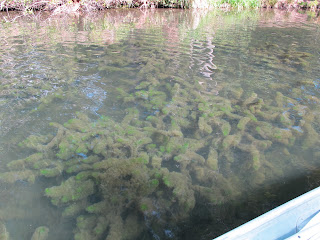
algae floating in Blue Lake
Variable-leaf milfoil in Blue Lake.
We are always seeking more environmentally-friendly ways to manage Washington waters. This environmental study is pivotal to that search. Our goal is to give better tools to those tasked with managing our waterways. We want solutions that target the unwanted plants and algae, and reduce impacts to neighboring plants and animals. We also want solutions that are effective and have a low risk of unwanted plants developing a resistance to the chemical.

Protecting the health of the native ecosystem is our top priority. New information is learned all the time, so it’s important to continually review what we permit with the best science and technology available.

This environmental review is neither a permit nor a decision, but it will inform decisions we make around aquatic plant management in the future.

Send us your comments

We are now accepting comments on our environmental review of the chemicals used in these two permits. We will take input on the Draft SEIS for Aquatic Plant Management until 5 p.m. on June 6, 2017.

We will also accept comments by mail:

Nathan Lubliner
Washington State Department of Ecology
PO Box 47696
Olympia, WA 98504-7696


By: Jessie Payne and Tim Lewis, Water Quality program communications

Friday, May 1, 2015

New oyster permit substantially reduces toxics in Willapa Bay and Grays Harbor

UPDATE: On May 3, Ecology and the shellfish growers cancelled the pesticide spraying permit. 
Read the news release here: http://ecologywa.blogspot.com/2015/05/news-release-ecology-shellfish-growers.html

By Chase Gallagher, Southwest Region Communications Manager

We have heard from many people who read the recent Seattle Times column (and other articles) about a permit for imidacloprid use in Willapa Bay and Grays Harbor. We want to make sure you have the facts about the permit, the pesticide (and the label you’ve read about), and to set the record straight about our role.

We monitor, analyze and plan ways to clean and protect our state’s waters. This involves limiting and restricting the ways facilities, farms and others discharge any pollution into our waterways.

Two weeks ago we issued a water quality permit to the Willapa – Grays Harbor Oyster Growers Association for the use of imidacloprid – a widely used, common pesticide – on commercial shellfish beds in Willapa Bay and Grays Harbor. This is one of many aquatic pesticide permits we issue to ensure water quality is maintained during use of a pesticide to combat invasive species, mosquitoes, algae, or in this case, burrowing shrimp.

About burrowing shrimp

Burrowing shrimp are a native species to Willapa Bay and Grays Harbor. As their name suggests, they burrow into the mud in tidelands, loosening mud, causing it to soften and lose its integrity. For shrimp, that’s a good thing. But for an oyster or clam it means they’ll likely sink into the mud and suffocate. About 25 percent of our nation’s commercial oysters are produced from these two bays. The shrimp are more than a nuisance; they put the shellfish industry and economy at risk.

Shellfish growers have been combating the burrowing shrimp for more than 50 years 

From the 1960s until 2013 a pesticide called carbaryl was used in these same areas.

The Department of Ecology permitted the use of carbaryl in 2002, monitoring its impacts on water quality. In 2008, the shellfish industry began pursuing a less toxic way of controlling the burrowing shrimp population. A wide number of options were considered and tested, including:

  • Covering tideflats with gravel and shells
    • Organic insecticides such as:
    • Mustard seed meal
    • Habanero pepper extract
    • Garlic oil
  • Running all-terrain vehicles over shellfish beds to compact and cave-in burrows
  • Propane explosions within the infested mudflats
  • Injecting clay slurry into burrows
  • Electroshocking the mudflats
  • Releasing high-pressure sound waves into the mudflats 
  • Alternative shellfish culture systems
  • Plastic mesh barriers
  • Other chemicals 

The most effective method

It turns out that the most effective way to combat the burrowing shrimp was with imidacloprid, one of the most commonly used agricultural pesticides. It’s the active ingredient in most flea collars for your pets, is used on termites, and protects fruits and vegetables from insects that damage crops. 

It works by causing paralysis in an organism, like burrowing shrimp. It prevents them from being able to move, causing eventual death. It’s most effective against invertebrates, like the burrowing shrimp. It’s far less of a threat to fish or other, larger, vertebrate wildlife, like birds and humans. 

But what about the label saying you can’t use it on water?

Every pesticide is registered for a particular use. The bottle or package of imidacloprid consumers can buy at their local hardware store or garden center has been registered for use on land, not the water. The household label states that. That’s the type of imidacloprid the Seattle Times’ columnist wrote about


However, the product permitted for use in Willapa Bay and Grays Harbor to control burrowing shrimp in commercial shellfish beds is a different product with a different label.


While the active ingredient (imidacloprid) is the same, these are different products, registered for different uses. This one is explicitly registered by the U.S. EPA and the Washington Department of Agriculture for use on shellfish beds. The Seattle Times column failed to report this important distinction, and we think you should have the facts.

Limited use

For this permit, shellfish growers are limited to using imidacloprid only on commercial shellfish beds on no more than 1,500 acres in Willapa Bay and 500 acres of Grays Harbor. That’s less than 2% of the total area of the bays.

The most likely application will be from the air, during low tides, using helicopters to directly spray right on the shrimp burrows. Our rules prohibit any spraying during high tide, and when winds are stronger than 10 miles per hour to minimize drift. 

Applying the treatment at low tides directly targets the shrimp in their burrows. When the tide comes in, any residual material will be adequately diluted.

Reducing pesticide use by 95% -- less toxic and more effective

The previous pesticide used by shellfish growers, carbaryl, was applied at a rate of 8 pounds per acre. The new permit issued for imidacloprid limits application to 8 ounces, and it can only be applied once per year. 

Additionally, the U.S. EPA says that oysters are safe to harvest just 30 days after a treatment of imidacloprid – instead of having to wait an entire year after a treatment of carbaryl. 


In our testing we’ve found that the most sensitive creatures that live in the mud, known as benthic invertebrates, return to normal levels just two weeks after a treatment. 

Studies and public process

With its widespread use in agriculture, imidacloprid has been studied extensively for use on land. But this is the first time it’s being permitted for use on shellfish beds, and we undertook an extensive scientific review and public involvement process. 

We began studying the effects of imidacloprid on water quality five years ago (in 2010). We started the environmental impact study process in January 2014, and held a public meeting in South Bend in February. Public comments have helped shape what was included in our draft Environmental Impact Study (EIS) released in October 2014. The final EIS was released last month.

Everything throughout the process was posted on our website

Monitoring

The permit we issued on April 16 is valid for five years. It includes monitoring requirements, and the WSU Long Beach Extension is supporting some of the sampling required this year. Over the next five years, we’ll review the annual monitoring data, and identify any adverse impacts to the sediment in the bays and water quality.

If for some reason the effects don’t match our scientific findings, we included conditions to reevaluate the permit at any time.  

For some it may seem counter intuitive – the state’s environmental agency allowing the use of a pesticide on shellfish beds. But our job is to protect the water and environment for all of us in Washington. If there’s an opportunity to reduce toxics in the water, we’re going to take it, and that’s what this permit does.