Showing posts with label #cleanwater. Show all posts

Wednesday, December 18, 2019

Protecting Puget Sound’s No Discharge Zone

Ecology will continue to implement the NDZ and protect Puget Sound while the court case proceeds


Since May 10, 2018, a federal “No Discharge Zone” (NDZ) has made it illegal to discharge both treated and untreated sewage from boats and vessels into Puget Sound.

Vessel sewage can contain bacteria and viruses that are harmful to people and the environment. These contaminants are harmful to water quality, beaches, and shellfish beds. Eating shellfish that have been exposed to pollution can make people sick. The presence of one type of bacteria, fecal coliform, has closed shellfish beds throughout Puget Sound.

While this is Washington’s first NDZ, there are more than 90 No Discharge Zones in 27 states. The U.S. Environmental Protection Agency (EPA) approved the Puget Sound NDZ and has continued to approve NDZs across the country, including a new NDZ in Maryland on Dec. 16, 2019. View the full list of EPA-approved NDZs.

We are implementing the NDZ and Washington’s boaters are using the more than 100 pumpout stations in Puget Sound. We have seen approximately 700 acres of shellfish beds reopen since implementation, a sign that the NDZ is working to protect and restore Puget Sound.

At the same time, a coalition of marine businesses have challenged the NDZ in federal court. While the U.S. District Court for D.C. has not yet ruled on the case, there are recent developments in the case and we wanted to share the current status of Washington’s NDZ. 

view of puget sound with text Puget Sound off limits to vessel sewage

Legal Matters

In December 2018, the American Waterways Operators (AWO) filed suit in federal court  against EPA, challenging EPA's determination that there are adequate pumpout facilities in Puget Sound to support a No Discharge Zone. We intervened in the AWO lawsuit because we support the NDZ and know it is a critical part of helping restore and protect Puget Sound. 

The court granted our motion to intervene on March 25, 2019. Washington Environmental Council, Puget Soundkeeper, and Friends of the Earth were also granted intervention.

In late May 2019, EPA filed a motion with the court asking the court to remand the case to EPA, so EPA could evaluate the cost of its adequate pumpout determination. Industry joined EPA’s motion and requested  the court vacate EPA’s adequate pumpout determination during the remand. On December 13, 2019,  the court  ruled against the motions to remand the NDZ decision back to EPA and the case is now proceeding on the merits. 

What's next for Washington's NDZ?

We will continue to implement the NDZ as the court case proceeds. We believe EPA correctly determined there are adequate pumpout facilities in Puget Sound to support the Puget Sound NDZ and are confident the court will ultimately rule in Washington’s favor. 
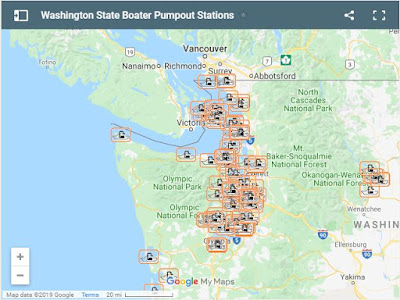
map of pumpout stations
There are well over 100 recreational and commercial pumpouts on Puget Sound and funding is available through Washington State Parks grants to establish more. Washington boaters are already using these convenient locations to safely dispose of vessel sewage. 

We provided an extended compliance timeframe for the rule, so some operators, including tug boats, have until 2023 to fully retrofit all their vessels to hold sewage. Vessel operators have begun investing in retrofits to comply with the rule.

Investments in the newly upgraded shellfish beds have begun and we expect more good news as the NDZ continues to be a part of Puget Sound. 

Why does Washington have an NDZ?

We established the NDZ to stop the discharge of vessel sewage into our waters.  Puget Sound is a regional treasure of great economic importance and preventing vessel sewage from being released throughout Puget Sound is a common sense decision. The NDZ is an important part of protecting and restoring the sound.

To learn more about why we have an NDZ and how it protects Puget Sound, read our April 2018 blog post.

Additional NDZ information is available on our NDZ webpage.

Find a pumpout in Washington or visit the State Parks pumpout website.

Washington's NDZ helps protect water quality, beaches, and shellfish.

By Colleen Keltz, Water Quality Communications

Monday, July 8, 2019

From onsite septic repair to stormwater infrastructure, $183 million is going to more than 100 clean water projects

Ecology’s Water Quality Program is offering more than $183 million in financial assistance for 106 high-priority clean water projects across the state. The funding includes $169 million for 105 new projects and $14 million to fully fund a project from last year’s list. Offers went out to the successful applicants on June 28 and the projects can start as soon as the agreements are finalized.

“Nearly 90 percent of our state’s water quality funding goes to local communities,” said Heather Bartlett, Ecology’s Water Quality Program Manager. “Clean water projects can be in communities big or small and anything from enhancing wastewater treatment systems to designing stormwater gardens to planting trees along rivers.”

Our Water Quality Combined Funding Program supports local communities by helping them upgrade sewage treatment systems, manage polluted stormwater runoff, and complete a variety of other projects to prevent and cleanup pollution. More than $100 million of our combined funding is for new projects that will help support Puget Sound recovery. These projects are a high priority, as they help improve water quality and create a healthy habitat for the endangered Southern Resident Orca, salmon, and the food web they rely on.

Clean water funding comes from a mix of state and federal funds for water quality improvements and protection. State financial managers calculate that 11 direct and indirect jobs are created in Washington for every $1 million spent on building clean water infrastructure.

Our interactive map shows where the projects are located and provides additional details. Below you'll find a few of the project highlights.

Reducing stormwater pollution

south fork of Palouse River
The South Fork of the Palouse River will benefit from a new 
stormwater decant facility in Pullman.
Ecology is offering $33 million in grants to 38 communities to implement projects to treat and reduce stormwater pollution. More than $20.5 million of the stormwater grant funding is for Puget Sound recovery projects, as stormwater runoff is a leading pollution threat in urban areas. The highest-priority stormwater projects include:

  • The City of Pullman in Whitman County was offered a $525 thousand grant to design and build a new stormwater decant facility. The City’s current facility is undersized and not connected to the City’s sewer system. The new facility will help improve water quality in the South Fork Palouse River, as untreated stormwater has been identified as an important source of pollutants to the river.
  • The City of Bremerton in Kitsap County was offered a grant of more than $800 thousand to construct a system to treat runoff from 6.31 acres of urban roads and parking lots and 8.32 acres of other surfaces to improve the water quality of Ostrich Creek. The creek is considered to be the most polluted stream in Kitsap County, with restrictions on contact due to pollution. The project was the highest rated stormwater project among this year’s applications, and it is a high priority in the Puget Sound Action Agenda.
  • The City of Tacoma in Pierce County was tagged to receive a $5 million grant and more than $2.7 million in loan to retrofit stormwater treatment on nearly 27 blocks of failed residential roadway in the Larchmont Neighborhood. The project will treat stormwater and reduce stormwater flows from 43 developed acres through infiltration, using permeable pavement and sidewalks. The project will help restore more natural hydrologic conditions to Flett Creek and Chambers Creek.

map of larchmont neighborhood with highlights
This planning map shows the blocks in Tacoma's Larchmont 
Neighborhood that will receive stormwater retrofit.

Addressing nonpoint pollution

Nonpoint pollution comes from activities that are usually widespread across an area without a single pollution source. Nonpoint pollution is a serious pollution problem across the state, and one of the most difficult to solve. We are helping to address nonpoint pollution by funding 33 projects with $21.4 million in grants, forgivable loans that do not have to be repaid, and low interest rate loans.

This septic project in Chinook is one of +1,200 projects
Craft3 has financed under the Regional Loan Program to
improve public health and water quality.

  • The projects offered funding include an expansion of the highly successful Regional Loan Program for repairing and replacing failing onsite septic systems at homes and small businesses. The program currently includes 15 counties, but with the new funding it is expanding to Pend Orielle, Stevens, Ferry, Skagit, Okanogan, Benton, and Franklin. It is expected that loans will be available in these new areas by September, 2019.
  • The Underwood Conservation District in Klickitat County was offered a $250 thousand grant to conduct riparian planting, install cattle exclusion fencing, implement livestock best management practices, monitor water quality, and provide education and technical assistance in the White Salmon River Watershed. The primary areas of focus for the project are streamside agricultural areas in the Trout Lake Valley.
  • The Cascadia Conservation District in Chelan County was offered a $245 thousand grant to implement a large-scale riparian restoration plan through a community-wide clean water outreach and education campaign and to provide technical assistance to landowners to take steps to reduce nonpoint source pollution and practice good stewardship. The project is consistent with actions recommended in locally-developed water quality improvement reports and management plans.

Supporting wastewater treatment projects

outfall pipe going down wooded hill
A leaking, exposed outfall pipe that goes into
Olequa Creek could be replaced with new funding.
Ecology is offering $124 million for 35 wastewater treatment projects. Of this, $110 million is for new projects and $14 million is to fully fund a project from last year’s list. Nine of the projects qualified for hardship financial assistance due to their potential impact on residential sewer bills. These hardship projects may receive a combination of grants, forgivable loans that do not have to be repaid, and low interest rate loans. High priority wastewater hardship projects include:

  • Yakima County was offered nearly $1.5 million in grant and $700 thousand in loan to design and construct critical repairs and improvements at the wastewater treatment facility in the community of Buena. The repairs and improvements are necessary to ensure proper treatment of the wastewater discharged from the facility. The project was the highest rated among all projects submitted for funding this year.
  • The City of Vader in Lewis County was awarded $4.8 million in grant and loan to protect Olequa Creek by constructing significant improvements to its wastewater treatment facility. The funding for the project is approximately half grant and half loan.

Adequate funding in state budgets for the Centennial Clean Water Program is vital for helping small, financially challenged communities such as these to complete important wastewater projects. The program also provides funding for many nonpoint pollution control projects across the state.


More information

We’re looking forward to seeing these projects take off! In the coming months, we plan to share updates and clean water successes.  If your community is receiving funding for clean water projects and you’d like to share your project’s progress, please let us know by emailing Emma Kluzniok at emma.kluzniok@ecy.wa.gov.

Find out more about the Water Quality Combined Funding Program on our website.

More information on this funding cycle, including a link to the funding offer list and an interactive map of our offered funding for projects can be found on our funding cycles webpage.

A map of recent clean water projects across the state can be found on our Ecology Grants and Loans map.

By Daniel Thompson and Colleen Keltz, Water Quality Program


Monday, July 1, 2019

By managing stormwater, cities and counties are helping to protect Washington’s waters

Reducing stormwater pollution helps prevent toxins from entering the water and harming orca and salmon. 

The state’s most-populated cities and counties now have updated municipal stormwater permits. The permits are aimed at reducing stormwater pollution at its source, treating it, and controlling volume and flow, so cleaner water goes into our creeks, rivers, lakes, groundwater, and Puget Sound.

Why it matters

A clean street and a clear catch basin or stormwater 
drain are key to clean stormwater! 
Photo credit: City of Federal Way, D.Smith
Stormwater runoff is a leading pollution threat to lakes, rivers, streams, and marine water bodies in urban areas of Washington State. As rain and snowmelt runs off buildings, paved streets, highways, and parking lots, it increases in speed and volume, and can pick up pollution such as oil, fertilizers, pesticides, soil, trash, and pet waste. These pollutants and higher flows are carried into local water bodies, where they can harm water quality and habitat.

“More than 160 cities, counties, and municipalities are part of the stormwater permits.” said Heather Bartlett, Water Quality Program Manager at Ecology. “By managing stormwater, they are reducing the flow of toxins into Washington’s waters. Reducing exposure to toxic pollutants is one of our top priorities for protecting and restoring orca and salmon.”

Washington’s municipal stormwater permitting program is unique in the amount of state funding devoted to implementation. Ecology provides financial support to permittees through a multi-million dollar grant program used to address the impacts of municipal stormwater. That said, nearly all permittees fund their core programs with stormwater utility fees.

Three stormwater permits

Municipal stormwater permits are divided into three categories, based on population and geography:

  • Phase I permits include incorporated cities with a population over 100,000 people and unincorporated counties with populations over 250,000 people. 
  • Western Washington Phase II and Eastern Washington Phase II permits are for the next most populated parts of the state. 

We separate the Phase II permits into East and West because of the differences in climate.

Our map shows the areas of the state with municipal stormwater permits.


What are the updates?

Swales, or rain gardens, help filter pollution 
before it goes down the storm drain.
We review and update the permits to add new science and clarify requirements. Here are a few highlights from the 2019 updates:

New requirements: Phase I Permittees and Western Washington Phase II permittees are required to prioritize and plan for stormwater management actions. Western Washington Phase II permittees also have a new requirement to implement source control programs for existing development.

  • Stormwater planning will help ensure low impact development remains the preferred and commonly used approach, and through a refined planning approach, identify stormwater improvement projects and activities to implement in priority basins. 
  • Source control programs for existing development will help ensure businesses use source control best management practices to prevent stormwater contamination and illicit discharges. Phase I Permittees have been implementing this program since the 2007 permit, and it has proven to be very effective for controlling pollution sources.

Bilingual education and outreach programs can be 
part of the municipal stormwater permit.
Environmental Justice: As the permits inform city and county-wide programs, we are including requirements and guidance calling attention to overburdened communities in the permits. We aim to improve awareness and be more inclusive to improve quality of life for those most affected by water quality impairments.

Clarifications: We refined language throughout to clarify operations and maintenance, public education, controlling runoff for new and re-development, structural stormwater controls, and improving annual reporting.

To support permit implementation, we have developed Stormwater Management Manuals for Eastern and Western Washington. The manuals are available on our stormwater manuals page.


Three new permittees

We are adding three new permittees for 2019. We evaluated municipalities that meet the population threshold for permit coverage. Based on that evaluation, College Place in Walla Walla County, Clallam County’s Urban Growth Area surrounding Port Angeles, and Shelton in Mason County are now required to apply for the permit.

Renton's grant-funded Sunset Terrace Regional 
Stormwater Facility bioretention cell provides 
enhanced treatment for 2.9 acres.
New permittees have an alternative implementation schedule for permit requirements, as we recognize the new permittees need time to fully develop their stormwater programs.

New permittees receive funding for implementation along with existing permittees, and may also compete in other water quality financial assistance programs to fund stormwater projects and activities.

Listening to stakeholders throughout the process 


We’ve gotten feedback from many stakeholders throughout this update process. We held listening sessions and public meetings across the state over the past two years to gather input. Our formal comment period ran from Aug. 15 through Nov. 14, 2018, resulting in more than 3,000 comments on the drafts. Our team revised permit language based on the feedback we received. You can learn more about our public process in our Aug. 15, 2018 blog post.


Next Steps

The permits become effective on August 1, 2019.

This is what you'll see if you click the 
three dashes on the listserv page.
Over the coming months, Ecology will be updating and preparing guidance documents on implementing new permit requirements involving stormwater planning and source control permit sections.

Join our municipal stormwater permit listserv to receive future updates about our permits. Click the three dashes in the right hand corner for subscriber options.

To learn more about water quality grants and loans, including funding for stormwater projects, visit our grants and loans page.

By: Colleen Keltz, Water Quality Communications

Thursday, May 9, 2019

Kicking off American Wetlands Month by securing $4.5 million in federal conservation grants

Skookum Valley wetland aquisition site in Mason County. A federal grant will help the Squaxin Island Tribe acquire, restore and permanently protect wetlands and shorelines at the site.
Skookum Valley wetland acquisition site in Mason County. We secured a $564,000 federal grant to help our Squaxin Island Tribe partner acquire, restore and permanently protect wetlands and shorelines along Skookum Creek that drains to Puget Sound. Photo courtesy Doug Ridenour.
To help celebrate Washington’s wetlands during May—American Wetlands Month—we’re delighted to share we have secured five National Coastal Wetlands Conservation grants worth $4.5 million.

This year, the federal grant program will help local partners including tribal governments and nonprofit land trusts acquire, restore, and enhance about 400 acres of coastal wetlands in Clallam, Mason, Pierce, and Thurston counties. All five projects will help recover salmon that Washington’s endangered Southern Resident orca whales depend on for survival.

The program is managed by the U.S. Fish and Wildlife Service (USFWS) and funded in part through taxes paid on equipment and fuel purchases by recreational anglers and boaters. Established in 1990, the federal conservation program provides up to $1 million for individual wetland projects in coastal and Great Lake states as well as U.S. territories.

Wetlands essential for Washington economic, environmental health

Washington’s wetlands are essential for sustaining the state’s economic and environmental health. Wetlands act as a natural sponge, helping control flooding and erosion by catching and slowing down melting snow and surface water runoff from storms. They purify water by filtering sediments and trapping excess nutrients and pollutants such as heavy metals. Wetlands also hold much of the surface water that trickles through the soil and recharges our underground drinking water aquifers.

If communities had to replace the flood control and water treatment functions Washington’s wetlands naturally provide, the costs could far outweigh the expense of preserving them. A 2008 independent study by Earth Economics found fresh water wetlands in the Puget Sound regional alone could be worth more than $10 billion to the state economy.

Productive ecosystems rivaling rain forests and coral reefs

Our wetlands also offer important refuge for wildlife and fish, including salmon, and places for people to boat, fish, and enjoy other recreation activities. Wetlands bordering or close to the marine waters of Puget Sound and Pacific Ocean can be among the most productive ecosystems in the world, rivaling rain forests and coral reefs. Wetlands also help mitigate climate change by absorbing greenhouse gases.

Although only states can apply for National Coastal Wetlands Conservation grants, we work closely with land trusts, local and tribal governments, and other entities to identify conservation projects in Washington and develop wetland restoration and protection proposals for consideration by USFWS.

Since 2008, we have helped secure federal funding and provided technical assistance for acquisition and restoration projects totaling more than $100 million to conserve more than 11,000 acres of Washington’s coastal wetlands.

This year, Ecology received 22 percent of the total $20.3 million in coastal wetlands grants USFWS awarded nationally. The Washington Department of Fish and Wildlife also received a $1 million USFWS grant to restore a coastal wetland in lower Hood Canal.

Washington’s 2019 coastal wetland conservation projects

Working with local partners, the 2019 federal grants Ecology secured will be used to help fund the following coastal wetland enhancement and restoration projects:


Baird Cove site in Thurston County. Photo courtesy Eric Erler.
Baird Cove Acquisition ($995,000)—Working in partnership with the Nisqually Land Trust to acquire an 88-acre estuarine complex in Thurston County on the east side of Johnson Point in southern Puget Sound, including more than 4,200 feet of intact estuarine shoreline, pristine coastal wetlands and mature forest.


Elwha Estuary Place site, Clallam County.
Elwha Estuary Place site, Clallam County. Photo by John Gussman.
 Elwha Estuary Place Acquisition ($1 million)—This collaborative project with the Coastal Watershed Institute will conserve historic Elwha River estuary wetlands and restore marine shoreline along the river delta in Clallam County.


Skookum Valley Wetland Acquisition ($564,000)—Working in partnership with the Squaxin Island Tribe, the funding will be used to help acquire and permanently protect 158 acres of wetlands and shorelines along Skookum Creek that flows directly to Puget Sound in Mason County.


Sound View Camp property in Pierce County.
Sound View Camp Conservation Easement ($950,000)—We are working with our Nisqually Land Trust partner to acquire a permanent conservation easement to protect Sound View Camp, a 93-acre waterfront property on Drayton Passage in southern Puget Sound in Pierce County.


West Oakland Bay restoration site in Mason County
West Oakland Bay restoration site, Mason County.
Photo courtesy Anchor Environmental.


West Oakland Bay Restoration Phase 2 ($1 million)—Working with our Squaxin Island Tribe partner to put the second phase of restoring critical coastal wetlands in place in West Oakland Bay in Mason County. The project will restore 28 acres of saltmarsh, lost when an industrial harbor was created more than a century ago.


Wetlands tools and resources 

Want to know more? We provide technical assistance and development tools for local governments, consultants, and developers regarding the responsible management, regulation, and stewardship of state wetlands.

Wednesday, May 1, 2019

Ecology seeks comments on draft general permit for industrial stormwater

Attend one of the six workshops around the state


When rain or snow melt run off surfaces such as rooftops, paved streets, highways, and parking lots, we call it stormwater. Stormwater can pick up pollutants that contaminate local water bodies and potentially harm fish and other aquatic life. We use stormwater permits to protect the water quality of Washington’s lakes, rivers, and marine waters.


Industrial buildings with containers around and clean cement.
An example of one of the 1,200 industrial sites in Washington
that fall under the general permit.
Stormwater can also pick up pollutants from factories and businesses. The Industrial Stormwater General Permit helps ensure industrial facilities meet federal and state regulations to protect Washington’s water quality. Industrial facilities that are similar in their processes and types of stormwater runoff fall under this general permit. We require many types of industrial sites in Washington to monitor, measure, and reduce stormwater pollution leaving their facilities.

We update the Industrial Stormwater General Permit every five years. As part of this process, we invite the public to give feedback on the proposed draft permit from May 1 until June 29, 2019.

What are the proposed changes?

We are proposing to add two new business sectors, based on public input during the last permit update and our experience with facilities in these categories. Businesses in these new sectors would need to apply for coverage under the industrial permit. We expect this will add about 50 new permitees.
  • Heavy machinery rental yards that handle large earthmoving equipment, heavy trucks, log loaders, etc. This excludes businesses that provide equipment rental for home use. This category is of concern as it involves machinery stored and repaired outside and has the potential to cause oil, metals, and other pollution from the equipment and maintenance activities to go into the stormwater system. 
  • Marine Construction storage facilities where construction materials and machinery are stored and maintained. This would not cover construction that occurs in marine waters, but does cover land-based storage yards. Pollutants of concern are metals, oil, solids, and other pollutants based on location and type of construction.

Other permit changes include:

Stacked bunches of logs with equipment for moving the logs, mud free of any bark or debris.
An example of a clean log yard using good bark management.
  • Changing the timing of First Fall Storm Event sampling– this is the first precipitation event leading to discharge of stormwater after the dry season. Pollutants generally accumulate over the dry season and are washed out during the first fall storms, making it important data to catch. Based on climate data for the state, we propose to move the timing of when to begin monitoring for the First Fall Storm Event from October 1, to September 1.
  • Revising requirements for Consistent Attainment – If businesses consistently meet their benchmarks over two years, they may be able to reduce monitoring to once a year for three years. We are proposing to require one fourth quarter sample to verify that permittees are still meeting the requirements for reduced monitoring.

A full list of changes between the last permit and the new draft permit can be found in the permit factsheet.

Listening to stakeholders throughout the process

We received feedback from many stakeholders during early engagement on this update process. From June to November 2018, we held several listening sessions in eastern and western Washington and gathered email and online comments with specific input. We considered these comments as we developed the draft permit.

How to comment

An example of a clean site using source control over equipment.
See the overhang on the building on the right that prevents stormwater
contact with outdoor equipment
We have now opened our formal comment period, and we invite comments on the draft documents from May 1 through June 29, 2019. You can find the draft permit and supporting documents, as well as other information on our webpage. You can submit comments using our online comment system.

We will also hold a series of workshops and public hearings, during which you can learn about the proposed changes to the permit and provide formal comment. Information on workshops and public hearings can be found on our public events page.

Once we close the comment period, we will review and respond to comments. Our response to comments will be included in the final permit documents. We intend to make a final decision on updating the permit in Fall 2019.

Preventing runoff pollution

When we cover the land with hardened surfaces like roads, parking lots, sub-divisions and shopping malls, we restrict its ability to soak up water and naturally filter out pollution. To allow for businesses to grow we provide tools to help people, businesses, and local governments manage their runoff pollution.  Learn more about stormwater runoff and what you can do about it.


Monday, April 15, 2019

We oppose federal proposal to redefine 'waters of the United States'

Salmon leaps from the water at Port of Tacoma's Upper Clear Creek wetland mitigation site.
Salmon leaping from the water at Port of Tacoma's Upper Clear Creek wetland mitigation site. Washington's streams and wetlands offer important habitat for fish and wildlife while helping clean our water, and control flooding and erosion.
Today, we sent our official response to the Trump administration opposing its draft rule to redefine the scope of “waters of the United States” that would be protected and regulated under the 1972 federal Clean Water Act. As the primary federal law governing water pollution, the Clean Water Act is instrumental in protecting Washington’s water.

We are gravely concerned the draft rule, proposed jointly by EPA and U.S. Army Corps of Engineers, will eliminate federal protection for classes of streams and wetlands highly valued by Washingtonians. In Thurston County alone, we estimate the federal proposal would remove between 2,000 and 11,000 acres of wetlands from federal protection.

The rule change, if finalized, would remove federal protections for:
  • Streams in upland ditches as well as water in most ditches.
  • Wetlands behind dikes with no surface connection to a river, as well as wetlands along irrigation canals.
  • Wetlands close to, but not touching, marine waters.
  • Streams that only flow in response to rainfall—also called “ephemeral” streams.
  • Wetlands in a floodplain that receive floodwaters on a less than annual basis and lack a surface connection to a stream.
  • Prior converted croplands, wetlands under agricultural production when they are proposed to be changed to non-agricultural uses.


Healthy streams and wetlands = healthy Washington

These waters help our state maintain a healthy, safe and vibrant economy and environment by:
  • Providing and supporting important habitat for salmon that southern Puget Sound resident orca need to survive.
  • Filtering and cleaning our drinking water.
  • Controlling flooding and erosion.
  • Offering habitat and refuge for fish and other wildlife.
  • Providing places for boating, fishing, and other recreation activities.
Coweeman wetland mitigation bank in Cowlitz County a year after being created in 2016.
Coweeman River Wetland and Conservation Bank in Cowlitz County, a year after being established in 2016. Wetland mitigation banks help private and public developers restore and preserve wetland functions in river basins across the state. 

Federal proposal too flawed to be adopted

According to the proposed rule language, the federal government is seeking to change the definition of waters of the United States to increase the predictability and consistency when implementing the Clean Water Act and reduce the scope of federally-protected waters.
We find this approach to be significantly flawed because it:
  • Would put Washington’s water quality at risk. Federal protection would be rolled back to cover only certain stream reaches instead of the entire water body.
  • Creates an artificial divide between state and federal waters, allowing the federal government to shirk its responsibility to protect the physical, chemical, and biological integrity of the nation's waters under the federal Clean Water Act.
  • Ignores years of science, upheld by numerous court decisions, that Washington’s surface streams and wetlands are often directly connected to underground sources of water. Surface water pollution puts state drinking water aquifers at risk.
  • Creates a need for a new state permitting program. Public and private developers seeking to build projects that would impact certain classes of wetlands now file a single state/federal application. We currently apply state requirements as part of the federal permitting process. Without federal involvement, the state would need legislation to create and fund its own wetland permitting process. Without such a program, projects could experience delays and economic losses. 


Washingtonians expect their waters to be protected

Time and again, Washingtonians have been clear about the importance of protecting, restoring, and conserving state waters and wetlands. They demand safe drinking water, expect healthy places for recreation, and support a vibrant natural resource economy supported by clean water.

Our state laws reflect this mandate:
  • Water Pollution Control Act, passed by the state legislature in 1945, outlines the state’s interest in controlling pollution and protecting water quality in all state waters and wetlands.
  • Shoreline Management Act, passed by voter referendum in 1972, protects and manages development along the state’s 28,000 miles of stream, river, lake, and marine shorelines.
  • Growth Management Act, passed by lawmakers in 1990. Under the act, local governments protect all wetlands and streams by adopting critical areas ordinances.


Rule would negatively reshape relationship with federal partners

Chehalis River swamps Centralia and Chehalis during catastrophic 2007 flood.
Chehalis River swamps Centralia and Chehalis during 2007 catastrophic flood.
The proposal to change the definition of waters of the United States will need to go through the federal rule-making process before it can take effect. We are concerned the rule could:
  • Significantly reshape the working relationship we have with the U.S. Army Corps of Engineers and EPA to help protect our waters.
  • Sow confusion among local communities seeking help from our federal partners.
  • Mean more work for communities and state agency partners like us.
  • Result in accidental violations of local and state laws.
While we don’t know what the final changes will be to the federal proposal, we will continue to protect all Washington waters and wetlands from being lost or degraded.

By Curt Hart, Ecology communications

Wednesday, March 27, 2019

Reclaimed water in Sammamish Valley to benefit community

A new reclaimed water permit reminds us to use the right water for the right use

All water on earth is recycled, thanks to nature. Several sewage treatment plants in Washington are using their own process, instead of nature’s, to produce high-quality reclaimed water suitable for local use. Although reclaimed water has been around in Washington for more than 20 years, Ecology issued the state’s first administrative rule last year – the Reclaimed Water Rule (WAC 173-219). All new and reissued permits now follow our new requirements.

Map showing brighwater facility location and purple pipes to Sammamish Valley areas where water is being used. Reclaimed — or recycled — water starts out as domestic wastewater, but is then highly-treated through systems designed to produce water that is safe for many beneficial uses. King County’s Brightwater treatment plant is designed to be the largest reclaimed water producer in the state. Brightwater will receive one of the first new permits issued under the new reclaimed water rule and will be effective on May 1, 2019. The permit renews authority we granted to King County in 2011 to produce, distribute, and use reclaimed water. It also adds requirements based on the new rule. King County supplies reclaimed water from the Brightwater treatment plant for landscape irrigation at the Brightwater Education Center, at a golf course, a soccer complex, and a tree farm in the Sammamish valley. Water is also supplied for toilet flushing at the Brightwater Education Center. 

The Brightwater facility serves 67 square miles, stretching from the north end of Lake Sammamish to the City of Mill Creek in Snohomish County. The facility treats sewage from about 205,000 residents as well as wastewater from local businesses and factories. This relatively new facility was built to help with the population growth in the area and to help prevent overflow into Lake Washington.
 

Many facilities are using reclaimed water to meet community water needs

In late December 2018, we reissued a permit under the new rule to the Holmes Harbor Sewer District. This small facility outside of Freeland on Whidbey Island exclusively produces reclaimed water to use for irrigation of the Holmes Harbor Golf Course. During the winter, when the golf course does not need the water, the facility stores the reclaimed water in large lagoons until the summer.   

We currently have 29 facilities across the state producing reclaimed water (see map below) for a variety of irrigation uses, groundwater recharge, and other environmental benefits such as wetland enhancement. Over the next year we will work on renewing the permits for more than half of those facilities. Also, several other communities across the state are looking at adding reclaimed water as one of their tools meet their long-term water needs.

Map of all reclaimed water facilities across the state as of 2018


Reclaimed Water Rule first anniversary

After an extensive public process that started in 2006, we finalized the Reclaimed Water Rule in early 2018. This collaborative effort with the State Department of Health (Health) relied on many important partners across the state, including existing reclaimed water producers, tribal representatives, water utility representatives, consultants from engineering and other technical areas, and interested residents. After finalizing the rule, we worked with many of the same partners to complete our guidance manual for reclaimed water facilities – a document we call the Purple Book

We work with Heath to protect public health and the environment as we implement the new rule. We work together in reviewing proposals for new reclaimed water projects and in the development of permits for new and existing facilities. Safeguards in the new rule and in the reclaimed water permits are designed to match the water quality requirements with the planned uses. This ensures that water used in public areas is safe for public contact, while allowing use of lower quality water in areas with restricted access. The safeguards also protect drinking water sources by preventing cross-connections for reclaimed water to mix with drinking water supplies.


How is reclaimed water treated so it is safe?

Modern sewage treatment plants do a good job at removing most of the stuff people flush down a toilet or send to a sewer system. They typically remove more than 85% of the solids and biodegradable pollutants that enter the facility and disinfect the water to kill most pathogens. While the treated wastewater is generally safe to discharge and meets appropriate water quality standards, it is not necessarily safe to reuse, especially in areas with direct public contact.

Reclaimed water facilities take the treated domestic wastewater and apply higher levels of treatment to remove more solids and destroy more pathogens. The highest class of reclaimed water – Class A – is processed through filtration systems to remove nearly all solids and disinfected to a level that removes 99.99% of the viruses that may be in treated domestic wastewater. The high level of treatment is enough to turn what was once a wastewater into something that is no longer a waste – it is now a valuable resource ready for a beneficial use.

Brightwater Treatment Plant uses a process called a
Membrane Bioreactor or MBR to produce
Class A reclaimed water.
Reclaimed water treatment processes may differ across the state but there are two common types of treatment – filtration through sand or filter fabrics and filtration using membranes. These systems are followed by disinfection using intense ultraviolet light or chlorine. King County’s Brightwater Treatment Plant uses a process called a Membrane Bioreactor or MBR to produce Class A reclaimed water. This process combines typical treatment processes for a modern sewage treatment plant with an ultrafine membrane to produce water that is free of most pollutants.

By using the right water for the right use, reclaimed water is one way that Washington can help preserve our water supplies. If you are interested in receiving updates on reclaimed water in Washington, sign up for our listserv.

Visit King County’s reclaimed water website for more information on their facilities. 

Tuesday, March 19, 2019

Puget Sound Nutrient Watch: What we're learning from other states

Nutrient management from coast to coast

Across the country, many states are dealing with similar environmental issues. This month, thanks to funding from the EPA’s National Estuary Program Grant, we invited experts from Long Island Sound, Chesapeake Bay and the San Francisco Bay to speak to the Puget Sound Nutrient Forum and share their work on reducing nutrients in estuaries. Puget Sound is the country’s second largest estuary, an area where saltwater from the ocean meets freshwater from rivers. Our state shares similar challenges as other coastal estuary states.

Many coastal areas need to reduce the amount of nutrients coming into the waterway. Excess nutrients can come from humans and cause low dissolved oxygen conditions, a problem for aquatic species and food webs. Long Island Sound and Chesapeake Bay were experiencing extremely low levels of oxygen, called hypoxia, due to excess nutrients from humans. Through state-run clean-up plans, each state was able to reduce human nutrient sources and improve water quality.  

There’s nothing like a good success story to keep us inspired in our nutrient reduction strategies. Check out some highlights from their work:

Tricks of the trade from Long Island Sound

The Long Island Sound’s largest source of nutrients, according to Rowland Denny of the Connecticut Department of Energy and Environmental Protection, was discharges from wastewater treatment plants (WWTPs). Connecticut’s cleanup plan focused solely on reducing nutrients at WWTPs. 

Because treatment technologies can be costly and require long-term planning, Connecticut set out to create a cost-effective plan in the 1990’s to restore a healthy Long Island Sound.  
To start their cleanup plan, Connecticut first established a cleanup goal: reduce nutrients from WWTPs by 58.5%. Their plan has three main elements:
Changes in hypoxia in Long Island Sound from 1994-2018. 
Extreme hypoxia (red) is entirely gone and the Sound 
is much healthier.
  • Require equal nutrient reductions at WWTPs: This means all WWTPs in Connecticut were given the same minimum nutrient reduction requirement and were on the same compliance schedule. 
  • Give the WWTPs time to transition: Requirements ramped up in three stages: a first reduction goal by 2004, a second reduction by 2009, and finally the total 58.5% reduction by 2014. This gave WWTPs time to make strategic upgrades to their facilities 
  • Allow trading: If WWTPs reduce nutrients beyond the requirement, they can sell excess “credits” to WWTPs unable to meet their requirement that year. The state manages the trading program providing a financial incentive to reduce more nutrients than required. It also gives flexibility for WWTPs to buy credits when they have difficulty meeting their requirement. Total nutrients from all WWTPs that enter the Sound must meet the reduction requirement, ensuring the Sound is still healthy even if a few WWTPs don’t meet their exact targets.  

Result: Success! Long Island Sound was able to meet required reductions by the 2014 deadline. The plan was cost-effective and flexible for WWTP treatment upgrades, and 61 facilities upgraded their treatment technologies.

For more info, visit the Long Island Sound Nitrogen Trading Program webpage.

Chesapeake Bay: the grass is greener

Allan Brockenbrough, Virginia Department of Environmental 
Quality, speaking at the Puget Sound Nutrient Forum.
To clean up the Chesapeake Bay, Allan Brockenbrough from Virginia Department of Environmental Quality, explained the need to reduce nutrients from all human sources to meet their bay cleanup goals. Allan described Virginia’s nutrient management plan as “everyone doing everything, everywhere.” The most significant source of nutrients to the Bay was WWTPs, but other human sources were also quite high, including agriculture, runoff from urban areas, forestry, and septic systems. 

Similar to the Long Island Sound cleanup, Chesapeake Bay used a nitrogen reduction requirement for WWTPs and allowed trading. They also created technology requirements so that any new facilities or planned upgrades must meet minimum reductions set by the cleanup plan. 

Virginia included reduction for non-point sources, or sources that don’t directly discharge into the Bay. This includes fertilizer run-off from agriculture, stormwater pollution, and failing septic systems. Virginia allowed non-point sources that met nutrient reduction goals to trade with WWTPs. They also did outreach to involve all residents in cleaning up the Bay.

Recovered eelgrass provides habitat for the famous 
Chesapeake Bay Blue Crab.
Result: Success! Chesapeake Bay is on its way to meeting the nutrient reduction goal and you can literally see the improvements. Eelgrass and other aquatic vegetation is recovering and providing habitat for fish and aquatic species. Eelgrass also protects shorelines by lessening wave impact and keeping water clear by rooting down seafloor sediment. 

For more info, visit the Chesapeake Bay water cleanup plan webpage.

San Francisco Bay: Same, same, but different

San Francisco Bay, seen here, is also concerned about 
a growing human population.
Our West Coast estuary neighbor, San Francisco Bay, is planning for future population growth and climate change impacts on their waterways. Nutrient issues have been kept at bay here, due to the strong tides. But, there are concerns about the effects of algal blooms from excess nutrients. 

David Senn, from the San Francisco Estuary Institute, explained that just because excess nutrients aren’t obvious now, it doesn’t mean it won’t be an issue as the human population grows in the surrounding area. That’s why San Francisco wastewater treatment plants and other stakeholders are investing in monitoring and science. 

Puget Sound is also a quickly growing region and is not immune to the impacts of climate change. That’s why we use our sharpest tool in the (water)shed, the Salish Sea Model, to help us understand the impacts of future growth and climate change on the health of Puget Sound. You can explore our recent modeling results evaluating nutrient reductions in Puget Sound on our Salish Sea Model webmap

Sharing is Caring

We plan to stay connected with other nutrient management plans around the U.S., because we all benefit from each other’s successes and lessons learned. Managing excess nutrients is a global issue, especially in coastal estuaries near growing populations. 

If you’re interested in what’s being done to reduce nutrients in Puget Sound, please visit our project page for resources and to sign up for email updates. All Forum meetings are open to the public. 

Funding for guest speakers’ travel to the Puget Sound Forum was provided by the EPA’s National Estuary Program. 

By: Kelly Ferron, Water Quality Program

Friday, January 18, 2019

$183 million proposed for clean water projects across the state

More than 100 projects would help improve infrastructure and protect the environment. 


Ecology is proposing to award more than $183 million in financial assistance for 107 high-priority clean water projects across the state. Our Water Quality Combined Funding Program supports local communities, helping them upgrade sewage treatment systems, manage polluted stormwater runoff, and complete a variety of other projects to prevent and cleanup pollution. The entire draft funding list is available online.

This year, more than $114 million of our combined funding is for projects that will help support Puget Sound recovery. These projects are a high priority, as they help improve water quality and create a healthy habitat for the endangered Southern Resident Orca, salmon, and the food web they rely on.

Nearly 70 percent of the funding we manage goes to local communities for environmental projects. Our clean water funding comes from a mix of state and federal funds dedicated for water quality improvements and protection. State financial managers calculate that 11 direct and indirect jobs are created in Washington for every $1 million spent on building clean water infrastructure.

The funding is contingent on passage of state and federal budgets appropriating funding for the projects. We will announce the final project list this summer, as soon as funding is secured.


Find proposed projects in your area using our interactive map. 


Here are a few project highlights


As proposed, 38 communities across the state will split $33 million in grants to implement projects to treat and reduce stormwater pollution. More than $20.5 million of the stormwater grants funding is for Puget Sound recovery projects. The highest-priority stormwater projects include:

bioretention cell consisting of plants and flowers
Renton's grant-funded Sunset Terrace Regional Stormwater Facility
bioretention cell provides enhanced treatment for 2.9 acres. 
  • The City of Bremerton in Kitsap County may receive a grant of more than $800 thousand to construct a system to treat runoff from 6.31 acres of urban roads and parking lots and 8.32 acres of other surfaces to improve water quality in Ostrich Creek. The creek is considered the most polluted stream in Kitsap County, with restrictions on contact due to pollution. The project was the highest rated stormwater project among this year’s applications, and is a high priority in the Puget Sound Action Agenda.
  • The City of Tacoma in Pierce County is slated for a $5 million grant and more than $2.7 million in loan to replace nearly 27 blocks of failed residential roadway in the Larchmont Neighborhood. The project will treat stormwater and reduce stormwater flows from 43 developed acres through infiltration using permeable pavement and sidewalks. The project will help restore more natural hydrologic conditions to Flett and Chambers creeks.
Thirty-three projects are tagged to receive about $21.4 million in grants, forgivable loans that do not have to be repaid, and low interest rate loans to address nonpoint pollution. Nonpoint pollution has a significant impact on water quality; it comes from activities that are widespread usually across an area instead of a single identifiable source of pollution. The projects proposed for funding include an expansion of the highly successful Regional Loan Program for repairing and replacing failing on-site sewage systems at homes and small businesses. Examples of other nonpoint projects that may be funded include:

open field showing new plantings
Grant-funded riparian restoration prevents stream channel erosion, 
filters pollutants, and improves salmon habitat on the Palouse River. 
  • The Underwood Conservation District in Klickitat County is in line to receive a $250 thousand grant to conduct riparian planting, install cattle exclusion fencing, implement livestock best management practices, monitor water quality, and provide education and technical assistance in the White Salmon River Watershed. The primary areas of focus for the project are streamside agricultural areas in the Trout Lake Valley.
  • The Cascadia Conservation District in Chelan County is on track to receive a grant of about $245 thousand to implement a large-scale riparian restoration plan through a community-wide clean water outreach and education campaign and by providing technical assistance to landowners to take steps to reduce nonpoint source pollution and practice good stewardship. The project is consistent with actions recommended in locally developed water quality improvement reports and management plans.
There are 36 wastewater treatment projects marked to receive approximately $125 million. Nine of the projects qualify for hardship financial assistance due to their potential impact on residential sewer bills. These hardship projects may receive a combination of grants, forgivable loans that do not have to be repaid, and low interest rate loans. High priority wastewater hardship projects include:
An exposed outfall pipe goes from Vader's lagoon
 to Olequa Creek. The pipe has leaks that will be fixed 
if the project is funded.
  • Yakima County is proposed to receive nearly $1.5 million in grant and $700 thousand in loan to design and construct critical repairs and improvements at the wastewater treatment facility in the community of Buena. The repairs and improvements are necessary to ensure proper treatment of the wastewater discharged from the facility. The project was the highest rated of all projects submitted for funding this year.
  • The City of Vader in Lewis County may receive about $4.8 million in grant and loan to protect Olequa Creek by constructing significant improvements to its wastewater treatment facility. If adequate funding is included in the state budget, the funding for the project will be approximately half grant and half loan.

Let us know what you think


Comments

We invite comments on our draft funding list. Send comments to Daniel Thompson at daniel.thompson@ecy.wa.gov by 5:00pm on February 18.

Public meeting

You can also join us for a meeting to discuss the draft funding list:
Wednesday, Feb. 6, at 1:00pm
Pierce County Library
Processing and Administrative Center
3005 112th Street E
Tacoma, WA, 98446

More Information

Learn more about clean water grants and loans on our website.

By Daniel Thompson and Colleen Keltz, Water Quality Program