Showing posts with label Washington Waters. Show all posts

Friday, July 22, 2016

Pollution solution: Keep a clean beach, help keep shellfish harvests open

There’s poop on Washington beaches. Bird poop. Fish poop. Insect poop. Dog poop. Cat poop. And yes, there is people poop, too.

North Beach has suffered several shellfish harvest closures due to dangerously-high levels of fecal bacteria.

Beach poop comes in all shapes and sizes, but the vast majority is invisible. Beach poop can originate from many different sources, both human and animal. But whether it comes from humans, our pets and horses, or wildlife it adds fecal coliform bacteria to our beaches and shellfish beds. This directly affects our ability to harvest and enjoy razor clams.

Beach poop is everyone’s business. 

New beach study pinpoints sources

A new study released by our Environmental Assessment Program identifies levels of contamination and main sources of fecal coliform bacteria pollution along the Pacific coast--from Ocean Shores to the Moclips River--and offers solutions that residents and visitors can use to keep beaches safe from this problem. High levels of fecal coliform bacteria not only impact shellfish beds, but can make people and pets sick from exposure to contaminated water.

The North Beach Bacteria Study is a collaboration between Ecology, Washington Department of Health, the Quinault Indian Nation and local governments. Its aim is to improve downgraded shellfish areas and protect those that currently meet water quality standards.

“Maintaining healthy beaches and shellfish beds is everyone’s business,” says Lydia Wagner, our project coordinator on the study. “Beachgoers must be responsible for their own activities that contribute to bacteria pollution.”

The North Beach area receives tens of thousands of visitors during the summer months and clam digs, which creates an intermittent, heavy-use impact on beaches.


Do your part to keep the beach clean

For beach tourists, the study offers three easy tips they can use to keep Washington beaches clean and limit bacteria problems in shellfish areas:
  1. Bag your pet waste and properly dispose of it
  2. Pack out your picnic trash
  3. Don’t feed wildlife
Learn more tips to be a good beach steward on our website. 


Local residents are also encouraged to maintain their home’s septic system. Regular maintenance supports clean beaches and helps avoid costly repairs later.


Dig deeper into the science

The study is the first step in creating a great resource for those interested in protecting Washington’s coastal beaches. Residents will understand how a damaged septic system can harm the beaches they love. Visitors will understand why packing out the beach poop, whether it’s actual poop or common litter, is important to maintaining the safe and healthy beaches they love to visit. 

There is a simple solution to the problem of common beach pollution: bag it up and pack it out.

By: Dave Bennett, communications manager

Tuesday, April 12, 2016

Who ya gonna call? 800-OILS-911

By Lisa Isakson, Community Outreach and Environmental Education Specialist
 

What comes to mind when you hear the phrase “oil spill”? Do you picture the 2010 spill in the Gulf of Mexico, with thick brownish-orange mats of goo and oil drenched birds? Or black-coated shorelines with people in white suits picking up tarballs or hosing down the rocks?

While those images are certainly true for large spills, the reality is that an oil spill can be as small as a couple drops of gasoline in water. While Washington state has not experienced a spill as large as the Deepwater Horizon or Exxon Valdez, every day oil is spilled in Washington waters. Spills can happen at fuel docks in marinas, in storm drains along roadways, when boats carrying fuel run aground or sink, while transferring oil from large vessels, or during equipment failures at oil terminals. This chronic discharge of oil impacts Washington’s environment, economies, and public health.

What you can do
First, prevent spills from happening.

• Do not top off your gas tank.
• Fix oil leaks right away.
• Dispose of used oil at your county’s collection center.


Next, report spills when you see them! Call 800-OILS-911 to report sheens or other spills of hazardous materials to water. The sooner someone notifies us of a spill, the quicker Ecology can launch a rapid, aggressive, and well-coordinated cleanup response.

Earth Day every day

Earth Day is Friday, April 22. (And every day is a good day to inspire better habits for the environment!) Leading up to the big day, we’ll have additional blog posts about our work and how you can help protect the earth! Find it all on our social media channels by searching #EarthPassItOn.

Wednesday, July 25, 2012

Let’s Talk Science: Breaking down decomposers

By Brook Beeler, environmental educator, Office of Communication and Education

Nitrogen and phosphorus are essential building blocks for living organisms. These elements and others, like carbon, allow organisms to create cells, tissue, and provide energy to complete their life processes. Nitrogen and phosphorus, also known as “nutrients”, are an integral part of living organisms. These nutrients continue to be important to the ecosystem even after the organisms die. If it weren’t for an essential part of the food web known as decomposers these nutrients would forever be trapped in dead plants (like lawn clippings and dead leaves) and animals.


Decomposers, like the ones pictured in this simplified aquatic version, are an important part of the food web. They break down dead organisms and release nutrients like nitrogen and phosphorus for other organisms to use.
Decomposers, such as fungi, bacteria, and invertebrates like earthworms and insects, work to break down the cells and other structures that made up any living organism. Watch this short video that shows how decomposers are nature’s “trash collectors”. In the process of breaking down dead plants and animals, decomposers do two important things:

1) They use oxygen to gain energy and drive their own life processes.
2) They release nutrients back into the environment for other organisms to use.

Understanding these two functions of the decomposer might just help with the bigger picture. Because when you insert human behaviors into the system we can have a big impact on the outcome.

Nutrient pollution

Nutrient pollution is a well documented problem in our waters in the US. You can learn more about it from this short EPA video. Nutrients can directly make their way to waters in a variety of ways including stormwater runoff. When these nutrients hit a lake or river, they act as a fertilizer, accelerating plant and algae growth. It is when the plants and algae die that decomposers step in to do their job.

So as decomposers kick their cycle into high gear, remember they are 1) using oxygen and 2) releasing more nutrients back into the environment. As they consume the oxygen in water there is less available for fish and other aquatic life. Low oxygen also means that some bodies of water may not meet Washington’s water quality standards.

Yard waste can create pollution

Remember the example of grass clippings and dead leaves? These happen to be great food for decomposers. As they break down dead plant tissue, they are freeing nutrients, which in turn make great food for your yard and garden. However, often times this yard waste is improperly disposed. Dumping grass clippings near storm drains, into ditches, and even directly into water can add up to a big nutrient pollution problem. You can learn more about proper disposal of grass clippings from our Focus on Clean and Healthy Waters.

One person’s yard waste may not make a big difference, but when many people do it, the decomposing yard waste can be very harmful to water and fish. So keep yard waste away from streams and lakes. Here are a few other ways that you can prevent nutrient pollution in your local lake, river, and Puget Sound.
You can learn about these and many other ways to protect our water at our Washington Waters website.

Friday, May 11, 2012

Fix that Leak! - Youth drive home clean water point

by Justine Asohmbom, Shorelines & Stormwater Education Manager for Puget Sound, Northwest Regional Office

** NEW 2013 Workshops! for more information about FREE workshops see Don't Drip and Drive - Fix That Leak workshops (http://www.ecy.wa.gov/washington_waters/fixcarleaks.html) **


There is nothing more captivating than when young people help inspire and educate their peers. The possibilities are as endless as their imaginations. Students from Ballard, West Seattle and Roosevelt high schools, with their youthful zeal and passion, are engaging and educating their peers on the importance of checking for and fixing vehicle oil leaks and protecting Puget Sound.

“We are trying to stop pollution and raise awareness for the younger generation and not just for the older generation because oil leaking from cars ends up in Puget Sound, it pollutes everything, and it all comes back to us. We are not hurting just the environment, we are hurting ourselves,” said Macauley Cameron and Kelsey Mendenhall, both Juniors at Ballard High school.

These students are members of the Distributive Education Clubs of America (DECA Washington), and they are working in collaboration with the Department of Ecology, Seattle Public Utilities and KUBE 93 FM radio. DECA is the club for high school students interested in marketing.

“The youth are change agents in our society. That is why we are focusing on them. They are first time drivers. They are learning new habits, so we want to start them off on the right foot,” said Michael May, Public Relations Specialist, with Seattle Public Utilities.

The teens used social marketing principles to produce radio commercials, videos, iPhone games, brochures and posters with messages to encourage their peers to check for and fix vehicle leaks and fluids.

Susan Trunk, Account Executive with KUBE 93, who was one of the judges of the student campaign materials, said: “I was very impressed by the caliber of work that the high school students were able to present to us. It was very creative and they are the best people to get messages out to their peers, so what they created was very spectacular.”


Students sneak a peek at KUBE 93 FM Radio

The students with the winning submissions visited KUBE 93 FM radio station for a learning experience and to contribute to the official eight-week on-air, online and onsite auto leaks campaign. http://www.kube93.com/pages/auto_leaks.html. Catalina Solberg, Account Executive with KUBE 93, gave the students a sneak peek behind the scenes at the station.

The students were impressed by how much work gets into each radio production.

Young voices for clean Puget Sound

Listen to the radio commercial by one of the groups of students.

Wael Abou-Zaki, KUBE 93 and KISS FM Creative Director, worked with the winning team to produce their final radio commercial. He said, “Tailoring and putting together a commercial and getting it on radio is genius; there is no other way to capture kids attention than putting them on the radio where everybody can hear them.”

Check out the partners’ YouTube site and watch the contest-winning Fix That Leak video by one of the groups of students.

Gearing up for action

These students will bring the inspiration and magic of the campaign to life for other young people in their schools and communities at a youth-driven auto leaks education kickoff event scheduled for May 16, 2012 from 11 a.m. to 1 p.m. at Ballard High School. KUBE will be onsite with their sound system. The host, DJ Eddie Francis, will conduct a live on-air call-in at the event. Students will answer auto leaks questions, and listeners will vie for a chance to win Summer Jam tickets and other fun prizes.

Will you say “yes!” to our youth?

Start by checking your own car for oil leaks. Get started today at http://www.ecy.wa.gov/washington_waters/cars.html

Tuesday, January 10, 2012

Free Auto Leaks Workshops: How to not be a drip (from your car, that is)

by Justine Asohmbom, Puget Sound educator

** NEW 2013 Workshops! for more information about FREE workshops see Don't Drip and Drive - Fix That Leak workshops (http://www.ecy.wa.gov/washington_waters/fixcarleaks.html) **


An oil leak in your car can be a frustrating thing, not to mention the fact that oil that drips onto driveways, parking lots and streets can find its way to our local creeks and Puget Sound, hurting wildlife and habitat. A new, free one-morning workshop gives you the basic knowledge to prevent and stop most car leaks.

You can do it!

Even if you never saw yourself as a do-it-yourselfer, these “Free Automotive Leaks” hands-on workshops at South Seattle Community College can jump start your car care knowledge.

Bring your car and learn step-by-step how to prevent, find and correct its leaks.

Check out this one minute video about the workshops and sign up today!

These monthly workshops are organized by Seattle Public Utilities in partnership with the Department of Ecology and South Seattle Community College. They are part of the trio’s incentive-based automotive education and outreach effort, the Automotive Maintenance Program (AMP). They are designed to raise awareness and encourage motorists to check for and fix car oil leaks. AMP aims to help reduce the amount of automotive contaminants that wash into our local streams and ultimately Puget Sound.

Car expert Jesse Ruiz teaches the four-hour workshops. He’s on the Automotive Technology program faculty at the college. You’ll learn how to check the ‘under belly’ of your own car to identify sources of oil and fluid leaks.

The workshop also covers how to repair common minor leaks, clean up spills, and where to take used auto fluids for proper disposal.

“These workshops are designed for only fifteen participants so that the instructor can take the time to look at each individual car and advise them on what to do. We also give participants the information and tool kit they need to mitigate the problem,” said Antony Matlock, the Program Coordinator with Seattle Public Utilities.

Participants in their own words


A video is worth a million words. Check out this testimonial video to hear what participants had to say about the workshop.

Upcoming Workshops:

To register, email Idris.Beamailto:Idris.Beauregard@seattle.gov or call (206)-684-3056.
  • January 14, 2012
  • February 11, 2012
  • March 10, 2012
  • April 14, 2012
  • May 12, 2012
  • June 9, 2012

Education for the next generation of drivers

In an effort to reach our next generation behind the wheel, we have also partnered with some Seattle schools, DECA Washington and KUBE 93 radio station to carry out an automotive oil leaks campaign in schools. As part of this campaign, the students will produce PSAs about car oil leaks and also engage their peers through an integrated on-air, on-line and on-site campaign.

Kick-off for the campaign is scheduled for Spring 2012. Stay tuned!

Tuesday, November 1, 2011

When carpet cleaning, where should the wash water go?

By Brook Beeler, watershed education coordinator, Eastern Regional Office

Know how to dump smart

My mother-in-law pulled up to our house recently with my daughter, a huge pan of barbecued ribs, and a problem. Luckily the problem was not related to my six-year-old. It had to do with that delicious pan of ribs steeped in rich barbecue sauce and the carpet in her truck. It spilled and she was left with one heck of a mess.

So what is one to do when confronted with a carpet conundrum? Well believe it or not carpet cleaning is a bit of a hot topic and there a few things everyone should know.

Everyone makes mistakes

In September 2009, Ecology experienced its own “red-faced” moment when a contracted carpet cleaner at our Central Regional Office, dumped wash water directly to a storm drain.
    “To say the situation was a bit ironic is an understatement. Here, Ecology, the agency responsible
    for ensuring that cities and counties follow the new stormwater phase II program under the Clean
    Water Act was found to be violating the very requirements intended to protect water quality,”

Central Regional Director Tom Tebb said at the time.

Occurrences like this are called “teachable moments.” Did the carpet contractor know the storm drain leads straight to the Yakima River? And that carpet wash water is loaded with pollution?

Carpet wash water is toxic soup

Carpet wash water isn’t just dirt and water or barbecue sauce. It also may contain the very toxic chemicals we are trying to prevent from entering our environment. Wash water can be loaded with PBDE’s (Polybrominated diphenyl ethers), a toxic flame retardant. PBDE’s are found in many household products including televisions, mattresses, and the carpets themselves. Heavy metals can bind to sediment that is tracked in by our pets and shoes.

Grease, oils, and detergents are also common in wash water. Dumping carpet cleaning wash water into our street drains -- which are usually not treated and essentially the headwaters to our lakes, rivers and streams – can add to big pollution problems.

Ecology has new, carpet cleaning advice

In response to our own carpet cleaning conundrum, we have developed advice to share with carpet cleaners and the people who hire them. You can see our two page Focus on Carpet Cleaning and Carpet Cleaning Quick Tips on our Washington Waters website in the @Work – Best Practices for Businesses section.

Dump Smart, it’s not just water

The state has made grants available to cities and counties across the state to provide stormwater runoff education – education related to anything that might run into the storm drains.
Special funding allowed a consortium of counties led by Snohomish County to initiate a program targeting mobile businesses, including carpet cleaners. The Dump Smart program encourages mobile businesses that use water to know the facts about best business practices in each jurisdiction.

Where should wash water go?

The bottom line is that wash water should be filtered and treated at a wastewater facility and never dumped down a street drain or into a residential septic system. The best way to get rid of water is through toilets or utility sinks connected to a sewer system. Sewer water goes to a facility where it is treated and cleaned before it is sent back into the environment. For areas without sewer systems, wash water should be collected and disposed at a proper disposal point.

Lucky for my mother-in-law, I knew the best practices for carpet cleaning and her mess didn’t end up harming the environment. When hiring a company to clean the carpeting in her truck, she asked the right disposal questions and ended up hiring a responsible company.

And here’s a tip: You can clean up many of these messes on your own with a little vinegar, water and a drop of detergent. Then be sure to dispose your wash water into a sewer system.

Remember to dump smart, because it’s not just water.

Friday, July 15, 2011

Dog poop solution: It’s in the bag

by Justine Asohmbom, Puget Sound Educator


Summertime is an exciting, beautiful time of year to enjoy the Puget Sound outdoors with our families and our family pets – particularly our dogs. But I’ve done more than a few quicksteps around doggie poop on our sidewalks and open spaces. It’s something that’s given me cause to pause and ponder.

Have you ever stepped in dog poop?

Have you ever walked your dog and kept going after Spot, Fido, or Wrinkles made a pile?

There’s no doubt that picking up after your dog isn’t fun. But believe me, it’s worse for the poor souls (and soles!) that come after you. And, believe it or not, dog poop is a human health hazard. It is a source of pollution for our streams, lakes and Puget Sound.

Stepping in poop is a nuisance (and can ruin parties, too)

You may think a few dog piles in the grass by the roadside doesn’t really hurt anyone. My daughter and her friends know better. They will tell you it certainly does!

A couple of years ago, my daughter invited her friends for her birthday party. When they arrived, everyone noticed an awful smell and dark spots on our carpet. One girl, holding her nose, yelled out, “Something stinks!” Lo and behold, three girls had dog poop on their shoes.

Now I don't own a dog but someone had left fresh dog poop on the parking strip in front of my house. This was embarrassing! We spent nearly an hour trying to scrape that awful stuff out of the shoes and carpet. Not the fondest of birthday memories!

I understand if you dislike picking up after your dog but don’t think it will just decompose and do no harm.

Poop can be hazardous to your health

Dog poop is raw sewage. It contains bacteria like Giardia and parasites like roundworms that can cause diseases. A single gram of dog waste can contain an estimated 23 million fecal coliform bacteria — known to cause cramps, diarrhea, intestinal illness, and serious kidney disorders in humans. According to the U.S. Centers for Disease Control and Prevention, pet waste can contribute to diseases animals pass to humans, called zoonoses (zoo’-oh-nos’-is).

When you leave your dog’s infected poop on a lawn, roundworm eggs and other parasites can linger in the soil for years. Anyone who comes into contact with that fouled soil – while gardening, playing sports, walking barefoot or other means runs the risk of coming into contact with those parasite eggs. Dogs especially run the risk of being infected.

Poop pollutes our local waters

When it rains, stormwater carries dog poop from sidewalks, lawns and other open spaces directly to local water bodies and eventually washes into Puget Sound. The bacteria in dog poop can make water unsafe for recreation and fishing. The U.S. Environmental Protection Agency (EPA) indentifies pet waste as a major cause of water pollution. The EPA says that two or three days of droppings from just 100 dogs in a 20-square-mile watershed can contribute enough bacteria and nutrients to temporarily close a bay to swimming and shellfish harvesting.

By leaving your dog’s poop un-scooped, you not only risk someone’s nice shoes, you risk your own, your neighbors’ and your children’s health and the environment.

Dog poop is a problem, but it’s easy to solve. Check out this new video about scooping your dog’s poop.

What can you do to help?

Take a plastic bag with you on every walk with your dog. With the bag over your hand, pick it up, bag it and trash it. That’s it. Nothing fancy, expensive, or even dirty!

Be a great neighbor for good health, clean yards, clean shoes (and paws!), clean carpets and clean water.

For more information about the video, see The Scoop on “Dog Doogity” and dog waste in our waters

To learn more about what you can do to help, see: Washington Waters - Ours to Protect

Also see the Pacific Shellfish Institute's brochure: "Pet Waste: What's the problem?".

Tell us your dog poop stories. Have you ever stepped in dog poop? And would you tell a stranger to scoop their dog’s poop?

Wednesday, June 1, 2011

How Do YOU Protect Washington Waters?

By Brook Beeler, Watershed Education Coordinator

I think by now many people know that stormwater and polluted run-off is the number one pollution problem for Washington’s waters. Pollution from stormwater not only affects our rivers, lakes and streams but can also cause significant problems with drinking water and human health.

Although more than 60 percent of water pollution comes from things like cars leaking oil, fertilizers and pesticides from farms and gardens, failing septic tanks, pet waste, and fuel spills from recreational boaters, we want you to know there is good news. YOU can help make a difference. Each of us can do small things to help clean up our waters.


There are many actions you can take to keep our waters clean, at home, at play, even at work. You may already do some of these things.

You may have already taken our Protect Our Waters Pledge. You can also have some fun testing your knowledge with our stormwater quiz or discovering your Pollution Prevention Personality Profile.

Please share your clean water stories with us!

Click on the Post a Comment link below and tell us: “How do you Protect Washington Waters?”


Thursday, April 21, 2011

What are you doing to protect Washington Waters?

Take the Pledge

Ours to Protect


You can inspire powerful change in others. Let people know about the actions you and your family are taking to protect Washington waters.

Tell us your clean water stories


Do you carry extra plastic bags when you walk your dog? Have you found a way to wash your car without contributing to run-off? Not sure what you're doing? Here are some ideas to get you started.

Tell us what you're doing and inspire your neighbors!
And then take the pledge, to do just a little bit more.

Washington Waters - Ours to Protect


Wednesday, June 9, 2010

Dishwasher detergents are now lending a hand to clean water

by Brook Beeler, environmental educator, Eastern Region Office

Have you noticed? The detergent industry has changed the formula of your favorite dishwasher detergent product. Look around, now you’ll only be finding the new, low-phosphate formulas on the grocery shelves.

This change affects everybody who runs a dishwasher in their home kitchen.

So what?

Phosphorus is a water pollution problem because when it gets into our waters, it acts like a fertilizer to algae and other aquatic plants in fresh water. When these plants and organisms die, their decay uses up oxygen, suffocating our fish and other aquatic life.

And sewer treatment plants can’t remove all of the phosphorus that arrives in untreated water.

Statewide and beyond

So starting in July 1st, Spokane and Whatcom counties won’t be the only counties in Washington state to require the sale of low phosphate automatic dishwashing detergents for residential use. The new law goes into effect for all of Washington and 15 other states on July 1.

In an ongoing effort to improve water quality in our lakes, rivers, streams, and marine waters, Washington will stop the distribution and sale of dishwasher detergents that contain more than 0.5 percent phosphorus. Because soaps designed for washing dishes by hand are already phosphorus-free, the new requirement affects only soaps used in automatic dishwashers.

The Washington Legislature passed the law in 2006 and it went into effect in Spokane and Whatcom counties in July 2008.

The new limits on phosphorus in dishwasher detergent are an extension of phosphorus limits already in place for laundry detergent. By reducing phosphorus in our everyday household products, we can reduce nutrient pollution.

We’re on a roll

The Soap and Detergent Association tell us the rest of the United States and Canada are also jumping on the new low-phosphate dishwasher detergent diet!

Removing phosphorus from dishwashing detergents is just one action being taken to protect Washington’s Waters from pollution. The simplest way to reduce phosphorus in water is to not put it in there in the first place.

The other 15 states joining Washington in the move away from phosphate-laden detergents July 1, 2010 are Illinois, Indiana, Maryland, Massachusetts, Michigan, Minnesota, Montana, New Hampshire, Ohio, Oregon, Pennsylvania, Utah, Vermont, Virginia, and Wisconsin.

Want all the details on the dishwasher detergent law? Visit our reducing phosphorus webpage. You find resources and learn how alternative products work.

Thursday, March 25, 2010

Spill Drill on Padilla Bay This Morning

By Larry Altose, Communications Manager, Northwest Regional Office

That’s a drill, not a spill, on Padilla Bay this morning.

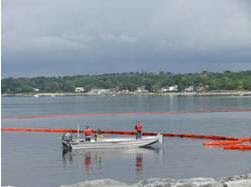
Skimming vessels — including the one shown here — work boats and crews from two Salish Sea spill-response organizations and local facilities are participating.

See the Ecology Spills program Web site for photos, background and updates.


Tuesday, March 23, 2010

Only a drill: Oil spill teams to stage Padilla Bay practice

By Larry Altose, Communications Manager, Northwest Regional Office

It may look like an oil spill response on Padilla Bay Thursday morning. But it’s only a drill.

Spill response boats, oil skimmers and other equipment will take to southern part of the bay in Skagit County for what’s called a combined deployment drill. Everything needed for the real thing will be there, except the oil, which is not used in a practice like this.

The Washington Department of Ecology will observe and evaluate the exercise.

Spills Preparedness

Staging an exercise in Padilla Bay will allow spill responders to focus on the special requirements of operating in shallow water. The bay empties completely at low tide to expose miles of mud flats and eelgrass beds. At high tide much of the bay is less than 10 feet deep.

This means the boats have only the peak two hours of the high tide in which to work, navigate without grounding and retreat to deeper water. Thursday’s high tide is predicted for 12:12 p.m. at 7.1 feet.

The private, not-for-profit Marine Spill Response Corporation (MSRC) will conduct the exercise, using four skimmers and several additional boats. MSRC will be joined by its British Columbia counterpart, Burrard Clean Operations (BCO). About two dozen people from the two organizations will participate.

MSRC will deploy vessels in oil-skimming formations on open water, and will dispatch crews to the mouth of Telegraph Slough on the bay’s southern shore to deploy 2,000 feet of boom a floating, segmented barrier to keep oil from entering that waterway.

Oil-skimming V formation
Oil-skimming V formation: Boom drawn by the leading work boats channels oil to the skimmer at the v-point.
There may be few places to see the drill very well from shore, but here are the two primary things to watch for:
  1. Skimming. The most common method is the V formation. The skimmer is at the point, aimed toward the inside, working with two other vessels. Several yards of boom connect the skimmer with each helper boat.

    As the three-boat formation moves forward, oil is funneled by the V toward the skimmer. Usually a helicopter guides the skimming, but we won’t have a chopper on Thursday. The crews will practice working in formation and keeping the V in trim.


  2. Booming off the slough. There are dozens of places around Puget Sound that will be protected first if there’s an oil spill nearby. The overall plan is called the Geographical Response Plan, or GRP. Each site is called a GRP, and the entrance to Telegraph Slough is actually two of these, one on each side of mouth.

    Crews in work boats will follow plans already written for this location to anchor and position the bright yellow or orange boom to protect the slough.

Drill Sponsors

Boom deployment
Boom deployment: A work boat tows boom into place at a Geographical Response Plan site.
Shipping companies, oil terminals and pipelines are members of MSRC and BCO.
Eleven of these companies are sponsoring the drill:
  1. Sea River Maritime, Inc.
  2. Polar Tankers, Inc.
  3. BP Shipping
  4. BP Cherry Point Refinery
  5. Kinder Morgan Transmoutain Pipeline
  6. Alaska Tanker Company
  7. Tesoro Anacortes Refinery
  8. ConocoPhillips Ferndale Refinery
  9. Harley Marine Services, Inc.
  10. Shell Puget Sound Refinery
  11. Olympic Pipe Line Co.

By doing so, they will fulfill a part of the Washington State oil-spill preparedness requirements that apply to them. Larger ships and facilities must develop, update and practice oil spill contingency plans. These plans are separate and in addition to spill-prevention plans and programs they must develop and follow.

The Padilla Bay drill is part of Ecology’s work on spill preparedness. Ensuring this preparedness forms part of Ecology’s overall effort to reduce toxic threats to public safety, health and the environment and to support the statewide initiative to protect and restore Puget Sound.

Padilla Bay between Anacortes and Mount Vernon is a National Estuarine Research Reserve, administered by Ecology, with its headquarters and education center near Bay View.

Also see our news release, Spill response practice set for Padilla Bay (March 23, 2010)

Monday, March 22, 2010

Seeking a source: Where is Slip 4’s contamination coming from?

By Mark Edens, Site Manager, Dept. of Ecology Toxics Cleanup Program


Collecting stormwater samples in the North Boeing Field area

Environmental investigators Glen Vedera and Julie Wartes with Science Applications International Corporation, under a Washington Department of Ecology contract, collect stormwater samples in the North Boeing Field area of south Seattle in January 2010.

Detective work takes patience and persistence.

Over the fall and winter months we’ve needed plenty of both for the Department of Ecology’s investigation in the North Boeing Field area to locate and control contamination that enters the nearby Duwamish Waterway.

A rainy forecast means more opportunities. This is when we gather stormwater and sediment samples from drain lines.

A sampling crew from Science Applications International Corporation (SAIC) works under a contract with Ecology. The study is part of an agreement between Ecology, the City of Seattle, King County, and the Boeing Company to investigate and propose solutions for soil, stormwater, and groundwater contamination in the North Boeing Field/Georgetown Steam Plant area of south Seattle.

EPA and Ecology have agreed to accelerate investigation.

The U.S. Environmental Protection Agency (EPA) plans for contaminated sediment at the bottom of Slip 4, a nearby inlet of the Duwamish Waterway, to be cleaned up by fall of 2011. EPA and Ecology have agreed to accelerate investigation of pollutant sources on the 137-acre North Boeing Field/Georgetown Steam Plant site to prevent re-contamination of the inlet to meet the cleanup target date.

Polychlorinated biphenyls (PCBs) and other pollutants have been found in storm drains that empty to Slip 4 from the site. PCBs were commonly added to oil used in electrical transformers. They were banned in the 1970s after scientists found that the chemical was harmful to people and http://www.atsdr.cdc.gov/tfacts17.html#bookmark03for many years if leaked or spilled.

The current work is part of a comprehensive site investigation supervised by Ecology and conducted by SAIC. The three property owners have agreed to jointly pay the cost of this sampling and analysis. The study area includes northern portions of King County International Airport (Boeing Field) – property owned by King County and currently leased by Boeing – and the city-owned Georgetown Steam Plant site at the airport’s north end.

The three parties have conducted several cleanup and storm-drain improvement projects over the past 25 years, all aimed at cleaning up soil and groundwater contamination from past industrial activities. These included replacement of some pavement joint seals at the airport that contained PCBs and the cleanup and replacement of a contaminated drainage channel called the Georgetown Steam Plant flume. Additional joint-seals replacement and other cleanup projects may be necessary, because PCBs and other contaminants continue to appear in storm drain sediments.

A five-mile reach of the river upstream of Harbor Island is the federal Lower Duwamish Superfund cleanup site, jointly administered by the EPA and Ecology. Slip 4 is part of that larger sediment cleanup effort.

The Duwamish flows to Puget Sound.

Cleanup of the waterway is a significant part of Ecology’s effort to reduce and prevent toxic threats to the environment and to support the Governor’s Puget Sound Initiative – a cooperative effort among state, local, federal and tribal governments, businesses, and organizations to protect and restore Washington’s inland marine waters.

Like all detective work, environment investigations involve sifting for clues. AIC’s sampling work provides new “evidence” to help us identify lingering sources of PCB contamination. This could lead to special environmental cleanup projects – called Interim Actions in Washington’s toxics cleanup law – to prevent PCB releases from re-contaminating Slip 4. Other solutions could include construction of a treatment system to reduce PCB concentrations in stormwater discharges.

We’re also making use of the data to create a computer model to help us understand how much protection Slip 4 will need after the 2011 cleanup of its sediments. We’ll use the model to set limits on PCB concentrations in the drainage system sediments in order to prevent the inlet’s recontamination.

Cleanups on land that prevent contamination of Duwamish sediments are called Source Control. Ecology coordinates most of the Source Control investigations and cleanups in the Lower Duwamish, including this one.

There are more planned cleanup zones in the Lower Duwamish Waterway, and more Source Control areas that drain to them. Slip 4 and North Boeing Field/Georgetown Steam Plant drainage basin help illustrate the magnitude of the challenge – and potential for achievement – that the overall Lower Duwamish cleanup presents for the governments, property owners, and communities that have stakes in this undertaking.

For more information:

North Boeing Field/Georgetown Steam Plant area: http://www.ecy.wa.gov/programs/tcp/sites/lower_duwamish/sites/nBoeingGeorgeTnStmPlant/nBoeingGeorgetown.htm

Lower Duwamish Superfund site: http://www.ecy.wa.gov/programs/tcp/sites/lower_duwamish/lower_duwamish_hp.html

Monday, September 14, 2009

Play it Again, Sam

A new version of the plan to control phosphorus pollution and increase oxygen in the Spokane River and Lake Spokane is ready for public review. You may be thinking we have been here before. And we have! However, substantial changes to the draft water-quality improvement plan have been made. That means we need to hear from you again.

Over the years this plan has been controversial and the subject of robust community discussion. This time around the plan has been re-worked to address community’s concerns heard during the previous public comment period. Now it’s time to take one more look.

The water quality improvement plan outlines how the community will reduce phosphorus and other substances in the Spokane River and Lake Spokane to prevent algae blooms, increased growth of aquatic plants, and the related declines in Lake Spokane’s dissolved oxygen.

Phosphorus is the primary nutrient causing excess algae and plant growth in the Spokane River and Lake Spokane. It acts like fertilizer, causing algae and other aquatic plants to grow and thrive. When the plants decompose, they use up dissolved oxygen that fish need to breathe. More algae means less oxygen.

The plan is still one of the most stringent in the country.
  • It will lead to reducing phosphorus pollution from industrial and municipal pipes by more than 90 percent.

  • The industrial and municipal “point-source” (from a pipe) dischargers are required to help reduce phosphorus from other diffuse, “non-point” sources such as farms, septic systems, animal waste, and fertilizers used at home.

  • It provides strong incentives for investing in wise water use.

  • Establishes a long-term monitoring program for the river and Lake Spokane.


So what is different about this plan?
  • Requirements to reduce stormwater discharges.

  • An average 66 percent reduction in the amount of phosphorus that goes into Lake Spokane during the warmer months, March to October.

  • A plan to address the dissolved oxygen impacts for which Avista is responsible.


Take another look for yourself. The new comment runs through Oct. 14, 2009. The Spokane River/Lake Spokane Dissolved Oxygen Water Quality Improvement Plan will guide work toward a healthier Spokane River.

A public meeting is planned for 6-9 p.m., Thursday, Sept. 24, 2009, at the Spokane Community College’s Sasquatch Room in the Lair Building #6, 1810 N Greene St., Spokane.

You can view and download the report at: www.ecy.wa.gov/biblio/0710073.html

Frequently Asked Questions about the Water Quality Improvement Report:
http://www.ecy.wa.gov/biblio/0810028.html

Frequently Asked Questions about Effective Public Commenting: http://www.ecy.wa.gov/biblio/0307023.html


Monday, August 31, 2009

Are you the master of your shoreline?

One of the many miles of shoreline in Spokane County One of the many miles of shoreline in Spokane County. Williams Lake will be governed by Spokane County's Shoreline Master Program Update.
The sun is shining, the work week is over, and you are relaxing on a small stretch of Spokane County’s 730 miles of shoreline. Enjoying the shoreline is more than a great start to the weekend; Washington shorelines are a valuable asset that voters chose to protect with the adoption of the Shoreline Planning Act in 1972. The cornerstone of that act is locally-tailored Shoreline Master Programs.

Shoreline Master Programs are the vehicles by which shorelines are protected. They are written to help minimize environmental damage to shoreline areas, reserve appropriate areas for water-oriented uses and reduce interference with the public’s access to water. In many communities a comprehensive update has not been done in 30 years. In Spokane County, now is the time for you to weigh in on the program’s update.

Right now you can read and comment on how future development is handled and where habitat improvements will be made. It is important that your voice is heard. Whether it is a water-dependent use, public access, or habitat protection you value, be the master of your shoreline.

Read the draft plan online: Spokane County draft plan

Written comments will be accepted through October 2, 2009 at dpin461@ecy.wa.gov or Ecology's Spokane office: 4601 N. Monroe St., Spokane, WA 99205. Comments should be addressed to the attention of "Spokane County SMP."

Attend the public workshop and hearing at 7 p.m., Tues., September 15, 2009 at Spokane Community CollegeBuilding 6, Sasquatch Room, 1810 N. Green St., Spokane.

For more information:

Tuesday, August 4, 2009

The "Spills aren't Slick" campaign reminds boaters to report ALL spills

The "Spills aren't Slick" campaign is a joint effort by Washington, California, Oregon and British Columbia to address a significant source of oil and fuel spills: recreational boaters and commercial fishermen. Marinas across the state are posting campaign reminder signs for boaters. The signs also let them know they need to notify authorities if they spill oil or gas in the water.

Scores of leaky gaskets and filters and sloppy fueling practices cause many small spills that add up over time. And unfortunately, the reports that are received from recreational boaters and fishermen are probably just the tip of the iceberg. Many people don't know they are required to report spills, and they don't know that it's as easy as dialing 800-OILS-911.

More than 1,000 blue, black and white signs have been posted at public and private marinas in Washington, the majority in the Puget Sound area.

The toll-free 800-OILS-911 number is prominently displayed on the sign. Using the phone number, people can use it to report oil spills from British Columbia to California. The call goes directly to each state's emergency management division. The intent of the easy-to-remember 800 number is to get people to report a spill while there's still time to minimize the damage.

If you are a boat owner, here are a few things you can do to help prevent spills:
· Shut off all engines during fueling.
· Use an absorbent pad or fuel collar to catch drips.
· Know the fuel capacity of your boat's tank and do not top off. (Maximum 90 percent full.)
· Keep bilges dry and oil free. Avoid oily discharges.
· Use absorbent pads (not soaps) to clean up spills. Soaps and oil are toxic to fish and the environment.
· Recycle used oil and filters.

In addition, boat motors should be tuned up and bilges checked for oil leaks before launching your boat. An oil-absorbent roll in the bilge area will temporarily take care of any oil drips and can be used to catch any fuel before it spills into the water. The oil-absorbent pads and rolls can be purchased at most marina supply stores.

If a spill occurs, stop the flow and warn others in the area immediately. Shut off any ignition sources, including cigarettes, and contain the spill. Then, immediately call 800-OILS-911. By law, ALL spills must be reported.

Learn more at Washington Waters - Ours To Protect.

Friday, July 10, 2009

Some people still singin’ the car wash blues

Car Washing poster
Summer’s here. The time when most of us want to drive a clean car. Well, most of us, maybe not all of us. I have a silver car that doesn’t show the dirt, so I’m not too much of a clean car freak, but I do like clean windows and good working wiper blades.

I digress…

Today Associated Press reporter Phuong Le writes an update about our beloved car washing.


About a year ago, we had a lot of misinformation going around. People thought the state was banning residential car washing, which was not true.

Phuong got the story right. No, we’re not banning car washing. There is nothing wrong with washing your car. But where you wash it makes all the difference for our salmon, for Puget Sound, and for the rivers, lakes and streams near you.

We are in an education mode because you see, the soapy water is toxic to fish. Even biodegradable soapy water is toxic -- as toxic as some industrial pollution.

For a lot of us, car washing in the driveway is right up there with baseball, motherhood and apple pie.

You probably know that storm drains (street-side drains) empty into a series of underground storm drain pipes. This water is not treated. The underground pipes are essentially part of our watershed system that drains into our rivers, lakes and Puget Sound.

This morning, a producer of a Seattle radio program called me and asked to interview me. I said sure.

The radio host made it clear that he understands why only rain should go down the drain. Would you or your kids want to swim in the soapy water or let your dog drink it? No. He agreed with us.

We suspect we’ll get more media calls in the coming days. That’s good if it helps all of us remember that whatever runs down the street or road and into the storm ditch ends up poisoning the water that we and the salmon need for our survival.

You have good, clean options for washing your car. We require by law commercial car washes to collect and treat soapy water and grime from our cars. Or if you prefer to wash your car at home, that patch of grass in the yard just might be craving a drink of water right now. And in the process, it will filter out the soapy pollutants before the rinse water reaches the water we need for drinking and for salmon.

For a hoot, watch this educational video about driveway car washing posted by the city of Pullman. (Scroll down on that page. It’s called "Stormwater video #1")

Ecology has educational materials on our Washington Waters – Ours to Protect website. Check them out!

Here’s to your shiny ride! Will I be seeing “Wash Me” on your back side of your ride this summer? Maybe so, maybe not!

Monday, June 29, 2009

Home Septic System Successes


By Dustin Bilhimer, Water Quality Program

Is your septic system acting up? When your home's septic system fails, it's more than a wet stinky mess. It's expensive to repair and it's a health hazard to you and your family.

A lot of people have learned the hard way that regular inspection and maintenance can prevent system failures and save you money in repair costs.

The Department of Ecology is working with local governments (contact your local health district here) and citizens to help cover costs for septic system repair/replacement where we find water pollution problems are caused by failing residential septic systems.

These partnerships are leading to improved working relationships between the public and government agencies. This cooperation leads to clean water solutions.

A recent success story from the Colville River watershed highlighted how homeowners received grant money from Ecology and the Conservation Commission to replace their septic systems.

Actions followed the implementation of a Total Maximum Daily Load (TMDL) study and water quality improvement plan to clean-up fecal coliform bacteria pollution in the Colville watershed. After homeowners got their problem septic systems repaired, the district's water quality monitoring began showing signs of cleaner water.

Ecology and local governments offer different combinations of loans and grants to ease the cost of replacing failing septic systems where water quality needs to be improved. Here are several examples of Ecology providing financial assistance in other parts of the state:
Do you know how to properly maintain your septic system to prevent problems? Click here to learn how or go to Ecology’s Washington Waters homepage to learn more about what you can do to protect our water quality.

Are you interested in other water quality success stories? Click here.

Want to find out if there is a TMDL in your area? Click here.

Thursday, May 21, 2009

London Calling

No, I am not talking about The Clash’s 1979 album. It’s literally true. Last month when news of “soap smugglers” in Spokane County hit the news wire, Ecology’s Eastern Regional Office received a media call from the BBC in London. Why all this press about soap?

Last June it became illegal to sell automatic dish detergent with more than 0.5 % phosphorus in Spokane County. You can review this law and a similar one for Whatcom County at our reducing phosphorus webpage. Frustrations began to surface when dish washers became frustrated with some of the commercially available phosphorus-free detergents. Spokane’s notoriously hard water was leaving spots and film on clean dishes. Reports started flying of Washingtonians driving to nearby Idaho to buy “hot soap”. That is when London called.

So what is the big deal? Why can’t we put the phosphorus back in the dishwashing detergent? Here’s the thing. Too much phosphorus in water can cause big pollution problems. Phosphorus in water acts as a fertilizer causing plants and algae to grow. Then when they die they rob the oxygen that fish and other critters need for survival.

Removing phosphorus from dishwashing detergents is just one action being taken to protect Washington’s Waters from pollution. The simplest way to reduce phosphorus in water is to not put it in there in the first place. Whether it goes to a wastewater treatment plant or an on-site septic system, avoiding excess phosphorus means good news for Washington’s waters.

Getting back to the “soap smugglers” – why the apparent exodus to Idaho for phosphorus-laden detergent? And what about the people that aren’t driving to Idaho – are they eating off of dirty dishes? Well, I can tell you this, some detergents perform better than others. You can visit Greener Choices, a branch of Consumer Reports that ranks these detergents on their ability to clean. They even found that some of these detergents do an “excellent” job of cleaning.

Even if you’re not in Spokane or Whatcom counties, you may want to test drive the phosphorus-free detergents, because in 2010 the law will be enacted in all of Washington. In fact, many states in the nation will be enacting laws requiring dish detergent limits on phosphorus. Detergent manufacturers are working now to change their formulations to comply with the new law and they expect to be going phosphate-free in markets nationwide.

Have you tried a phosphorus-free dish detergent? What tips do you have for cleaning dishes the phosphorus-free way?