Showing posts with label environment. Show all posts

Friday, May 18, 2018

Clean Air Month - Part 1

Our future and air pollution

Air quality has improved dramatically since the Clean Air Act was initiated in 1970 to respond to industrial pollution that at that time had no prevention controls in place.

Still today, hundreds of studies show that air pollution threatens the health of Washingtonians -- your health. The challenge for the future will be to continue to improve air quality in the face of population and industry growth. Together, we can make a difference.

For the month of May we’ve been celebrating Clean Air with tweets and this blog post. Look for other updates on May 22 and 25 at ECOconnect.

What is clean air?
Clean  air naturally balances gases such as oxygen, nitrogen, and carbon dioxide. Clean air does not contain pollutants and allergens, harm the environment, disrupt your view of scenic vistas, or cause health problems, as defined in statute to protect human health and the environment.

Air pollution is caused from a variety of sources that we all contribute to. Some of the sources are:
  • Emissions from vehicles, ships, trains, and airplanes. 
  • Emissions from construction equipment.
  • Campfires, forest fires, and agricultural burning.
  • Cooking, BBQ, and wood-burning stoves.
  • Solvent-based cleaning supplies.
  • Blowing dust, soot, ash, etc.
  • Commercial and industrial facilities like factories, restaurants, and dry cleaners.
By doing your part, you can help protect our clean air, environment, recreation activities, and health.

How we protect the air
The federal Clean Air Act requires states to develop plans to monitor and reduce air pollution to protect the environment and public health. The EPA sets national standards, or limits, for six criteria air pollutants called the National Ambient Air Quality Standards.  The six criteria air pollutants are:
  • Nitrogen dioxide.
  • Ozone.
  • Particle pollution.
  • Sulfur dioxide.
  • Carbon monoxide.
  • Lead.
It is each state’s responsibility to monitor the air and make sure they are meeting the national standards. If air pollution reaches levels that harm human health, the state must develop a plan to clean up the air. These plans are known as State Implementation Plans

Ecology and seven local clean air agencies help keep the air clean by:
  • Developing and enforcing rules about air quality.
  • Regulating harmful emissions from vehicles, burning, and industrial activities, and reducing greenhouse gases that contribute to climate change.
  • Issuing air quality permits. Inspecting – and fining, when necessary – businesses and industries that have those permits.
  • Tracking air quality using about 70 air monitoring stations.
  • Developing plans to maintain and improve air quality.
  • Informing the public about air conditions by:
    • Issuing daily decisions for agricultural burn permit holders.
    • Calling burn bans.
  • Educating the public about making healthy, clean air choices.
In our next blog, we’ll explore specific ways we all can protect clean air.

By Kim Vaughn | Air Quality

Wednesday, July 12, 2017

The best solution is less pollution … 50 years of the Clean Air Act


(This is the second post of a three-part series.) 

Fifty years ago, Washington’s Clean Air Act was adopted in order to improve air quality for
Washingtonians. Since that time, much has been done to reduce harmful pollutants that effect our environment and people’s health. 

One of the many benefits of the good work started years ago, if maintained, is that that you, and future generations, can enjoy our majestic mountain wilderness areas. 


Seeing clearly through the haze

If you’ve ever looked out at Mt. Rainier, or any other scenic vista from far away and it appears hazy or blurry, chances are, those aren’t clouds blocking your view. It’s likely air pollution, also referred to as regional haze, and it’s one of the many air quality issues we’ve been working to improve.

Regional haze is formed by particulate matter that absorbs and scatters light. It can travel a
The same view with different amounts of
particulate matter in the air.
very long distance and individual particles are too small to see with your eyes. The more particles in the air, the harder it is to see far away. It also can cause serious health problems when inhaled. 


What makes up air pollution?

Air pollution and smoke are made up of hundreds of different complex mixtures of gases and fine particles; like soot, dust, and dirt.

Many of these mixtures contain harmful primary pollutants like: 
  • Sulfur dioxides. Gases that form when sulfur is exposed to oxygen at high temperatures during fossil fuel combustion, volcanic eruptions, oil refining, or metal smelting. At high concentrations it can dissolve in clouds and chemically combine with oxygen to form sulfuric acid, otherwise known as acid rain. 
  • Nitrogen oxides. A group of gases composed of nitrogen and oxygen. Two of the most common nitrogen oxides are nitric oxide and nitrogen dioxide. Nitrous oxide is a greenhouse gas that contributes to climate change. Nitrogen oxides are produced by the burning of fuels from many things such as vehicles, power plants, industrial, commercial and manufacturing facilities.
  • Volatile organic compounds. These are chemicals that can easily become vapors or gases. Along with carbon, they contain elements such as hydrogen, oxygen, fluorine, chlorine, bromine, sulfur, or nitrogen. Gasoline-burning engines are a major source but they are also found in many products used daily, such as paint and household cleaners. 

When nitrogen oxides and volatile organic compounds interact in sunlight, they create ground-level ozone, a secondary pollutant. Ground-level ozone is a harmful, colorless, and highly irritating gas that forms just above the Earth's surface. This is not the same as stratospheric ozone in the upper atmosphere that protects us from the sun’s ultraviolet rays.


Effects of pollutants on the environment

Even though many of these compounds are found in nature, having too many of them can:
  • Make lakes and streams acidic; harming aquatic life and economically damage fishing industries. 
  • Change nutrient balances in water and soil; causing damage that can’t be repaired. 
  • Cause damage to forests; resulting in a loss of wildlife habitat.
  • Damage crops; resulting in economic loss. 
  • Contribute to acid rain; that stains and erodes monuments.  
  • Affect the diversity of ecosystems; by limiting their ability to function and grow, such as during oxygen-robbing algal blooms.

Effect of pollutants on human health

Air pollutants, like fine particles and ozone, can harm people’s health. As pollution levels rise, the number of trips to the doctor due to pollution-related illnesses may also increase. Air pollution is a real public health concern because it can cause or contribute to serious health problems like:
  • Headaches
  • Premature death in people with heart or lung disease.
  • Heart attacks.
  • Irregular heartbeat.
  • Aggravated asthma symptoms.
  • Decreased lung function.
  • Irritation of the eyes and airways causing coughing or difficulty breathing.
  • Respiratory infections
  • Cancer.
  • Increased health care costs.


People at the most risk are children, pregnant women, the elderly, and those with cardiovascular or respiratory disease. Health effect research shows that death rates in several U.S. cities increased when there were higher levels of particulate matter in the air. 


Coming soon

Our third and final blog will discuss things you can do to minimize your contribution to air pollution and what Ecology is doing to protect human health and the environment. Working together, we can ensure healthy air for another 50 years and future generations!
If you’re interested in seeing what the air quality is like in your community, check out our monitors your area by visiting Washington’s Air Monitoring Network

To learn more about the history of our state's Clean Air Act visit WaCleanAir50.org

Part I: We’ve come a long way baby … celebrating 50 years of the Clean Air Act
Part 3: A breath of fresh air ... 50 years of the Clean Air Act

By Kim Allen, Air Quality

wacleanair50.org

Tuesday, September 13, 2016

WCC: Now hiring across the state!

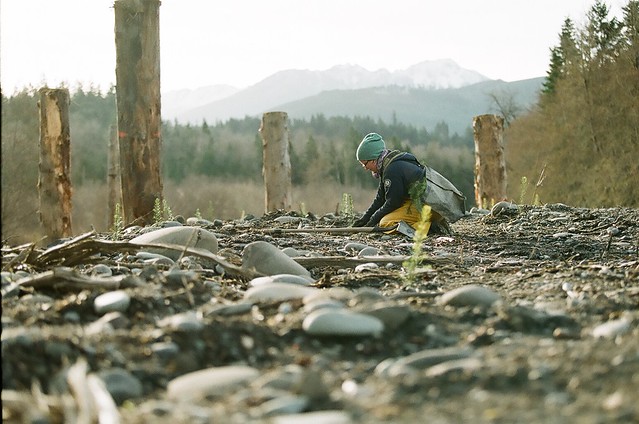
Want to serve your community, improve habitat for fish and wildlife and restore the environment? Want to gain hands-on experience in the environmental field? Are you 18-25 years old or a military veteran? If so, we want to hire you for Washington Conservation Corps (WCC)!

WCC, an AmeriCorps program housed within Ecology, serves outdoors year-round to protect and enhance Washington’s natural resources. We also deploy, as needed, on local and national disaster response. By joining the WCC, you might find yourself planting native trees or shrubs along rivers and streams, improving forest health or building trails.

WCC projects could take you across the state to construct fencing, maintain backcountry trails or respond to a disaster. We cover food and lodging for our members if overnight travel is involved.

What types of positions do you offer?

WCC is recruiting on all 55 crews across the state through Oct. 3. Joining a crew means serving alongside four other members and a supervisor to complete restoration or trails projects. Some crews travel more than others. Learn more about our crews on our website!


WCC also offers an internship program called the Individual Placement (IP) Program. IPs serve individually with natural resource organizations across the state. These unique positions might monitor streams, survey fish, design restoration projects, map beaches, collect samples, create outreach materials or perform a host of other environmental tasks.

The details...

Interested in joining WCC? Check to see if you qualify:
  • No experience? No problem!
  • You must be a Washington State resident
  • You must pass a background check
  • You must be 18-25 years old, but age restrictions do not apply to Gulf War era II veterans, reservists and dependents
Most importantly, applicants must be willing to serve outdoors in all types of weather and contribute to a positive team atmosphere.

What do you get?

As a WCC member, you will make $9.47/hour. You will also earn an AmeriCorps Education Award of $5,775.00 for education after completing 1700 hours and your 12-month term.

Other benefits include:
  • Basic health insurance for full-time (12-month) members
  • In a new partnership with Walla Walla Community College, WCC members can now earn up to 18 college credits during their time in WCC
  • Two weeks of paid training in career-transferable, environmental courses
Ecology's WCC consists of three subprograms: the core WCC, Veteran Conservation Corps and Puget SoundCorps. Visit our WCC featured projects story map to see examples of how our WCC members serve.

WCC Projects
Click through to see examples of WCC AmeriCorps projects!

Learn more and apply online today to become a member of WCC: 

www.ecy.wa.gov/wcc

Tuesday, February 2, 2016

500+ acres of our wetlands conserved this World Wetlands Day!!

Happy World Wetlands Day!

Wetlands work hard to control flooding, clean the environment, provide habitat, recharge ground water and do much more to benefit our ecosystem. We love them for it! With hundreds of thousands of acres of wetlands in our state, we've got a lot of love to spread around.

Gaining, restoring and protecting wetlands

World Wetlands Day comes with an extra cause to celebrate this year; all five of the National Coastal Wetlands Conservation grants we submitted last year have been fully funded. This means that we're awarding over $4 million in federal grants to acquire, restore and protect wetlands. This grant money will join with local partners to total over $8 million for wetlands! How's that for good news on World Wetlands Day?

With these five grants, Washington has been granted over 20% of the National Coastal Wetlands Conservation funds that will go to conserving wetlands nationwide this year. Let's see where the money will go...

The Beach Lake Acquisition and Restoration will
conserve 46.3 acres, restore beaches and maximize
benefits from the removal of the Elwha River dams.

Beach Lake Acquisition and Restoration

Partner: Coastal Watershed Institute
Location: Elwha River Watershed
Clallam County
Grant: $1,000,000

This project will acquire and restore 46.3 acres of critical coastal wetlands in the Elwha River watershed. This conservation will benefit wildlife habitat, restore 870 feet of natural beaches and will boost the natural recovery process put in motion by the removal of the Elwha River dams.

The Coastal Watershed Institute will add $604,940 to the grant funds, totaling $1,604,940 to protect wetlands. Together, our work will create habitat for salmon, forage fish and migratory birds. And we're maximizing our investment by joining a broader effort by local conservation partners to protect the Elwha River watershed and estuary.

Acquiring Heron Point will protect some of the highest quality
forested wetland habitat within the Snohomish River Basin,
preserve 20 acres of old-growth Sitka spruce
and safeguard a haven for fish and birds. 

Heron Point Protection

Partner: Tulalip Tribes
Location: Ebey Slough
Snohomish County
Grant: $63,800

20 acres of old-growth Sitka spruce estuarine wetland will be protected along Ebey Slough with this project. The land we will acquire on Heron Point contains some of the highest quality and most intact forested wetland habitat within the Snohomish River Basin.

The Tulalip Tribes will provide $30,380 to match this grant, ensuring this treasured wetland will be protected for a price tag of $94,180. Following the acquisition, the Tribe will own and manage the property as part of the nearby Qwuloolt Estuary Restoration Project, which was funded by previous grants. Protecting this wetland improves forest biodiversity within the river basin and ensures important natural processes will continue to occur as the tide ebbs and flows throughout the area. Preserving this wetland provides a haven for fish and native birds, including a heron rookery.

Acquiring the Pearson Nearshore permanently
protects endangered fish and bird habitat; preserving
2,800 feet of estuarine wetland, feeder bluff and forest.

Pearson Nearshore

Partner: Whidbey Camano Land Trust
Location: Whidbey Island
Island County
Grant: $1,000,000

This project is a win for habitat. By acquiring 49 acres of Puget Sound waterfront property, we will permanently save habitat used by endangered salmon and other marine organisms. The upland forests that will be protected provide habitat for federally and state listed species such as pileated woodpecker, peregrine falcon and Vaux’s swift.

This project will protect 2,800 feet of intact estuarine wetland, feeder bluff and coastal upland forest. The feeder bluffs preserved will replenish beach sands as they erode, and help ensure the longevity of the ecosystem. In addition, a fifth of the property is made up of estuarine intertidal wetlands, a nationally declining type of nearshore habitat. The Whidbey Camano Land Trust will contribute $455,000 to match the grant, and the land will be forever conserved for a total of $1,455,000. The preservation that will benefit a wide range of species that depend on the saltwater, beaches and forest for survival.

Restoring the 315-acre Smith Island Estuary improves
habitat for local wildlife and recovers a safe haven for
birds as they migrate south from Alaska.

Smith Island Restoration, Snohomish River Estuary

Partner: Snohomish County
Location: Smith Island, Snohomish River Estuary, Snohomish County
Grant: $1,000,000

Restoring 315 acres of tidal marsh in the Snohomish River Estuary will represent a significant critical habitat improvement for Puget Sound. This restoration will provide refuge and valuable foraging areas for fish, birds and other wildlife. It will also improve habitat and migration pathways for Chinook and other salmon species.

This project will restore the estuary by repairing the natural ecosystem after years of damage from development. Not only is this a huge benefit to local wildlife, but the Snohomish River Estuary is also an important stopover on the Pacific Flyway for migratory birds. This means birds migrating from Alaska to Mexico and South America will reap the benefits as they take a break in the estuary while they recuperate along their long journey.

This project to protect and restore 73 acres of wetlands
and other aquatic habitat on Oakland Bay is part of a 

larger multi-year effort that will benefit the environment,
wildlife, tribal uses, oyster growers and recreation.

West Oakland Bay Restoration and Conservation

Partner: Squaxin Island Tribe
Location: Oakland Bay
Mason County
Grant: $1,000,000

Conserving these 73 acres on the western side of Oakland Bay is part of a much bigger plan to protect and restore marine nearshore, estuarine and freshwater habitats in Oakland Bay watershed that will benefit wildlife, tribal uses, oyster growers and recreation.

The project will protect 10 acres of saltwater and freshwater riparian habitat, four acres of tidelands and 59 acres of biologically significant wetlands and coastline. Over 21 acres of saltmarsh at the mouth of Goldsborough Creek will be restored, adding to a larger goal to preserve existing high-quality habitat and re-establish and permanently protect a saltmarsh estuary. The Squaxin Island Tribe will make this great benefit to Oakland Bay possible by matching the grant with $1,900,000, for a total price of $2,900,000.

Our work with wetlands

For more details on the projects listed above, visit our wetlands coastal grant program webpage. Learn more about our role in protecting, restoring and managing wetlands by visiting our website.

By Jessica Payne, communications manager, Shorelands program