Showing posts with label Washington Conservation Corps. Show all posts

Friday, October 4, 2019

Giving back: WCC Director Bridget Talebi earns national leadership award

On Sept. 19, Bridget Talebi, director for our Washington Conservation Corps (WCC), was named 2019 Outstanding Service Program Staff Member by America’s Service Commissions. The national nonprofit, nonpartisan association represents 52 state service commissions from across the United States and its territories.

For nearly two decades, Bridget has selflessly served the residents of Washington, first as a member of our WCC starting in 2001, then in multiple roles serving the WCC including operations manager and now director of the 350-position strong statewide service program.

Bridget Talebi (WCC Director, pictured center) with Amber Martin-Jahn (Executive Director of the Serve Washington Commission, pictured right) and Jenny Benson (Program Officer for Serve Washington Commission, pictured left).*

Every year, America’s Service Commissions recognizes the leadership and accomplishments of state service commissions and their commissioners, staff, service programs, and legislative champions around the nation.

The organization’s 2019 national leadership award recognizes Bridget for her long-standing commitment to give back to her community while also strengthening the WCC, the national AmeriCorps program, and other programs in Washington providing national service to the public. Bridget is the first recipient for this new award category.

“I’m so proud to see Bridget Talebi of Washington Conservation Corps receive this national honor,” said Amber Martin-Jahn, Executive Director of the Serve Washington Commission, who nominated Talebi for the award. “Bridget is the epitome of a team player and has been a remarkable change agent for AmeriCorps culture in the state of Washington. Most recently, Bridget has done incredible work to make sure AmeriCorps recruitment and staff hiring practices are as inclusive and equitable as possible.”

WCC offers young adults and military veterans hands-on opportunities to gain experience in environmental restoration, monitoring and research, local and national disaster response services, and education projects.

Bridget’s tireless efforts on behalf of the WCC have been instrumental in helping restore and preserve hundreds of acres of riparian habitat as well as improving water quality and salmon habitat across the state.

In words of colleague Gordon White, who oversees our statewide shoreline protection and environmental review activities, “Bridget is WCC at her core. There are countless examples of Bridget digging in through difficult times. Whenever there is difficult work needing done, she is the first to volunteer.”

WCC also responds around the state and across the country to help recovery efforts in communities affected by wildfires, floods, mudslides, hurricanes, tornadoes and other disasters.

Her work has touched the lives of thousands of Washington residents, including hundreds of current and former WCC members—many of whom chose to work in environmental careers after their service.

“We are delighted to recognize Bridget Talebi as this year’s Outstanding Service Program Staff Member,” said Kaira Esgate, CEO of America’s Service Commissions. “This is the first year we have given an award in this category, and we feel that Bridget’s commitment to excellence and innovation at the Washington Conservation Corps is the perfect representation of what a great AmeriCorps program staff member can be.”

*Photo by Laura Schlabach

Friday, September 13, 2019

Boots on the ground: Serving in Shenandoah, Iowa

Our WCC AmeriCorps members serve for 11-month terms restoring habitat for salmon and wildlife, building and enhancing trails, and assisting communities after local or national disasters. Below, a member reflects on her recent experience on a disaster response deployment to Iowa.

My name is Olivia Sohn, and I serve as an AmeriCorps member and assistant supervisor on a Washington Conservation Corps field crew based out of Issaquah. With our crew supervisor Chelsea Krimme, we complete a variety of habitat restoration and trail enhancement projects across Western Washington.

My crew and I spent most of July on a disaster response deployment to Iowa, supporting communities affected by severe flooding in Spring 2019. The timing of disaster response deployments can be unpredictable; this opportunity came right as my family was visiting me in Washington from my home state of New Jersey. Just when I thought I would be driving around the Pacific Northwest with my family, showing them where I have been living for the last year and a half, I was instead packing for a 30-day deployment.

Four AmeriCorps members, wearing shirts with AmeriCorps logos, stand in front of a blue truck crossing their arms.
L to R: AmeriCorps members Tyler Ambrose, Olivia Sohn, Melanie McMillan, and Joe Merrill in Shenandoah, Iowa.*


Iowa recovers from major flooding 

Iowa experienced more snowfall than usual this past winter. In March 2019, the combination of warm temperatures and heavy rainfall caused snowmelt and rainwater to run off the already-saturated soils into the Missouri River. The river swelled to more than 30 feet near the city of Council Bluffs and breached more than 40 levees in Western Iowa. In July, the WCC sent two field crews and three crew supervisors to help suppress mold, remove debris, and muck and gut homes in Mills and Fremont Counties.

Anticipation builds

My first deployment was to Florida in December 2018, responding to the aftermath of Hurricane Michael. It took time for me to adhere to the level of flexibility that deployments demand. We moved to three different living spaces in the span of two weeks, and I learned that the combination of tackling unfamiliar projects in a new state while adjusting to new living spaces was overwhelming for me. I felt nervous on the plane ride to Iowa, anticipating my second deployment. I also felt motivated to overcome the stress I felt on my last deployment and to keep our mission at the center of my thoughts.

We stayed in the beautiful town of Shenandoah — or “The Shan” as people from surrounding towns called it. Our housing facility was a spacious, amenable community center called The Armory. I would be a strike team lead, and Chelsea was Chief of Operations and Logistics. After a couple of days of classroom training on mold suppression and field training led by WCC supervisors, my crew headed to our first house.

Six people gather for a photo in front of a house with a large blue tarp installed on the roof. Five are AmeriCorps members wearing blue shirts, and one is the crew supervisor wearing a purple sweatshirt.
The crew gathers for a photo after installing a tarp on a home in Florida.*


Serving as a strike team lead

In Florida, we spent most of the time installing blue tarps on homeowners’ roofs. I had no prior experience with muck and gut or mold suppression — our primary activities in Iowa — so I relied on my more experienced teammates when I had questions. Fellow WCC AmeriCorps member Sammy Craven co-led field teams and brought valuable knowledge and leadership skills. Each day, we suited up in protective Tyvek suits and respirators and served in two teams for 30-minute shifts at a time, suppressing mold in water-damaged homes. The weather was hot and humid, so it was critical to take breaks often.

Being a strike team lead when you are not the most technically experienced person on the team is a good lesson in leadership. Because I did not have all of the answers, it was important to consider the skills and knowledge of my teammates and strategically break them up into strong groups to enter the house for each shift. I think it is easy to feel flustered when you do not have all the answers, but utilizing available resources, including my teammates, the Incident Command Staff, and our crew supervisors, helped us succeed. 

Two AmeriCorps members are wearing full bodied, white, Tyvek protective suits and yellow hard hats while removing water-damaged material from a home.
Tyler Ambrose and Ryan Grate muck and gut a home in Percival, Iowa.*


Collaboration, inspiration, and motivation 

We were fortunate to serve with other AmeriCorps programs, including Habitat for Humanity and the National Civilian Conservation Corps. The Habitat for Humanity crew was very knowledgeable in construction and enthusiastic to help those in need. 

The energy of everyone around me was the most inspiring part of this deployment. The Incident Command Staff was dedicated to making the biggest impact that we could in our thirty days. Every morning and afternoon, the crews all worked together to load and unload trucks. It was exciting at the end of the day to hear about what the other crews and assessment teams accomplished. WCC staff and members took turns cooking dinner for the group. All this effort and energy made it feel like we were functioning as one large, multi-faceted team.

Moments of celebration amidst recovery

It was rewarding to interact and connect with homeowners on deployment. Disaster response brings you right into people’s homes and lives — it has an unavoidably personal nature. One day, we helped a kind woman named Sally sort through her personal items in her home after the water level came down. Deciding which items could stay and which should go was an emotional process. Sally was happy to share pictures of her son and late husband with us as we found them. One of my favorite moments was when we found a key to her safe that she thought she had lost. My fellow AmeriCorps member Tyler, Sally, and I all raised our arms into the air and cheered. Similar to the moments when we looked at pictures with Sally, it was a lighthearted, exciting moment on a difficult, emotionally tolling day.  

Two AmeriCorps members carry a water-damaged dryer across a lawn. They are wearing white Tyvek protectives suits and yellow hard hats.
Tyler Ambrose and Olivia Sohn remove a dryer from Sally's home in Iowa.*

Returning home to Washington state after living with this high-energy hive mentality for weeks was difficult. It was hard to leave Iowa with so much work left unfinished. On the plane ride home, I thought back to a moment from the flight to Iowa when the pilot announced the presence of our AmeriCorps Disaster Response Team on the plane. After being a part of the disaster response deployment in Iowa, I feel very proud to have served side by side with everyone. 

By: Olivia Sohn, WCC AmeriCorps member 
*Photos contributed by Olivia Sohn

Join WCC

We are currently accepting applications for 11-month members! Learn more and apply on our website. Ecology's Washington Conservation Corps, an AmeriCorps program, provides hands-on experience, field skills, and training opportunities to young adults between 18 and 25 and military veterans. WCC consists of three subprograms: the original WCC, Veteran Conservation Corps and Puget SoundCorps. 


Monday, July 29, 2019

Boots on the ground: WCC as a stepping-stone to disaster management career

A decade ago, Nina Rubenstein was swinging a pick-mattock on a Washington Conservation Corps restoration crew. Today she serves as the emergency manager for Providence St. Joseph Health’s Oregon region. It all started with saying “yes” to some exciting – and challenging – opportunities as an AmeriCorps member.

Nina grew up in the world of land conservation. Her father’s experience in the legal arena exposed her to the environmental field, and Nina joined our WCC in 2009 to gain hands-on experience. But she was further enticed by a new angle: the prospect of disaster response deployments.

Nina served on a restoration crew during her
WCC AmeriCorps member days. Photo
contributed by Nina Rubenstein.
During her first year as a WCC AmeriCorps member, Nina deployed to Mississippi to assist communities after devastating tornadoes. The deployment call arrived just before a major stand-up comedy show she was set to open, in front of an audience that included Bill Gates. “I had five minutes to decide whether to deploy, and I weighed what I would have to miss back home,” she said. “I decided to pass up the show, and disaster response turned out to be a calling. That’s pretty cool.”

A formative first - and second - deployment

She removed debris from land where homes had once stood, and led weekly safety meetings. Survivors who owned a crawfish business hosted a full crawfish boil for members at the camp where members were staying during deployment.

“I remember it being my first immersive experience in the South,” she said. Its lasting impact made her want to continue serving on disaster responses. “I decided I would not only do a second year in the WCC, but I would deploy again at any opportunity,” she said.

That opportunity arose when 360 confirmed tornadoes tore across the Southern, Midwestern, and Northeastern regions of the United States in just three days. Nina and WCC’s disaster response teams arrived in northern Alabama a month later, charged with managing a volunteer resource center.

The disaster response teams also needed a logistics coordinator. Already serving as an assistant supervisor and ready for more responsibility, Nina jumped at the chance. Leading the administrative and logistical side of the deployment meant making many phone calls to match field projects with the skill level of the volunteers.

“It was really gratifying to spend time on the phone with people who felt like they had been forgotten,” she said.

Disaster response in a new setting: a classroom

The second deployment to Alabama helped solidify her calling to disaster response. “I saw that the logistical side of things could be a much broader path, and I realized ‘I want to know what path that is,’” she said.

After returning from Alabama, Nina researched options for finishing her undergraduate degree and landed on the Homeland Security Studies program at Tulane University in New Orleans. A few months later, she finished her second service term in the WCC and headed off to Tulane University.

Nina poses at Department of Homeland Security's Center
for Domestic Preparedness in Anniston, Ala. She has visited
the training facility for healthcare emergency management
twice for different courses. Photo contributed by Nina Rubenstein.
After a deep dive into emergency management curriculum—including an in-depth study of the effects of Hurricane Katrina—Nina moved back to the West Coast and secured an emergency management coordinator position with PeaceHealth, a hospital system based in Vancouver, Wash.

She put her experience and new degree to use, building an emergency management program for the two hospitals in southwest Washington. A year and a half later, a colleague from the hospital emergency management field contacted her about a management position at Providence Health & Services in Portland. She hopped on the phone to learn more, and a month later, started her emergency manager position.


Expanding her skills, with a nod to AmeriCorps service

Nina’s team at Providence St. Joseph Health is in charge of emergency management plans for six hospitals and more than 100 clinics and acute care centers. Typical projects include developing full-scale exercises to demonstrate preparedness, including staff training, and building a disaster equipment cache for the region she serves.

She also develops protocols regarding how hospitals manage medical and trauma surge capacity—when patients occupy all beds and services might need to be scaled up to meet the demand. To prepare for mass casualty incidents, Nina designs and leads exercises like “15 ‘till 50,” where the hospital has 15 minutes to prepare to receive 50 incoming patients.

Looking back, the days of waking up at 6 a.m. to meet her WCC restoration crew in Renton provided pivotal experience along her vocational journey.

“In school, and more so now, I found that I knew what I was talking about because I had done it. Applying for jobs and school, I could say I had two years’ work experience in this field, in a supervisory role,” she said. “That was absolutely a leg up in the job market.”


Fast forward to 2019: WCC deploys to Iowa

On July 8, 2019, 10 WCC AmeriCorps members and three crew supervisors deployed to Fremont and Mills Counties in Iowa, to support communities after devastating flooding in spring 2019. Members are spending the month assisting homeowners and operating a disaster response center. Keeping safety a top priority in summer heat, teams are taking turns hydrating and resting, and donning protective Tyvek suits to conduct mold suppression and remove water-damaged material from affected homes.

 Five of our WCC crews are designated disaster response crews, though any crew has the potential to deploy. Our Washington Conservation Corps (WCC) provides disaster services in Washington and beyond, assisting communities after fires, floods, hurricanes, tornados, oil spills, and more.

WCC AmeriCorps members remove invasive species at Camp Murray.
Photo by Taylor Belisle.

Apply to WCC today

Do you want to gain hands-on environmental experience, build your résumé, and make a difference in your community? WCC is currently recruiting for the 2019-2020 AmeriCorps service year! Learn more and apply online: www.ecology.wa.gov/wcc.


Monday, April 22, 2019

Boots on the ground: Restoring habitat through partnerships in Bellingham

On Earth Day 2019, Washington Conservation Corps is thrilled to highlight nearly two decades of close partnership with City of Bellingham. The City began sponsoring WCC field crews after the tragic 1999 Olympic Pipe Line explosion in Whatcom Creek. Our AmeriCorps members’ activities along Whatcom County’s rivers and streams have helped restore more than 160 acres of critical habitat on 70 properties throughout the City and Lake Whatcom watershed. Our members serving with City of Bellingham are continuing to improve habitat along these riparian corridors to help restore local salmon runs that have suffered due to increased urbanization.

Donning waders and counting fish

Three WCC members stand around a smolt trap, a device set up in the middle of a stream. They are each holding a clip board and smiling.
WCC AmeriCorps members record smolt trap data.
Photo contributed by Paul Argites and Nick Saling.
Sometimes, a day of service on these crews means donning hip waders and counting fish! Recently, AmeriCorps members helped build the City’s first smolt trap in Padden Creek. Smolt are juvenile salmon getting ready to migrate from fresh water to the ocean. Smolt traps temporarily and safely trap any fish migrating through a water passage. Our members learned the ins and outs of smolt trap construction, and continue to help monitor these traps. In Spring 2018, members recorded more than 3,689 juvenile fish in the Padden Creek trap in a single day! 

Evaluating how fish are using a creek after habitat enhancement plays an important role in efforts to recover salmon.  “This documentation benefits these species by informing future restoration designs as well as providing data to support funding future enhancement projects,” said Sara Brooke Benjamin, coordinator for Bellingham’s environmental monitoring program.

Daylighting Padden Creek

A close-up photo of someone planting a bare-root plant. A gloved left hand is holding the stem in place while the right hand holds a dirt clump.
Our members installed more than 15,000
native plants as part of the Padden Creek
Daylight project. Photo by WCC/Ecology.

The smolt trap in Padden Creek help researchers learn about the effectiveness of the Padden Creek “daylighting” project. City of Bellingham re-routed a large section of the creek that had flowed through a concrete tunnel since the 1890s. The City constructed a nearly mile-long creek channel to replace the tunnel. Members kicked off the planting phase of the project, installing more than 15,000 native plants and ensuring freshly installed plants survived their first spring. The project has helped restore fish passage, improve water quality, and reduce flood risks for nearby residents.
WCC crews also conducted surveys for spawning salmon and their nests, called “redds.” During spring 2016, crew members walked about two miles of Padden Creek, searching for salmon and redds and recording data. Those surveys revealed that chum salmon can now access and are spawning in parts of the creek previously inaccessible to them!


Engaging the community

In addition to the restoration activities, community engagement plays an important role in project success. “The crews facilitated greater community understanding and participation by helping host three community work parties along our City streams,” said Analiese Burns, habitat restoration manager for City of Bellingham. “These crew members have contributed to our quality of life and in return, they leave with the skills necessary to continue their career of service.”

Watch a smolt trap in action

Visit City of Bellingham’s website to watch a short video on how smolt traps work, and visit Ecology's website to learn more about riparian restoration efforts in Whatcom County and statewide.

This could be your office! WCC AmeriCorps members serving in Skagit County
take a lunch break. Photo contributed by Josh Boswell.


Join WCC

We are currently accepting applications for 3-month member positions! Learn more and apply on our website. Ecology's Washington Conservation Corps, an AmeriCorps program, provides hands-on experience, field skills, and training opportunities to young adults between 18 and 25 and military veterans. WCC consists of three subprograms: the original WCC, Veteran Conservation Corps and Puget SoundCorps.


Tuesday, April 16, 2019

Boots on the ground: Empowering leaders through environmental service

Climate in Washington matters. Ahead of Earth Day, our Washington Conservation Corps (WCC) is sharing how our AmeriCorps members are helping prepare for the future with solutions rooted in empowerment and environmental service.


Developing educational curriculum

What might “Sammy the Salmon” write to their friend “Reggie the Bald Eagle” on a postcard? AmeriCorps Individual Placement (IP) member Kelsey Chun developed a new Eagle Watcher’s program this winter to teach fourth-grade students about the life cycles of these important creatures. She serves as a Youth and Community Engagement Coordinator with Mount Baker-Snoqualmie National Forest. Kelsey uses the pen-pal storyline between the salmon and eagle to illustrate their migration journeys, and mutual dependence on the Skagit River - ancestral land of the Upper Skagit Indian Tribe. Climate change affects eagles’ survival in many ways, including the bodies of water upon which they rely for fish and other food.

A collage of three photos, with the top horizontal photo featuring a group of children looking over a river with binoculars. Bottom left is a photo of WCC IP Kelsey Chun, bottom right is a photo of salmon swimming in a river with sunlight shining through.
Kelsey serves as a Youth and Community Engagement
Coordinator for Mount Baker-Snoqualmie National Forest
through WCC's IP program. Photos from Kelsey Chun.
Many of our IP members educate adults and children about wildlife, our local landscape, and climate change. Making content accessible is a priority.

“Based on feedback from the teachers and their ideas for new content, I included information related to landforms and presented many of the key vocabulary terms in both Spanish and English,” Kelsey said. “Madison Elementary is a dual language school, and the students were excited about sharing their knowledge of words for animals and the land: la águila, el salmón, las migraciones, las montañas, los ríos.”

Collaboration in restoration projects

As a keystone species and a cornerstone of the cultural identity of Pacific Northwest Indian tribes, salmon are a big deal! From local non-profits to government entities, so many people are working to make sure salmon survive and thrive. As climate change increases water temperatures across Washington, collaborating to restore and preserve salmon habitat is even more important.

A prime example comes out of Port Hadlock, where North Olympic Salmon Coalition (NOSC) sponsors one of our restoration field crews. In December 2018, the crew added native trees and shrubs to Snow Creek-Salmon Creek Unit, a site where the two summer chum and coho-bearing streams converge to enter Discovery Bay in Jefferson County. The project is a 15-year effort to restore the riparian and nearshore habitat. Partnerships between NOSC, WCC, Washington Department of Fish and Wildlife, Jefferson Land Trust, Jefferson County Conservation District, and others, is a huge part of the project’s success. 

“This [site] was originally planted by a WCC crew I led in 2003,” said WCC Restoration Specialist and Crew Supervisor Owen French. “Since then, projects have extended out to the estuary and bay, and miles upstream on both public and private lands.” Habitats at the site include scrub-shrub, marsh, and forested wetland, wet upland meadows, and estuary.

Four WCC members, wearing dark blue sweatshirts and yellow hard hats, are wearing planting bags and getting ready to plant native trees and shrubs.
AmeriCorps members serving on our NOSC restoration crew
plant native trees and shrubs at Snow Creek-Salmon Creek unit.
Photo contributed by Owen French.
Members serving with our NOSC restoration crew contribute to restoration projects by planting thousands of native trees and shrubs. Through these experiences, our members gain an understanding of the importance of collaborative relationships in long-term restoration efforts.

"The relationships I have developed let me view ecological restoration as a holistic process…serving with NOSC lets me see the evolution of watershed recovery through multiple stages and seasons, talking with employees who bring their own specialties and perspectives to the table," said WCC member Jose Garrido.

Since October, the crew has planted nearly 15,000 trees for NOSC and partner organizations at sites across Clallam and Jefferson Counties!

Empowering leaders of all types

We believe successful solutions come from diverse perspectives, talents, and backgrounds. In the WCC, this means welcoming everyone to the table, or rather, welcoming everyone to the power tool, to the opportunity to try on a leadership role for size, and to spend a year of their lives improving our environment.

One leadership opportunity we offer members is the assistant supervisor role on field crews. Selected by the crew supervisor, the assistant leads their crew on select trail or restoration projects, and attends a dedicated leadership training with other assistants from crews across the state. 

WCC Supervisor in white hat holds a piece of metal steady while Olivia, in a yellow hard hat, uses a metal cutter to break up the piece of metal.
Assistant Supervisor Olivia Sohn uses a metal cutter to break up large metal debris found along the
Pickering Barn Trail in Issaquah. Photo by AmeriCorps member Ryan Grate. 

Olivia Sohn, a first-year member from Renton, is the assistant supervisor on an Issaquah- based crew completing trail and restoration projects across King County. “This year I've had the opportunity to build my confidence working with power tools and leading the crew. It feels great to improve these skills while restoring stream habitat in Washington,” said Olivia.

Mentoring the next generation of environmental leaders and providing a foundation of hands-on experience is the core of WCC’s mission. We are grateful for our many alum supporting and leading solutions-oriented projects within environmental organizations across the state. We look forward to seeing the creative solutions our members will go on to implement!

Join WCC

We are currently accepting applications for 3-month member positions! Learn more and apply on our website. Ecology's Washington Conservation Corps, an AmeriCorps program, provides hands-on experience, field skills, and training opportunities to young adults between 18 and 25 and military veterans. WCC consists of three subprograms: the original WCC, Veteran Conservation Corps and Puget SoundCorps. 

Friday, May 18, 2018

Boots on the Ground: WCC deploys 37 to assist flood response efforts, 35 more on standby

WCC crew readies sandbag berm near Pend Oreille River at Newport.
Today, Friday, May 18, we will have 37 Washington Conservation Corps (WCC) members deployed to Eastern Washington to help communities in Okanogan and Pend Oreille counties respond to the most severe flooding the region has seen in more than 40 years.

Late last week, rain and high daytime temperatures caused significant snowpack melt, pushing many rivers out of their banks. Many local governments directly affected by flooding requested emergency assistance from our WCC AmeriCorps members and staff.

Our WCC crews are deployed to the following communities to help fill, stack and place sandbags to keep floodwaters out of people’s homes:
  • 16 members and staff in Newport in Pend Oreille County.
  • 18 members and staff in Okanogan in Okanogan County and Cusick in Pend Oreille County.
  • Five members and staff in Tonasket in Okanogan County.

WCC members and staff filling sandbags in Cusick
WCC members and staff filling sandbags
 in Cusick.
In addition, we have six more members and staff actively supporting a Department of Natural Resources base camp in Okanogan where more than 225 DNR, regional fire district, and other interagency staff are staying during the current flood response. Our responsibilities at the camp include organizing and loading supplies like pumps and hoses, loading trucks, and supporting facilities.

Should we receive additional assistance requests, we have another 35 members and staff on standby ready to deploy to help with flood response efforts.

On Friday, May 11, Gov. Jay Inslee issued a state of emergency to make resources available as flooding and high-risk conditions continue. A total of 20 Eastern Washington counties face potential flooding.

When local disasters such as flooding occur, local and tribal government partners and state officials often request on-the-ground assistance from our WCC.

The National Weather Service is predicting more flooding as hot weather drives more snowmelt to various river systems – especially the Okanogan, Similkameen, Kettle, and Pend Oreille rivers.

The WCC provides hands-on experience, field skills, and training opportunities to young adults between 18 and 25 and military veterans. Our 300 members and 53 field supervisors across the state restore critical habitat, build trails, and protect the state’s natural, historic and environmental resources. They also respond to out-of-state and local disasters.

Learn more about WCC
Ecology's Washington Conservation Corps, an AmeriCorps program, consists of three subprograms: the original WCC, Veteran Conservation Corps and Puget SoundCorps. We are currently recruiting for three-month AmeriCorps members positions. Recruitment for the 2018-19 year will begin in July! See photos of the types of projects WCC members support during their service in our WCC Projects Flickr set and WCC Featured Projects Story Map. Learn more and apply online today.

Monday, May 14, 2018

Boots on the Ground: WCC responds to severe flooding in Eastern Washington

WCC members and volunteers filling sandbags in Okanogan
WCC members and volunteers filling sandbags at 5 a.m. in Okanogan
This past weekend, we deployed several Washington Conservation Corps (WCC) crews to help the towns of Okanogan, Tonasket, and Cusick after rain, high daytime temperatures and significant snowpack melt caused severe flooding in Okanogan, Pend Oreille, and Ferry counties.
 
Our WCC AmeriCorps members and crew supervisors spent about 16 hours Saturday, May 12, assisting community efforts to fill, stack and place sandbags to keep floodwaters out of people’s homes.

On Friday, May 11, Gov. Jay Inslee issued a state of emergency to make resources available as flooding and high-risk conditions continue. A total of 20 Eastern Washington counties face potential flooding.

When local disasters such as flooding occur, local and tribal government partners and state officials often request on-the-ground assistance from our WCC.

We currently have two WCC crews deployed to Tonasket and three to Okanogan in Okanogan County. Another crew is serving in the town of Cusick in Pend Oreille County.

A seventh WCC crew is being deployed to the Okanogan County Fairgrounds in Okanogan to set up and manage a camp base for our response partners at the state Department of Natural Resources.
  
WCC members getting sandbags ready in Tonasket.
On Monday afternoon, water levels remained lower than the flooding levels experienced on Friday and Saturday.

However, the National Weather Service is predicting a second flood crest later this week that could be higher than the first as hot weather drives more snowmelt to different river systems in Eastern Washington – especially the Okanogan, Similkameen, Kettle, and Pend Oreille rivers.

The WCC provides hands-on experience, field skills, and training opportunities to young adults between 18 and 25 and military veterans. Our 300 members and 53 field supervisors across the state restore critical habitat, build trails, and protect the state’s natural, historic and environmental resources. They also respond to out-of-state and local disasters.

WCC disaster response program
 
Our WCC crews have responded to local floods, wildfires, oil spills and landslides and have also been deployed to provide disaster relief and recovery assistance for communities affected by floods, hurricanes and tornadoes around the nation. Four WCC crews are designated disaster response crews but any crew has the potential to be deployed.

Hundreds of readied sandbags on pallets waiting to be deployed in Tonasket.
Sandbags readied in Tonasket.
  • Members and staff are trained to safely and effectively:
  • Clean up homes, roads and structures
  • Install emergency repairs such as roof tarps
  • Manage volunteers and donations
  • Remove hazard trees and debris
  • Set up and operate emergency shelters
 Learn more about WCC
 
Ecology's Washington Conservation Corps, an AmeriCorps program, consists of three subprograms: the original WCC, Veteran Conservation Corps and Puget SoundCorps. We are currently recruiting for three-month AmeriCorps members positions. Recruitment for the 2018-19 year will begin in July! See photos of the types of projects WCC members support during their service in our WCC Projects Flickr set and WCC Featured Projects Story Map. Learn more and apply online today.
 

Wednesday, February 7, 2018

Boots on the ground: Two deployments, two different roles

By Eric Rushton, Washington Conservation Corps AmeriCorps member

WCC AmeriCorps members have been serving in Puerto Rico for 30-days at a time since October 2017, assisting communities after Hurricane Maria made landfall in September 2017. WCC AmeriCorps members will return home this month from deployments to Florida, Puerto Rico, and the U.S. Virgin Islands.

An avid hiker, I joined the Washington Conservation Corps last fall to learn how to build and improve trails around my hometown of Issaquah. During the recruitment process, I learned my crew would be supporting more than trail projects: We were set to deploy to the U.S. Virgin Islands in the first week of our 11-month term to assist with hurricane relief efforts.

The prospect of being away from home for a month didn’t concern me, especially since I had served five years in the U.S. Navy where I only saw my home on occasion. Helping communities on the islands of St. Thomas and St. John proved to be rewarding, illuminating, and challenging. WCC AmeriCorps members are serving with a local volunteer organization, All Hands and Hearts. Together we assisted homeowners who needed storm-damaged materials and trees removed from their homes and properties.

A second mission: Puerto Rico
WCC AmeriCorps member Erin Harris uses her
Spanish skills to set up assessment appointments.
Photo contributed by Eric Rushton.
Two months after returning home from the U.S. Virgin Islands, we got another opportunity to assist communities affected by hurricanes, this time in Puerto Rico. We arrived on Jan. 12 as part of WCC’s third mission assignment in the wake of Hurricane Maria. Similar to my previous deployment, the local residents are facing damaged property and a variety of other challenges.  Our team of 48 WCC AmeriCorps members is serving alongside AmeriCorps members from St. Louis, SBP, and the California Conservation Corps.

Unlike my last deployment, where I served in the field interacting directly with the community, I have been given the opportunity to serve in the command center, or Joint Field Office (JFO), as public information officer and deputy operations chief. I’ve experienced how the command staff bears the brunt of responsibility in handling incoming information and requests from the community, issuing daily work orders, and generally ensuring the mission is a success for everyone.

Embracing responsibility
Day after day, responsibility is the word and feeling of the day. My colleagues and I take to heart the responsibility we have to Puerto Rico and our fellow citizens who have been affected by the hurricanes. We have the responsibility to equip our AmeriCorps members with the supplies, information, and direction they need to help as much as possible before this whirlwind of grit and sweat comes to an end.

This responsibility drives each of us minute by minute, and the stress wears on us as the days go by. But the great thing about being part of a team is that we get to lift each other up throughout the day!

We can only be successful if everyone is successful. Every day I hear conversations and see actions by each one of us that builds up our team. This was true when I was serving in the field removing debris in the U.S. Virgin Islands, and I’m happy to report that it’s true as I serve in a command staff position in Puerto Rico. Does it trickle down, or does it trickle up? It’s both. We all can affect the success of this or any mission by the individual actions we take, no matter which role we find ourselves in.

WCC AmeriCorps members gather for a briefing on how to properly re-seal a concrete roof.
Photo by Liz Esikoff.

Join the WCC
Do you want to help the environment, meet great people and make a difference in your community? We are now accepting applications for six-month WCC AmeriCorps members! Learn more and apply online today. See photos of the types of projects WCC members support during their service in our WCC projects Flickr set and WCC featured projects story map.

Thursday, December 21, 2017

Boots on the ground: Home from U.S. Virgin Islands with memento and more

WCC AmeriCorps members have been serving in the U.S. Virgin Islands for 30-days at a time since October, assisting communities in the wake of Hurricanes Irma and Maria. Our teams are serving alongside All Hands, a local disaster relief organization. WCC AmeriCorps members return home this week from deployments to Florida, Puerto Rico, and Texas as well as the U.S. Virgin Islands. 


By Erin Harris, Washington Conservation Corps AmeriCorps member


When I returned home from the U.S. Virgin Islands in October 2017, I came back with so much more than I brought with me.

My Danner boots now feel like an extension of my feet and my WCC uniform is forever stained from the hardest month of service I have ever endured. Most importantly, I’m bringing home a token from a homeowner I met, tucked safe in my backpack between my sleeping bag and medical kit.

My first project in the Virgin Islands was serving on a chainsaw crew removing large debris from survivors’ homes and yards. The first person we helped was an elderly, soft-spoken woman named Ms. Judy, who lost everything but her spirit in the storms. Hurricanes Irma and Maria had torn off most of her home’s roof and caved in the walls. Her yard was covered in downed trees, corrugated aluminum roofing, and household items.


Ms. Judy’s home and bedroom wall. Photo by Eli Varner.
Ms. Judy lived with Shareff, a middle-aged man and old family friend with the soul and spunk of a teen-ager. In exchange for meals and a place to live, Shareff provided Ms. Judy with transportation and protection. Along with a cat and four dogs, the two had moved their few belongings left into the only inhabitable structure remaining: A shed on the back of the property.


From an outsider’s perspective, the first thing that appeared to be missing was a refrigerator and a front door. But what Ms. Judy wanted back the most was her husband’s ashes. Part of our assignment was to recover them for her.

We spent five days in Ms. Judy’s yard. It wasn’t until our last day of service that we were able to find her late husband’s ashes and present them to her. With the rain cascading down, I couldn’t distinguish the fat drops from the tears on my face.

When we returned to cutting down the torn bedroom wall, I saw something bright under the house. It was a photo album that had been hidden until we moved the wall segments. The wall had protected the album from floods and rain. I grabbed the photo album and threw it under my shirt to prevent the ever-prevailing precipitation from causing damage.


AmeriCorps members clean the Joint Field Office on their final week.
Photo by Hunter Bowen.

I stood in the doorway of the shack, out of breath and shaking. Ms. Judy and Shareef were huddled together around the table as I delivered the photo album and watched anxiously as she opened it. Perhaps thanks were in order to the God Ms. Judy was always talking about because somehow the photo album was untouched by water and dirt. In a matter of seconds, we were all in tears again as Ms. Judy lovingly explained photos of her husband and children. She stood up and engulfed me in a long hug, all the while proclaiming that I was God’s gift to her.

Ms. Judy didn’t say goodbye to me; she knows I’ll be back to visit her soon. She blew me one last kiss as Shareef made his way down the driveway to us. Stopping just in front of me, he laid a beaded necklace with a large painted ‘VI’ emblem around my neck. He put his hands on my shoulders and told me that I’m special. Nothing else needed to be said as he repeated that sentence over and over.

Fighting back tears, I made my final promise to return for fishing lessons and with one last wave, I climbed into the car. For the rest of our deployment the necklace hung over my bed, reminding me of Shareef and Judy and the resiliency that they embody.

Back in Bellingham, the necklace has found a permanent home on my wall where it serves as a daily reminder of the Virgin Islands and the people I met there who changed my life.


WCC’s disaster response program

Long hours, unpredictable conditions and ultimately rewarding experiences serving communities in need often characterize WCC disaster response efforts. Deployments range from national to local disasters, supporting flood response and prevention, wildfire operations, hurricane assistance and more. Four of our WCC crews are designated disaster response crews, though any member has the potential to deploy.


Join the WCC

Do you want to help the environment, meet great people and make a difference in your community? Recruitment for six-month WCC AmeriCorps positions will open in January 2018! Lean more and apply online today. See photos of the types of projects WCC members support during their service in our WCC projects Flickr set and WCC featured projects story map.

Wednesday, October 4, 2017

Boots on the Ground:

Staying mentally healthy during disaster deployment


Twenty-four Washington Conservation Corps (WCC) AmeriCorps members just finished up a 30-day deployment to Texas assisting communities affected by Hurricane Harvey. We served alongside numerous other programs including the Texas Conservation Corps at American YouthWorks, Conservation Corps Minnesota and Iowa, AmeriCorps' Corporation for National and Community Service, and American Red Cross.

This week, we will send 12 WCC staff and AmeriCorps members to both Puerto Rico and U.S. Virgin Islands to help with the response to Hurricane Maria. Six more AmeriCorps members and staff are heading to Florida to assist communities affected by Hurricane Irma, and a new wave of 30 AmeriCorps members and staff will head for a second 30-day deployment to Texas.


AmeriCorps Disaster Response Teams capacity expands

It's amazing how fast 24 hours can go by. When you’re serving on an AmeriCorps Disaster Response Team assignment, so much happens in 24 hours it feels like an entire week. It’s hard to believe that our WCC disaster response team members arrived in Austin just three weeks ago.

We have been serving 13-hour days, seven days a week, to maintain and support the overwhelming amount of donations and volunteers. If you were to ask anyone on the WCC response team how long they’ve been deployed to Texas, they might reply, “between 45 to 60 years.” That’s how long three weeks can feel during an emergency response.

A little more than a week ago, 38 Texas Conservation Corps (TxCC) and 52 Minnesota and Iowa Conservation Corps (CCMI) members arrived in Austin and we have been providing disaster response training and hands-on experience for the projects our new colleagues will support.

Two WCC AmeriCorps members in front of a bulletin board, one woman kneeling on the left, one woman standing.
WCC AmeriCorps members Kelly Lewis (L) and Kayla Seaforth
(R) lead the AmeriCorps Disaster Response Team planning section.

Training new teams through
 peer-to-peer dialogue

As part of the training, we engaged in an exercise that meant a lot to me when I received it as part of my WCC service. We divided the group into two sections: Those who had previous disaster response experience and those who did not.

The seasoned responders wrote down the top five things they wish they had known before embarking on a response assignment. We asked those serving on their first disaster assignment to write their top 10 questions about what it's like to serve on a disaster response team. After much deliberation and conversation, representatives from each group reported back.

Our Texas colleague Byron Zuniga kicked off the session sharing a pointer from someone with response experience: “Remember to take a token or a favorite snack from home because it truly cannot be expressed how comforting a little bit of home can be when you're away for this long.”

As things got rolling, the dialogue opened up, turning into a conversation that helped those with any jitters about heading out to be deployed. The questions reminded more seasoned responders how much advice they had to offer.

AmeriCorps members sit in tables in a large auditorium, listening to a training presentation.
WCC AmeriCorps members train with other A-DRT programs
to prepare for upcoming projects across Texas.

Taking time to focus
on mental health and self-care

I think everyone in the group soon realized they would be able to make it through a deployment alongside their friends and fellow AmeriCorps members. We also discussed a few light-hearted issues like ways to spend our down time such as reading books, learning new card games, and engaging in general relaxation activities.

Some of the questions were more serious – such as the best strategies to help people feeling overwhelmed by the disaster and sympathetic stress. That answer wasn't so cut and dried. We discussed taking time to get in touch with loved ones at home, talking with a close member of your crew, or asking for a day off to help with mental health. The atmosphere in the room was one of genuine kinship. The knowledge that everyone there really wanted to help felt supportive and encouraging.

Focused trainings worthwhile across programs

All too often in times of distress, mental health is pushed to the side. However, talking about these issues is one of the healthiest, most important things we can do to help people lower their emotional and physical stress during a disaster. Some of the things that happen during a disaster may not hit a responder until days or even weeks after they’re home and away from the incident.

Providing space for those feelings and talking with people with similar experiences helps responders process the experience. It was extremely reassuring to be in a room full of people telling everyone these feelings are normal and OK.

The issues surrounding mental health during and after a disaster was a critical part of my second- year disaster training as a WCC AmeriCorps member. I was excited to bring some of the same curriculum to a larger audience.

At the end of our training session in Texas, we handed out feedback sheets. Among the questions: “What was your favorite part of disaster training?” I was thrilled to see that overwhelmingly, people said the group discussion about what to expect and how to take care of yourself during and after a disaster response deployment was one of their top sessions.

Trained, geared up, and ready to assist communities in need
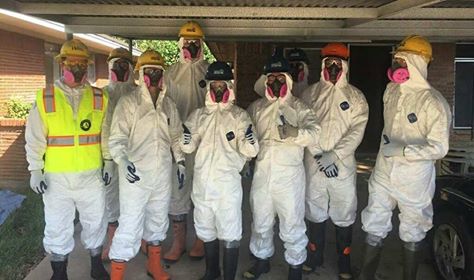

A group of AmeriCorps members are wearing white Tyvek suits and yellow hard hats to protect themselves before they enter a home for debris removal.
WCC AmeriCorps members utilize safety gear when entering homes for debris removal and other projects. Photos by Rob Crawford, Alex Wunder and Dillon Benitez.

CCMI is headed to Houston to begin home assessments and gutting projects while TxCC is off to Corpus Christi to do the same. I was honored to provide training for my colleagues in these amazing programs. I wish them all the best as they head out to their assignments, armed with a little more information and ability to better serve affected communities of Texas and themselves.

By Alex Wunder, WCC AmeriCorps Disaster Response Team public information officer


Join the WCC

Do you want to help the environment, meet great people and make a difference in your community? Recruitment for six-month WCC AmeriCorps positions will open in February 2018! Lean more and apply online today. See photos of the types of projects WCC members support during their service in our WCC projects Flickr set and WCC featured projects story map.

Learn more about serving as a WCC AmeriCorps member: www.ecy.wa.gov/wcc


Monday, April 10, 2017

WCC members serve local communities through AmeriCorps program

A series of storms caused many Eastern Washington streams and rivers to flood last month. On March 17, Gov. Jay Inslee issued an emergency proclamation for all 20 counties east of the Cascades to free up state resources in case wet weather and flooding risks continue.

When disasters occur, local and tribal government partners and state officials often request on-the-ground assistance from Ecology’s Washington Conservation Corps (WCC) AmeriCorps members and crew supervisors.

The WCC provides hands-on experience, field skills, and training opportunities to young adults between 18 and 25 and military veterans. Our 300 members and 55 field supervisors across the state restore critical habitat, build trails, and protect the state’s natural, historic and environmental resources.

During disasters, however, WCC members and supervisors respond to assist communities in Washington and beyond.

2017 flood response in Sprague and Yakima

March 18, WCC crews help keep rising flood waters from Sprague.
City officials and the state Military Department requested help battling flood waters in the Lincoln County town of Sprague on March 17, and WCC was able to respond the next day. WCC members based in Spokane, Walla Walla, Wenatchee, Yakima and Ellensburg filled and placed about 3,500 sandbags to protect Sprague homes and businesses. Members also reinforced and fixed sandbags to stay ahead of rising water levels.

The crews received a warm welcome. “It was refreshing to see the community come together and help our crews and each other,” said WCC supervisor Matt Cone, who was deeply moved by the experience. “The people volunteered their time, labor, supplies and food so that everyone was taken care of. Even in a stressful situation, this community showed a lot of heart.”
WCC crew in removing sandbags in Yakima

On March 20 and 21, another WCC crew responded to a similar request from the city of Yakima. Members took a day off from their regular duties with the North Yakima Conservation District to help the city clean up after widespread flooding. The crew removed nearly 4,000 sandbags from a previously flooded interchange.

WCC disaster response program

Our WCC crews have responded to local floods, wildfires, oil spills and landslides and have also been deployed to provide disaster relief and recovery assistance for floods, hurricanes and tornadoes around the nation. Four WCC crews are designated disaster response crews but any crew has the potential to be deployed.

Members and staff are trained to safely and effectively:
  • Clean up homes, roads and structures
  • Install emergency repairs such as roof tarps
  • Manage volunteers and donations
  • Remove trees and debris
  • Set up and operate emergency shelters
WCC AmeriCorps funding in jeopardy

The WCC was created in 1983 and became an AmeriCorps program in 1994. The federal Corporation for National and Community Service administers AmeriCorps. The proposed federal blueprint budget would eliminate funding the agency’s funding. For the 2017-18 federal budget year (Oct. 1, 2017, through Sept. 30, 2018), AmeriCorps provided Ecology’s WCC program:

  • $1.8 million in grant funding – about 20 percent of WCC’s budget.
  • Authority and funding to support Ecology WCC AmeriCorps federal disaster and response and recovery efforts.
  • A $5,775 education award to each WCC member who completes a year of services. They can use the AmeriCorps award to pay for future college expenses or toward existing student loans. This year the awards, paid directly to post-secondary institutions, will provide more than $2 million in tuition income to trade schools, college and universities attended by WCC alumni.
Since it is still early in the federal budget-making process, it is unknown what the full effects could be on Ecology’s WCC AmeriCorps program in the future.

Learn more about WCC

Ecology's Washington Conservation Corps, an AmeriCorps program, consists of three subprograms: the original WCC, Veteran Conservation Corps and Puget SoundCorps. Recruitment for the 2017-2018 year will begin in July!

See photos of the types of projects WCC members support during their service in our WCC Projects Flickr set and WCC Featured Projects Story Map. To become a member of WCC, learn more and apply online today.