Saturday, June 28, 2014

Tacoma Smelter Plume: Work begins Monday to clean up contamination and improve drainage at Vassault Park

By Diana Smith, Public Involvement Coordinator, Toxics Cleanup Program

On Monday, Ecology’s Soil Safety Program will begin construction work to replace contaminated soils at the playfields at Tacoma’s Vassault Park. The former Asarco Tacoma smelter contaminated 1,000 square miles with arsenic and lead from its smokestack.

Metro Parks Tacoma will coordinate drainage improvements during the cleanup work. Doing these needed improvements during cleanup work is more cost-effective.

Construction schedule and closed areas

On Monday, June 30, our contractor will begin putting up fencing and moving equipment to the park. Work will run through mid-October.

The playfields will remain closed until summer of 2015 to protect the new grass and allow time for it to grow.

The tennis courts and playground will remain open throughout the project.

Want more information?

Questions about the cleanup?


Thursday, June 26, 2014

Eyes Over Puget Sound on June 23, 2014

By Sandy Howard, communications manager, Environmental Assessment Program

Our guest feature this month is about phytoplankton monitoring in Budd Inlet, plus we’ve got an in-depth look at our mooring program. Our technology is now hitching a ride on the state ferries.

We hope you enjoy our June 23, 2014 Eyes Over Puget Sound.


floating at thesurface in Fidalgo Bay, Anacortes.

What's happening right now in Puget Sound

Onshore winds have been keeping the Puget Sound lowlands cool and cloudy, but sunlight and warmer temperatures are returning.

We saw large organic mats of surface debris in Hood Canal, Padilla Bay, and Lay Inlet – our scientists say that many are macro-algae. There were strong red-brown blooms in Discovery Bay, East Sound, and parts of Georgia Basin.

There was sediment-rich water north of San Juan Islands. Jelly fish are increasing in numbers. Colder, saltier conditions in early 2014 and lower oxygen in Whidbey Basin, Central, and South Sound continue. Hood Canal remains unusually cold. At our Mukilteo mooring, temperatures are similar to last year, but salinity and dissolved oxygen follow the Puget Sound-wide trend.

Follow us!

Eyes Over Puget Sound combines high-resolution photo observations with satellite images, en route ferry data between Seattle and Victoria BC, and measurements from our moored instruments.

Sign up to receive email notifications about the latest Eyes Over Puget Sound by subscribing to Ecology’s email listserv.  Eyes Over Puget Sound home page.


Wednesday, June 25, 2014

Tackling Toxics: Flame Retardants

Are they worth the risks?

By Erika Bronson, communications, Reducing Toxic Threats

Flame retardants are one class of chemicals the Department of Ecology is tracking. Many of these chemicals are toxic, and some are also persistent, bioaccumulative toxics (PBTs) because they gradually increase and remain in the environment and our bodies over time.

Evidence is mounting that shows flame-retarding chemicals don’t effectively slow fires and that fire fighters can have negative health effects from inhaling their fumes while battling blazes. (See The Chicago Tribune series “Playing with Fire” for more information.)
Foam furniture and stuffed toys are often
treated with flame retardants.

PDBEs are everywhere

Polybrominated diphenyl ethers (PBDEs) are one type of chemical flame retardant that manufacturers have added to a variety of consumer products for over 30 years to slow combustion. Studies show that PBDEs, which are persistent and bioaccumulative, can impact reproductive health, the immune system, and development in mammals. They are escaping from consumer products and building up in people and the environment throughout the world. PBDEs have been found in human breast milk, blood and fat; house dust and indoor air; fish; wildlife; birds; beef; dairy products and sediments.

Three PBDE mixtures were widely used for different purposes. Penta-BDE was used in low-density polyurethane foam in products such as furniture. Octa-BDE was used in electronics, such as housings for fax and answering machines, automobile trim, telephone handsets, and kitchen-appliance casings. Deca-BDE was used primarily in electronic enclosures, particularly in computers and televisions.

Prevention is the cure

In 2007, Washington banned the use of penta- and octa-BDE in products sold in the state. The use of deca-BDE was also banned in mattresses at that time, and that ban was extended to televisions, computers, and residential upholstered furniture after Ecology found safer alternatives.

We also track the use of 66 chemicals of high concern to children (CHCC), including six flame retardants. Manufacturers report their use of CHCCs if they are present in children’s products under the Children’s Safe Product Act (CSPA).

Testing products for flame retardants
Cutting up a product for component analysis.

Over the last year, Ecology tested 125 consumer and children’s products for PBDEs to ensure manufacturers and retailers are complying with the ban and reporting under CSPA. Products tested include seat cushions, mattresses, upholstered furniture for children, electronics, clothing, and baby carriers.

Finding these chemicals is like being a detective. Unfortunately, analyzing samples to isolate specific substances is not as quick and easy as it may appear on slick crime-scene-investigation TV shows. To select products for testing, Ecology staff purchased items that were likely treated with flame retardant chemicals. Products were then scanned for indicators of flame retardants using x-ray fluorescence. If the scan results were positive, the product was then broken into separate components, such as fabric, stuffing, foam, metal and plastic, and sent to a lab for analysis.

So what did we find?

An unfortunate side effect: Regrettable substitutions

The good news is we didn’t find PBDE violations in any of products we tested.

The bad news is some of the replacement flame retardants we detected are still toxic but not yet regulated. And just as concerning are the indications that substituted chemicals may be toxic, but due to the proprietary nature of the chemical formula, we can’t identify or quantify them. This is why we cannot stop at banning toxics but must also find ways to assure that manufacturers move toward safer alternatives.

The lab could not identify the brominated compounds in 54 samples that screened positive for bromine using x-ray fluorescence. This suggests more brominated compounds than what we tested for are in use, which is a problem because we may not have information about health effects.

Ecology also found that eight samples from children’s products contained flame retardants above the CSPA reporting limit. We have notified manufacturers and are working to ensure compliance.

Future work on flame retardants

These results show progress and a willingness among the manufacturing community to follow laws. However, the use of regrettable substitutions shows we still have work to do.

Fortunately, the Washington State Legislature agrees and has provided further funding for Ecology’s work on flame retardants and safer alternatives. They’ve requested a report by December 2014 recommending whether other flame retardants should be banned in children’s products and furniture.

Manufacturers and others interested in learning more about alternatives assessments for finding safer chemicals are invited to register for a workshop on July 9.

Stay safe & get involved

The Washington State Department of Health has additional information about how we are exposed to PBDEs and how to reduce exposure. In addition, the Northwest Pediatric Environmental Health Specialty Unit at the University of Washington has produced a factsheet on PBDEs for pediatric health professionals.

These product-testing campaigns are just one piece of a much larger toxics puzzle. You can stay informed about all our work to reduce toxic threats by:

If you have questions or would like more information, please contact Andrew Wineke at (360) 407-6149.


Tuesday, June 24, 2014

Don’t Drip & Drive! Free workshops offer oil-leak inspections

By Justine Asohmbom, communication & education


It's summertime once again! Before that big road trip, or even for everyday errands, stop and ask: Is my car reliable? Does it drip? Not even sure what to check and how to do it? Wish you could learn how to make sure your vehicle gets the basic preventive and corrective servicing that can keep it reliable and safe? Or, just want a second opinion about an issue with your car?

We have GOOD NEWS for you!

Free workshops with oil-leak inspections.

Yes, that’s right, it’s FREE!!!

If you’re like me, what’s under the hood or and under the car is a puzzlement. So, when I tried one of these workshops, it shined a light that gave me a real understanding, for the first time, of my own car. In addition to a leak check, I also learned why it pays to lavish a bit of attention to your ride, to avoid the heartbreak and unexpected expense of car problems down the road.

Watch this video to hear what other participants had to say about the free workshops.

Sign up at: http://www.ecy.wa.gov/fixcarleaks.html

A leaky car is not reliable, because whatever is dripping out should really be in part of the car doing its job there. A leak is often a sign of trouble, so it’s worth knowing what’s leaking, where it’s coming from and what you can do about it.

A thorough inspection of your car – like the one you get at our free workshop! – is a sensible way to avoid being stranded at the side of the road, facing the unexpected expense of emergency repair. Yes, you may have to shell out for maintenance, but that’s always less than fixing-when-it-breaks. For me, that’s peace of mind.

So, we say “fix that leak!” because it extends the life of your car, saves you money in the long run, and protects Puget Sound. That’s a triple win! Add up the little drips and leaks from all our vehicles and they release 7 million quarts of motor oil into the Puget Sound basin every year.

“Don’t Drip & Drive” Free Auto Leaks Workshops are a partnership between the Washington Department of Ecology, Seattle Public Utilities, Renton Technical College, Shoreline Community College, South Seattle Community College and West Seattle High School.

Space is limited.

Register today at: www.fixcarleaks.org


Friday, June 20, 2014

Fecal Matters: Swimming Advisory issued for Bayview State Park beach, Skagit County, WA.

BEACH Program Update

A no contact advisory was issued for Bayview State Park beach on June 20, 2014.  The advisory was issued due to high fecal bacteria levels at the beach.  Skagit County Beachwatchers will resample this beach next week. This advisory will be in effect until further notice.

Contact with fecal contaminated waters can result in gastroenteritis, skin rashes, upper respiratory infections and other illnesses. Children and the elderly may be more vulnerable to waterborne illnesses.

Stay updated about water quality at your beaches by keeping up with us on Facebook, checking beach status on Coastal Atlas, or joining our listserv. Debby Sargeant is the BEACH Program Manager and is available at debby.sargeant@ecy.wa.gov for questions.

Smoked out? Where to find information during wildfire season

By Jay Carmony, Ecology air quality specialist

2012 Tabletop Wildfire
(Photo by Kittitas County Emergency Response)
It’s the season for wildfires in our great state. And with that comes smoke that can linger for a while creating unhealthy air quality, especially in communities that hug the valleys of the Cascades.

Federal, state, and local agencies would like to keep you apprised of the air quality changes.

Use these web pages to find out the latest on air quality and wildfire smoke at http://wasmoke.blogspot.com.

Useful information is added to the blog when the smoke gets thick.

Seasons of smoke

Remember there are four seasons of smoke each year in the Northwest. In the spring and fall we experience forest prescribed burning, agricultural field and orchard burns, and where allowed, residential yard waste burns. In the summer there is the threat of wildfires, and in winter smoke hangs around from home heating woodstoves and fireplaces.

Help reduce wildfire starts and obey home heating burn bans for cleaner year-round air.

Resources:

Keep tabs on burn bans.

Consider alternatives to burning such as composting and chipping yard debris. Never burn garbage and always attend to a fire.

Real time air quality information

More health information

Thursday, June 19, 2014

Around the Sound: Cleanup poised to start at Budd Inlet site

By Seth Preston, communications manager, Toxics Cleanup Program

The former Reliable Steel manufacturing facility on Olympia's Budd Inlet is almost ready for a partial makeover.

Aerial view of Reliable Steel. (Ecology photo)
We're asking the public to comment on a proposed plan for doing some cleanup work at the site starting in August or September.

What we're planning
The work is going to include digging up and removing contaminated soil, metal debris, and an underground storage tank that's leaking heating oil.

The work will be focused on two parts of the site, making this an "interim" or partial cleanup. More work will need to be done at some future point.

Saving Puget Sound
Boat building, steel fabrication and welding took place at the site starting in 1941. Historical operations left behind environmental contamination, including heavy metals, petroleum hydrocarbons and other pollutants in soil and groundwater.

Reliable Steel in 1955. (Photo courtesy of Squaxin Island Tribe)
The facility shut down in 2009, and a fire in 2010 badly damaged some of the buildings. Two buildings were torn down in 2011.

Reliable Steel is one of seven sites in and around Budd Inlet being cleaned up under the Puget Sound Initiative. We're also working with the Port of Olympia to study and clean up contaminated sediments in the inlet.

Wednesday, June 18, 2014

Around the Sound: Volunteers help restore Port Gamble Bay

By Seth Preston, communications manager, Toxics Cleanup Program


Volunteers clean up debris near Point Julia. (Photo by Celina Abercrombie)


Olympia oysters (photo courtesy of Taylor Shellfish Farms)
Volunteers hit the beaches around Port Gamble Bay on June 14 as part of an effort to clean up and restore the bay and its surrounding shores.

In all, 56 local residents and others spent the morning working to pull tires, trash, old fishing gear, and other debris off the beaches around Point Julia.

Here's a set of good photos taken by Don Willott of the Kitsap Audubon Society.

The Port Gamble S'Klallam Tribe put together the event; the tribe and our Toxics Cleanup Program are working together to remove debris from the bay's waters and shores.


Saving Puget Sound

 Port Gamble is one of the bays we're focusing on under the Puget Sound Initiative. The restoration and preservation work also includes:
  • Removing creosote-treated pilings at Point Julia, Martha John Estuary and other locations.
  • Studying what can be done to restore Port Gamble's herring population, which has been declining for over 10 years.
  • Restoring Olympia oyster populations to support restoration of Washington's only native oyster.
  • Restoring riparian vegetation along the shores and eelgrass in the waters to support fish and other aquatic organisms.

Cleanup also coming

At the same time, we're continuing to work with Pope Resources to design a cleanup of pollution caused by historical operations at the old Pope & Talbot forest products mill on the bay. The mill operated from 1853 to 1995 before closing.


We expect in-water cleanup work to start in summer 2015.


Aerial view of old mill site at Port Gamble. (Ecology photo)


Monday, June 16, 2014

Ferries for Science: Technology hitches a ride to better understand Puget Sound

By Sandy Howard, Department of Ecology; Broch Bender, Washington State Ferries; Hannah Hickey, University of Washington

The Washington state ferry "Salish."
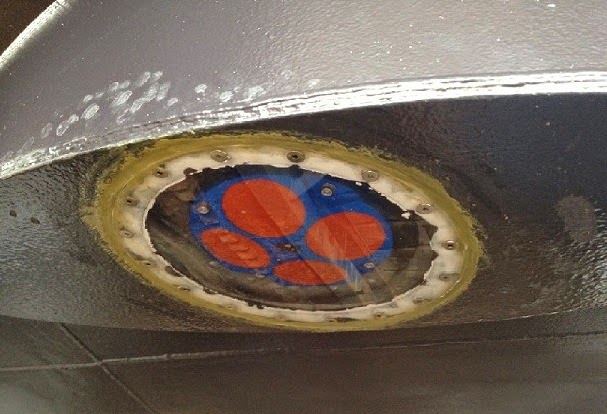
To improve our understanding of Puget Sound and our ability to keep it healthy, state marine scientists have collaborated to install a high tech water monitoring sensor on the hull of the 64-car Salish that makes daily crossings between Port Townsend and Coupeville.

“Monitoring of Puget Sound is important because it helps us understand long-term trends and changes over time,” said Carol Maloy, Department of Ecology marine scientist. “Monitoring helps us separate if changes are natural or human-caused. If changes are human caused, perhaps there are steps we can take to reverse the problems.” 

This poster will soon be hung inside the ferry
for passengers to read.
The ferry sensor measures how fast the water, from surface to sea floor, is moving. It also measures the direction the water is moving.

Scientists intentionally chose Admiralty Reach, the stretch of water across the mouth of Puget Sound, where the ocean water comes in and the fresh water moves out to sea. The narrow constriction point between the Strait of Juan de Fuca and Puget Sound is a relatively shallow bottleneck and makes it a good place to measure water exchange and circulation between Puget Sound and the Pacific Ocean.

The water velocity information will help scientists understand how much Puget Sound is influenced by the ocean. In particular, they hope it gives them a handle on how much low-oxygen water and corrosive water with very low pH may be coming into Puget Sound from the ocean.

Low-oxygen water is a problem because aquatic life needs oxygen to thrive. Aquatic life can also be sensitive to low pH. The information will also help scientists understand nutrients and algae blooms. This testing will increase understanding about the transport of toxic chemicals and ocean acidification.

Creative and cost effective

“This is a great example of a creative and cost-effective collaboration that will help us better understand the complex marine ecosystem of Puget Sound,” said Ken Dzinbal of the Puget Sound Partnership.

Jim Thomson, principal oceanographer at the University of Washington Applied PhysicsLaboratory added, “The Port Townsend-Coupeville ferry makes multiple runs per day, so this gives us unprecedented, continuous monitoring data that we’ve never had before.

The Acoustic Doppler Current Profiler as it looks installed
in the hull of the Washington State Ferry "Salish."

How do the sensors work?

The sensors are called Acoustic Doppler Current Profilers, or ADCPs. They send tiny sound waves (pings) down through the water column beneath the ferry as it is underway.  The technology is very similar to the ‘depth sounders’ and ‘fish finders’ used on many recreational vessels.

Particles in the water column reflect the sound back. The time it takes for the echoes to return to the ADCP is used to calculate the distance beneath the ship, and the Doppler shift of the ping is used to calculate speed and direction (velocity) of the water flowing under the ferry. Soon the sister ferry Kennewick will also be outfitted with the sensor.

Innovation began in 2009 with Clipper Navigation, Inc.

The state’s innovation began in 2009, when the Department of Ecology gained permission to install oceanographic sensors on the private passenger ferry Victoria Clipper IV  that transits between Seattle and Victoria.

The sensors measure phytoplankton concentrations, turbidity, freshwater influence, salinity, and water temperatures during the ferry's twice-daily runs.

Now in the program’s fifth year, the Victoria Clipper monitoring program is helping us better understand algae blooms, plankton food web interactions, river plumes, and changes over time in Puget Sound. “We thank the operators of the Victoria Clipper for generously working with us – it’s been a great partnership that continues,” Maloy said.

Location on ferry of the acoustic doppler current profiler
Funding for the project came from the EPA’s National Estuary Program, which identifies, restores, and protects significant estuaries of the United States, including Puget Sound. Projects are focused on taking action to protect Puget Sound.

Project partners include the Washington Department of Ecology, the University of Washington Applied Physics Laboratory, Clipper Navigation, Inc., Washington State Ferries, the Puget Sound Partnership, the U.S. Environmental Protection Agency (EPA) and Integral Consulting, Inc.

View a video about the Washington State Ferries sensor and a poster of how the science works at http://www.apl.washington.edu/project/project.php?id=ferries_for_science.

Wednesday, June 11, 2014

Tacoma Smelter Plume: What's the latest in north Tacoma?

By Jill Jacobson, yard program outreach coordinator, Toxics Cleanup Program


Map of homes participating in soil cleanup in Tacoma in 2014.
This summer, Ecology is cleaning up soil contamination on 50 homes in north Tacoma. The homes are located south of N. 46th and north of N. 42nd between N. Frace and N. Bennett (see map at right).
This is part of Ecology's ongoing work to clean up arsenic and lead under the Residential Yard Sampling and Cleanup Program. To learn more, please join us at an upcoming meeting.

Neighborhood Meeting

We are hosting a meeting to talk about the yard cleanup work in Tacoma this summer. We will explain what to expect to see during construction in the neighborhoods closest to the 50 homes.

Tuesday, June 17, 7 - 8:30 p.m.

Point Defiance Elementary School Cafeteria 4330 N Visscher St, Tacoma
7:00 - 7:30 p.m. Presentation
7:30 - 8:00 p.m. Question & Answer
8:00 - 8:30 p.m. Open house

Questions about the cleanup? Please call the Tacoma Smelter Plume hotline at (360) 407-7688, press 2. Visit https://www.ecy.wa.gov/toxics/tacoma-smelter.html


Tuesday, June 3, 2014

Single Moms: Free Oil Change and Auto Leaks Workshop just for YOU!

by Justine Asohmbom, communication & education


Moms learning how to properly maintain their vehicles
“Don’t Drip & Drive” Free Auto Leaks Workshop are now a partner in the “Single Moms’ Free Oil Change,” annual community service event this weekend. Register now!

There’s something for everyone in the family: refreshments, hands-on fun for kids, and pampering for moms.

When: Saturday, June 7, 2014; 8:30 a.m. – 3:30 p.m.
Where: New Life Church Renton Campus, 15711 1152nd Ave. SE, Renton, WA 98058

You'll be glad you came!

You depend on your car. But, to keep up with your errands and kid-shuffling, it needs regular maintenance.

“Don’t Drip & Drive” Free Auto Leaks Workshops help with that. Learn from certified automotive experts if your car has a leak that needs to be fixed. You get the know-how to check for leaks and properly maintain your vehicle. Plus, you gain the sheer confidence to talk knowledgeably with service personnel when you need automotive repair service.

“Don’t Drip & Drive” Free Auto Leaks Workshops are a partnership between the Washington Department of Ecology, Seattle Public Utilities, Renton Technical College, Shoreline Community College, South Seattle Community College, and West Seattle High School.

Register today at: www.nlchurch.com/oilchange


Auto Mechanic changing a Mom's brakes

Monday, June 2, 2014

WWU, Ecology team to train future cleanup experts

By Seth Preston, communications manager, Toxics Cleanup Program

As a college student, Susannah Edwards toured the Everett Shipyard cleanup site on Port Gardner Bay.

Now she's working on cleaning up the shipyard as an Ecology employee.

Susannah, a sediment specialist in training in the Toxics Cleanup Program, joined Ecology in October 2013. She graduated in 2012 from Western Washington University with a bachelor of science degree in environmental science with environmental toxicology emphasis.

While there, she took part in the Science and Management of Contaminated Sites (SMoCS) courses at Western's Huxley College of the Environment. The Toxics Cleanup Program helps support SMoCS through an interagency agreement with Western.

"I liked that it was very 'real world'," Susannah said of SMoCS.

Putting it together

Dr. Ruth Sofield started and runs the SMoCS program. She said she got the idea when she heard Tim Nord, a former TCP section manager, speak at Huxley College about cleanups in May 2009. He mentioned that Ecology had received some money as part of a natural resource damage settlement tied to cleaning up the former Scott Paper mill site in Anacortes.


Dr. Ruth Sofield
Some of the settlement money was going to go to Western for environmental education. Ruth said she figured her students, who were training in toxicology and other cleanup-related subjects, would be well suited to put that money to use.

So she set about designing a program to train students in cleanup work. She said a key point was a brainstorming session with Bob Elsner, then with the Port of Anacortes, and engineering consultant John Herzog. Bob and John were working on the cleanup of the Scott Paper site, which the port owns.

Ruth said she still retains many of the ideas from that meeting, including "the idea of the students behaving like consultants in the class." They use information from real cleanup sites to put together projects similar to those produced by professionals.

"I also wanted to show the students that a cleanup decision isn't as easy as 'clean it up because it's dirty -- and do a good job cleaning it up.' I wanted them to understand the complexities (scientific, political, societal, etc.) of these decisions," she said.

Talking about science

It's important to be able to communicate those complexities. So in 2012, Ruth teamed with Rebekah Greene, who is the faculty adviser for the student-run The Planet magazine. The award-winning publication focuses on environmental issues. Rebekah also advises students interested in environmental journalism.

Teaming up helps the science-oriented students learn how to communicate about their technical information and work, while the journalism students learn how to understand and explain the science of cleanup.

Students create group projects focused on science and communications as part of their course work. For example, in 2010 the first group of SMoCS students worked on projects at the Scott Paper mill site on Fidalgo Bay in Anacortes.

"We were able to deploy mussel cages while dredging was on hold because of fish passage," Ruth said. "The students looked at how (creosote-treated) pilings on the site affected mussel growth and survival."

And students have made videos about the Model Toxics Control Act (MTCA) and the massive cleanup effort in the town of Skykomish, as well as a comic book that educates people about cleanup work under MTCA.

Learning by doing


Susannah Edwards at the Cornwall Avenue Landfill in 2012.
SMoCS students also learn from experts in environmental fields who visit the campus. Ruth said that's important, because it gives students a number of different perspectives on some complex issues.

Students visit cleanup sites, including making trips to the Hanford nuclear reservation.

Susannah said touring sites like Everett Shipyard and Cornwall Avenue Landfill in Bellingham and talking with working professionals made it easier to focus on studying. That's because she saw how her course work could be practically applied.

"I think the biggest thing was seeing how organic chemistry, statistics and other challenging courses were going to translate to the work world," she said.

And now she's seeing it up close.