Showing posts with label jellyfish. Show all posts

Tuesday, February 16, 2016

Eyes Over Puget Sound: Air temps in the 70's at 2,500 feet!

El Niño persists! This month's Eyes Over Puget Sound marine monitoring flight found once again, air temperatures are running warmer and precipitation is higher than normal for this time of year. Our winter snow pack is in much better shape than this time last year, but we've lost some due to our recent stint of warm weather.

View this month's report


While flying this month, we noticed the outside cabin thermometer reading 72 °F at 2,500 feet above the ground! With weather this warm, we're keeping a close eye on snow levels and Puget Sound temperatures.

In the February issue

Feb. 2016 Eyes Over Puget Sound
Scan photos from the Feb. flight on Flickr.
Winter's heavy rains bring us higher river flows, which means lowered salinities in Puget Sound and coastal bays. This influx in cool water doesn't seem to be making much of a difference in water temperatures however. Puget Sound waters remain at record-breaking highs.

It appears 2015 may not be our only year of the jellyfish. We saw large patches of jellies in the southern finger inlets of the Sound. Also, signs of phytoplankton blooms are already visible in coastal bays.

As you can imagine, winter weather can make it very difficult to find a good day to fly. When we can't take to the skies our research boat, the Skookum, gets the job done!


What's Eyes Over Puget Sound?

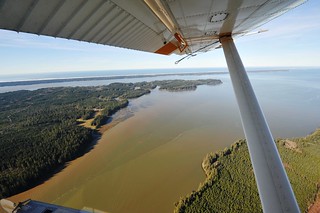
Eyes Over Puget Sound combines high-resolution photo observations with satellite images, ferry data from travel between Seattle and Victoria BC, and measurements from our moored instruments. We use a seaplane to travel between our monitoring stations because they are so far apart. Once a month, we take photos of Puget Sound water conditions and turn those out, along with data from our stations, in the monthly Eyes Over Puget Sound report.

Thursday, January 28, 2016

Eyes Over Puget Sound: 2015 was the year of the jellyfish!

Our 2015 Eyes Over Puget Sound sampling year was marked by the Blob, colorful algae blooms and jellyfish galore. Take a trip through the past year in photos that tell the 2015 story of Puget Sound.

View the 2015 year-in-review report


January: Warm coast, clear Sound

We started out 2015 with the Blob lurking on our coastlines. The warm water had just started entering Puget Sound, and our mild winter left those waters a bit warmer than usual. Whereas a very cold winter would lead to a down-season for jellies, we noticed patches of jellyfish hanging around through the winter. While flying over the coasts, we saw phytoplankton blooms in the surf, which are uncommon to see so early in the year.

February: Rivers run high and more jellies

Remember how warm February was last winter? This led to large amounts of snow melting, gushing down our rivers and dumping water into Puget Sound. As a result, we observed a lot of sediment entering our waters from the Fraser River, which is one of the biggest influences to the Sound. The sunny weather, dry air and warm water also made our waters run green in areas due to our first signs of growing phytoplankton. We saw numerous patches of jellyfish lurking in the southern inlets of Puget Sound.

March: Unusually warm and even more jellies

Come March, we started to notice how unusual the year was shaping up to be. Abundant jellyfish patches were showing up in uncommon places for the winter, such as Totten Inlet. By this time, all of the major rivers that feed Puget Sound were running high as the mountains lost snow in response to our remarkably warm weather conditions. As a result, just three months into 2015, Puget Sound was dressed in brown.

April: Summer blooms and jellies arrive early

April brought some truly bizarre observations. The red-brown phytoplankton blooms we typically see in Puget Sound during late summer were already going strong. This painted areas such as Sinclair Inlet near Bremerton in swirling tie-dye patterns of brilliant red that contrasted with our bold blue waters. We also saw--you guessed it--more jellyfish! These jellyfish patches persisted through the spring bloom in large numbers.

May: The turning point for an extreme summer

Most of the rivers that feed into Puget Sound fell below their expected flows in May. The large rush of melting snow came early and faded quickly. This is the turning point when the Sound transitioned from lower-than-normal salinities, to higher-than-normal salinities. This, along with decreased flows from our rivers, causes water circulation to slow down. Waters began to warm, and this warmer water held less oxygen and was stressful for fish.

June: Conditions get real interesting, real quick

Warm temps and weak circulation are not typical Puget Sound conditions for June. We, and the public, were very interested in how the extreme weather was taking effect. Jellyfish began outnumbering the crunchy, more nutritious zooplankton we normally find, making it harder for wildlife to find sustaining meals, and adding to the stress caused by warm water and low oxygen levels. Massive Noctiluca and other phytoplankton blooms appeared across Puget Sound in response to low river flows from the drought.

July: Small plants make big stink on beaches

The Blob fully infiltrated Puget Sound in July. This gave us warm water temperature readings at every depth throughout the Sound. From the air, the water looked like someone spilled green slime into Puget Sound. In fact, these were huge mats of small plants, what our scientists call "macro-algae," floating throughout the Sound, Dyes Inlet and Samish Bay. These caused a smelly situation as they washed ashore and piled up in huge rotting heaps, leading to swimming closures on some beaches.

August: Millions of jellies take center stage

By August the public and media took notice of the major influx of jellyfish. Waters were warm, salty and fairly stagnant due to record low river flows. Massive jellyfish patches stretched hundreds of feet long all across Puget Sound. While other marine wildlife were stressed by our marine conditions, the warm water was ideal for these jellies. Red-brown algae blooms were abundant across the Sound. We all began asking, "Is this what climate change will make the new normal in our region?"

September: Jellies flourish in record temps

Huge jellyfish patches continue throughout the Sound, showing up in unusual places and reaching peak numbers. Despite the little rain that returned to our region, the arrival of fall did not mark an improvement to our marine conditions. Water and air temperatures remained at record highs, and river flows remained extremely low. Warm waters and sunny conditions fostered green tides throughout the Sound, which caused another wave of stinky tides along some local beaches.

October: Finally, tides turn toward normal

After a long, hot and grueling summer, October brought welcomed cool air and rainstorms. As the rivers that feed the Sound recovered their flows, Puget Sound got a much needed dose of relief as a result. This marked a turning point in conditions, and we finally began seeing closer-to-normal data readings. Even with conditions trending toward normal, waters remained warmer than usual for this time of year. Uncertainty continued, as El Niño and the Blob were both likely to keep waters warm throughout winter.

November & December: As rain rejuvenates waters, storm runoff hits Puget Sound

The winter months brought torrential rains rushing over our landscape, down our rivers, through our storm drains and out into Puget Sound. Although this improved temperature conditions and greatly helped with water circulation, it dumped huge amounts of sediment and stormwater runoff into the Sound. Snow built up in the mountains and even the Blob began fading.


This brings us to today 

El Niño is still at the equator and big questions remain. Will the snow stay in the mountains or come down early like last winter? Will Cascade snowpack reach normal levels? Will the Blob return, stronger than ever? Will we face another drought? Will climate change make extremely warm years more common in the future? Our scientists are anxiously watching Puget Sound to see how things shape up. Every month, as we fly, we monitor and take the pulse of Puget Sound.


What's Eyes Over Puget Sound?

Eyes Over Puget Sound combines high-resolution photo observations with satellite images, ferry data from travel between Seattle and Victoria BC, and measurements from our moored instruments. We use a seaplane to travel between our monitoring stations because they are so far apart. Once a month, we take photos of Puget Sound water conditions and turn those out, along with data from our stations, in the monthly Eyes Over Puget Sound report.

Thursday, October 15, 2015

Eyes Over Puget Sound: Finally getting back to normal

After a long, hot and grueling summer, Puget Sound is finally starting to get closer to normal. Autumn brings cooler air temps and rainstorms which help the rivers that feed the Sound recover their flows. As a result, Puget Sound is getting a much needed dose of cold air and water.

Eyes Over Puget Sound

Click here to see the October report


On this month's flight we saw fewer algal blooms, jellyfish and macro-algae as a result of the water's salinity becoming more normal.

And the national Innovations Award winners are...

Team members from our Eyes Over Puget Sound and
Ferries for Science programs pose with Director Maia Bellon
and their 2015 ECOS Innovations Award.
Our Eyes Over Puget Sound and Ferries for Science programs shared the national Environmental Council of the States (ECOS) Innovations Award for 2015! Our Director Maia Bellon accepted the award on behalf of the programs while attending the ECOS annual conference in Newport, Rhode Island.

Our marine programs were honored by this award for finding innovative solutions to funding, timeliness and public engagement in marine monitoring. Learn more about the award in our report.

Nisqually River fares okay through drought

Did you know that half the total freshwater that enters Puget Sound comes from the Nisqually River? This river fared the drought better than other rivers in Washington this year. Check out graphs, water quality improvement projects, and watershed restoration efforts in our Streams section of this month's report.

Keeping an eye on Puget Sound

Even with conditions trending back toward normal, waters are still warmer than usual for this time of year. El Niño and the Blob are likely to affect Puget Sound and keep waters warm throughout the winter. We'll continue monitoring Puget Sound and report conditions to you as we find them.

What's Eyes Over Puget Sound?

Eyes Over Puget Sound combines high-resolution photo observations with satellite images, ferry data from travel between Seattle and Victoria BC, and measurements from our moored instruments. We use a seaplane to travel between our monitoring stations because they are so far apart.

Once a month, we take photos of Puget Sound water conditions and turn those out, along with data from our stations, in the monthly Eyes Over Puget Sound report.
Learn more and see other issues on our website.

Friday, August 7, 2015

Millions of jellyfish take the center stage for this month's Eyes Over Puget Sound

By: Jessica Payne, Environmental Assessment Program communications manager


Click here to view this month's report.

Low flows from our rivers and warm temperatures from “the Blob” have Puget Sound waters acting strange. During this month's Eyes Over Puget Sound monitoring flight, we saw massive blooms of jellyfish stretching hundreds of feet long. By teaming up with NOAA, we were able to measure one of these jellyfish blooms and found that it was over 36 feet deep! That's a lot of jellies! Our waters are acting in a way never seen before.

Also in this edition

Estuarine circulation is weak, so what gets into Puget Sound stays there. Mats of organic debris and red-brown algae blooms are prevelant throughout the Sound and just bake in the sun. Learn more about the Blob, jellyfish, and current Puget Sound conditions in this month's Eyes Over Puget Sound report.
Click image to enlarge.
Puget Sound is 4° F warmer than is normal for this time of year. See how these warm conditions are impacting water quality and marine wildlife in our blog: Puget Sound waters left sweltering after double punch from the drought and the Blob.


What's Eyes Over Puget Sound?

Eyes Over Puget Sound combines high-resolution photo observations with satellite images, ferry data from travel between Seattle and Victoria BC, and measurements from our moored instruments. We use a seaplane to travel between our monitoring stations because they are so far apart.

Once a month, we take photos of Puget Sound water conditions and turn those out, along with data from our stations, in the monthly Eyes Over Puget Sound report.

Learn more and see other issues on our website.

Thursday, July 30, 2015

Puget Sound waters left sweltering after double punch from the drought and the Blob

By Jessica Payne, Environmental Assessment Program communications manager


Everyone in Washington is feeling the heat this summer, and Puget Sound is no exception. It's been hot and dry, with all kinds of weather records being set. These unusually hot temperatures don't end at the water's edge. We're also seeing the record-breaking warm water temperatures from “the Blob” of North Pacific Ocean water that made its way through the Strait of Juan de Fuca and into Puget Sound late last year.

“The Blob entered Puget Sound on a massive scale in the fall of 2014 and rapidly changed conditions for temperature and also oxygen,” said Dr. Christopher Krembs, Ecology senior oceanographer. “We’re measuring water temperatures 4° F higher than normal from our past 25 years of record keeping. We’re seeing the warm water everywhere, from Olympia to Bellingham.”

Monitoring suggests that these warm conditions are having many negative consequences on the Puget Sound marine environment. This year we've seen increasing harmful algae blooms, increasing and early shellfish closures, lower dissolved oxygen levels, and unfavorable conditions for salmon and other cold-loving marine species.

Why is Puget Sound warm?

Puget Sound waters have been hit with a double-whammy. Late last year, "the Blob" Was followed by an extremely warm winter and our usual snowpack didn’t form in the mountains. We rely on this melting snow to drive our river flows in the spring and summer. Without snow to melt and flow down our rivers, Puget Sound does not have enough estuarine circulation to push the Blob out of Puget Sound. Decreased circulation can lead to low oxygen conditions and allow pollution to hang around longer.