Showing posts with label water supplies. Show all posts

Thursday, April 11, 2019

Recent rain welcome bonus for water supply


Still not enough to make up for shortfall in North Central Washington
2015 Drought Journal
2015 drought photo perspective

We’ve seen some wet weather across the state in the weeks since drought was declared in a few of our Central Washington watersheds on April 4. And that has been welcome news! This is especially good news in the watersheds that were looking iffy a month ago in Western Washington, particularly parts of the Olympic Peninsula and the Nooksack in Whatcom County. 

The lowland precipitation will help with soil moisture, but it won’t make up for the shortage of snowpack that feeds the Methow, Twisp, Okanogan and Similkameen rivers in Okanogan County. Runoff is looking pretty dismal from the British Columbia mountains that are a source for these streams. 

As the state’s water supply manager, we evaluate water supplies statewide in consultation with state and federal partners who are watching precipitation closely

 “We’re still watching the Upper Yakima Basin, which provides irrigation water for farmers downstream and supports important tributaries crucial to salmon and bull trout survival,” said Jeff Marti, drought coordinator for Ecology. 

North Central Washington hasn’t received as much as the lowlands and is projected to have 65 percent of normal water supplies through the summer. 

That may not seem like cause for alarm, but it is considered drought conditions. For farms that depend on river-fed water supplies and fish that need healthy stream flows to travel to spawning grounds, 75 percent of normal can mean trouble. 

According to Scott Pattee, water supply specialist for Natural Resources Conservation Commission, March started off promising with reasonable snowfall in the mountains and even a rare shot of snow in the low lands during week two. 

However, overall, Washington experienced less than 20 percent of normal precipitation in March. That is the fourth driest March since 1895.

“For every day that went by without mountain snow accumulation we lost ground,” said Pattee.

 Agriculture communities depend on snowpack for water 

Washington is a beautiful state known for its lush evergreens, soggy winters, and rainy spring season. But the state is far more diverse. When you get east of the Cascade Mountain Range, our central and eastern regions have sunny, arid landscapes that are rich in agriculture. Orchards abound, hops flourish, and picturesque rows of crops are a reminder of Washington’s agricultural abundance. 

Precipitation is vital to our agrarian communities. Snowpack in our mountains feeds the 
rivers that supply water to irrigation districts. This cool, rushing supply of water also provides prime conditions for fish to thrive and spawn. 

Gov. Jay Inslee’s drought declaration allows state agencies and local conservation and irrigation districts to take actions to assist farmers and implement drought response planning for fish agencies and small communities. Such actions include making emergency water transfers more swiftly. Watersheds declared in drought include the Methow, Okanogan, and Upper Yakima basins. 

Although a statewide drought isn’t anticipated impacts state experts are watching all watersheds closely. For more information about water supplies, visit our drought and statewide conditions web pages.

By Camille St. Onge and Joye Redfield Wilder, communications

Friday, February 23, 2018

La Niña winter update

Winter Storm Oliver brings February snowpack relief


Skiers and snowboarders had a lot to like about the recent President’s Day weekend weather. Winter Storm Oliver not only was significant nationally, it brought an impressive snowfall to the Washington Cascades. At the same time, the white stuff that closed mountain passes is helping to narrow the level of uncertainty we might have about this summer’s water supply.

When paired with forecasted cooler temperatures, conditions for late winter appear to be improving considerably. The more localized storm this past weekend (Feb. 23-25) appears to be further evidence the season is normalizing, particularly at Snoqualmie Pass.


What a difference the second half of February is shaping up to be.

How much snow did our mountains receive?

Generally, SNOTEL sites across the Cascades received about 10 percent of the annual total during Winter Storm Oliver.

A few exceptional highlights:
  • Snow-measuring sites near Snoqualmie Pass accumulated between 14 and 22 percent of the median annual total snowpack. Meadows Pass, located in the Cedar River watershed, improved dramatically by receiving 22.4 percent of annual snow water equivalent (SWE).
  • In the north Cascades, the Wells Creek site for the north fork of the Nooksack River added 11 percent of the annual total, finishing at 107 percent of annual peak snowpack.
  • The Potato Hill site near the north side of Mount Adams finished the storm at 94.8 percent of the annual peak, adding 16.7 percent of SWE over the long weekend.


Meadows Pass is a SNOTEL station at approximately 3200’ in elevation in the Snoqualmie Pass area. Snow falling at this location drains into the Cedar River, supplying Seattle Public Utilities’ reservoir at Chester Morse Lake.  It is also adjacent to the headwaters of the Yakima River Basin.


Early February was a different story

Just a few weeks ago in this blog, I characterized the winter snowpack as a “fits-and-starts” variety inconsistent with the cold and snowy winters typical of La Niña years. Day and nighttime temperatures well above normal and, in some cases, record-breaking warm, were a concern.

Signs portending an early spring seemed to be ramping up. Seattle had above-normal temperatures for the first nine days of the month of February, on many days 5-to-10 degrees above normal.

Even more startling, Yakima had several days with high temperatures near 70 degrees. The Paradise ranger station on Mount Rainier had nine days with high temperatures, 32 degrees or above, in the first 20 days of the month. On four of those days, the average temperature for the entire 24-hour period was at or greater than freezing.

It is certainly nice for folks to haul out their skis instead of their bikes now that temperatures are cooler and the snow levels are improving. But water managers may suffer headaches if warm winter days return and trigger an early melt-off of the snowpack.

Water distribution systems in the Pacific Northwest rely on the slow but steady runoff of melted mountain snow to replenish our reservoirs and rivers, and provide the water used during our dry summers. An early snowmelt leaves less for rivers, communities, and farms during the dry season.

Cool high-country temperatures late in the snow year, even as few as a couple of weeks of cooler temperatures, can go a long ways toward providing seasonal water security in the region. As it stands right now, the unseasonably warm weather of a few weeks ago appears to be more of a short-term perturbation, rather than a harbinger of a very early spring. This is good news.

Is spring canceled?

“Winter is not over—the story is still being written,” a colleague of mine adroitly put to me. The spring-like temperatures of early February are not something we are contending with for the time being. This doesn’t necessarily mean spring is far away, but we're no longer seeing Arizona-like winter temperatures threatening to drive an early snowmelt.

The return of winter weather also means that basins with below-normal snowpack have less catching up to do before winter begins to glide into its denouement.
  • The Stevens Pass SNOTEL site, for example, currently has 94 percent of peak annual snowpack in inches of SWE.
  • Rainy Pass, a site in the north Cascades at the headwaters of the Skagit and Stehekin rivers, also has 94 percent of the median total annual snowpack.
  • White Pass’ Pigtail Peak SNOTEL—a key indicator for Yakima River Basin water supplies—added 11 percent of the peak annual snowpack during the most recent storm, improving from 64 percent to 75 percent of the median maximum annual SWE.
We’ll need to see continued cold weather to ensure this snow stays in place until it is most needed.

What's next?

The outlook by NOAA’s Climate Prediction Center sees normal precipitation and much-below-normal temperatures for both the six-to-10 day and 8-to-14 day forecasts. Forecasts also indicate near-normal levels of precipitation for late spring and summer.
So, stay tuned – there’s more to come. And this winter remains one to watch!

For more information check out our statewide water conditions page.


By Tyler Roberts
Watermaster for Ecology's Office of Columbia River

Thursday, September 1, 2016

Watching the water supply


This blog post is part of an ongoing series about water supply conditions. Please click here to read the previous post. If you want to learn more, visit our Washington water supply information page.

Have we seen the last of summer’s high temperatures? The arrival of more moderate weather may feel like fall for many of us across the state. As we begin to transition into the next season, let’s check in on our statewide water supply conditions.

Status of our supplies


Weather impacts | Cooler and wetter weather is on the way. Over the next 10 days, Washington will receive much-needed rain. While the amount may be modest, it will help our rivers and streams rebuild to higher levels while lowering water temperatures.

The Walla Walla River in southeast Washington ran low in
August. 
Rivers and streams | This is the time of year when rivers and streams are at their lowest levels. The snowpack is long gone and rain has been infrequent, so rivers and streams are relying on groundwater. Currently, about 48 percent of our streams and rivers are at below-average levels compared to historical flows. Most of these are in the western half the state, though southeast Washington also has a number of low rivers. These dry areas have gone without their usual share of precipitation since early spring.

Last year, we experienced a record-setting drought that resulted in 70 to 80 percent of our rivers being below-average for most of the summer. But in mid- and late August, the weather turned cooler and thunderstorms rolled across the state, dropping the percent of rivers flowing at below-average conditions to 40 percent. Compared to last summer at the end of August, our rivers are actually faring worse because we haven’t had those big storms yet.

Agriculture | Most of Washington’s agricultural areas experienced a dry and hot August. Crops are doing well for the most part, but farm ponds and reservoirs are getting low. The large federal reservoirs used for irrigation in the Yakima River Basin are at about normal levels, which is good for farms and fish. Farmers in the Yakima region holding junior water rights are receiving 94 percent of a full water supply. Senior users have 100 percent.

Bull trout in Bumping Lake, a reservoir in Yakima County,
are heading up tributaries to spawn. Photo: WDFW
Fish | Low flow levels in rivers and streams can be tough for fish, but cooler overnight temperatures are helping. In the Puget Sound area, streams are averaging 1 to 3 degrees Celsius cooler than in 2015. To the north, the South Fork Nooksack River is about the same temperature as last year. The Chehalis River and nearby southwest Washington streams are running very low compared to normal. Good news can be found in the Upper Yakima and Naches river basins, where bull trout have started moving out of Bumping Lake and into streams to spawn. That’s encouraging after what happened last summer, when low lake levels prevented the fish from moving into Deep Creek, an important bull trout stronghold.

The Washington Department of Fish and Wildlife continues to watch for recreational rock dams that might impede upstream adult salmon passage.

Drinking water | Drinking water supplies are doing well. Seattle, Everett and Tacoma report normal or above-average water supplies.

How you can help


We all have a role to play in conserving water. Here are two ways you can make a difference:

  • When washing your hands, turn off the water while you lather up.
  • Don’t use your toilet as a wastebasket. Even better, use a leak-free, high-efficiency toilet. Toilets are by far the main source of water use in our homes – they account for nearly 30 percent of residential indoor water consumption.

For more tips, visit our water conservation page.

By Kristin Johnson-Waggoner, Water Resources Program communications manager

Friday, July 29, 2016

Watching the water supply


This blog post is part of an ongoing series about water supply conditions. Please click here to read the previous post. If you want to learn more, visit our Washington water supply information page.

Goodbye hoodies, hello flip-flops – summer temperatures are here! Despite the heat, our water supplies continue to be in good shape statewide. We can thank the recent cool, wet “Jultober” conditions for reducing water demand and improving water supplies. Those moderate conditions felt much different from last summer, when we were in a statewide drought emergency.

Status of our supplies


Weather impacts | If late June and early July felt cooler than usual to you, you’re not wrong. Average temperatures for the last month were within 2 degrees of average statewide, with most of the state being below average. Things changed late last week when the heat set in, especially on the east side. Yakima hit 102 on Monday, tying the record high for that day. Looking ahead, the weather is expected to cool off a bit in the coming days.

Precipitation amounts have been varied, depending on the region. Over the past 30 days, the north Olympic Peninsula has been drier than average while the eastern slope of the Cascades and southeast Washington have been wetter than average. Record daily rainfalls were recorded recently in Seattle, Kennewick and near Walla Walla. Flash flooding even caused some road closures in Chelan and Douglas counties.

Rivers and streams | As of today, 28 percent of rivers are below normal. Our rivers, in an aggregated sense, are just shy of normal flows. That said, in a few rivers – about 7 percent – flows are much lower than average or are at record low conditions.

Agriculture | The Yakima River Basin, our drought bellwether, continues to have a good water supply. Junior water users are being prorated to 90 percent of full supply. Last year, it was 46 percent. Summer storms have helped rivers in some areas, especially on the east side, and reduced the need for continual irrigation.

A bull trout navigates an upper tributary of the 
Yakima River. Photo: William Meyers/WDFW
Fish | Our fish are doing alright, despite some areas of high water temperatures. The Washington Department of Fish and Wildlife is monitoring conditions closely and may take action to protect vulnerable fish populations. Visit their website to learn more. Overall, the toughest part of the year for fish was spring, but this summer so far is better than last year.

Drinking water | Drinking water supplies in Seattle, Tacoma and Everett are in good shape.

What’s next


The Water Supply Availability Committee (WSAC) will hold its monthly meeting on Aug. 11. This committee is a team of experts from state and national agencies who review data and discuss potential water shortages. If conditions warrant, this committee can convene the Executive Water Emergency Committee (EWEC), which is made of state agency leaders with a stake in water supplies. These leaders assess findings from WSAC and determine whether water users in affected areas will likely incur undue hardships. EWEC can recommend the governor consider an emergency drought declaration.

How you can help


It’s easy to make water conservation part of your daily routine. Here are two tips that will save water and money:

  • Wash only full loads of laundry or use the appropriate water level/load size selection on the washing machine.
  • Want a nice, cold glass of water? Keep drinking water in the refrigerator instead of letting the faucet run until the water is cool.

For more tips, visit our water conservation page.

By Kristin Johnson-Waggoner, Water Resources Program communications manager

Wednesday, July 6, 2016

Watching the water supply

This blog post is part of an ongoing series about water supply conditions. Please click here to read the previous post. If you want to learn more, visit our Washington water supply information page.

Did you grab a jacket or sweater while celebrating the Fourth of July? The weather felt different from last year for lots of folks across the state. Our water supply situation is different, too.

In summer 2015, we were in the midst of a drought emergency. This winter, plenty of snow and rain helped reduce impacts from the drought, but a hot and dry spring concerned experts. Luckily, the recent run of normal-ish temperatures and precipitation have improved our statewide water supplies.

Status of our supplies


Here’s the latest on our water supply conditions as of July 6:

Weather impacts | Over the past two weeks, precipitation has been about normal statewide – within 1.5 inches of average. But the coast and northeast parts of the state, already dry from spring, have stayed on the below-average side.

Average statewide temperatures for the past 14 days have stayed within 0 to 4 degrees above normal. Water use is declining due to more moderate temperatures compared to last month. In Seattle, the city’s public utility reports that daily demand is down nearly 50 million gallons per day from last year.

This USGS map compares current (July 6) and historical stream flows in
Washington. Click here to see more.
Rivers and streams | Rivers are naturally at their lowest flows during summer, but our rivers are experiencing – and will continue to experience – the effect of drier-than-normal spring weather and rapid snowpack melt. Statewide, about 58 percent of rivers are below average. This is an improvement over the beginning of June, when 77 percent were below average. (This doesn’t mean river flows are getting higher. Rather, compared to the same time of year for the period of record, we are closer to average now than we were in early June.) Looking back, 79 percent of our rivers were below normal last year around this time.
 
Agriculture | The Bureau of Reclamation manages several large reservoirs in the Yakima River Basin, an important agricultural center, and releases forecasts of how much water farmers can expect from those reservoirs. Currently, the areas with junior water rights are expecting 86 percent. Last year, they were at 47 percent. Senior water right holders are expecting a full forecast.

Managers of sockeye salmon fisheries are closely watching water
temperatures. Photo: William Meyers/WDFW
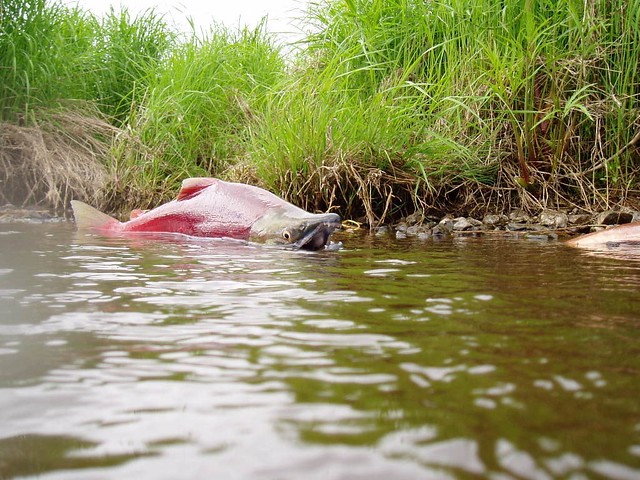
Fish | River temperatures are on the rise, but we’re still better off than last year, when sockeye salmon and sturgeon mortalities were being reported. This year, enough sockeye have entered the Columbia River and migrated upstream from McNary Dam for the Washington Department of Fish and Wildlife to open sockeye fisheries. Due to the debilitating losses of almost all spawning sockeye in the Okanogan River in 2015, fisheries managers are proceeding conservatively until it’s confirmed enough spawning fish make it into the Wenatchee and Okanogan rivers. As the run progresses upriver, sockeye seasons above Priest Rapids Dam are likely as long as water temperatures stay cool. Anglers should visit WDFW's website for more information.  

Drinking water | Drinking water supplies are not currently projected to be affected by shortages. Contact your local municipal water system to learn more.

What’s next


Tomorrow, the Water Supply Availability Committee (WSAC) will hold its monthly meeting. This committee is a team of experts from state and national agencies who review data and discuss potential water shortages. If conditions warrant, this committee can convene the Executive Water Emergency Committee (EWEC), which is made of state agency leaders with a stake in water supplies. These leaders assess findings from WSAC and determine whether water users in affected areas will likely incur undue hardships. EWEC can recommend the governor consider an emergency drought declaration.

How you can help


Outdoor water use accounts for nearly a third of daily water use by U.S. households. You can conserve water – and save money – by making a few tweaks to your outdoor routine:

  • Purchase an inexpensive hose timer to avoid over-watering. Soaker hoses are also a great option for avoiding evaporation.
  • Use a broom or electric blower to clean driveways and sidewalks, rather than hosing them off.

For more tips, visit our water conservation page. 

By Kristin Johnson-Waggoner, Water Resources Program communications manager

Friday, June 17, 2016

Watching the water supply

As the recent cool-down gives way to warmer, drier summer weather, we are closely monitoring our water supplies. Last year, a lack of snowpack and spring rain led to a drought that had statewide impacts. This year, our water supplies are currently stronger across the state but we’re watching areas of concern.

There are two groups that keep close tabs on our state’s water supply. The Water Supply Availability Committee (WSAC) is a team of experts from state and national agencies who meet monthly to review data and discuss potential water shortages. If challenging conditions are identified or projected, they will bring the information to the Executive Water Emergency Committee (EWEC). This committee is made of state agency leaders with a stake in water supplies (Departments of Agriculture, Commerce, Health, Natural Resources, Ecology, Fish and Wildlife, etc.). These leaders assess findings from WSAC and determine whether water users within affected areas will likely incur undue hardships.

At its meeting in early June, EWEC did not issue an emergency drought recommendation to the governor, which they did in 2015. The group discussed areas of concern and will continue to monitor water supplies. They will meet again should conditions change.

To help keep you informed, we’ll be sharing regular water supply updates on this blog. (Click here to read an earlier post on this topic.)

Status of our supplies


Here’s a look at water supply conditions as of June 17:


Paradise on Mt. Rainier received a few inches of snow this week, but most mountain snowpack monitoring stations are currently snow-free.
Paradise on Mt. Rainier received a few inches of snow
this week (June 7 top; June 14 below), but 
most mountain
snowpack monitoring  stations are 
currently snow-free.
Photos: National Park  Service 
webcam
Weather impacts | Cooler, wetter weather helped improve river flows in on the west side of the state where spring rains were in short supply this year. Today, about 56 percent of stream gauges are at below-normal levels. A couple weeks ago, about 75 percent of our gauges were below normal. The eastern side of the state did not benefit as much from rain. Rivers fed by melting snow (the Methow, Wenatchee and Okanogan rivers, for example) were running high due to early melt but are now below normal. While snow fell at higher elevations this week, most of our snowpack monitoring stations are currently snow-free.

Agriculture | The U.S. Bureau of Reclamation manages several large reservoirs in the Yakima River Basin, an important agricultural center, to help farmers irrigate through the dry summer months. As of Saturday, the Bureau began releasing water – about a week earlier than average – from the reservoirs to downstream irrigators. Last year, this action began in mid-April. The Yakima reservoirs are fuller this year – at 98 percent capacity.

Drinking water | Drinking water supplies are in good shape and aren’t currently projected to be affected by shortages. Contact your local municipal water system for information specific to your community.
Cle Elum Lake is a reservoir managed by the U.S. Bureau of Reclamation.
Cle Elum Lake is a reservoir managed by the U.S. Bureau 
of Reclamation.  

More information | Visit our Washington water supply information page to read about streamflow, snowpack, precipitation, forecasts and more. 

Focus on fish


Fishery populations across the state face challenges again this year. Low flows in some streams and rivers are stressing migrating juvenile salmon, and Washington Department of Fish and Wildlife hatchery teams are already responding to warm water conditions. Water temperatures in the Columbia River are higher than average, even exceeding 2015 temperatures on some days earlier this spring. WDFW staff remain on alert for low-flow fish migration blockages and high water temperatures as we move into July.

How you can help


Water is a shared resource and we all have a responsibility to protect it. Here are two easy water conservation tips you can use at home:
  • About 30 percent of our water use across the state goes to outdoor watering. When planting your landscape, consider drought-tolerant native plants and check to see a plant’s watering needs before you schedule your sprinklers.
  • You can significantly reduce water use by simply repairing leaks in fixtures (faucets and showerheads), pipes and toilets. A leaky faucet wastes gallons of water in a short period of time. A leaky toilet can waste 200 gallons per day. That would be like flushing your toilet more than 50 times for no reason!
Check out this page for more tips.

By Kristin Johnson-Waggoner, Water Resources Program communications manager