Showing posts with label conservation. Show all posts

Monday, July 29, 2019

Boots on the ground: WCC as a stepping-stone to disaster management career

A decade ago, Nina Rubenstein was swinging a pick-mattock on a Washington Conservation Corps restoration crew. Today she serves as the emergency manager for Providence St. Joseph Health’s Oregon region. It all started with saying “yes” to some exciting – and challenging – opportunities as an AmeriCorps member.

Nina grew up in the world of land conservation. Her father’s experience in the legal arena exposed her to the environmental field, and Nina joined our WCC in 2009 to gain hands-on experience. But she was further enticed by a new angle: the prospect of disaster response deployments.

Nina served on a restoration crew during her
WCC AmeriCorps member days. Photo
contributed by Nina Rubenstein.
During her first year as a WCC AmeriCorps member, Nina deployed to Mississippi to assist communities after devastating tornadoes. The deployment call arrived just before a major stand-up comedy show she was set to open, in front of an audience that included Bill Gates. “I had five minutes to decide whether to deploy, and I weighed what I would have to miss back home,” she said. “I decided to pass up the show, and disaster response turned out to be a calling. That’s pretty cool.”

A formative first - and second - deployment

She removed debris from land where homes had once stood, and led weekly safety meetings. Survivors who owned a crawfish business hosted a full crawfish boil for members at the camp where members were staying during deployment.

“I remember it being my first immersive experience in the South,” she said. Its lasting impact made her want to continue serving on disaster responses. “I decided I would not only do a second year in the WCC, but I would deploy again at any opportunity,” she said.

That opportunity arose when 360 confirmed tornadoes tore across the Southern, Midwestern, and Northeastern regions of the United States in just three days. Nina and WCC’s disaster response teams arrived in northern Alabama a month later, charged with managing a volunteer resource center.

The disaster response teams also needed a logistics coordinator. Already serving as an assistant supervisor and ready for more responsibility, Nina jumped at the chance. Leading the administrative and logistical side of the deployment meant making many phone calls to match field projects with the skill level of the volunteers.

“It was really gratifying to spend time on the phone with people who felt like they had been forgotten,” she said.

Disaster response in a new setting: a classroom

The second deployment to Alabama helped solidify her calling to disaster response. “I saw that the logistical side of things could be a much broader path, and I realized ‘I want to know what path that is,’” she said.

After returning from Alabama, Nina researched options for finishing her undergraduate degree and landed on the Homeland Security Studies program at Tulane University in New Orleans. A few months later, she finished her second service term in the WCC and headed off to Tulane University.

Nina poses at Department of Homeland Security's Center
for Domestic Preparedness in Anniston, Ala. She has visited
the training facility for healthcare emergency management
twice for different courses. Photo contributed by Nina Rubenstein.
After a deep dive into emergency management curriculum—including an in-depth study of the effects of Hurricane Katrina—Nina moved back to the West Coast and secured an emergency management coordinator position with PeaceHealth, a hospital system based in Vancouver, Wash.

She put her experience and new degree to use, building an emergency management program for the two hospitals in southwest Washington. A year and a half later, a colleague from the hospital emergency management field contacted her about a management position at Providence Health & Services in Portland. She hopped on the phone to learn more, and a month later, started her emergency manager position.


Expanding her skills, with a nod to AmeriCorps service

Nina’s team at Providence St. Joseph Health is in charge of emergency management plans for six hospitals and more than 100 clinics and acute care centers. Typical projects include developing full-scale exercises to demonstrate preparedness, including staff training, and building a disaster equipment cache for the region she serves.

She also develops protocols regarding how hospitals manage medical and trauma surge capacity—when patients occupy all beds and services might need to be scaled up to meet the demand. To prepare for mass casualty incidents, Nina designs and leads exercises like “15 ‘till 50,” where the hospital has 15 minutes to prepare to receive 50 incoming patients.

Looking back, the days of waking up at 6 a.m. to meet her WCC restoration crew in Renton provided pivotal experience along her vocational journey.

“In school, and more so now, I found that I knew what I was talking about because I had done it. Applying for jobs and school, I could say I had two years’ work experience in this field, in a supervisory role,” she said. “That was absolutely a leg up in the job market.”


Fast forward to 2019: WCC deploys to Iowa

On July 8, 2019, 10 WCC AmeriCorps members and three crew supervisors deployed to Fremont and Mills Counties in Iowa, to support communities after devastating flooding in spring 2019. Members are spending the month assisting homeowners and operating a disaster response center. Keeping safety a top priority in summer heat, teams are taking turns hydrating and resting, and donning protective Tyvek suits to conduct mold suppression and remove water-damaged material from affected homes.

 Five of our WCC crews are designated disaster response crews, though any crew has the potential to deploy. Our Washington Conservation Corps (WCC) provides disaster services in Washington and beyond, assisting communities after fires, floods, hurricanes, tornados, oil spills, and more.

WCC AmeriCorps members remove invasive species at Camp Murray.
Photo by Taylor Belisle.

Apply to WCC today

Do you want to gain hands-on environmental experience, build your résumé, and make a difference in your community? WCC is currently recruiting for the 2019-2020 AmeriCorps service year! Learn more and apply online: www.ecology.wa.gov/wcc.


Tuesday, May 22, 2018

Ecology secures $5 million in federal grants to help partners conserve five coastal wetlands

Barnum Point in Island County.
Barnum Point on east side of Camano Island in Island County. Photo courtesy Benjamin Drummond.
May is American Wetlands Month. To highlight the vital ecological, economic, and social health benefits wetlands provide Washington state, we are pleased to announce Ecology has been awarded $5 million in federal National Coastal Wetlands Conservation grants to help protect, restore and preserve five crucial coastal wetlands in Clallam, Island, Kitsap, and Skagit counties.

The federal program, managed by the U.S. Fish & Wildlife Service (USF&WS), provides up to $1 million in funding for individual wetland conservation projects located in our coastal and Great Lake states as well as U.S. territories. The program is funded in part through taxes paid on equipment and fuel purchases by recreational anglers and boaters.

While only states can apply for the coastal wetlands grants, we work in close partnership with land trusts, local and tribal governments, and other entities to identify conservation projects in Washington and develop wetland restoration and protection proposals for consideration by USF&WS.

With five $1 million individual federal wetland conservation awards, Ecology received more program grants in 2018 than any other state agency in the nation. In past decade alone, we have helped secure federal funding and provided technical assistance for projects totaling nearly $86 million to conserve more than 10,000 acres of coastal wetlands in Washington.

‘Kidneys’ of our watersheds

Sometimes referred to as the “kidneys” of a watershed, wetlands are renowned for improving our water quality by removing excess nutrients, toxic substances, and sediments from the water that flows through them.

Wetlands help safeguard the overall health of our community water supplies by helping filter and slowly recharge our underground sources of water. Wetlands help reduce flood damages by soaking up rain and storing flood waters. These ecosystems provide critical habitat for plants, wildlife, and fish, including salmon. Wetlands are an effective and economical way to enhance community safety while improving quality of life.

Restoring coastal wetlands in Clallam County


Elwha River delta along coast of Strait of Juan de Fuca.
Elwha River delta. Photo courtesy Jamie Michel.
We were awarded a $1 million grant for the Elwha River Delta Acquisition and Restoration project. We are working in close partnership with the Coastal Watershed Institute to conserve and restore critical coastal wetlands at the mouth of the Elwha River in Clallam County. The project will:
  • Protect and restore 3.25 acres of coastal wetlands at the site of a former delta channel in the Elwha River.
  • Complete the restoration of 2 acres of marine shoreline that was part of a previous conservation project to remove derelict shoreline armoring.
This conservation effort will help maximize the environmental benefits associated with removing the Elwha River dams and is part of a broader effort by local partners to protect the river corridor, from its headwaters to the estuary. 


Lower Dungeness floodplain.
Another $1 million grant will be used for the Lower Dungeness Floodplain Restoration project. We are working with Clallam County to reconnect the lower Dungeness River to its historic channels and floodplain, ensuring the perpetual conservation and restoration of wetlands, floodplain, and shoreline along one of the most important river systems on the Olympic Peninsula.  This first phase effort will benefit more than 100 fish and wildlife species currently using the site, including four salmon species.


Protecting estuarine and freshwater wetlands on Hood Canal


Big Beef Creek in Kitsap County.
Big Beef Creek; photo courtesy
Brandon Palmer
After securing a $1 million grant for the Big Beef Creek Estuary Acquisition, we are working in partnership with the Hood Canal Salmon Enhancement Group to acquire and protect 126 acres of estuary, freshwater wetland and riparian habitat in Kitsap County. This property on the lower Big Beef Creek feeds into Hood Canal on the west side of the Kitsap Peninsula. The project will result in the conservation of a complex, functional, and truly connected coastal wetland ecosystem critical to many salmon species. 


Preserving, enhancing coastal wetlands in Island and Skagit counties


We are using a $1 million grant for the Barnum Point Phase 2 Acquisition project and working in close partnership with Island County to acquire 30 acres of Puget Sound waterfront property on the east side of Camano Island. The project is located in Port Susan Bay, within the greater Skagit and Stillaguamish river delta. This area is considered one of the most important places on Washington's northwest coast for estuarine and nearshore conservation due to its biodiversity and key role in supporting dozens of important estuarine-dependent species.

Guemes Island in Skagit County.
Guemes Island coastal acquisition project.
We will provide $1 million in federal coastal wetland grant funding toward the Guemes Island Coastal Acquisition project and are working in partnership with the Skagit Land Trust to acquire and permanently protect 143 acres on Guemes Island in Skagit County. This project will conserve:
  • More than 4,000 feet of marine coastline – including nearly 30 acres of feeder bluffs and associated coastal forest uplands.
  • About 116 acres of marine shoreline and the largest coastal wetland ecosystem on the island including freshwater wetlands, meadows, and creeks.
Wetlands tools and resources

Want to know more? We provide technical assistance and develop tools for local governments, consultants, and developers regarding the responsible management, regulation, and stewardship of our wetlands.

Thursday, February 2, 2017

$4.7M in federal grants conserve our biggest set of wetlands yet!

Over 2,500 acres of wetlands conserved?!
This makes our hearts swell!

Happy World Wetlands Day!

This year we're excited to announce we were awarded $4,713,613 in National Coastal Wetlands Conservation grants through the United States Fish & Wildlife Service. Only states can apply for the grants, so we partner with land trusts, local governments, tribes and other groups to restore and protect wetlands across Washington state. These federal grant dollars will conserve 2,582 acres of our wetlands--our biggest annual batch yet!

In the past decade, we've helped projects totaling almost $86 million conserve over ten thousand acres of our state's wetlands. Wetlands work hard to control flooding, clean the environment, provide habitat, recharge groundwater and do much more to benefit our ecosystem. We love them for it! With hundreds of thousands of acres of wetlands in our state, we've got a lot of love to spread around.

Protecting Barnum Point will preserve 67 acres of
vital habitat in its estuaries and shoreline.

Barnum Point Acquisition 

Partner: Island County
Location: Camano Island, Island County
Grant: $1,000,000

This project will acquire 67 acres of Puget Sound waterfront property on the east side of Camano Island. It protects one of the most important places in the Pacific Northwest for estuarine and nearshore habitat.

Situated in Port Susan Bay, within the greater Skagit and Stillaguamish Delta area, the biodiversity of this land plays a key role in the life of dozens of internationally important species that depend on its estuaries for survival.
 
Growing Dosewallips State Park will make a healthier
watershed and create better habitat for fish and wildlife.

Dosewallips Floodplain and Estuary Restoration 

Partner: Wild Fish Conservancy
Location: Dosewallips, Jefferson County
Grant: $402,117

Restoring five acres of tidally-influenced floodplain and enhancing 25 acres of salt marsh and mudflats at Dosewallips State Park will improve the natural functions of the ecosystem by reconnecting the main channel of the estuary to the salt marsh south of the river.

This will help create and maintain wetland habitats in the delta of the Dosewallips River by recreating the native network of water channels on the right bank of the river. By giving water the opportunity to flow and meander naturally, this project will improve habitat for wildlife and reduce the risk of flood damage to communities in the floodplain.

Protecting this threatened habitat in Grays Harbor will
 make a better home for ducks and other wildlife alike.

Grayland Acquisition Project

Partner: Ducks Unlimited
Location: Hoquiam, Grays Harbor County
Grant: $1,000,000

Acquiring these 1,750 acres of diverse and threatened habitat will protect more than 1,100 acres of estuaries and marsh wetlands, tidal mudflats, old-growth forests and wet dunes and meadows. This ecosystem provides a vital haven for ducks, other water birds, fish, amphibians and marine wildlife.

Preserving this property amplifies the benefit of the existing conservation lands that surround it. In this way, it helps the positive impact on the environment of neighboring state and federal public lands like Grays Harbor National Wildlife Refuge, Johns River Wildlife Area, Bottle Beach and Graylands Beach state parks.

This land purchase will protect 106 acres and restore
wetlands of national importance to their natural state.

Lower Henderson Inlet Acquisition 

Partner: Capitol Land Trust
Location: Olympia, Thurston County
Grant: $800,000

Acquiring these two parcels totaling 106 acres will restore 23 acres of nationally declining marsh wetlands damaged by past agricultural use. This project will restore the natural function of the tideland by allowing water to move more freely throughout the wetland.

Restoring this land will prevent contamination to the water and soil, and stop the spread of invasive plants.
 
Restoring these 88 acres of estuary will revive the
floodplain by bringing coastline and river together again. 

Zis a ba Estuary Restoration 

Partner: Stillaguamish Tribe
Location: Stanwood, Snohomish County
Grant: $511,496

Restoring these 88 acres of coastal wetlands will reconnect the floodplain. The project area is currently isolated from the rise and fall of the tides by a dike that was built a long time ago to prevent flood damage. We've learned through experience, however, that a healthy floodplain is best for protecting lives, homes and property from flooding.

The project is designed to restore tidal and river influence by removing the majority of the current levee and building a setback levee to protect surrounding property owners. The restoration work and setback levee will improve habitat and water quality by allowing the estuary to function more naturally. By doing this, it will bring Puget Sound and the Stillaguamish river together again in this area.
   
Conserving these 541+ acres protects a network of
lakes, wetlands and riparian areas. It also lays the
groundwork for future stream restoration.

Zylstra Lake Acquisition 

Partner: San Juan County Land Bank
Location: San Juan Island,
San Juan County
Grant: $1,000,000

Acquiring this land on San Juan Island will conserve over 541 acres. The project, which includes two lakes, approximately one mile of riparian stream and estuary shoreline, and almost three miles of Puget Sound shoreline, is located in the 11,464-acre False Bay watershed. The project will protect a network of lakes, wetlands and riparian areas. It will improve the ecosystem by reconnecting this network with the Salish Sea. In addition, this land purchase will protect water rights needed for future stream restoration projects.

Our work loving our wetlands

At Ecology, we understand how important wetlands are for clean water, healthy wildlife and a more pure Washington. Our children and grandchildren deserve the same beautiful nature we enjoy today. By protecting the wetlands we have and conserving those which can be restored, we are making Washington great for generations to come.

Our talented staff help local governments, businesses, communities and landowners protect, preserve, restore and enhance wetlands.

For more details on the projects listed above, visit our coastal wetlands grant program web page. Learn more about our role in managing wetlands by visiting our website.

By: Jessie Payne, communications manager

Friday, July 29, 2016

Watching the water supply


This blog post is part of an ongoing series about water supply conditions. Please click here to read the previous post. If you want to learn more, visit our Washington water supply information page.

Goodbye hoodies, hello flip-flops – summer temperatures are here! Despite the heat, our water supplies continue to be in good shape statewide. We can thank the recent cool, wet “Jultober” conditions for reducing water demand and improving water supplies. Those moderate conditions felt much different from last summer, when we were in a statewide drought emergency.

Status of our supplies


Weather impacts | If late June and early July felt cooler than usual to you, you’re not wrong. Average temperatures for the last month were within 2 degrees of average statewide, with most of the state being below average. Things changed late last week when the heat set in, especially on the east side. Yakima hit 102 on Monday, tying the record high for that day. Looking ahead, the weather is expected to cool off a bit in the coming days.

Precipitation amounts have been varied, depending on the region. Over the past 30 days, the north Olympic Peninsula has been drier than average while the eastern slope of the Cascades and southeast Washington have been wetter than average. Record daily rainfalls were recorded recently in Seattle, Kennewick and near Walla Walla. Flash flooding even caused some road closures in Chelan and Douglas counties.

Rivers and streams | As of today, 28 percent of rivers are below normal. Our rivers, in an aggregated sense, are just shy of normal flows. That said, in a few rivers – about 7 percent – flows are much lower than average or are at record low conditions.

Agriculture | The Yakima River Basin, our drought bellwether, continues to have a good water supply. Junior water users are being prorated to 90 percent of full supply. Last year, it was 46 percent. Summer storms have helped rivers in some areas, especially on the east side, and reduced the need for continual irrigation.

A bull trout navigates an upper tributary of the 
Yakima River. Photo: William Meyers/WDFW
Fish | Our fish are doing alright, despite some areas of high water temperatures. The Washington Department of Fish and Wildlife is monitoring conditions closely and may take action to protect vulnerable fish populations. Visit their website to learn more. Overall, the toughest part of the year for fish was spring, but this summer so far is better than last year.

Drinking water | Drinking water supplies in Seattle, Tacoma and Everett are in good shape.

What’s next


The Water Supply Availability Committee (WSAC) will hold its monthly meeting on Aug. 11. This committee is a team of experts from state and national agencies who review data and discuss potential water shortages. If conditions warrant, this committee can convene the Executive Water Emergency Committee (EWEC), which is made of state agency leaders with a stake in water supplies. These leaders assess findings from WSAC and determine whether water users in affected areas will likely incur undue hardships. EWEC can recommend the governor consider an emergency drought declaration.

How you can help


It’s easy to make water conservation part of your daily routine. Here are two tips that will save water and money:

  • Wash only full loads of laundry or use the appropriate water level/load size selection on the washing machine.
  • Want a nice, cold glass of water? Keep drinking water in the refrigerator instead of letting the faucet run until the water is cool.

For more tips, visit our water conservation page.

By Kristin Johnson-Waggoner, Water Resources Program communications manager

Wednesday, October 7, 2015

From city lots to irrigated crops—working with your conservation district to find the right water conservation solution for you


by Laura Johnson, Communications Coordinator, Washington State Conservation Commission

In 2015, Washingtonians began making jokes about “the rain drop” becoming the newest endangered species. But our drought is no laughing matter. Gardens wilted, streams ran dry, and crops were lost.

The drought impacted communities across Washington in different ways. Fortunately, each county is served by at least one conservation district, and they can help you find the right water conservation strategy for your property. The following are examples of projects conservation districts may be able to help you with.

Around the home: Water-wise landscaping
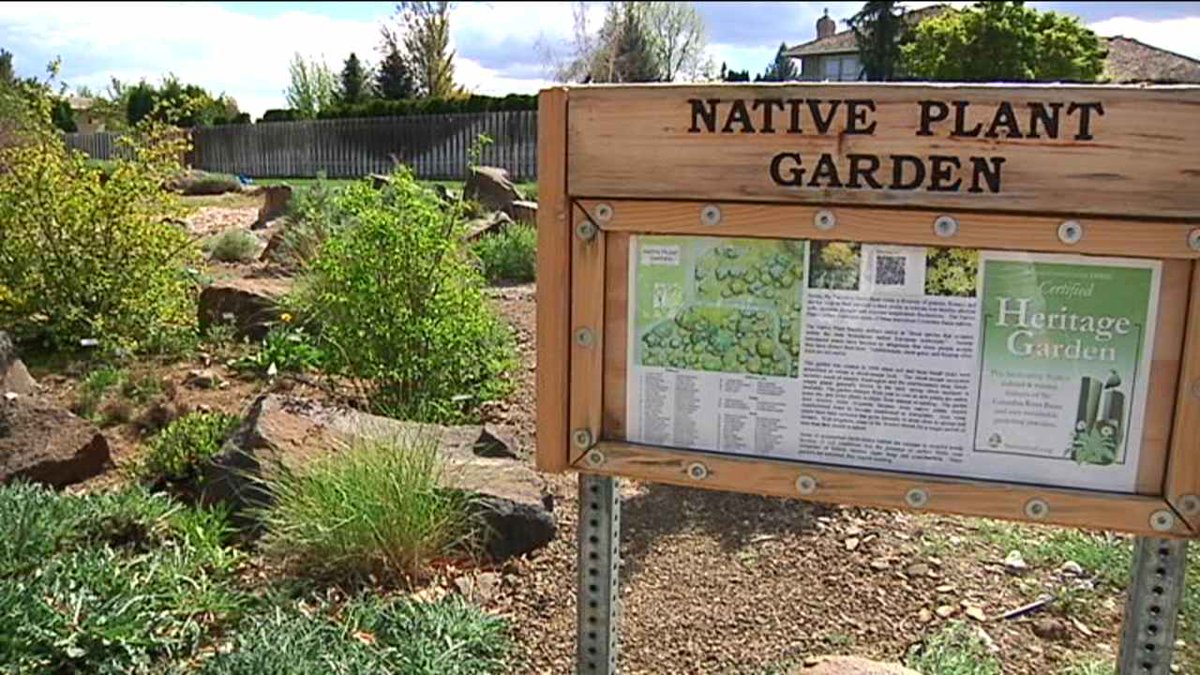
Heritage Garden
Benton Conservation District

  • Heritage Gardens promote the use of native, culturally significant plants and low water-use landscaping. These are sprouting up throughout the United States. Converting lawn to Heritage Gardens can save thousands of gallons of water per year, protecting landscapes during drought years like 2015 and into the future. Benton and Franklin Conservation Districts, in partnership with the Columbia Basin Chapter of the Washington Native Plant Society, are implementing a Heritage Garden Program that offers local landowners free information, on-site recommendations, and a workshop on November 14. Learn more about Benton Conservation District’s response to the drought.
  • Smartscaping or Xeriscaping provides another lawn alternative. These landscapes include a mix of plants, trees, and edibles that require little to no irrigation, even in periods of drought. Spokane Conservation District’s SmartScape website provides free tips, plant suggestions, and even landscape designs to help you get started. 
  • When the clouds finally break, rain gardens allow you to use runoff from hard surfaces, such as roofs and driveways, to water your plants. They also replenish groundwater and reduce ground pollutants. Kitsap Conservation District offers free site visits to landowners in unincorporated Kitsap County to discuss options, and they may be able to offer financial assistance. Several conservation districts, especially in the Puget Sound region, also offer low-cost rain barrel workshops. Or, watch a video on how to build a rain barrel from Snohomish Conservation District.

On the farm: Using less and retaining more

Sprinkler irrigation system
Kittitas Conservation District
  • Improving irrigation efficiency builds drought resilience by reducing water use and reducing the amount of sediment and pollutants that flow off fields into nearby waterways. Many conservation districts offer cost-share to help landowners cover the expense of upgrading to more water-efficient irrigation systems, such as center pivot sprinklers. In the last two years Kittitas County Conservation District has assisted over 12 landowners with sprinkler conversion projects.
  • Many conservation districts across the state help landowners implement Irrigation Water Management (IWM). IWM plans help landowners determine the volume, frequency, and application of irrigation water for the most efficient water use. The plans are based on specific site conditions, such as soil type, crop grown, and slope.
  • Direct seed and no-till farming not only improves soil health, it also benefits water conservation. Conventional plow-based tillage buries crop residue (stalks, stubble, and leaves left after a crop is harvested) in the ground. With direct seed and no-till practices, crop residue is retained on the surface. The residue helps increase water infiltration and reduce evaporation. Many conservation districts offer direct seed equipment rental programs. You can learn more about the practice on this fact sheet from Spokane Conservation District.

Learn more

Conservation districts offer a range of voluntary services to help you conserve natural resources on farms, forests, ranch land, water- and river-front properties, and in urban and suburban areas. Find your district today using this Conservation District Map, and visit the Washington State Conservation Commission website for more information.

Tuesday, August 18, 2015

Water blog series: What does water conservation look like?

This a good year to roll out Yakima Basin residential drought plan

By Joye Redfield-Wilder, Central Regional Communications Manager


Some 300 years ago, Thomas Fuller wrote, "We never know the worth of water, till the well is dry." An apt statement for this year’s drought.

Water conservation can make a difference in our communities. Seattle is a national model for water efficiency, despite its rainy climes, and uses the same amount of water yearly that it did in the 1970s.

We know outside irrigation is the largest “consumer” of water in the United States. In the Yakima Valley and across Washington investments to change irrigation practices from flooding a field to sprinklers and drip are a great success.

Sadly, those efforts haven’t been enough. Why? It hasn’t rained in Seattle and the rivers aren’t running high anywhere. Mother Nature didn’t deliver a 10-foot pile of snow to slowly melt like in a typical year. We’re experiencing NOW what could be the new norm 40 years from now.
Record low flows in Teanaway River, tributary to the Yakima River

Large urban areas and farmers have been paying attention and measuring both the environmental and economic costs of droughts. And planning ahead. Now it’s time for the rest of us to consider what we can do and why.

I live in the Yakima Valley, where my grandfather homesteaded on property near White Swan, grew potatoes, sold cream from his dairy cows and raised a large family. Water is the lifeblood of this fertile valley. Our families know acutely when the well runs dry and the pump goes out and the irrigation ditch is unfilled.

Water conservation is a crucial part of how we should address drought. It’s an important component of the Yakima River Basin integrated water management plan that looks to respond to current and future water short years. A fully implemented plan calls for everyone - not just farmers – to cut their water use to 70 percent of normal in a drought. This year, many farmers are getting only 46 percent of normal.

Efficient use of municipal and domestic water throughout the Yakima Basin can make a difference and is spelled out in the plan, using voluntary, incentive-based actions that focus on landscape irrigation and other consumptive uses.


Imagine if each of us decided to lop 30 percent off our summer water bills.

I know many pay a flat fee for their irrigation whether they use it or not. Others draw from private domestic wells. Still, imagine what using 30 percent less water would look like.

What better year than this for us to start examining how residential, commercial, public entities – cities, parks, schools – can improve how water is used and better yet NOT waste water in the first place.  

Would it mean watering every other day instead of watering for 20 minutes a station EVERYDAY? This year in Kennewick, residents can only water twice a week at 20 minutes per station.

The savings could protect a declining aquifer and your domestic well and mean better water supplies for next year. Predictions are for another dire year. Let's plan ahead.

How about for school boards and park managers? Can we examine how frequently school yards and ball fields are watered and consult with conservation districts and Washington State University to land on optimum watering schedules that protect kids, but also not waste water? Could it be as simple as changing our watering schedule and sprinkler programs?
Embedded image permalink
Benton Conservation District Native Plant Garden

How many of us have walked across a soggy field or seen sprinklers watering the sidewalk? How many of us are ‘keeping up with the Jones’ in our yards? I know I’m guilty.

Consider making yours a heritage garden of low-water and native plants that will add beauty and help to respond to drought now and in the future.

This can be a positive experience and not a rude wake-up call. Y’all let’s get on board! Learn more at EPA WaterSense


>> see the Drought collection