Showing posts with label Environmental Assessment Program. Show all posts

Thursday, September 26, 2019

The spiny pink scallop: Ready for sweater weather


Eyes Under Puget Sound's Critter of the Month


Mmmm….scallops. It’s amazing how just one word can conjure up the taste and smell of pan-seared, buttery deliciousness. If you’ve ever been to a fancy seafood restaurant or watched the show, “Top Chef,” you know the important role that scallops play in the culinary world. But do you know what role they play in the sediment ecosystem at the bottom of Puget Sound?

Pretty in pink

The spiny pink scallop spends its days doing what most scallops do: lying on its right side on the sea floor with its fan-shaped shell open, filtering microscopic algae from the water that passes over its gills. This particular scallop is known for its bright color and the prominent spines that adorn the ribs running down its shell.

What’s interesting about this species is that the type of sea floor it lives on can influence what it looks like! Individuals found on rocky or shelly bottoms (the more typical habitat) generally have the pink and spiny characteristics. However, individuals found on the muddy sea floor in more protected areas are drab in color, with less pronounced spines. The difference can be so drastic that taxonomists once thought these two “morphotypes” were actually different species.

Sweater weather

The spiny pink scallop on the right has the sponge (Myxilla
incrustans
) covering; the one on the left doesn't. Photo
courtesy of Dave Cowles, wallawalla.edu.
Spiny pink scallops that live on the hard, rocky sea floor also tend to be covered with a layer of yellow sponge on their upper (left) valve. This is a symbiotic relationship that benefits both parties — the sponge gets a comfy place to live, and the scallop uses its sponge “sweater” as protection from predators.

Imagine you are a sea star, sensing a tasty scallop lunch nearby. You reach out and touch… a slimy, unappealing sponge! It’s no surprise that sea stars have been observed rejecting the sponge-covered scallops. This benefit makes carrying the extra weight of the sponge worthwhile, even if the burden may impact the scallop’s growth rate.

Just keep swimming

Spiny pink scallops also have to worry about predation by sea otters, octopuses, and humans — creatures not so easily fooled by the sponge disguise. This is where its “swimming” ability, used by many mobile scallop species, comes into play. When the scallop senses a predator approaching, it can quickly clap the two valves of its shell together, squeezing water out and causing a jet propulsion effect that allows it to swim to safety.

How does the scallop know when danger is near? It can detect predators by smell using chemoreceptors in the margins of the fleshy body wall membrane known as the mantle.
At 1 cm across, this little spiny pink scallop is already big enough to
 fall into the "hundreds of eyes" category! I stood it up on its side in
 a petri dish to get a better look at them as the valves slowly opened.

The eyes have it

If you look closely at the mantle, you will see the scallop has another sense as well — sight. Those bright blue-green dots scattered around the mantle are actually tiny, adorable eyes! These eyes can’t see images, but they can detect changes in light that might mean a predator approaching. A baby scallop might have just a few, but an older individual can have hundreds.

Coming to a plate near you?

This spiny pink scallop rests on the sea
floor, valves fully open in feeding mode.
Photo by Jim Nestler, July 2005 (from
wallawalla.edu).
The spiny pink scallop has somehow managed to avoid being a target of commercial fisheries (although some are harvested each year by diver or trawl in Canada). This is partially due to its small size; maxing out at about 6 cm, the spiny pink scallop barely makes a mouthful compared to the giant Pacific scallop or weathervane scallop (Patinopecten caurinus) found on Pacific Northwest dinner menus. However, its smaller (and less common) cousin Chlamys rubida, the Pacific pink scallop or smooth pink scallop, has made a comeback in Seattle restaurants in recent years. Perhaps the smooth pink scallop is prized over the spiny pink scallop for its delicate flavor? Someone needs to do a taste test — I’ll volunteer to be the judge!


By: Dany Burgess, Environmental Assessment Program


Critter of the Month
Dany is a benthic taxonomist: a scientist who identifies and counts the benthic (sediment-dwelling) organisms in our samples as part of our Marine Sediment Monitoring Program. We track the numbers and types of species we see in order to understand the health of Puget Sound and detect changes over time.

Dany shares her discoveries by bringing us a Benthic Critter of the Month. These posts will give you a peek into the life of Puget Sound’s least-known inhabitants. We’ll share details on identification, habitat, life history, and the role each critter plays in the sediment community. Can't get enough benthos? See photos from our Eyes Under Puget Sound collection on Flickr. 

Friday, August 30, 2019

Our scientists contribute to “global biodiversity library”

Eyes Under Puget Sound

Video provided by www.hakai.org.

Last week I was in sunny Los Angeles for the third and final west coast invertebrate “bioblitz” of the summer — the LA Urban Ocean Expedition (LAUOE). While the LA scenery was certainly different from home, the work I did there was a continuation of my previous work helping other marine scientists catalog invertebrate biodiversity! This work is crucial for documenting species before they disappear. The event also gives us an opportunity to communicate to the public just how important invertebrates are to the healthy function of marine ecosystems.

Bioblitz selfie! I had just settled in at my microscope station.  Working alongside some of the West Coast’s expert taxonomists
for a week was an incredible experience.

Crack the code

Our marine scientists held a similar bioblitz this past spring, where we collected and identified as many live sediment-dwelling invertebrates as possible from Puget Sound. “DNA barcoding” events like these are happening all over the U.S. and worldwide. Washington, Oregon, and California are just the latest to join in the effort.

During a bioblitz, tiny pieces of tissue are taken from each animal collected. These tissue samples will be sent to the Smithsonian Institute, where DNA will be extracted and analyzed to determine a unique genetic sequence for each species. The resulting DNA barcodes will be added to a global biodiversity library that taxonomists like me can use to identify species and determine if species are new to science — including undescribed species from Puget Sound! We can use this information to better understand how invertebrate communities respond to environmental stressors, like those associated with climate change.


Under the microscope

Daily operations are continuing for the rest of this week at the AltaSea facility at the Port of LA, where a pop-up lab is staged with flow-through saltwater systems, microscope stations, and docks for dive boats to pull up with fresh specimens. Taxonomists from all over the country were invited to participate, so I felt very fortunate for the opportunity to learn from them about the intertidal invertebrates of Southern California. Some species were familiar, but many aren’t found as far north as Washington, so this gave me a bit of a challenge. One of the highlights was having a worm I identified — the Sandcastle Worm, Phragmatopoma californica — win a “Species of the Day” contest!

Los Angeles BioBlitz Critters

Reaching out


LAUOE is sponsored and organized by staff from the Natural History Museum of Los Angeles County. They invited school groups, community members, and business professionals to meet ocean scientists, tour the lab, and even touch and sort live critters.

Many people living in urban environments don’t realize how many amazing animals live right at their doorstep. Engaging the public in these types of events fosters an appreciation for the natural world that can later translate into more successful conservation efforts.


By: Dany Burgess, Environmental Assessment Program

Critter of the Month

Our benthic taxonomists, Dany and Angela, are scientists who identify and count the benthic (sediment-dwelling) organisms in our samples as part of our Marine Sediment Monitoring Program. We track the numbers and types of species we see in order to understand the health of Puget Sound and detect changes over time.

Dany and Angela share their discoveries by bringing us a Benthic Critter of the Month. These posts will give you a peek into the life of Puget Sound’s least-known inhabitants. We’ll share details on identification, habitat, life history, and the role each critter plays in the sediment community. Can't get enough benthos? See photos from our Eyes Under Puget Sound collection on Flickr.

Thursday, August 29, 2019

Women in Science: Sara Sekerak navigates new cannabis lab legislation

Sekerak leading a presentation about cannabis testing methods, protocols, and quality standards.

Sara Sekerak is working in uncharted territory. She is part of a new task force mandated by Washington’s Legislature to define scientific standards for our state’s cannabis laboratories. How does someone end up with such a high-pressure job? It takes a lot of lab experience, a keen eye for quality assurance, and a thorough background in ensuring products comply with regulatory standards. Sara shares more about what led her to this important new position on the task force in this month’s Women in Science interview.


Sara's job at Ecology


Sekerak performing size reduction of a study product in the Product Testing
Prep Room. Pre-processing of products is a necessary step in producing
samples for lab analysis.
Right now, I am the lead chemist for the Cannabis Science Task Force, but the road to my current position has been a winding one. Before I joined the Task Force, I was a Product Testing project manager. In that position, most of my work supported the Children’s Safe Product Act.

During the past two years, I managed a study of school supplies marketed to children ages 12 and under. We looked for lead and cadmium because those metals have both federal and state limits. School supplies are not explicitly covered in the Children’s Safe Product Act, so the Attorney General’s office took a special interest in this. We worked with the Attorney General’s Office and scoped a project to meet their needs.


In May 2019, the Attorney General’s Office finalized a settlement with Amazon that our study helped substantiate. The most important outcome of this settlement is that Amazon now requires all third-party sellers of school supplies and jewelry to produce a certificate confirming that their products meet the federal requirements for lead and cadmium.

Recent work

Authoring a Cannabis Laboratory Accreditation report led me to my current position as lead chemist for the Cannabis Science Task Force. The goal of the Task Force is to work with multiple agencies, as well as scientists from the cannabis industry. We have been asked by the Legislature to provide recommendations that would help cannabis testing labs apply science-based practices and other critical elements needed for a robust accreditation.
Because there is no federal oversight for cannabis (like there is for drinking water or agricultural products), there are currently no standard methods specifically for testing cannabis. So labs are creating their own procedures and processes. Right now, each lab defines their own level of quality; the problem with this is that there is variability from one lab to the next. Our task force will meet from now to Dec. 1, 2021, and this multidisciplinary group of agencies and scientists will try to close some gaps in the labs’ processes.

Advice for future women in science

I’ve often felt like my work has been challenged or questioned. But, wherever I have gone, these challenges and questions have always motivated me to work harder. So my first piece of advice would be to not let negative comments get you down. I have worked hard to build my name and reputation to prove that I am a valuable team member. If anyone questioned my work ethic, I just worked harder to prove that I could.
Sekerak working at Manchester Environmental Laboratory.
My second piece of advice would be to never stop learning and always ask questions. In 2000, I started my first job at a lab through an internship at Manchester Environmental Laboratory. I always wanted to learn new things, so I would offer to help and job shadow everywhere I could.
From there, I worked my way up to my current position as a lead chemist, and my experience communicating with labs gave me a leg up. My diverse experiences lined me up perfectly for my current position, which requires a broad scope of knowledge.

By: Ruth Froese, Environmental Assessment Program Communications

Tuesday, May 28, 2019

Women in Science: Arati Kaza


Arati Kaza in the lab taking apart a children's product that will be tested.
Arati pre-processing children's toys for metals and phthalates.

ARATI'S JOB AT ECOLOGY


Arati Kaza is our quality assurance officer. She reviews project plans and other technical documents for the agency. She makes sure that the hard work that goes into the collection and analysis of environmental samples is defensible in court. For each project, she has to see the big picture so that every science-based report that comes out of Ecology is of the highest quality and complies with regulations.

Arati shared her most recent work , advice, and experiences.

RECENT WORK

    Arati overseeing lab work.
  • I have been heavily involved in making process changes to get to a paperless system for quality assurance documents. This has made the process more transparent and faster than previous processes. 
  • I worked on the recent case for setting better standards for toxic metals in school supply products. Due to the great work done by the team, a major online supplier is now requiring testing results with their products to ensure safe levels of metals like lead and cadmium.
  • I helped organize a Citizen Science Workshop for a non-profit for sampling phthalates in products that are used in road paints, billboards, traffic cones etc. Surprisingly, most of the products tested were free of phthalates, and now a second round of testing is in progress.

ADVICE FOR FUTURE SCIENTISTS

    Pull quote: don't give up on your passion or area of expertise - one day those paths will cross!
  • Go to school and get a degree! Going to school builds that strong foundation toward working hard, asking the right questions, and finding the people with whom you share common ideas.
  • Work on your communication skills; they really come in handy.
  • Whenever you voice a problem, think about how you can suggest a few solutions to the problem. This encourages problem solving; you might not have the right solution every time, but you force your brain to think from different perspectives.
  • There will be hardships, there will be problems, but always treat a problem as an opportunity to learn something new.
"When I was growing up, my parents always talked about how there is one thing in life that you are good at and then there is the one thing that you are passionate about," said Arati. "For me, chemistry was what I was good at, and protecting the environment was my passion. A combination of the two is what landed me at Ecology. So I would say to all you women out there, don’t give up on your passion or your area of expertise — one day those paths will cross!"

By Ruth Froese, Environmental Assessment Program Communications
Women in Science is an Ecology series produced by the Environmental Assessment Program. Stories are usually published once a month.  

Tuesday, July 31, 2018

If fish could talk—what Palouse River fish are telling us


A big catch for clean water

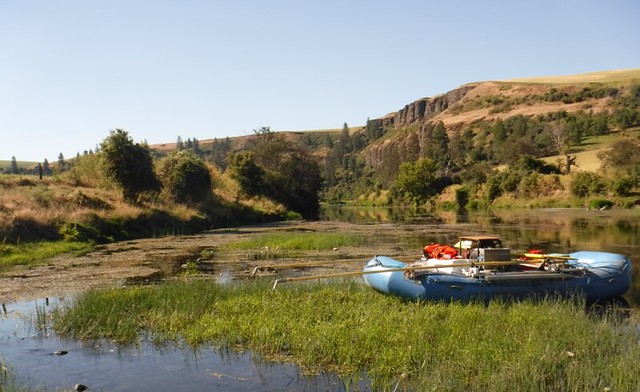
Crews from the Department of Ecology and local Conservation Districts just spent six weeks collecting fish from the Palouse River in southeastern Washington. Collecting these fish is part of Ecology’s program that monitors fish in rivers and streams for contaminants.

The fish collected will help the agency measure changes in the water quality of the river. The fishing effort yielded 348 “keepers,” including suckers, pike minnow, smallmouth bass, chiselmouth, and carp.

Once the team of researchers finish collecting fish they are analyzed for harmful toxic pollutants, like PCBs and other chlorinated pesticides like DDT. 

Capturing just the right number, size, and species of fish at just the right location can make fish collection difficult. Researcher Keith Seiders of Ecology’s Environmental Assessment Program says that collecting fish in smaller rivers like the Palouse can be challenging, but it’s worth the effort.

Seiders: “It’s worth it because these fish in the analyses give us information that will help us make decisions that can impact communities and the way we do business for decades to come.”


Palouse River Freshwater Fish Sampling


What do the fish tell us?

Toxic chemicals used in the past can end up in the environment and get washed into rivers and streams where fish accumulate them. Even though some of these chemicals were banned in the United States more than 35 years ago and are no longer used, they persist in the environment because they can take decades to break down and become harmless.

Seiders: “Fish are a great collector of these chemicals because they’re in the aquatic system and everything flows downstream and into the waters. So that’s where we can measure these chemicals accurately in the environment. And it tells us about how widespread they may be."


Fishing for solutions

A 2005 study sparked communities in the Palouse watershed to take action to control pollution. Ecology worked with local governments to develop a water cleanup plan. This plan identified chemical sources and listed actions to address the problem areas.

Seiders: “The monitoring that our group does is so important to help provide the information to let communities and states and residents make educated decisions about how to address problems with pollution in their environment."


Reeling in results

Results from this year’s fish sampling will be compared to previous studies to see if levels of pollutants in fish have decreased, and the results will also meet a variety of other needs.

Seiders: “The results are used by [Washington State] Department of Health. They’ll look at the results to see if a risk assessment is needed for the levels of toxic contaminants in the fish. If they’re high enough, they will do more work and issue a fish consumption advisory.”

The results from this research are expected to be reported in 2019. The report will tell the agency about changes in the amount of toxic pollutants in the Palouse River since the 2005 study. It may even give Ecology and local communities some insight into how the water cleanup plan is progressing.

By Ruth Froese, Environmental Assessment Program Communications


Thursday, July 19, 2018

Eyes Under Puget Sound: Size matters—What can we learn from biomass and size classification?


Eyes Under Puget Sound
For the first time, benthic invertebrate biomass is being studied on a large scale in Puget Sound. What does this mean? Sediment-dwelling benthic invertebrates (benthos) live in the mud or sand at the bottom of Puget Sound; their abundance and diversity can help us assess the health of the sediment ecosystem. As it turns out, the size of the animals is also critical when evaluating ecosystem health. Recording these biomass trends over time will help us learn more about how organisms respond to environmental stressors linked to climate change.

Sediment sampling photos
LEFT: A sediment sample is collected using a double Van Veen grab. CENTER: Angela rinses a benthic sample though a 1 mm mesh screen. RIGHT: A benthic sample containing Molpadia intermedia, the Sweet Potato Sea Cucumber.


Making it count

Our Marine Sediment Monitoring Program has been identifying and counting Puget Sound benthos since 1989. Although a few studies have examined the biomass of particular invertebrate species on a smaller scale, large-scale monitoring wasn’t put in place until 2016, when we added a biomass and size-classification component to our program. This is important because we want to know how organisms respond to environmental stressors associated with climate change and nutrient enrichment. These stressors include changes in temperature and salinity, decreasing dissolved oxygen levels, and changes in food quality.


That’s about the size of it


Biomass is a measure of the amount of living biological tissue in a system, which can tell us about productivity, or how animals use and cycle nutrients as they grow. Calculating biomass is no small feat. It means weighing many individual animals in the lab, most of them very tiny. We have weighed over 6,500 creatures so far! After an animal is weighed, we categorize it into one of five species-specific size classes (small, medium, large, extra-large, and megafauna) based on its length. Megafauna are large animals like sea cucumber and crabs that weigh 2 grams or more; when we analyze our data, we look at these animals separately, since just one of them can greatly outweigh all the small animals in a sample.

Measuring benthos in the lab

LEFT: A marine worm is weighed to the nearest thousandth of a gram. CENTER: A tiny pectinariid (also know as the Ice Cream Cone Worm) is measured under a microscope. RIGHT: Size series of Astyris gausapata, the Shaggy Dovesnail.


Sneak peek

Map of benthic biomass based on water depth
Total benthic invertebrate biomass (in grams per 0.1 meters²) at 22
 Puget Sound stations sampled in April 2016. 
Shallow areas are indicated by lighter blue, 
while deeper areas are darker blue.
 Although it will take a few years before we can look at trends in biomass and size class over time in Puget Sound, we’ve already observed some interesting results from our 2016 data. These preliminary results were presented as a poster at the 2018 Salish Sea Conference in Seattle, and are now available online as an Ecology publication.

Some of the major findings include higher biomass in shallow areas like Bellingham Bay and terminal inlets, and generally lower biomass in deep basins (see map, right).
Communities with high biomass tended to have lower numbers of individuals and low diversity (meaning that a few large animals dominated, but there were not a lot of different species). Communities with the lowest biomass had the greatest numbers of individuals and were the most diverse (meaning there were many smaller animals of many different species). This shows that high biomass alone is not necessarily an indicator of a healthy benthic community. Overall, the top contributors to total biomass were stress-tolerant species of marine worms and small clams.

The sizes of animals and how they change over time may shed light on the effects that stressors have on the development of individual organisms, and how that relates to the long-term stability of benthic communities. We certainly have much more to learn from this exciting new dataset, so stay tuned!


By: Dany Burgess & Angela Eagleston, Environmental Assessment Program

Our benthic taxonomists, Dany and Angela.
Pictured left, Angela Eagleston;
right, Dany Burgess.

Our benthic taxonomists, Dany and Angela, are scientists who identify, count, and weigh the benthic (sediment-dwelling) organisms. They work as part of our Marine Sediment Monitoring Program team. Together, they track the numbers and types of species we see in order to understand the health of Puget Sound and detect changes over time.


Can't get enough benthos? See photos from our Eyes Under Puget Sound collection on Flickr.
Thursday, March 29, 2018

Fecal Matters: How'd your beach do in 2017?


Curious to see how your favorite beach fared for healthy swimming last year? See how the 2017 swimming season stacked up. In the BEACH Program 2017 Annual Report you'll find the top swimming beaches for water quality, beach water quality by county, and beaches that did not meet swimming standards.

Click to View the 2017 Annual BEACH Report

See the good, the best, and the "poopy" marine swimming beaches for last year. Did your favorite beach make the list for the top swimming beaches? Or, did it make the list of beaches that were closed to recreation due to high levels of fecal bacteria?


Why does it matter?


Anyone who uses marine beaches for recreational purposes such as swimming, scuba diving, surfing, or kayaking can be exposed to illness associated with water contaminated by sewage.


Contact with fecal contaminated waters can results in gastroenteritis, skin rashes, upper respiratory infections, and other illnesses. Children and the elderly may be more vulnerable to waterborne illnesses.

How does poop get in the water? 

Fecal bacteria get into the water in a number of ways. Some of it is natural, and a small amount of fecal bacteria does not pose a threat to public health.

Water at a beach can rise to an unhealthy level for many reasons. These include septic tanks that are not properly maintained, large amounts of sewage discharged from sewers overflowing during heavy rain or recreational boaters, wild animals congregating due to people feeding them, dogs pooping on beaches, used diapers being left on the beach, and others.

Click to learn how you can help keep your beach clean for swimming

More about BEACH

The Beach Environmental Assessment, Communication, and Health program, nicknamed BEACH for short, monitors marine beaches from Memorial Day to Labor Day. This program is a joint effort with the Washington State Department of Health, county and local agencies, tribal nations, and volunteers.

The BEACH program helps keep swimmers healthy on the coast and across Puget Sound by testing marine beaches for fecal bacteria and issuing public beach closure notices if the results show the water might pose a health risk. BEACH does not test freshwater beaches located on rivers and lakes.

Click here to see if your beach is open.
Remember, many beaches are only monitored Memorial Day through Labor Day.
Stay updated about water quality at your beaches by subscribing to our Fecal Matters RSS feed, checking the beach closure map on Coastal Atlas, or joining our email listserv. Contact BEACH program manager Julianne Ruffner with questions.