Monday, December 23, 2019

Crews safely remove, detonate dangerous chemical device

Homeowner finds poisonous theft deterrent in old safe

Our Spill Response program is usually thought of as the team that responds to oil spills across Washington. What people may not know is that they also respond to many other dangerous situations that could harm our environment or threaten human health. 

The theft deterrent device.
“We remove the hazards from illegal drug manufacturing facilities and we also respond to and identify unknown chemical substances; things like abandoned containers or drums that aren’t labeled, mystery chemicals discovered in homes and schools,” said Spill Response Section Manager Dave Byers. “A lot of what we run across is very toxic … phosphine gas, cyanide, acids, and flammable materials.”

Last Thursday, the Spill Response team got a call from the Kennewick Fire Department. A homeowner had purchased an old safe and found a theft deterrent device inside comprised of three glass vials of a slightly opaque, unknown liquid. Antique devices like these commonly used chloropicrin or phosgene, poison gases first manufactured for chemical warfare during World War I.

The idea behind the design? Potential safe crackers would break the vials and get a toxic surprise.

Testing for hazardous chemicals before detonation.
Since local hazardous waste collectors wouldn’t take the vials, Spill Response Manager Andy Wilson picked them up for inspection and disposal. When Wilson contacted the National Guard 10th Civil Support Team for assistance, he learned the vials could actually contain highly-volatile nitroglycerin or picric acid. He and the National Guard opted for caution and called the Washington State Patrol bomb squad.

They tested the chemicals, which were identified as Chloropicrin, a gas that can cause severe irritation to the eyes, lungs and skin. The bomb squad elected to detonate the chemicals to ensure safe disposal.

“Our small but highly skilled team never knows what we’ll be responding to until we get the call,” said Spill Response Supervisor Sam Hunn. “That’s what makes it fun. But we’re rarely operating alone. We work with our partners in the emergency response community to make sure we finish the job safely and efficiently. In this case, that meant working with partners who have access to explosives.”

While this incident ended in the safe removal and disposal of hazardous chemicals, the outcome could have been very different, depending on the actions of the homeowner. If you come across unknown or unmarked chemicals, don’t just toss them in the trash. Ecology’s Spill Response team can help identify and dispose of them if necessary. They can be reached anytime by contacting Washington Division of Emergency Management at 1-800-258-5990.

Learn more about Ecology’s Spill Response program at ecology.wa.gov/Spills-Cleanup/Spills.

Friday, December 20, 2019

Fecal Matters: Update to the no-contact advisory issued for Port Washington Narrows and Dyes Inlet, Kitsap County

BEACH program update


12/24/2019 Update: Kitsap Public Health District extended the no-contact advisory in Port Washington Narrows to Dec. 31 and expanded the affected area to include Dyes Inlet. This is due to an additional sewage spill of approximately 6,000 gallons.

Kitsap Public Health District issued a no-contact health advisory for Port Washington Narrows due to sewage spill caused by heavy rains of more than 15,000 gallons. Signs have been posted at public access points and the public is advised to avoid contact with the water in those areas. This advisory will remain in effect through Thursday, Dec. 26.

Contact with fecal contaminated waters can result in gastroenteritis, skin rashes, upper respiratory infections, and other illnesses. Children and the elderly may be more vulnerable to waterborne illnesses.

Stay updated on water quality at your beaches by following our Fecal Matters blog posts, connecting on Facebook, or joining our listserv.

Julianne Ruffner, our BEACH Program Manager, is available at 360-407-6154 or julianne.ruffner@ecy.wa.gov for questions.

Fecal Matters: No-contact advisory issued for Saltwater State Park, King County

BEACH program update


Seattle and King County Public Health has issued a no-contact advisory to water contact at Saltwater State Park. Heavy rains caused a sewage spill at the Midway Sewer District that has discharged near the park. Signs have been posted at the park notifying the public.

Contact with fecal contaminated waters can result in gastroenteritis, skin rashes, upper respiratory infections, and other illnesses. Children and the elderly may be more vulnerable to waterborne illnesses.

Stay updated on water quality at your beaches by following our Fecal Matters blog posts, connecting on Facebook, or joining our listserv.

Julianne Ruffner, our BEACH Program Manager, is available at 360-407-6154 or julianne.ruffner@ecy.wa.gov for questions.

Thursday, December 19, 2019

What do you do when the polluter is a mountain?


Sumas Mountain has been losing weight.

For decades, a slow-moving landslide has been exposing the side of Sumas Mountain, in Whatcom County. The landslide material contains naturally-occurring asbestos and heavy metals – and it all ends up in Swift Creek.

Can we stop the mountain from sliding? No dice.
The Sumas Mountain landslide (upper center) is polluting
Swift Creek with naturally-occurring asbestos and heavy metals. 

Ecology originally considered engineering a “fix” to stop Sumas Mountain from sliding and depositing asbestos into Swift Creek. Further research and design revealed that Mother Nature would win that fight.

The slide can’t be stopped by a human-engineered approach, no matter how massive. Sumas mountain, or at least one side of it, is slowly coming down.

So Ecology and Whatcom County are left to manage the effects: chronic flooding and huge volumes of landslide debris and stream-born sediment damaging property and crops downstream.

Check out the Swift Creek Action Plan to learn about this flood control and sediment management plan.

A round peg in a square hole
Sediment in Swift Creek from the Sumas Mountain Landslide
 is contaminated with naturally-occurring asbestos and heavy metals.

Over the past 30 years since the Model Toxics Control Act (MTCA) became law, Ecology has become skilled at managing cleanups – and then comes along a unique project that’s NOT a cleanup. MTCA gives Ecology legal authority to clean up contaminated sites – and to make Potentially Liable Parties (PLPs) pay for it. At Swift Creek, the only PLP is Mother Nature, and as much as we all wish, money does not grow on her trees. We can’t get her to the table to sign a legal agreement, either.

Meanwhile, we’re left with the challenge of fitting a round peg into a square hole: a long-term project implemented with a MTCA-based legal agreement, but with no PLP and no rigid MTCA process to guide management.

Twists and turns
Swift Creek public meeting October 9, 2019.
Public input was a big part of the process.

Given the unusual challenges and need for coordination among Whatcom County, EPA and Canadian agencies, Ecology’s project manager, Cris Matthews, relocated to the Bellingham Field Office years ago to better manage the project.

Since Mother Nature wasn’t ponying up and Whatcom County didn’t have the money to complete the project, outside funding was critical. Several trips to the state legislature over the years for budgetary help were eventually rewarded with appropriations to pay for the project. With funding available, Ecology and Whatcom County crafted a grant agreement that allows flexibility to provide for the complicated mix of property purchase, contracting, and long-term construction goals.

The twists and turns didn’t stop with the finances. The project requires the County to purchase approximately 200 acres of private timberland, and those negotiations are currently in progress.

Then there was keeping the community involved and informed -- in two nations. Swift Creek flows into the Sumas River and, eventually, the Fraser River, northeast of Abbotsford, British Columbia.

Maintaining relationships with our Canadian agency counterparts and proactively engaging the community were key. The public meeting was well-attended and various outreach outlets helped spread the word. Our story even landed on the front page of the local newspaper.)

Different flow, same goal

For all its differences, the end goal of the Swift Creek project is the same as Ecology’s goal for any project: protect human health and the environment. Since Ecology and Whatcom County can’t stop the asbestos problem or remove it from the environment, we work to control the effects to stream conditions, flooding and manage the sediment in a way designed to reduce risk.

To be where we are today took a team effort, dedication, perseverance, more than a few cups of coffee, and a unanimous “yes” vote by the Whatcom County Council on Tuesday, November 19 to sign the Consent Decree that defines the relationship and responsibilities for Ecology and the County.

The Swift Creek project Consent Decree signing on
Dec. 6, 2019 was an exciting milestone that allows
us to move forward with solutions. 
Friday, December 6, 2019 marked a huge milestone with the Consent Decree signing. Unfortunately, a photo couldn’t quite capture the satisfaction in the room, but you can see a few smiles accompanying the pens.

Well done team.

Sumas Mountain keeps sliding. Sediment keeps accumulating. Swift Creek keeps flowing.

Our team keeps innovating, managing and persevering.

When Mother Nature gives us a “square hole,” we make that “round peg” fit the best we can.

By Ian Fawley & Cris Matthews, Toxics Cleanup Program Bellingham Field Office​

Wednesday, December 18, 2019

Protecting Puget Sound’s No Discharge Zone

Ecology will continue to implement the NDZ and protect Puget Sound while the court case proceeds


Since May 10, 2018, a federal “No Discharge Zone” (NDZ) has made it illegal to discharge both treated and untreated sewage from boats and vessels into Puget Sound.

Vessel sewage can contain bacteria and viruses that are harmful to people and the environment. These contaminants are harmful to water quality, beaches, and shellfish beds. Eating shellfish that have been exposed to pollution can make people sick. The presence of one type of bacteria, fecal coliform, has closed shellfish beds throughout Puget Sound.

While this is Washington’s first NDZ, there are more than 90 No Discharge Zones in 27 states. The U.S. Environmental Protection Agency (EPA) approved the Puget Sound NDZ and has continued to approve NDZs across the country, including a new NDZ in Maryland on Dec. 16, 2019. View the full list of EPA-approved NDZs.

We are implementing the NDZ and Washington’s boaters are using the more than 100 pumpout stations in Puget Sound. We have seen approximately 700 acres of shellfish beds reopen since implementation, a sign that the NDZ is working to protect and restore Puget Sound.

At the same time, a coalition of marine businesses have challenged the NDZ in federal court. While the U.S. District Court for D.C. has not yet ruled on the case, there are recent developments in the case and we wanted to share the current status of Washington’s NDZ. 

view of puget sound with text Puget Sound off limits to vessel sewage

Legal Matters

In December 2018, the American Waterways Operators (AWO) filed suit in federal court  against EPA, challenging EPA's determination that there are adequate pumpout facilities in Puget Sound to support a No Discharge Zone. We intervened in the AWO lawsuit because we support the NDZ and know it is a critical part of helping restore and protect Puget Sound. 

The court granted our motion to intervene on March 25, 2019. Washington Environmental Council, Puget Soundkeeper, and Friends of the Earth were also granted intervention.

In late May 2019, EPA filed a motion with the court asking the court to remand the case to EPA, so EPA could evaluate the cost of its adequate pumpout determination. Industry joined EPA’s motion and requested  the court vacate EPA’s adequate pumpout determination during the remand. On December 13, 2019,  the court  ruled against the motions to remand the NDZ decision back to EPA and the case is now proceeding on the merits. 

What's next for Washington's NDZ?

We will continue to implement the NDZ as the court case proceeds. We believe EPA correctly determined there are adequate pumpout facilities in Puget Sound to support the Puget Sound NDZ and are confident the court will ultimately rule in Washington’s favor. 

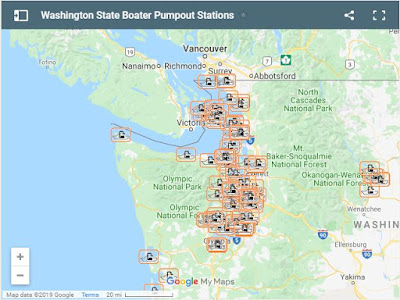
map of pumpout stations
There are well over 100 recreational and commercial pumpouts on Puget Sound and funding is available through Washington State Parks grants to establish more. Washington boaters are already using these convenient locations to safely dispose of vessel sewage. 

We provided an extended compliance timeframe for the rule, so some operators, including tug boats, have until 2023 to fully retrofit all their vessels to hold sewage. Vessel operators have begun investing in retrofits to comply with the rule.

Investments in the newly upgraded shellfish beds have begun and we expect more good news as the NDZ continues to be a part of Puget Sound. 

Why does Washington have an NDZ?

We established the NDZ to stop the discharge of vessel sewage into our waters.  Puget Sound is a regional treasure of great economic importance and preventing vessel sewage from being released throughout Puget Sound is a common sense decision. The NDZ is an important part of protecting and restoring the sound.

To learn more about why we have an NDZ and how it protects Puget Sound, read our April 2018 blog post.

Additional NDZ information is available on our NDZ webpage.

Find a pumpout in Washington or visit the State Parks pumpout website.

Washington's NDZ helps protect water quality, beaches, and shellfish.

By Colleen Keltz, Water Quality Communications

Floodplain redesign delivers downstream benefits for all

Southeast Washington project will restore fish habitat, reduce flood risk


Cobblestones crunch under a dusty yellow excavator dragging a 20-foot length of tree by its roots. The grappling arm weaves the log between two cottonwoods and into the river, where upset water raises its voice in response.

This deliberate logjam is one piece of a plan to restore a functional floodplain along a three mile stretch of the North Fork Touchet River in southeast Washington. Boulders and woody debris will influence the river’s flow while creating deep pools for fish. Native trees and grasses, planted along the banks, will lower downstream flood risks and shade cooler water. More than a mile of levee will be removed or set back to reconnect 50 acres of floodplain, slowing the springtime surge and storing water in underground aquifers for healthier late summer flows.

Construction will take about three years and $5 million to finish. The Salmon Recovery Funding Board, Confederated Tribes of the Umatilla Indian Reservation (CTUIR), and Bonneville Power Administration are contributing about $3 million to the project, while our Floodplains by Design (FbD) program is providing $2.1 million. Ecology co-manages FbD with The Nature Conservancy and Puget Sound Partnership, helping Washington communities reduce local flood hazards while restoring aquatic habitat, improving water quality, and enhancing outdoor recreation.

Ecology's Floodplains by Design program is helping to fund restoration of a functional floodplain along a three mile stretch of the North Fork Touchet River in southeast Washington.

Restoring lost vitality


“Over the last decade or so we’ve realized that we’re losing the battle on protecting communities against flood risk,” said Scott McKinney, who leads the FbD grant program. “We’ve also realized that, much like wetlands, floodplains are vital ecosystems that provide a lot of services, and we’ve been losing those as well.”

Floodplains moderate the flow of water, deliver rich soil for farms, and offer important habitat for fish such as steelhead trout, which have been struggling for survival in the Touchet River watershed. Chinook salmon – a primary food source for Washington’s endangered Southern Resident Killer Whales – haven’t lived in the river for years. Improving habitat in the North Touchet will help the state Department of Fish and Wildlife and CTUIR in their efforts to reintroduce Chinook.

“We’re working under a umbrella philosophy that the tribes call ‘the River Vision,’ which is meant to not only restore habitat, but to improve the hydrology, geomorphic and biological function of the river,” said CTUIR project leader Jerry Middel. “The North Touchet is a relatively small river when you look on the map, but it’s extremely important. What we’re doing here is going to directly benefit all our downstream neighbors.”

The city of Dayton, while not directly involved with the project, is among the downstream beneficiaries. Adding logjams and other material to the system will prevent sediment from rushing into town to undermine levies and increase flood risk when river flows are high.

“The reason why this project is important is, it shows collaboration between tribal agencies, government agencies, and private landowners, and that’s not an easy nexus to form,” Middel said. “By us being out here, we can find common ground and get these projects on the ground.”

Snake River Salmon Recovery Board executive director John Foltz is primarily focused on salmon recovery, but he agrees a return to natural conditions will be better for everyone.

“If we can give the river a little more space, there’s so many multiple benefits to that – for the ag community, for flooding, for citizens downstream, and for the environmental condition of the ecosystem,” he said. “Sometimes we don’t have that luxury because of what’s occurring in the watershed, but in places where we do have that option and we have willing landowners, we feel like we can really have a win-win situation.”

Providing space to move 
An excavator lifts a log into the North Touchet River.


One landowner involved in the project is Bill Warren, whose family has farmed here since his grandparents arrived in the early 1900s. A section of his land will be given over to floodplain through a conservation easement.

“It makes sense to do these types of projects on this type of ground,” he said. “We don’t have houses on this property; it’s still pretty open and available.”

Past attitudes about flooding in the North Touchet and other watersheds have focused on control. Landowners attempted to tame rivers with levees and dikes, while property development annexed natural floodplains. Restricted rivers pushed their energy downstream, decimating salmon runs and leaving more towns and farmland in the path of dangerous floods.

Warren has learned the value of letting the river flex, a belief he’s sharing with his neighbors.

“My neighbors are curious about what I’m doing...They know I ask a lot of questions and they know I’m satisfied, so they could probably be satisfied as well,” he said. “With this project, when you’re working with hydraulic engineers, you’re working with geologic engineers, you can do modeling to see how the river’s performing at 20, 30, 50 year floods. When we worked on the rivers in the past we didn’t have those tools.”

“We do a lot of planning, a lot of assessment work, and that effort doesn’t always lead to something on the ground,” Foltz said. “As we’ve built working relationships and been on the same page and been advocates for each other, that’s led to successfully getting funding that we can actually get on the ground to make improvements."

Boulders and woody debris influence river flow and create pools for fish.

Funding is available


Since 2013, Washington’s Legislature has appropriated $165 million through FbD, reducing flood hazards in 38 Washington communities to protect hundreds of homes and farms, as well as restoring salmon habitat in more than 25 miles of river systems.

Ecology administers these funds through a competitive grant program, collaborating with the Nature Conservancy and Puget Sound Partnership to score applications and issue awards to eligible entities. Together, we make sure state money is invested well and restoration milestones are reached.

Have a project in mind? We're accepting pre-applications for new Floodplains by Design grants through Jan. 31, 2020. Ecology uses pre-applications to screen projects and help determine their suitability for the program. Grants will be awarded for the 2021-23 biennial state budget period, which starts July 1, 2021.

Learn more at www.ecology.wa.gov/FloodplainsByDesign.


Monday, December 16, 2019

Ecology adopts rule to strengthen railroads’ oil spill response efforts

New rule ensures railroads transporting oil are even more prepared to respond to a spill than before

An oil train rolling through Seattle
Failing to plan for an oil spill is a risk we can’t afford to take. Washington has one of the lowest oil spill rates of any state in the nation because we routinely assess spill risks and take measures to keep pace with changing trends in how oil is moved around the state, and emerging spill response capabilities.

Our planning work with railroads is vital because rail lines stretch across thousands of miles in Washington, crossing many rivers, streams, bays, harbors, and aquifers.

Ecology just completed rulemaking work to increase spill preparedness and response requirements of companies that move oil by rail. Specifically, this rule requires rail companies to:

  • Enhance readiness requirements for non-floating oils – Washington wants to address response measures for oils that may degrade and sink when spilled. This type of oil is a challenge to traditional cleanup plans that are designed to respond to floating oils.
  • Establish new requirements for spill and wildlife response teams – Spill Management Teams are the groups of people who respond to oil spills. Wildlife response service providers locate and care for oiled animals during a spill.

  • Require railroad operators to conduct new oil spill preparedness drills – Drills help companies and their partners (local governments, tribes, state and federal agencies, etc.) know what to do when an oil spill occurs. Companies will be required to test their plans and staff, depending on the size of their operation and type of oil they transport.
  • Streamline plans for smaller rail lines – Some short-line railroads haul non-crude oils, such as lube and vegetable oils, as cargo. Though these small railroad companies do not carry crude oil and serve small communities, oil of any kind is an environmental toxin and planning for spills is important. The new rules streamline planning requirements for smaller rail companies, depending on the type and volume of non-crude oil carried.  

An oil train near Richmond Beach
Railroads provide important contributions to all of us, by funding the pre-staged response equipment we have throughout the state. It’s there in case it ever needs to be used. These updates will help protect Washington’s vital environmental, cultural, and economic resources. The rule passage concludes a long public process that included several public hearings and a comment period.

This rule is the next evolution of several legislative efforts to reduce the threat to the environment, human health, and local economies from a rail spill, the first being the Oil Transportation Safety Act in 2015.

The adopted rule will go into effect on January 18, 2020. With the passage of this rule, railroads transporting oil in Washington will be better prepared to respond to a spill of various types of oil, work closely with spill management teams and wildlife response service providers, and train routinely on a number of scenarios. For more information about this rulemaking, visit our webpage.

Friday, December 13, 2019

Let it snow!

Winter at Palouse Falls (Credit: Randy Bradbury, Dept. of Ecology)

More than half of the state's water supply starts out as snowpack, which is why it is so important to keep an eye on it—not just for ski conditions, but as part of our drought monitoring.

Snowpack coverage is 28% for Washington on Dec. 9, 2019
(Credit: USDA)
We started this week with snowpack at 28% of normal for this time of year, and after a little bit of snow, it’s at 36% as of Dec. 13. The increase is welcome since NOAA’s latest monthly climate report listed November as the fifth driest for Washington since 1895. According to Karin Bumbaco, assistant state climatologist, it is especially concerning that November was so dry since it’s usually one of our wetter months of the year.

“Snowpack is just as, if not more, important than just rainfall because it delivers benefits long after the storm has passed,” said Jeff Marti, Ecology’s water supply specialist.

Last year at this time we were at 59% of normal snowpack, and this past spring Gov. Jay Inslee declared a drought emergency.

The level of snowpack isn’t the only reason we issue a drought declaration. In fact, in Washington, we have a legal definition of drought that is based on water availability. There are two factors we consider before an emergency drought declaration to be made:

  • Water supply conditions, such as streamflow levels, are currently or projected to be at or below 75 percent of average, and
  • There is potential for undue hardships to water users and uses

Naches River during drought conditions in 2019
(Credit: Dept. of Ecology)
When these conditions occur, we can declare a drought emergency. This designation allows us to expedite emergency water right permitting. For instance, one farmer may lease water to another farmer and we can expedite that transfer. It also empowers our partner state agencies and local conservation and irrigation districts to provide a range of emergency services

Additionally, the declaration allows us to make funds available to address hardships caused by drought conditions. This year, our grant program provided $688k to help communities around the state with drought response.

At this time, there is no designation that exists describing a milder status, such as an advisory, though we have recommended to the Legislature that such authority be granted.

Our suggestion? Add “more snow” to your holiday wish list!

By Keeley Belva, Communications Manager, Water Resources Program

Wednesday, December 11, 2019

Brighten your holiday season with the northern opalescent nudibranch


Eyes Under Puget Sound — Critter of the Month

This month’s aquatic critter looks like a luminous holiday spirit carrying dozens of flickering candles. Definitely don’t try this at home, no matter how festive the effect might be!

Glow your own way

A translucent white and orange sea slug with tentacles extended crawls towards the camera across a pink and black background.

Hermissenda crassicornis from Hurst Island,
British Columbia. Photo courtesy
of Kevin Lee,
diverkevin.com.
The northern opalescent nudibranch has been called the most beautiful invertebrate in Puget Sound, and it’s easy to see why. Outshining its drab land slug cousins, this “sea slug” seems to radiate its own glowing light. With variable blue, orange, and snow-white markings, it’s ready for a holiday party! However, it’s more of a warm-weather fan, commonly found during spring and summer on intertidal and shallow subtidal habitats. These include mud flats, eelgrass, dock pilings, and rocky pools.

Mistaken identity

Kingdom Animalia, Phylum Mollusca, Class Gastropoda, Order Nudibranchia, Family Myrrhinidae, Genus Hermissenda, Species H. crassicornisThe northern opalescent nudibranch, or Hermissenda crassicornis, was once thought to occur all over the west coast. But in 2016, genetic analyses revealed that there were actually two west coast species: H. crassicornis, occurring from Alaska to northern California, and H. opalescens, occurring from northern California to Mexico. The southern species appears the same, but it doesn’t have white lines running down the cerata — those candle-like projections along the animal’s back, used for respiration.

To avoid confusion, the northern opalescent nudibranch is sometimes referred to as the “thick-horned nudibranch” in the area where the two species overlap. The “horns” are actually a pair of large tentacles, each with a tiny eye at the base. Behind the tentacles are a pair of sensory organs called rhinophores, used to “smell” prey. This species is so good at smelling that it can use the unique chemical signatures of its favorite prey species to pinpoint their locations — a skill known as chemotaxis.

Top view of a translucent white sea slug sitting atop a round patch of bright orange bryozoan encrusting a dark gray rock.

Photo of Hermissenda crassicornis
by
Minette Layne, Seattle, Washington.
This file was downloaded from Wikipedia
and is licensed under the Creative Commons
Attribution-Share Alike 2.0 Generic license.

Movable feast

A white slug with its tentacles and pointed tail extended. On one side, the rounded edge of the glass dish curves across the dark gray background.
Dorsal (top) view of a northern opalescent nudibranch crawling in a glass petri dish.
Photo courtesy of Dave Cowles,
wallawalla.edu
At a holiday buffet, this nudibranch would certainly be a member of the Clean Plate Club. In lab tests, it eats pretty much anything offered, including tunicates, worms, crustaceans, small clams, and even dead things. However, its prey items of choice are cnidarians such as hydroids, sea anemones, and sea pens (in Puget Sound, it is a main predator of the orange sea pen, Ptilosarcus gurneyi). These cnidarian prey contain a secret ingredient that is at the top of the nudibranch’s wish list — stinging cells called nematocysts. The nematocysts don’t hurt the sea slug, but pass directly through to its cerata, making it toxic and distasteful to potential predators. For this reason, it doesn’t have camouflage and doesn’t need it…the bright colors warn predators to nibble at their own risk!
Head-on view of a white and orange sea slug on a green and pink background.

A northern opalescent nudibranch crawls across
an encrusted rocky habitat amongst snails and chitons.
Photo by Kirt Onthank, August 2007,
wallawalla.edu.


Naughty or nice?

Beneath the northern opalescent nudibranch’s cheery exterior lies the heart of a true humbug. When one nudibranch touches another of the same species, a fight is imminent, complete with lunging and biting (including biting off chunks of the other’s head — ouch)! In some cases, the winner of the altercation eats the loser.

Despite their violent tendencies, these feisty critters can have a positive impact on human lives by sacrificing their own. They are easily reared in labs and have been used extensively for biomedical and behavioral research, including learning and memory studies and studies on lead toxicity. Maybe every grinch has a softer side after all.

By Dany Burgess, Taxonomist, Environmental Assessment Program

Tuesday, December 10, 2019

We can't effectively regulate Hanford cleanup without access to key information from U.S. Department of Energy

To effectively regulate cleanup of the Hanford Site in southeast Washington, we rely on the U.S. Department of Energy to provide us access to a broad range of critical information. Currently, Energy isn’t giving us access to all of the information we need, and much of what it does provide isn’t available in a timely fashion.

Missing milestones

When Nuclear Waste Program inspectors are on site at Hanford, 
they need access to critical information in real time in order to 
provide effective, efficient regulatory guidance.
Because of that, we’ve issued a Director’s Determination that gives Energy 30 days to meet our information requirements. We issued the determination after Energy failed to meet a March 31, 2018,  deadline set out in a Tri-Party Agreement (TPA) milestone. It’s a deadline our agency extended four times, through March 31 of this year.

In addition to missing TPA milestone M-035-09K, Energy also is out of compliance with two other sections of the Tri-Party Agreement. Energy has told us it plans to appeal the Director’s Determination.

We are allowed to fine Energy $15,000 for the first week of the missed deadline, and $30,000 for each week after, but have not yet issued any fines.

Information is key

Our agency’s mission is to protect, preserve, and enhance the environment for current and future generations. At the Hanford Site, we do this by permitting the treatment, storage, and disposal of hazardous waste; making cleanup and corrective action decisions; and doing regular inspections to ensure the proper cleanup and management of hazardous waste.

To carry out these crucial responsibilities, we rely on in-depth access to relevant information and data.

Without that information, our permit writers, inspectors, scientists, and management can’t make sound, comprehensive, and timely regulatory decisions. In addition, we’re unable to verify and validate Energy’s and its contractors’ cleanup activities to ensure compliance with applicable laws.

For those reasons, access to Hanford site information and data is vital, and Energy’s compliance to data access requirements is essential for proper cleanup, management and regulatory oversight of Hanford’s waste.

It’s information many Energy employees and contractor employees already regularly see electronically on demand.

A look at the toxic, radioactive waste inside one of Hanford's 177 deteriorating underground storage tanks.

To ensure access to this information, the Tri-Parties included the M-035 milestone series in the Tri-Party Agreement to ensure that both our agency and the U.S. Environmental Protection Agency have appropriate access to data relevant to our regulatory and oversight roles.

Attempts to resolve

On a number of occasions during the last year, in addition to extending the deadline four times, our staff reached conceptual agreement on mutually agreeable solutions. However, each time, Energy management has refused to sign off on the tentative agreements, choosing to instead pursue the dispute process.

Our Director’s Determination resolves the dispute with a reasonable schedule that would bring Energy into compliance with data access requirements. If this schedule was carried out, we’d be assured proper access to the information we need, and we’d be better able to make timely regulatory decisions without resorting to litigation.

We hope to see a resolution to the dispute soon, so we can continue to effectively regulate the cleanup of the 586-square mile Hanford Site, including the 56 million gallons of highly radioactive and chemically hazardous waste in 177 aging underground storage tanks.

– Ryan Miller, Media Coordinator, Nuclear Waste Program


Wednesday, December 4, 2019

Boots on the Ground: Salmon carcasses make a splash in Chiwawa River

This is my first year as an AmeriCorps member with the Washington Conservation Corps (WCC). I serve on a “spike crew” – or travel assignment crew –  based out of Wenatchee.

WCC AmeriCorps member Kevin Wooldridge*
I grew up in the Pacific Northwest and recently lived in New York City. I moved back to Washington this summer to be closer to family. I enjoy working outdoors and even once operated a smolt trap, so I knew WCC would be a good fit. Now, I’m just one month into the position but I believe the networking opportunities and hands-on experiences with our state, federal, and non-profit partners will help me decide if I want to pursue a career in the environmental field.

Day one: meeting my new crew

I met my fellow AmeriCorps members in Wenatchee on our first day of service, and we prepared for our first project on the Chiwawa River. Kelly Gilchrist, my crew supervisor,  and fellow crew members Khalil English, Rilea Dills, Chance Smith, and Bailey Haller are all awesome people with unique personalities. I look forward to serving alongside them. Since our first project was a spike, WCC provides food and lodging. So we got to stop along the way to purchase groceries. Then we headed out to meet the team from Cascade Columbia Fisheries Enhancement Group (CFEG), our partner organization for our first project.

Project orientation: Chiwawa River gets a nutrient boost

Our task during the first half of October was adding marine-derived nutrients into the Chiwawa River. This meant tossing in thousands of pounds of salmon carcasses compressed into pellets (also called analogs)! As the analogs decompose, they return nutrients to the river. As insects move in to eat the pellets, they in turn become an excellent food source for juvenile salmon. Before we started unloading bags of stinky salmon pellets from a trailer into several truck beds, CFEG Executive Director Jason Lundgren gave us a brief introduction into what we would be doing and why. As we drove to the five-mile reach of the upper Chiwawa River where we would be applying the salmon analogs, I was impressed by the breathtaking mountains, crisp air, and fall colors. I had never been to the area before and even in the cold and rain it was easy to get distracted by all the sheer beauty that surrounded us.

“For the fish!” we all chimed in before hauling the 50-pound pound salmon pellet bags through a mile-long obstacle course of thick brush and fallen trees to access the riverside. We made trip after trip, stacking bags near the river until the trucks were empty. We then donned waders and made our way to different spots in the river, being careful to avoid areas with salmon egg nests – or redds. Some of the treatment spots required we wade long distances up or downstream, which was tiring but so much fun! The last step was cutting open the bags and pouring the nutrients evenly into the Chiwawa.

CCFEG and WCC carry heavy bags of salmon analogs through the Chiwawa River before dumping them in.*

Prioritizing safety on the daily

Although we did not know exactly what to expect on our first project, we knew what precautions to take along the way. It was important to wear enough layers and have extra socks handy on rainy, cold days to keep warm. Our strenuous activities also meant it was crucial to drink enough water and consume plenty of calories. To prevent accidents, we also had to be extremely careful how we placed our feet in the river. Although these seem like basic safety measures, being mindful of them was important to successfully complete the project.

By the second week, we were experts in hauling those stinky bags around. We learned the best way to carry them, cut them open, and effectively dump the pellets in the water. We knew all the trails to the river by heart and were prepared to face any weather. We dispersed a total of 42,000 pounds of salmon analogs into the Chiwawa River!  Because we were ahead of schedule, some of us got the opportunity to help Washington Department of Fish and Wildlife with electrofishing, a fun learning experience. Electrofishing is a common technique used to sample fish populations. Biologists deliver an electrical charge into a body of water to temporarily stun and collect the fish, record data, then release the unharmed fish back into the water.

L to R: Kelly Gilchrist, Bailey Haller, Kevin Wooldridge,
Rilea Dills, Chance Smith (not pictured Khalil English).*

Inspiration and bonding

I was inspired by CFEG staff members’ passion, drive, and ability to face adversity head on every day. The life of an environmentalist can be uncertain, and it is admirable these people are doing all they can to help save local wildlife. Everyone seemed to love the work, and their passion was contagious. The feeling of being part of something larger than myself kept me going when the cold or fatigue hit. I want to give a huge “thank you” to CFEG for their hard work, and making our first project experience memorable.

This project was so much more than just dumping pellets into the river. I got the opportunity to spend quality time with my fellow AmeriCorps members! Making communal dinners, playing cards and video games, and sharing stories next to the warm fireplace after a long day outdoors made everything so much better. Being able to share the experience together was one of the best parts of the Chiwawa River Nutrient Enhancement Project.

By Kevin Wooldridge, WCC AmeriCorps member, Wenatchee Spike Crew 
*Photos contributed by Kelly Gilchrist (1, 3) and Cascade Columbia Fisheries Enhancement Group (2).

Tuesday, December 3, 2019

Updating fresh water rules to protect salmon spawning

Ecology is starting conversations about rule changes to help salmon recovery

many bright red blobs, which are salmon, in a clear river
Image by NOAA Fisheries
All across the state, people and organizations are asking what they can do to help salmon and orca. There are simple, every day actions we can all take to prevent water pollution, like limiting the amount of chemicals we use on our lawns, as they can be washed into streams and rivers. At Ecology, we are taking a wide variety of actions to better protect and restore these iconic species, including grants for community projects, reducing toxic chemicals from getting into our water, providing scientific support, and taking regulatory actions.

Salmon Spawning and Water Quality

Salmon play a critical role in our fresh and marine water ecosystems. Unfortunately, salmon populations have been declining in our state for more than a decade. In Washington, 15 distinct populations of salmon and steelhead are listed as either threatened or endangered, and according to the most recent State of Salmon report, eight of those populations are either getting worse or not showing signs of recovery.  

To support salmon recovery, we are considering making changes to the state’s fresh water standards. These changes could help improve the physical habitat and water quality for our rivers and streams to benefit all salmonids; including trout such as cutthroat, redband, bull, brown, rainbow, and brook. Specifically, we want to ensure salmon nests (called redds) have enough oxygen to support incubating eggs and newly hatched young. We also want to better protect these nests from the effects of too much fine sediment in the water.

“Salmon need a healthy environment to spawn and thrive. If we want more salmon in our rivers, we need to continue to help improve their environment,” said Heather Bartlett, Ecology’s Water Quality Program Manager. “The rule changes we are considering would help improve the spawning habitat for salmon across the state and compliment all of the great work being done to rebuild and protect salmon habitat.”

Oxygen 

Bright orange eggs with small translucent fish sticking their heads out.
Larval salmon, called alevin, stay protected between the stream
gravel until they absorb their yolk sack and emerge as young fish.
Image by pnwsalmoncenter.org
Salmonid eggs incubate in the gravel of fresh water streams and need enough oxygen to properly grow into larvae and emerge from the gravel. In regulatory terms, we refer to the oxygen in the water as Dissolved Oxygen and have a water quality criteria for how much oxygen needs to be in the water for aquatic species to be healthy.

We are considering adding an additional measure to the existing criteria to help ensure habitat conditions in gravel are ideal for salmon spawning. We want to make sure our standards provide the necessary conditions for growth, survival, and reproduction. Improved standards would help us better identify waters throughout the state that have oxygen issues that could be affecting salmon spawning.

There are a number of reasons why a water body could have low dissolved oxygen, including warm water temperatures and excess nutrients.

Salmon eggs and larvae need oxygen to breathe. A line drawing of a fish in a river with a gravel bottom. Arrows showing water flows through gravel and carries oxygen to group of small red eggs (called a redd). Arrows showing dissolved oxygen moves between the water column and the gravel bed. Redds often have lower dissolved oxygen than the water column. line drawing showing eggs outlined between gravel and baby fish.

Fine Sediments

A pink salmon excavates a loose gravel area to create
a nest (called a redd). She lays her eggs in and covers them up.
We are also considering the addition of new water quality criteria to limit the impact of fine sediment on salmon spawning gravel beds. Currently, the Water Quality Standards provide protection for spawning habitat but do not specifically address fine sediments.

Fine sediments are an issue for salmon nests because sediments can settle on the nests and block the flow of water through the gravel, depriving eggs and larvae of the oxygen they need.


In addition, adding fine sediment criteria is consistent with our agreement in the 2018 U.S. District Court Stipulated Order of Dismissal between Northwest Environmental Advocates, EPA, and Ecology.  In the agreement, we committed to completing draft rule language by Oct. 18, 2021.

Fine sediment is the result of soil erosion, which can happen for a wide variety of reasons, including development or construction, agricultural practices, and forestry. There are generally best management practices in place for these industries and activities to mitigate erosion and sediment pollution.
Fine sediment is not suitable spawning habitat. Line drawing of fish in river with gravel bed. Shows fine sediment covering the redd. Fine sediment blocks the flow of water and oxygen.  Less oxygen reduces hatching success.

Next Steps

This is the development phase of the rule, which means we have not yet drafted a proposed rule. Over the next few months, we will meet with tribes, stakeholders, and government agencies about the potential rulemaking, to seek their ideas on solutions, alternative approaches, and concerns.

We plan to propose rule language for comment in fall 2020. At that time, we will host workshops and public hearings. After evaluating the feedback we receive, we will make decisions on changes to the water quality standards for dissolved oxygen and fine sediments in fresh water.

To learn more about the rulemaking, visit our rulemaking webpage.


By Stacy Galleher and Marla Koberstein