Showing posts with label toxics. Show all posts

Thursday, August 29, 2019

Women in Science: Sara Sekerak navigates new cannabis lab legislation

Sekerak leading a presentation about cannabis testing methods, protocols, and quality standards.

Sara Sekerak is working in uncharted territory. She is part of a new task force mandated by Washington’s Legislature to define scientific standards for our state’s cannabis laboratories. How does someone end up with such a high-pressure job? It takes a lot of lab experience, a keen eye for quality assurance, and a thorough background in ensuring products comply with regulatory standards. Sara shares more about what led her to this important new position on the task force in this month’s Women in Science interview.


Sara's job at Ecology


Sekerak performing size reduction of a study product in the Product Testing
Prep Room. Pre-processing of products is a necessary step in producing
samples for lab analysis.
Right now, I am the lead chemist for the Cannabis Science Task Force, but the road to my current position has been a winding one. Before I joined the Task Force, I was a Product Testing project manager. In that position, most of my work supported the Children’s Safe Product Act.

During the past two years, I managed a study of school supplies marketed to children ages 12 and under. We looked for lead and cadmium because those metals have both federal and state limits. School supplies are not explicitly covered in the Children’s Safe Product Act, so the Attorney General’s office took a special interest in this. We worked with the Attorney General’s Office and scoped a project to meet their needs.


In May 2019, the Attorney General’s Office finalized a settlement with Amazon that our study helped substantiate. The most important outcome of this settlement is that Amazon now requires all third-party sellers of school supplies and jewelry to produce a certificate confirming that their products meet the federal requirements for lead and cadmium.

Recent work

Authoring a Cannabis Laboratory Accreditation report led me to my current position as lead chemist for the Cannabis Science Task Force. The goal of the Task Force is to work with multiple agencies, as well as scientists from the cannabis industry. We have been asked by the Legislature to provide recommendations that would help cannabis testing labs apply science-based practices and other critical elements needed for a robust accreditation.
Because there is no federal oversight for cannabis (like there is for drinking water or agricultural products), there are currently no standard methods specifically for testing cannabis. So labs are creating their own procedures and processes. Right now, each lab defines their own level of quality; the problem with this is that there is variability from one lab to the next. Our task force will meet from now to Dec. 1, 2021, and this multidisciplinary group of agencies and scientists will try to close some gaps in the labs’ processes.

Advice for future women in science

I’ve often felt like my work has been challenged or questioned. But, wherever I have gone, these challenges and questions have always motivated me to work harder. So my first piece of advice would be to not let negative comments get you down. I have worked hard to build my name and reputation to prove that I am a valuable team member. If anyone questioned my work ethic, I just worked harder to prove that I could.
Sekerak working at Manchester Environmental Laboratory.
My second piece of advice would be to never stop learning and always ask questions. In 2000, I started my first job at a lab through an internship at Manchester Environmental Laboratory. I always wanted to learn new things, so I would offer to help and job shadow everywhere I could.
From there, I worked my way up to my current position as a lead chemist, and my experience communicating with labs gave me a leg up. My diverse experiences lined me up perfectly for my current position, which requires a broad scope of knowledge.

By: Ruth Froese, Environmental Assessment Program Communications

Friday, January 11, 2019

2019 Washington State Brownfields Conference

Join us for the Washington State Brownfields Conference in Spokane this coming May. Brownfields are abandoned or underused properties where there may be environmental contamination. Cleaning up and redeveloping brownfields is key to local economic development efforts, turning perceived problems into community assets, such as affordable housing.

The goal of this conference is to bring together public and private sector stakeholders in Washington and the Inland Northwest to share information on brownfields redevelopment successes and future opportunities.

Save the Date postcard for the Washington State Brownfields ConferenceConference dates and location

Wednesday, May 29, 2019, 12 – 5 p.m.
Thursday, May 30, 2019, 8 a.m. – 5 p.m.
Doubletree by Hilton Spokane City Center
322 North Spokane Falls Court, Spokane

Registration information and the agenda will be available February 2019 on our Brownfields Conference web page.

What the conference will include:

  • Sessions on current technical issues, funding sources, and affordable housing opportunities
  • Case studies
  • Field trips to tour successful brownfield redevelopment projects in Spokane
  • Lunch and light refreshments on Day 1
  • Breakfast, lunch, and light refreshments on Day 2

Who should attend?

  • Local and regional government officials
  • Housing agencies
  • Nonprofit economic and community development organizations
  • Environmental consultants
  • Anyone interested in learning about brownfields or financial resources for local redevelopment

For more information, please contact:

Ali Furmall, Small and Rural Communities Brownfields Specialist
ali.furmall@ecy.wa.gov
509-329-3436, cell: 509-655-0538

Monday, September 10, 2018

Learn tips to beautify brownfields at 9/18 Yakima Workshop

Join Ecology and other experts as we dive deep into best practices and the latest trends in brownfield redevelopment, and provide you with tools and insights to advance your land reuse projects.

You can learn more about Ecology's brownfields program on our website.

What will I learn?

The workshop will kick off with a regulatory overview, covering topics from the economics of brownfield reuse, to uses of vacant and underutilized land and buildings, as well as issues unique to agricultural land. Presenters will share successful case studies from Wenatchee and Kittitas County. Ecology and the Washington Department of Commerce will talk about tools and grants to get moving on your brownfields sites.

See the agenda and speakers here.

Other topics include:
  • Grants: State and Federal
  • Due Diligence and Your Responsibility
  • Working with Private Property Owners
  • Redeveloping Agricultural Areas and Town Centers
  • Public, Private, Non-Profit, Community: How Can You Help?
  • Ask the Expert

Who should attend?

  • Project Managers (public, private, and nonprofit)
  • City Planners
  • Construction Managers
  • Redevelopment Managers
  • Environmental Attorneys
  • Practitioners engaged in the acquisition, funding, and development of properties

Register today!

The Brownfields Workshop is Tuesday, Sept. 18, 10 a.m. - 3:30 p.m. at the Yakima Convention Center.

Tuesday, July 31, 2018

If fish could talk—what Palouse River fish are telling us


A big catch for clean water

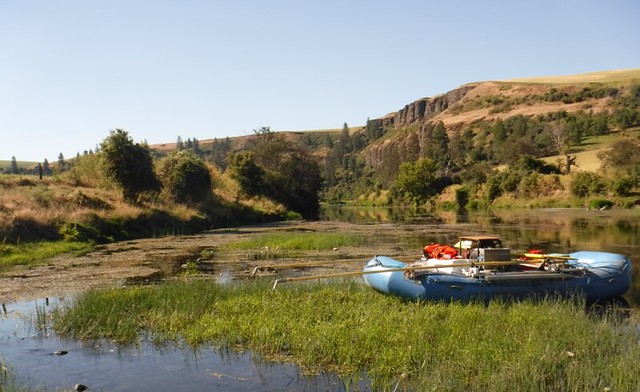
Crews from the Department of Ecology and local Conservation Districts just spent six weeks collecting fish from the Palouse River in southeastern Washington. Collecting these fish is part of Ecology’s program that monitors fish in rivers and streams for contaminants.

The fish collected will help the agency measure changes in the water quality of the river. The fishing effort yielded 348 “keepers,” including suckers, pike minnow, smallmouth bass, chiselmouth, and carp.

Once the team of researchers finish collecting fish they are analyzed for harmful toxic pollutants, like PCBs and other chlorinated pesticides like DDT. 

Capturing just the right number, size, and species of fish at just the right location can make fish collection difficult. Researcher Keith Seiders of Ecology’s Environmental Assessment Program says that collecting fish in smaller rivers like the Palouse can be challenging, but it’s worth the effort.

Seiders: “It’s worth it because these fish in the analyses give us information that will help us make decisions that can impact communities and the way we do business for decades to come.”


Palouse River Freshwater Fish Sampling


What do the fish tell us?

Toxic chemicals used in the past can end up in the environment and get washed into rivers and streams where fish accumulate them. Even though some of these chemicals were banned in the United States more than 35 years ago and are no longer used, they persist in the environment because they can take decades to break down and become harmless.

Seiders: “Fish are a great collector of these chemicals because they’re in the aquatic system and everything flows downstream and into the waters. So that’s where we can measure these chemicals accurately in the environment. And it tells us about how widespread they may be."


Fishing for solutions

A 2005 study sparked communities in the Palouse watershed to take action to control pollution. Ecology worked with local governments to develop a water cleanup plan. This plan identified chemical sources and listed actions to address the problem areas.

Seiders: “The monitoring that our group does is so important to help provide the information to let communities and states and residents make educated decisions about how to address problems with pollution in their environment."


Reeling in results

Results from this year’s fish sampling will be compared to previous studies to see if levels of pollutants in fish have decreased, and the results will also meet a variety of other needs.

Seiders: “The results are used by [Washington State] Department of Health. They’ll look at the results to see if a risk assessment is needed for the levels of toxic contaminants in the fish. If they’re high enough, they will do more work and issue a fish consumption advisory.”

The results from this research are expected to be reported in 2019. The report will tell the agency about changes in the amount of toxic pollutants in the Palouse River since the 2005 study. It may even give Ecology and local communities some insight into how the water cleanup plan is progressing.

By Ruth Froese, Environmental Assessment Program Communications