Showing posts with label Clean water on agricultural lands. Show all posts

Thursday, December 29, 2016

Seeking farmers in Palouse watershed to help improve environment

A conservation stewardship program spearheaded by the Palouse Conservation District aims to enroll thousands of acres of land into conservation programs that keep working lands working in an environmentally friendly way. The Palouse River suffers from a variety of water quality problems including low oxygen, too much bacteria and high temperatures.

Millions of dollars are available to Palouse-area farmers for making on-the-ground improvements that benefit soil, water and fish and wildlife habitat. Farms in the Palouse watershed are eligible to sign up for a program designed specifically for landowners and agricultural operators in portions of Whitman, Spokane, Adams and Lincoln counties and Latah County, ID.

The voluntary, incentive-based practices that qualify for the program’s funding can help reduce erosion and protect clean water. The program will provide a total of $11 million through the next five years for projects including installing more than 250 acres of streamside vegetation, placing 520 acres of land into agricultural conservation easements and getting 45,000 acres of land enrolled in conservation tilling that also qualifies for the Pacific Northwest Direct Seed Association's Farmed Smart program.

Farms can sign up for the program through Feb. 3, 2017 by contacting their local conservation district or program coordinator Tami Stubbs by email, tamis@palousecd.org or phone, 509-332-4101 x 111.

By Brook Beeler, communications

Direct seeding allows farmers to place seeds into last year's
stubble and apply fertilizer in one pass. Less tilling helps
reduce erosion. Photo: Palouse Conservation District

Crops that have been seeded directly into stubble poke through
the soil and crop residue.
Native trees have been planted adjacent to the stream and provide
a buffer to prevent farm chemicals and soil from entering the water.

Monday, October 24, 2016

Money available for forest and farm land improvements in Spokane River watershed

The Yale Road Fire scorched acres of forest
and farm land in the Hangman Creek
watershed in southeast Spokane County.

Those affected by summer fires   encouraged to apply


Summer fires in the Spokane area burned thousands of acres including forest and farm land. These areas are now prone to erosion, potentially causing big problems for water quality. Fortunately, help is on the way through a timely funding opportunity. The Greater Spokane River Watershed Regional Conservation Partnership Program is getting ready to accept applications and invest more than $15 million
on the ground to improve soil, forest health and protect water quality.

Livestock producers, dry-land farmers, and forestry operations are being encouraged to apply for financial and technical assistance to adopt conservation practices that protect and restore their property. Grants are available for projects within the Spokane River watershed in Idaho and Washington, and on Spokane and Coeur d’ Alene tribal lands.

“The program is available to anyone within the watershed, but we hope those affected by summer fires in the Hangman Creek and Little Spokane River areas apply,” said water quality specialist Elaine Snouwaert. “Soil burned by fire is highly unstable and has to potential to wash into rivers and streams causing water quality problems such as decreasing oxygen needed for fish.”

Landowners can take advantage of several existing conservation improvement programs including the Environmental Quality Incentives, Conservation Stewardship, Agricultural Conservation Easement and Healthy Forest Reserve.
Direct-seed farming is just one way to prevent erosion and improve
water quality. Etman Brothers Farms uses the technique near Valleyford, Wa.


Spokane Conservation District, which is leading the effort, is also introducing a Commodity Buffer Program. It’s a new, innovative approach that compensates landowners, based on crop values rather than the traditional soil rental rate values, for installing stream buffers that improve wildlife habitat and protect water quality.

Learn more about the program


Spokane Conservation District and its partners are hosting informational meetings before the first application period opens on Nov. 1. Landowners and producers have three opportunities to learn more at the following public meetings.

All meetings will be held from 6 to 8 p.m.:
  • Monday, Oct. 24, at DeSmet Tribal Longhouse, Brynes Road, DeSmet, Idaho. 
  • Wednesday, Oct. 26, at Fairfield Community Center, 218 E. Main St., Fairfield, Wash. 
  • Thursday, Oct. 27, at the Big Barn Brewing Co., 16004 N. Applewood Lane., Mead, Wash.
You can access application materials on the Spokane Conservation District’s website. If you have application questions, email the program coordinator Charlie Peterson at charlie-peterson@sccd.org or call 509-535-5274. Idaho residents can also drop off their application materials at their local conservation district or NRCS Field Office.

by Brook Beeler, communications

Thursday, July 14, 2016

Innovative agreement highlights practices that are good for farms and the environment

Fields of hay, wheat and canola spread across rolling hills in south Spokane County.
More than 40 farms representing 110,000 acres in Eastern Washington are in line to become among the first Farmed Smart certified agriculture operations in the Northwest.

The Pacific Northwest Direct Seed Association, an organization of direct-seed producers in Idaho, Oregon and Washington, collaborated with Ecology and others to develop a certification for farms where dryland crops are grown and managed in an environmentally friendly and sustainable way. This unique approach is a win for farms and environmental health.

Certified farms tout improvements in their operations including improved air and water quality, better soil health and wildlife habitat, and reduction of fuel use – reducing carbon footprint and keeping carbon in the soil.

The added bonus is that Ecology is confident that certified farms are protecting the environment so compliance efforts can be focused elsewhere.

The innovative agreement

On Wednesday, July 13, Ecology Director Maia Bellon and PNDSA President Douglas Poole formalized an agreement giving Farmed Smart certified farms safe harbor from water quality regulations in Washington.

“Certified farms are applying voluntary practices that we know protect water quality,” said Director Bellon during a recent farm tour. “We’re excited to stand beside the program and support an approach that shows clean water on working lands doesn’t require a one-size-fits-all solution.”

The agreement outlines four major components that allow Ecology to maintain responsibility and authority for protecting water quality and other environmental values while giving certified farms safe harbor. These include:

  • Tillage practices like direct seed significantly reduce erosion and keeps soil in the fields. 
  • Buffers and grass filter strips on streams and rivers protect water quality and aquatic habitat. 
  • Precision agriculture technology reduces chemical and fertilizer use and the potential for those chemicals to reach water. 
  • Eliminating crop burning (except under rare circumstances) helps maintain healthy air quality. 

The program

A group of like-minded farmers interested in sustainable farming practices came together to develop the Farmed Smart program in 2013.

“We recognized that the direct-seed cropping systems used to more efficiently manage resources can also satisfy many environmental protection requirements,” said PNDSA Executive Director Kay Meyer. “Sitting at the table with Ecology and others, we developed mutual respect and a quality program that benefits both farms and the environment.”

The Farmed Smart certification focuses on six aspects of environmental protection:

  1. Improving water quality – by reducing soil disturbance, reducing soil erosion, precision placement of fertilizers, and implementing buffer strips along water sources. 
  2. Improving air quality – by leaving crop stubble on the field to avoid wind erosion, reducing fuel emissions from equipment and smoke from field burning. 
  3. Improving soil quality - by reducing tilling, which increases organic matter, earthworm activity, and crop yield potential. 
  4. Improving wildlife habitat – by providing food and cover for wildlife and fish habitats. 
  5. Conserving energy and reducing carbon footprint – by planting in one to two passes, which significantly reduces fossil fuel and holds carbon in the soil. 
  6. Improving economic viability and sustainability – by reducing the costs of fuel, labor, and chemicals through precision agriculture and direct seeding practices this ensures the family farm can continue to produce a safe food supply for the growing population. 
Canola crop
Wheat crop


The program is off and running. Early-adopters have already been through the third-party certification process and there are 14 certified farms ranging from Uniontown to Almira. By 2017 the Farmed Smart program expects to have 44 farms certified, helping protect 20 miles of stream.

“We’re farming differently, using a system with virtually no erosion and chemical runoff,” said Farmed Smart certified producer Rob Dewald who farms near Ritzville and Davenport. “We’re building root structure and healthy soil by keeping the ground covered, which greatly improves water and air quality.”

You can find more information about the Farmed Smart Program at www.directseed.org

By Brook Beeler, communications manager, eastern region

Friday, January 23, 2015

Clean water on agricultural lands: Staff in eastern Washington take to the field this spring

By Brook Beeler, Communications, Eastern Region

Ecology staff will return to the field in March to assess the health of streams in several eastern Washington watersheds.

This is the same survey work we have done in the past to identify water quality problems and then follow-up with landowners to offer options and funding to help them fix water pollution problems. What’s new this time is that we are improving our outreach to landowners.

A farm nestled in the Palouse region of eastern Washington.
Photo credit: Ellery Samuels.
Agriculture is important to our way of life in Washington.  Clean water and a strong agricultural community can go hand-in-hand. To strengthen our commitment to the agricultural community Director Maia Bellon reached out to expand upon and improve our working relationships with landowners and livestock producers by creating the Agriculture and Water Quality Advisory Committee.

The advisory committee provides an open forum for dialogue ensuring both water quality protection and a healthy agricultural industry. Recently, the group reviewed the watershed assessment process and recommended key changes.

Our improved process this field season includes partnering with local producer groups to provide additional outreach. We will include more specific information in letters to landowners about water quality concerns. We will offer follow-up site visits, and give a clear explanation of our process and timeline for actions.

We will be focusing on five areas in eastern Washington including: Blue Mountain streams, Hangman Creek, the north and south fork Palouse River, Snake River tributaries in Whitman County, and the Walla Walla River.

Cattle are fenced away from the stream to protect
streamside trees and shrubs and water quality. 
We are partnering with conservation districts and WSU Extension to host workshops so landowners can learn about the current health of their watershed, the watershed assessment process and resources available to promote a healthy operation and protect clean water.

Three workshops are currently scheduled. Each starts at 6 p.m.:

Clean water and a healthy agriculture industry are compatible. Our eastern Washington watershed assessment is a tool to provide the technical and financial assistance that can support that outcome. We are dedicated to working with Washington’s agricultural community to achieve the shared value of healthy agriculture and clean water.

Thursday, November 13, 2014

Wintery weather halts travel but not my message
Collaborative partnerships deliver real solutions

by Maia Bellon, Ecology Director

Photo
A healthy environment and thriving agricultural community can go hand-in-hand. Wheat and other cereal grains grown in eastern Washington are valuable and important to our state.
I had hoped to be headed to Skamania Lodge today to speak with the Tri-State Grain Growers Convention, but icy weather had a different idea. In the interest of safety, I had to change my plans.

I am disappointed that I was not able to spend time with the agricultural community today. My best days at work are those spent in the field getting my boots dirty. I look forward to each opportunity that gets me in the same room or field with farmers and ranchers.

Washington’s agricultural industry is incredibly valuable and important to our state. A healthy environment and a thriving agricultural community are not mutually exclusive. Both are important to our way of life, our heritage, and our economy.

I believe that many of our ranchers and farmers are among the best stewards of the land. We all want the same thing: a strong economy, healthy land, clean water, and clean air.

Over the years we have worked with the agricultural community and found solutions together. We may not always see eye to eye, but when we work in partnership we can make real progress.

Achieving results — together


For example, in the early 1990s, smoke filled the air during the summer when the agricultural community was managing crop residue from cereal grains. It was unhealthy for people and the environment. Together we identified a balanced solution and the Agricultural Burning and Research Task Force was formed. Diverse interests began working collaboratively on reducing air pollution. This collaboration has been so successful that it is being used as a model by other states.

You may also have heard about my Agriculture and Water Quality Advisory Committee. I assembled a broad array of interests to improve working relations and ensure that Washington has both clean water and a healthy agricultural industry.

Together we have identified new approaches and started making changes. Just recently we shared with the advisory committee changes we made to our “watershed evaluation” program. This evaluation process helps us identify water quality problems, prioritize our work, and directly follow up with landowners to assist them in fixing pollution issues.

The changes include:
  • Better upfront communication
  • Engaging with producer groups
  • Ensuring our communications clearly identify the problem
  • Increasing clarity on what constitutes pollution problems
  • Working toward consistency between staff and regions

My most important message to our agricultural community


I welcome your ideas and perspective. I even welcome disagreements. It is healthy as long as we keep talking. Together we are learning that all of us around the table need to be flexible to keep working-lands working.

I know that together we can find on-the-ground approaches that can preserve agricultural lands and achieve clean water.

Thank you, especially to the Washington Association of Wheat Growers for leading by example.


Monday, March 10, 2014

Working together in Whatcom County to understand the manure-groundwater connection

By Sandy Howard, communications manager, Water Quality and Environmental Assessment Programs

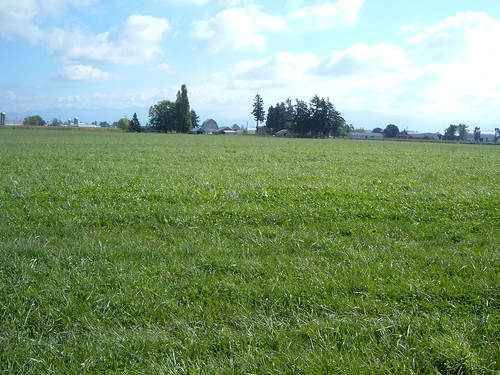
Grass field in Whatcom County where study was conducted
Grass field in Whatcom County, site of the study
This is a story about a gracious landowner who was willing to work with us so we could better understand connections between the use of manure on land and nitrate in groundwater.

Right off the top, we want to thank the landowner. Thanks to his hospitality, our state has some new-found science that will help both agriculture and water quality.

Why it matters

We think Washington’s agricultural industry is incredibly valuable and important to our state. We believe that livestock and agricultural production can co-exist and thrive along with clean water in our rivers and streams.

However, livestock manure can be a threat to our underground water supplies. Manure contains nitrogen which converts to nitrate in the soil. When nitrate gets into drinking water, it is a health risk, especially for babies and pregnant women.

Our study

For nearly five years through 2009, this dairy landowner in Whatcom County voluntarily agreed to allow scientists Barb Carey of the Department of Ecology and Dr. Joe Harrison from Washington State University to monitor and measure the amount of manure he applied to a 22-acre grass crop field in Whatcom County.

The work included measuring soil, crop, and groundwater to track where the nitrogen from the manure went.

Other partners in this work included the state departments of Agriculture and Health.

Why this location?

We selected this study location because the land sits over the Sumas-Blaine Aquifer

The aquifer – an underground water supply – is the main drinking water source for 18,000 to 27,000 people in northern Whatcom County. It has some of the most widespread and elevated nitrate concentrations in the state. It is relatively shallow, making it vulnerable to pollution from activities above ground.

Over the last 30 years, 29 percent of the wells tested in the Sumas-Blaine Aquifer have failed to meet the nitrate drinking water standard at least once.
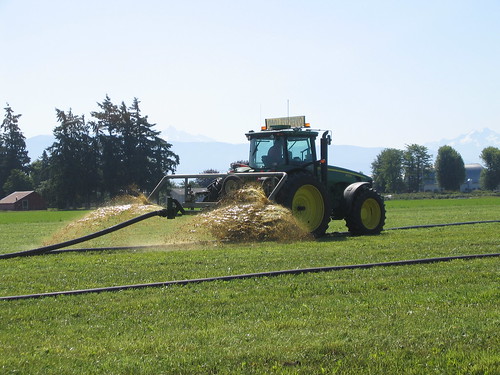
Aerator applying manure
Aerator adding manure to field
This landowner, like all dairy landowners, works hard to manage the manure his cows produce. It contains nutrients needed by crops, so the common practice is to spread it onto grass crop fields. The crop is later harvested and fed to the cows.

Here are some more we took during the study.

What our study found

We have shared our study findings not only with the landowner, but also with the Washington Dairy Federation, and with legislators, the Whatcom Conservation District, and other agricultural partners. We have asked others to read and weigh in on our findings – in fact that’s why it took us a while to get this report finished. Our key findings:

  • We found that the major source of nitrate in groundwater at the study site was from manure applied for grass production. The amount and timing of manure applied each year to the field were the overriding factors that affected nitrate levels in the shallow (less than 11 feet) groundwater. When manure was applied at the recommended amounts and times of the year, nitrate concentrations in groundwater were low enough to meet safe drinking water levels.

  • Most of the annual precipitation in the area occurs during the period of limited crop growth (October through March), when rain carries available nitrate in the soil to the water table. Late fall application in 2006 followed by heavy rain resulted in a significant increase in the groundwater nitrate concentration.

  • The study found that it is not possible to accurately predict actual groundwater nitrate concentrations based on the amount of nitrogen applied. Neither the post-harvest soil nitrate test nor the nitrogen mass balance methods that we evaluated was a good predictor of resulting shallow nitrate concentrations in groundwater.

  • Among the report’s recommendations is continued collaboration between state and local organizations in partnership with universities, dairies, and other agricultural producers to improve the efficiency of nitrogen use and protect groundwater quality.

What our partners are saying

“This project was designed to look at how we manage the complex system of the nitrogen cycle on a farm field,” said study partner Dr. Joe Harrison of Washington State University. “It is a dynamic cycle affected by rain, temperature, tillage practices, manure application, fertilizer application, weed control, and irrigation management.”

Harrison’s advice to landowners:“Keep good records of manure application rates; have your manure tested multiple times during the year; and have reliable estimates of crop yield, as well as a forage test. This data will allow one to accurately estimate the nitrogen balance on the field.”

He added that the landowner who allowed access for the study “…deserves a pat on the back for providing and creating a safe learning environment and the opportunity for the Washington dairy industry, Ecology, the Department of Agriculture, Whatcom Conservation District and WSU to collaborate on such a project. His commitment to environmental stewardship is appreciated.”
Clark Halvorson, director of the Office of Drinking Water said: “Collaborations with dairymen like this will help us identify new management practices that better protect our drinking water supplies and strengthen our vital agricultural industries.”
Added Virginia Prest, manager of the Washington State Department of Agriculture Dairy Nutrient Management Program “The majority of our state’s 400 dairies work hard to manage their manure to protect water quality in their communities. This study offers some key information that can help with that important effort.”

You can read our report “Nitrogen Dynamics at a Manured Grass Field Overlying the Sumas-Blaine Aquifer in Whatcom County" online. Follow our work with the agricultural community at Clean Water on Agricultural Lands.

Monday, October 28, 2013

Clean water on agricultural lands: The facts about Ecology’s watershed evaluation program

By Brook Beeler, Eastern Regional Office


Cattle are excluded from streams and provided off-stream water. The grass filter strip and large woody vegetation prevent pollutants such as nutrients and fecal coliform bacteria from reaching the stream. The trees and shrubs also maintain cool water temperatures needed by fish.


Examples of site conditions pictured here known to contribute to pollution are extended access to surface water; slumping stream banks and erosion; overgrazing of grasses; bare ground and exposed soil. Find more photos on Flickr.
An important part of the Department of Ecology’s work is to find and control sources of pollution that don’t come out of an industrial pipe.

Sometimes these sources of pollution are livestock.

While streams may pass through private property, they belong collectively to all people in the state. We believe that clean water on agricultural lands can be achieved and operations can remain profitable. We do not need to choose between the two. We can and should have both.

Our routine watershed evaluation work in Eastern Washington has been called into question by some. In doing this work, we evaluate and record pollution problems. Then we follow up with landowners to try to find ways to fix the problems with available state and federal funding.

There have been some mischaracterizations of this important watershed evaluation work. We want you to have the facts.

Ecology is not unfairly targeting livestock lands. We address all types of pollution including city and construction stormwater run-off, logging practices and agricultural production. Our watershed evaluation program allows us to prioritize our technical and financial assistance where the health of our rivers and streams are clearly impacted.

Some call this work “Ecology’s list of polluters.” The information we collect is a database of recorded site conditions and locations where water quality problems exist. We use this information judiciously. To set a wider context, we have performed livestock watershed evaluations in eastern Washington since 2001. During that time, we have taken just five formal regulatory actions.

Ecology has worked with more than one hundred livestock producers, resulting in the protection of more than 300 miles of streamside areas. Many of these livestock producers report that their operations are more viable after making changes that also protect clean water.

Watershed evaluation process

To conduct our annual watershed assessments, our field staff stays on public property adjacent to streams and look for signs of pollution. For livestock lands, we identify sites with water quality concerns based on site conditions we see. The connection between these site conditions and water quality problems is well documented in extensive scientific literature.

In cases of significant pollution problems Ecology communicates and coordinates with local conservation districts and then contacts landowners to provide financial and technical assistance. If landowners are concerned that they may have pollution problems on their land we are more than willing to discuss our evaluations of individual sites.

We are committed to helping landowners get the assistance needed to protect clean water. Many of the same practices that prevent pollution can also help landowners:
  • Better use range or pasture
  • Create grazing plans that improve forage availability
  • Set up winter feeding and calving areas to better protect the health of the animals
  • Receive significant rental payments to protect stream corridors
The choice to work with us and receive funding for needed changes is a unique service for agricultural landowners. This is not available to most industries.

Financial commitment

We also understand the concerns that producers have that management changes could affect them financially. To help address and alleviate these concerns, we provide producers assistance to not only protect clean water, but also opportunities to enhance the economic vitality of their operations.

We work hard to get grant funds into the hands of local conservation districts so they may help livestock producers address pollution concerns. Approximately 3.5 million state dollars have been directed toward programs to help livestock producers with water quality and farm improvements in Eastern Washington alone.

We are in this together, we all need clean water.

Read more about our work at Clean Water on Agricultural Lands.

See more photos of problem areas and improvement projects in our Flickr photo set Watershed evaluations.

Saturday, July 13, 2013

Stories about Getting to Clean Water: New Tidegate for Batt Slough - Collaboration builds trust in the valley

By Diane Dent, Water Quality Stories Lead, Water Quality Program

Batt Slough prior to new tidegate installation.

Introduction

After a 1960 flood inundated over 8000 acres of prime agricultural land in the Snohomish River Valley, the U.S. Bureau of Reclamation built a series of levees and gates to reduce flooding and manage the return flow of the flood water.

Concerns and complaints led the state Department of Ecology and the Marshlands Flood Control District (MFCD), a small public entity not normally in the public’s eye, into what could have been a tense relationship that instead became a partnership to meet MFCD goals and improve water quality and help salmon.

Problem

The underlying issue was a matter of trust. Ecology was concerned about the water quality in this predominantly agricultural area, including maintaining a natural fish population. The MFCD was leery of interacting with environmental agencies in general and Ecology in particular.

The specific issue was a failing flood gate on the Snohomish River about six miles upstream of Interstate 5. That gate served to drain Batt Slough, which is a remnant side channel that offers potential refuge habitat for migrating salmon. Batt Slough could provide about one mile of resting and refuge opportunities at a critical location. Significantly, the gate was not serving its original purpose of flood control.

To find out how the problem was resolved, read the full story online.

Story written by Bob Penhale, Ecology Northwest Regional Office

Telling our success stories

Water quality success stories provide a wealth of information associated with novel project designs, funding ideas, and useful resource suggestions. Some are clear successes; others supply valuable lessons to help us grow in our understanding of water quality protection and restoration. Stories illustrate successes gained from cooperation among Washington’s citizens and organizations.

Read all of our Ecology's water quality success stories, and check out our complete catalog of stories.

Friday, August 10, 2012

Beavers— Furry troublemakers or buck-toothed saviors?

By Jani Gilbert, Eastern Region Communications Manager

The beaver bill went into effect this summer in Washington state. The work of beavers was admired by Democrats and Republicans alike during the last session when they unanimously passed HB 2349. After all, beavers appear to be the best water managers around and they really don’t ignite quite the controversy that other forms of water management do.


The Lands Council Beaver team traps and relocates "nuisance" beaver.
That’s not to say there aren’t disagreements. Beavers tend to either charm their human landlords or drive them crazy. So the beaver bill makes it possible to catch beaver where they are not wanted and move them to a place where they are.

Why all the fuss for big, furry, flat-tailed rodents? Of interest to our water programs in the Department of Ecology (Ecology), beavers store rainwater, raise groundwater levels and create wetlands which retain snowmelt, while trapping sediment and making streams much cleaner. Find out more in this Beaver Solution video produced by the Spokane-based Lands Council’s Beaver Solution project that launched its efforts in 2010 with a $50,000 grant from Ecology.

The new law

The new law helps to improve the state’s water management infrastructure by relocating and maintaining healthy beaver populations.The beaver bill did three main things:

It authorized the Department of Fish and Wildlife (WDFW) to release captured beavers on land where the property owner agrees and where they are unlikely to get into trouble. It must be a place where beavers have lived in the past. But here are the most important criteria: They must only be released where beavers can make a difference in the health of the riparian area. Wildlife biologists will look at the gradient of the stream, the adequacy of food sources, the elevation, and the stream geomorphology as well as how the capture and release is done.

The bill required WDFW to maintain a website that reports where beavers are getting into “nuisance beaver activity” and information about beaver relocation efforts.

Finally, WDFW must convene a stakeholder's forum by the end of this year. The agency is planning to have the stakeholder forum in October. The date and location will be announced soon.

The Newport Miner weekly newspaper in Pend Oreille County ran a story on beavers this month. The article quoted Lixing Sun, a biology professor and beaver specialist at Central Washington University, who agreed that beavers can be nuisances but they do serve a valuable ecological function. Find out more about the benefits of beavers here.

The problem with the beaver

How can a cute beaver be a nuisance? Reporter Don Gronning with the Newport Miner wrote:

“Each year the beaver gets some attention at lake communities such as Sacheen and Diamond Lake. Mostly it isn’t good attention.

‘It seems like beavers have always been a problem at the outflow of the lake,’ Perry Pearman of Sacheen Lake said. ‘There are four to six dams that control the lake levels here.’

What beavers probably are best known for is building dams. The dams serve a variety of beneficial functions. But they also block the outflow for the lakes. That can cause the water to rise and flood basements, cause septic tanks to overflow and generally create problems for property owners.

Landowners whose property is negatively affected by beavers have a right to protect their property, says Severin Erickson, wildlife agent with the Washington State Department of Fish and Wildlife.

‘There are several things people can do,’ he says. Erickson recommends people contact him before doing anything, however, as there are also several things people are prohibited from doing, at least without proper permits.”

Even before the Washington Legislature passed the beaver bill, important restoration work was being done in Eastern Washington by the Beaver Solution team. The organization educates the public about the vital role that beavers play in our environment, and, working with WDFW, conducts live trapping of entire families of “nuisance” beavers to safely relocate them to areas where they are needed.

The history of the beaver in Washington

Today, wildlife experts estimate the Washington beaver population at about 10,000. Agriculture and development have taken a toll on beaver habitat. The 10,000 estimate is down from tens of millions of the critters decades ago. According to the Lands Council, the number of beavers in Eastern Washington numbered just under half a million in 1810, when Europeans first settled near Spokane.

The Lands Council’s Beaver Solution Director, Amanda Parrish, said the beavers' abundance drew rival gangs of French, British and American trappers hunting for pelts. She was featured in a 2011Wall Street Journal article written by Joel Millman.

“Ultimately, over-trapping occurred, which upset nature's balance. Storage ponds that filled in behind beaver dams turned into marshes, then grasslands, which withered during summer and stopped supporting the willow and alder stands beavers require for food and building material.

‘Nowadays, you can pretty much bet in a place named Beaver Creek, or Beaver Pond, there are no beavers. They've been trapped out,’ says Ms. Parrish of the Lands Council.

Parrish offers some insight into what transpired in the area:

‘…in the Pacific Northwest beaver were trapped out for political reasons. The Hudson Bay Company in Canada thought that if beaver were trapped out completely from the Pacific Northwest the United States wouldn’t expand into the Pacific Northwest, because the land would be completely devalued, and so the Hudson Bay Company actually established a fur desert policy in this area around the Columbia River.’”


Accomplishments

According to Mike Petersen, Executive Director of the Lands Council, the Beaver Solution team trapped and relocated seven families, 45 beaver, to appropriate habitat in 2010 and 2011. Also during the summers, the Lands Council studied the rate and extent at which beavers convert degraded land to functioning wetlands.

“We have established a few sites to monitor beaver activity and study the extent of disturbance and rate of wetland creation as a result of our management efforts,” explained ecologist Joe Cannon with the Lands Council.Cannon said one of the sites is California Creek, which runs into Hangman Creek and eventually into the Spokane River. California Creek is critical habitat for redband trout.


In 2010 and 2011 the Lands Council has relocated 45 beaver.
“We have taken preliminary stream assessment and vegetation data there,” said Cannon. “We also restricted beaver access to large diameter trees on the site, at the landowner's request, which will provide opportunity for us to study potential for long-term beaver habitation under such conditions. This is going to become the norm as our urban interface expands into the wild areas.

“We are observing that beavers are actually pretty good at getting by in marginal habitat, and are pretty comfortable near humans and developed areas,” Cannon said.

Mike Petersen said the beaver team also is working to address beaver related-damage before beavers are relocated. He said public outreach and education has changed landowner opinions.

“In 2011 we ran out of ‘nuisance’ cases because landowners we had been working with all year decided beaver removal was not the best option and asked for other means of damage management,” he said.
For example, Petersen explained, by installing flow devices, flooding can be stopped and the wetlands the beaver created can be saved. Proven, cost-effective devices and methods such as tree enclosures, Beaver Deceivers or Beaver Bafflers are available to control objectionable flooding and protect trees.

The roadblocks the Lands Council/Beaver Solution team has run into include the fact that landowners who want beaver don't always get them for a variety of reasons. Another challenge Petersen points to is that communication between agencies is missing.

“Many groups are working on different applications of beaver management throughout Washington,” Peterson said. “Before a comprehensive approach to beaver management can be determined, all interested stakeholders should have opportunity to give feedback.”

That will be the purpose of the Beaver Forum that is coming up in October, sponsored by WDFW.