Showing posts with label clean water. Show all posts

Wednesday, August 21, 2019

Ecology considers General Permit to control nutrients in Puget Sound

Excess nutrients are hurting Puget Sound
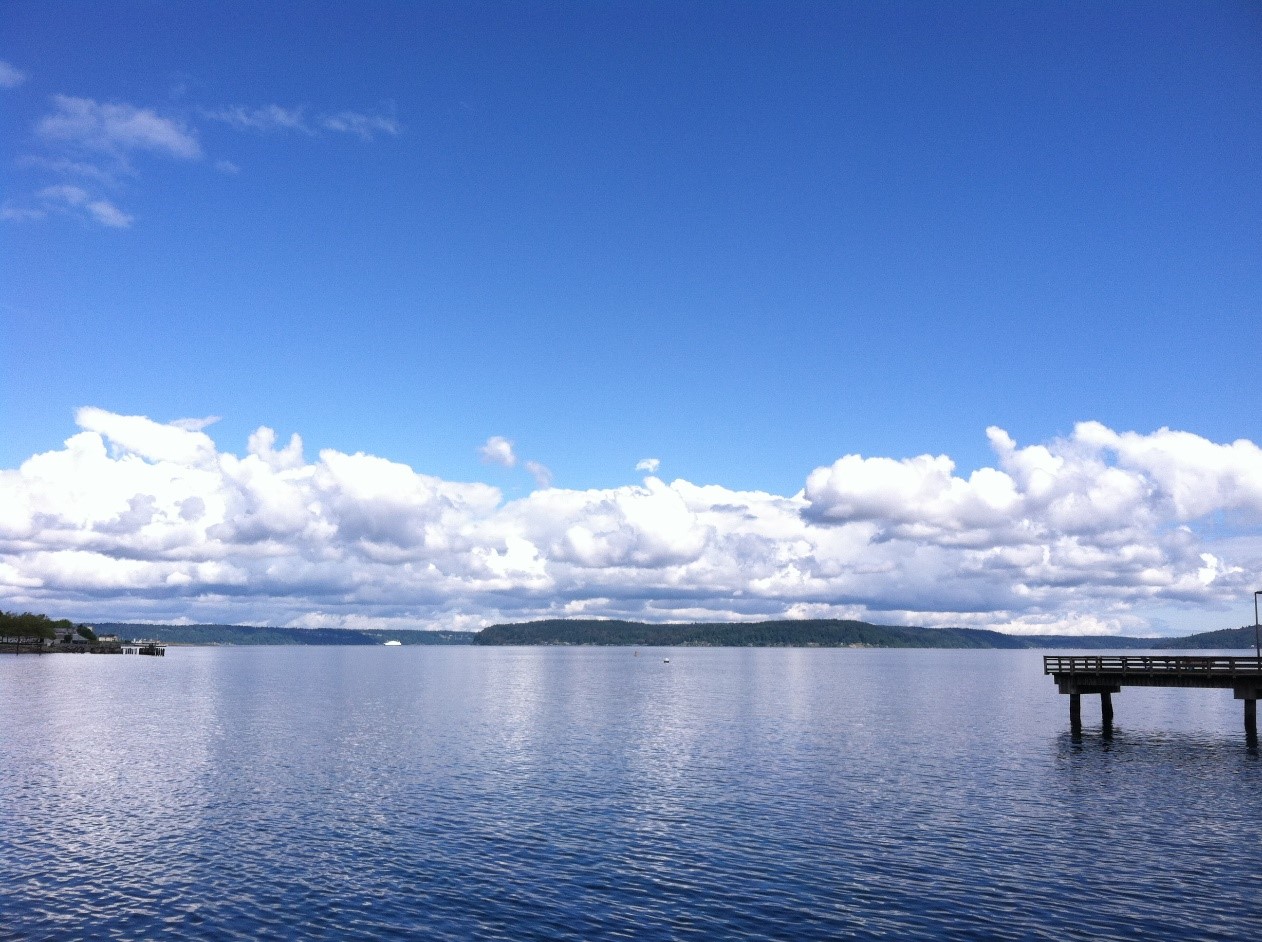
waterscape with dock and land
Puget Sound is the nation’s second largest estuary 
and faces many challenges, including population 

growth, development, and pollution.
Excess levels of nutrients from human sources are harming Puget Sound’s water quality. Excess nutrients can cause too much plant and algae growth that ultimately leads to low levels (below natural levels) of dissolved oxygen in many parts of Puget Sound. These low levels of dissolved oxygen are causing stress on marine life and making it difficult for aquatic organisms to thrive. Many areas in Puget Sound have dissolved oxygen levels below our state’s water quality criteria and Ecology is required to take action.

To improve and protect water quality in Puget Sound, we are focused on finding solutions for improving levels of dissolved oxygen in Puget Sound. Domestic wastewater treatment plants (WWTPs), or sewage treatment plants, are a major human source of nutrients to Puget Sound and are significantly contributing to low oxygen levels (read our Salish Sea Modeling reports for more info). With our region’s growing population, and recognizing that WWTP improvements to limit nutrients will take time, we need to start work now to protect and restore Puget Sound. To keep Puget Sound clean, Ecology must require WWTPs to control nutrients and we have made a preliminary determination to use a General Permit to accomplish this.

Controlling nutrients from WWTPs with a Puget Sound Nutrients General Permit

Aerial view of a wastewater treatment plant
Wastewater is the water that leaves our businesses and
 homes from sources like sinks, showers, and toilets. 
There are two permitting options to control nutrients at WWTPs:

  • New General Permit: Require nutrient limits for WWTPs that discharge to Puget Sound (in addition to their existing individual permits that cover other limits).
  • Individual Permits: Include nutrient limits in each individual permit for WWTPs that discharge to Puget Sound.

We have made a preliminary determination that a general permit is the best tool for addressing excess nutrients in Puget Sound. A Puget Sound Nutrients General Permit would:

  • Create a single coordinated public engagement process, allowing more stakeholder collaboration during permit development. 
  • Place WWTPs on a similar schedule instead of staggered permit requirements based on different individual permit schedules. 
  • Provide a foundation for communities to work together to achieve nutrient controls across Puget Sound.

General vs. Individual permits

All wastewater treatment plants require a water quality permit to operate, specifically to discharge to surface water. We use permits to limit pollutants that may enter our waterways. Both types of permits (general and individual) are issued on 5-year cycles, allowing us to adapt requirements in response to new information and technologies.

A general permit covers a group of dischargers that have similar qualities within a similar region. We can use a general permit to satisfy any or all state and federal water quality permit requirements. General permits are a cost-effective way to regulate numerous dischargers under a single permit. It allows us to hold a single permit development and implementation process per 5-year cycle for all the facilities together. This process includes stakeholder and permittee engagement.

The other permitting option is using individual permits, which we tailor to individual facilities. We issue each individual permit on independent schedules consistent with facility-specific permit renewal and reissuance dates, and a public comment process.

How would a Nutrients General Permit work? 

A Puget Sound Nutrients General Permit would apply to nearly 70 WWTPs that discharge to marine and estuarine waters of Puget Sound. A Nutrients General Permit would focus only on controlling nutrients. All WWTPs already have individual permits that regulate other pollutants. Therefore, WWTPs would have two permits.

We are at the earliest stage of a general permit process and it is too soon to know the exact permit conditions. If we move forward with the general permit, the permit development process will determine:

  • Which WWTPs will be included in the general permit.
  • How to cap nutrient loading.
  • What planning will be needed to meet nutrient reduction targets, starting with optimizing nutrient reduction with existing infrastructure, the feasibility of infrastructure upgrades, or other water quality improvement efforts.

Public comment period for the Preliminary Determination to Develop a Nutrients General Permit

We are accepting comments from Aug. 21 until Oct. 21, 2019 on our preliminary determination to develop a Nutrients General Permit. You may submit comments online.

We welcome your feedback on whether a general permit is the appropriate tool to control and reduce nutrients in discharges from WWTPs to Puget Sound. This public comment period is also an opportunity to provide us other relevant information about WWTPs and Puget Sound water quality.

For more information on the nutrients problem, the permit proposal, and how to comment, read our focus sheet. We do not currently have draft permit language. However, if we move forward with a general permit, we will prepare draft permit language and hold another public comment period.

You can find all of this information and additional materials on our General Permits webpage.

Other States with general permits for nutrients

Other states have used general permits to reduce the impacts of nutrients on their coastal waters.  In March, our Puget Sound Nutrient Forum hosted water quality experts from Chesapeake Bay and Long Island Sound to hear about their general permit process and other strategies they used to reduce nutrients in their waterways. Both of these estuaries have experienced success in cleaning up excess nutrients in their waterways and are on their way to improved water quality and restored marine habitats. Read our previous blog to learn more about how other states manage nutrients in their coastal estuaries.

What else is Ecology doing to reduce nutrients?

People raising their hands in a large meeting room
The Nutrient Forum, a large public advisory 
committee, meets regularly to provide input 


on how to reduce human sources of nutrients.
Limiting nutrients at WWTPs is one important element of Ecology’s Puget Sound Nutrient Reduction Project, but this alone will not solve Puget Sound’s low dissolved oxygen problem.  In order to improve Puget Sound and build resiliency back into our iconic water, we will also need to reduce nutrients from other human sources. We are working with the Puget Sound Nutrient Forum to develop a comprehensive Puget Sound Nutrient Management Plan to find the right solutions for reducing nutrients in Puget Sound. As we develop the plan, we will continue to hold our Puget Sound Nutrient Reduction Forum meetings and encourage everyone interested in this work to attend the meetings and sign up for our listserv.

More information:

To receive email updates about this potential general permitting effort, register for the Nutrients Permit listserv.

To receive updates on the broader Puget Sound Nutrient Reduction Project, register for the Puget Sound Nutrient Reduction listserv or visit www.ecology.wa.gov/PSNRP.

By Kelly Ferron, Water Quality Program


Monday, August 19, 2019

New career opportunities with the Wastewater Operator-in-Training Program

Ecology is growing the operator certification training program by adding three new Operator-in-Training levels.

Recently, we announced awards for the top-performing wastewater treatment plants and their operators. This week, we are excited to announce new career opportunities are now available through our Operator-in-Training (OIT) program.

Why Wastewater Treatment Plant Operators matter

Anything that goes down the sink or toilet ends up at a wastewater treatment plant (treatment plant).  Treatment plants are the frontlines of public health and environmental safety as they work around the clock to clean up our wastewater before it goes into Washington's rivers, lakes, streams, and Puget Sound.
Wastewater treatment operator drawing by 
James R Davis, Senior Gardener for South 
King County Wastewater Treatment Plant 

Wastewater treatment plant operators are the unsung heroes, responsible for ensuring treatment plants keep functioning properly and cleaning the wastewater. These operators have an undeniably important role in keeping Washington’s waters clean.

“Washington’s growing population creates a greater need for wastewater treatment every day. Talented and proficient plant operators are critical to meeting this challenge,” said Ecology Water Quality Program Manager Heather Bartlett. “There are jobs to be had, and we encourage people to go into this field to help serve the public and protect the environment.”

Because their work is so critical to the protection of public health and the environment, Ecology certifies wastewater treatment plant operators to help ensure that they are knowledgeable and able to properly operate and maintain wastewater treatment plants. We certify operators based on wastewater operating experience, relevant experience, and education. We are growing our operator certification training program by adding three new Operator in Training (OIT) Group Levels. 

Why Add Operator in Training Group Levels?

Ecology added new OIT Group levels II-IV to incentivize and encourage entry into, and growth within, the profession. This program creates more pathways for operators to advance to higher group levels. It also helps managers at treatment plants to plan for their most experienced operators’ retirements.

How did we design the OIT levels? 

We listened to operators. In 2018, we conducted a survey and formed a stakeholder Rule Advisory Committee (RAC). The RAC—made up of certified operators, statewide, from each group level—came together to advise us on the necessary changes to the rule. We then released an informal draft of our proposal for public comment. This past spring we held a formal comment period on the new levels.

During the survey and the RAC meetings, wastewater operators voiced their concern about the number of operators retiring from the workforce and the challenges for new operators entering the industry. We have repeatedly heard how important it is to get entry into this field and to promote growth from within the talented pool of operators that the state certifies. These OIT group levels help us do that. 


How it Works

A certified operator for the City of Enumclaw is cleaning a
secondary clarifier, just one of many tasks operators do to keep
treatment plants running smoothly. 
The formal regulatory action we took was adopting new OIT Group levels II-IV in chapter 173-230 WAC. These new OIT Group levels are for operators who can pass the next higher Group level exam, but do not yet meet the certification requirements to qualify for a full certification at that higher Group level. This means operators do not have to wait as long before taking the exam for the next certification level.  


Applicants who already hold a full certification 

If you meet the requirements for the OIT group level, you may apply for an OIT certification one level above your current full certification group level. If you pass the exam, you will then hold both your new OIT certification and your existing full certification.
You may keep your Group II – IV OIT certification for two exam cycles, up to 10 years, while gaining the necessary experience to upgrade to the next group level for full certification. 
While holding an OIT II-IV certification, you are only required to meet the professional growth requirements for their full certification and will pay only one renewal fee.
You will not be required to earn an OIT group level II-IV certification to advance to the next full certification level. It is merely an option for those operators lacking the operating experience necessary to qualify for the next level full certification. It allows you to take and pass the exam and gain the experience on the job. 


Applicants not yet certified 

If you do not already hold a certification, you may apply only for an OIT I. There is no time limit to how long an OTI I may remain at this group level.

Be a part of the solution

Given our state’s growing population, we need to treat more and more wastewater. This is a great field, with growth opportunities—often right in your own community.
Every treatment plant is unique - 
like the Cowiche Treatment Plant pictured here.

Not sure if you have the right experience? We find that people with experience as a welder, machinist, mechanic, operator at other similar facilities, laboratory technician, or engineer, often have the right type of experience for this important work. Check out our certification program website for more information. 

Evergreen Rural Water of Washington (ERWoW) is in the process of launching their Wastewater Utility Apprenticeship Program. The program offers hands-on and classroom training, which are both invaluable to wastewater treatment plant operators. We have had the opportunity to review their proposed program and training courses. Based on our review, operators who are successful in the program can qualify for the Operator-In-Training, Group I, Group II OIT, and eventually Group II level wastewater operator certification exams.

By: Jocelyn Jones, Senior Water Quality Rules Planner


Monday, April 15, 2019

We oppose federal proposal to redefine 'waters of the United States'

Salmon leaps from the water at Port of Tacoma's Upper Clear Creek wetland mitigation site.
Salmon leaping from the water at Port of Tacoma's Upper Clear Creek wetland mitigation site. Washington's streams and wetlands offer important habitat for fish and wildlife while helping clean our water, and control flooding and erosion.
Today, we sent our official response to the Trump administration opposing its draft rule to redefine the scope of “waters of the United States” that would be protected and regulated under the 1972 federal Clean Water Act. As the primary federal law governing water pollution, the Clean Water Act is instrumental in protecting Washington’s water.

We are gravely concerned the draft rule, proposed jointly by EPA and U.S. Army Corps of Engineers, will eliminate federal protection for classes of streams and wetlands highly valued by Washingtonians. In Thurston County alone, we estimate the federal proposal would remove between 2,000 and 11,000 acres of wetlands from federal protection.

The rule change, if finalized, would remove federal protections for:
  • Streams in upland ditches as well as water in most ditches.
  • Wetlands behind dikes with no surface connection to a river, as well as wetlands along irrigation canals.
  • Wetlands close to, but not touching, marine waters.
  • Streams that only flow in response to rainfall—also called “ephemeral” streams.
  • Wetlands in a floodplain that receive floodwaters on a less than annual basis and lack a surface connection to a stream.
  • Prior converted croplands, wetlands under agricultural production when they are proposed to be changed to non-agricultural uses.


Healthy streams and wetlands = healthy Washington

These waters help our state maintain a healthy, safe and vibrant economy and environment by:
  • Providing and supporting important habitat for salmon that southern Puget Sound resident orca need to survive.
  • Filtering and cleaning our drinking water.
  • Controlling flooding and erosion.
  • Offering habitat and refuge for fish and other wildlife.
  • Providing places for boating, fishing, and other recreation activities.
Coweeman wetland mitigation bank in Cowlitz County a year after being created in 2016.
Coweeman River Wetland and Conservation Bank in Cowlitz County, a year after being established in 2016. Wetland mitigation banks help private and public developers restore and preserve wetland functions in river basins across the state. 

Federal proposal too flawed to be adopted

According to the proposed rule language, the federal government is seeking to change the definition of waters of the United States to increase the predictability and consistency when implementing the Clean Water Act and reduce the scope of federally-protected waters.
We find this approach to be significantly flawed because it:
  • Would put Washington’s water quality at risk. Federal protection would be rolled back to cover only certain stream reaches instead of the entire water body.
  • Creates an artificial divide between state and federal waters, allowing the federal government to shirk its responsibility to protect the physical, chemical, and biological integrity of the nation's waters under the federal Clean Water Act.
  • Ignores years of science, upheld by numerous court decisions, that Washington’s surface streams and wetlands are often directly connected to underground sources of water. Surface water pollution puts state drinking water aquifers at risk.
  • Creates a need for a new state permitting program. Public and private developers seeking to build projects that would impact certain classes of wetlands now file a single state/federal application. We currently apply state requirements as part of the federal permitting process. Without federal involvement, the state would need legislation to create and fund its own wetland permitting process. Without such a program, projects could experience delays and economic losses. 


Washingtonians expect their waters to be protected

Time and again, Washingtonians have been clear about the importance of protecting, restoring, and conserving state waters and wetlands. They demand safe drinking water, expect healthy places for recreation, and support a vibrant natural resource economy supported by clean water.

Our state laws reflect this mandate:
  • Water Pollution Control Act, passed by the state legislature in 1945, outlines the state’s interest in controlling pollution and protecting water quality in all state waters and wetlands.
  • Shoreline Management Act, passed by voter referendum in 1972, protects and manages development along the state’s 28,000 miles of stream, river, lake, and marine shorelines.
  • Growth Management Act, passed by lawmakers in 1990. Under the act, local governments protect all wetlands and streams by adopting critical areas ordinances.


Rule would negatively reshape relationship with federal partners

Chehalis River swamps Centralia and Chehalis during catastrophic 2007 flood.
Chehalis River swamps Centralia and Chehalis during 2007 catastrophic flood.
The proposal to change the definition of waters of the United States will need to go through the federal rule-making process before it can take effect. We are concerned the rule could:
  • Significantly reshape the working relationship we have with the U.S. Army Corps of Engineers and EPA to help protect our waters.
  • Sow confusion among local communities seeking help from our federal partners.
  • Mean more work for communities and state agency partners like us.
  • Result in accidental violations of local and state laws.
While we don’t know what the final changes will be to the federal proposal, we will continue to protect all Washington waters and wetlands from being lost or degraded.

By Curt Hart, Ecology communications

Tuesday, January 29, 2019

Understanding the environmental impacts of more water over the dam

Ecology to consider allowing more water to spill over dams to help salmon migrate.

Spring spill season for dams along the Columbia and Snake rivers is approaching. During this time, generally from April through June, large amounts of runoff from the melting snowpack lead to high water flows. When hydropower operations cannot pass all of the water through turbines or store it, water is spilled over the dams through spill gates. Spill is used to manage incoming water and to help move juvenile salmon past dams, downstream towards the ocean. During this time, upwards of 100 million juvenile salmon migrate down the Columbia River.

This action would apply to eight dams on the lower 
Columbia and Snake rivers.
juvenile chinook
Juvenile Chinook, photo credit: Amy Hansen, USGS

Responding to the need for more salmon

Ecology, in support of the new agreement for flexible spill operations at four lower Columbia and four lower Snake River dams, is proposing a short-term modification that would allow more water to spill over the dams, with the goal of improving the survival of juvenile salmon migrating to the ocean. Under the flexible spill agreement, the increased spill would happen during hours of relatively low energy demand, balancing salmon survival rates while managing power costs.

The short-term modification would apply to state Water Quality Standards, specifically the Total Dissolved Gas criteria. When water is released from spill gates at the top of the dam, the plunging water can trap air (mostly nitrogen and oxygen gas) in the water. This could pose a threat to aquatic organisms, such as the adult salmon who are migrating back upstream and resident fish including white sturgeon or mountain whitefish. In this situation, fish are susceptible to ‘gas bubble trauma’ or what you could call giving fish ‘the bends’, if you are familiar with the scuba diving term. 

Currently, the total dissolved gas criteria is 110% for Washington State. There is a special condition to aid fish passage past dams during the spill season for the Columbia and Snake rivers, allowing total dissolved gas levels of 115% in the forebay, 120% in the tailrace of dams, and a maximum one-hour average of 125%. Spilling water over dams is recognized as one of the best ways to protect fish as they move past dams. 

The Department of Fish and Wildlife and the Columbia River Inter-Tribal Fish Commission and a coalition of Northwest Sportfishing Industry Association, Columbia Riverkeeper, and Save Our Wild Salmon have requested Ecology remove the 115% forebay criterion for total dissolved gas for the 2019 spring spill season and maintain the 120% tailrace criterion in the Columbia and Snake rivers. The purpose for removing the 115% forebay criterion is to test the benefits of more spill on fish passage by allowing higher total dissolved gas levels. This would align with the flexible spill operations agreement.

Fish passage system for a dam, graphic courtesy of U.S. Army Corps of Engineers

Our Proposal 

The goal of the short-term modification is to understand if allowing more spill will improve the survival of juvenile salmon migrating to the ocean without too great of impact on salmon, resident fish, invertebrates and other aquatic life in the rivers.

At this time, we are considering a short-term modification that would remove the 115% forebay criterion for up to three years. This action would coincide with the flexible spill agreement that aims to benefit salmon and hydropower. 

Learn about our Environmental Impact Statement

In order to do a short-term modification to our Water Quality Standards, we must complete an Environmental Impact Statement. Drafts of our Environmental Impact Statement and short-term modification are now available for public comment. The Environmental Impact Statement, while technical in nature, provides extensive information on current available science, research, and data related to total dissolved gas. It also contains a discussion of potential alternatives for developing a short-term modification. 

Save the date for our upcoming hearings 

We are planning two public hearings that will begin with a short presentation, followed by questions and answers. The hearing portion will begin shortly after the questions and answers are finished. During the hearing, you may give oral testimony and written comments. Written comments will receive the same consideration as oral testimony.

Feb. 13, 2019: In-person in Vancouver, WA at 2:30 p.m.
Washington State School for the Blind
Fries Auditorium (Old Main Building)
2214 East 13th Street
Vancouver, WA 98661

Feb. 19, 2019: Public Hearing via Webinar at 6 p.m. (register for the webinar)

After reviewing the comments, we will release our final Environmental Impact Statement and make a decision on issuing the short-term modification. 

To learn more about Ecology's actions to support orca and salmon recovery, visit our Orca task force webpage.

By Colleen Keltz, Water Quality Program


Thursday, August 2, 2018

Beach poop is everyone's business!


When the long-awaited warm weather finally makes its way to western Washington, people head to the beach…in droves. You pack the car with towels, chairs, a picnic, and the kids. The last thing you want to see when you get there is a “closed to swimming” sign.


Beaches close because of high levels of enterococci in the water. Enterococci are indicators of fecal bacteria and as you might have guessed, swimming in fecal bacteria is not only gross but can make you sick.

These bacteria are found in the intestinal tract of humans and animals. Fecal bacteria can make you sick when you ingest them or get them on your skin. If we find high levels of enterococci in the water that are above the safe swimming standard, we issue beach closures. We also inform the public that there is an increased risk of illness if they make contact with the contaminated water.

Know before you go!


We monitor select saltwater beaches weekly during the summer to help ensure that beachgoers stay healthy and are able to enjoy the water while at the beach. This summer, we’ve already had some beaches close due to elevated levels of fecal bacteria in the water. Before you head out to your favorite beach, go to our beach closure map to make sure that the water is safe for swimming!
Snapshot of Ecology's beach closure map.
Ecology's beach closure map.

Help keep poop off the beach

Fecal bacteria in the water can rise to unhealthy levels for many reasons. Here are some things you can do to help keep your beach clean:

Scoop the poop

If you bring your dog to the beach, pick up its poop, bag it, and throw it in the trash.

Bathroom breaks and swim diapers

Give children frequent bathroom breaks and put young children in swim diapers.


Don’t feed the birds

Pick up your trash and don’t feed the wildlife! While feeding the birds may be fun, it encourages birds to congregate in large numbers. This increases bird poop at the beach, which can effect water quality.

If you’re sick, stay out of the water

Swim only when well! Swimming while ill, especially with diarrhea, can transmit illness-causing bacteria to others.

Monday, January 22, 2018

Funding supports jobs and clean water in Washington's communities

This year, Ecology is proposing to award nearly $154 million in financial assistance for 69 high-priority clean-water projects across the state. Our funding supports local communities by helping them upgrade sewage treatment systems, manage polluted stormwater runoff, and complete a variety of projects to prevent pollution.

Nearly 70% of the funding we manage goes to local communities for environmental projects. Our clean water funding comes from a mix of state and federal funds dedicated for water quality improvements and protection. State financial managers calculate that 11 direct and indirect jobs are created in Washington for every $1 million spent on building clean water infrastructure. Using this calculation, the funding will support almost 1,700 jobs, with one-third of them as construction jobs.

The proposed funding is contingent on the Washington state capital budget and federal budgets. Projects on the list can begin as soon as July 1, if we have secured the funding.

Give input on the proposed funding list

We invite comments on our draft list of projects until Feb. 19, 2018. Send comments to Daniel Thompson at daniel.thompson@ecy.wa.gov. Also, see below for more information on our public meeting.

Here are a few highlights

Twenty projects are slated to receive about $21 million in grants and loans to address nonpoint pollution that comes from widespread, hard-to-trace activities.

Examples of these projects include:
Picture of stream with vertical logs places to create a structure like a beaver dam
Beaver Dam Analogues placed in a stream to slow down
and clean water which also creates better habitat.
 
  • Myers Creek, Cheesaw, Okanogan CountyThe nonprofit, Okanogan Highlands Alliance, is proposed to receive nearly $175,000 for the second phase of a project to re-establish the floodplain in Myers Creek, near Chesaw. The project includes the construction and enhancement of Beaver Dam Analogues (see picture), the planting of native plants, and to raise awareness about this critical habitat.
  • Nisqually Watershed, Pierce County
    The Nisqually Indian Tribe would receive more than $14 million in a low interest rate loan to help buy and protect 5,221 acres of forest with 42 miles of shoreline in the Mashel River sub-basin and 2,560 acres of forest with 26 miles of shoreline in the watershed’s Ohop Creek sub-basin.

Twenty-six wastewater treatment projects are proposed to receive approximately $99 million. Seven of the projects qualify for hardship financial assistance due to their potential impact on residential sewer bills. These hardship projects may receive a combination of grants, forgivable loans (loans that do not need to be paid back), and low interest rate loans.

High priority wastewater hardship projects include:
  • Pine Creek, Rosalia, Whitman County
    The Town of Rosalia is proposed to receive nearly $7 million in grant and loans to improve water quality in Pine Creek and reduce impacts on public health by fixing its failing sewer collection system.
  • Long Beach, Pacific County
    The City of Long Beach may receive $7 million in grants and loans to design and build a Regional Biosolids Treatment Facility. The facility will compost biosolids from several locations and turn it into highly-treated compost. Residents, businesses, and the city could use this compost for landscaping projects.

Twenty-one communities across the state are proposed to split about $27 million in grants to implement projects that focus on reducing stormwater pollution. The highest-priority stormwater projects include:

A completed stormwater pollution reduction
project, a planted swale.
  • Johns Creek, Renton, King County
    The City of Renton could receive more than $1.5 million for a project to improve water quality in Johns Creek (a tributary to Lake Washington). They propose to design and construct new bio-retention facilities and permeable sidewalks. The project will reduce toxic pollutants in stormwater runoff.
  • Ellensburg, Kittitas County
    The City of Ellensburg is proposed to receive about $2.7 million to treat stormwater runoff from a busy street before discharging into Mercer, Whiskey, and Wilson Creeks. Treatment will include Low Impact Development (LID) practices like building rock-lined swales and permeable sidewalks.

Unfortunately, due to insufficient funds there are 41 projects eligible for more than $17.5 million in Centennial Clean Water Program grant and 20 projects eligible for $225 million in Clean Water State Revolving Fund loan that may not receive full funding.


picture of children playing in a stream
Example of a wetland habitat education project. 

Let us know what you think

We invite comments on this draft proposal list.

Submit comments by Feb. 19 at 5:00 p.m. Email Daniel Thompson at daniel.thompson@ecy.wa.gov.

Public meeting
Join us for a meeting to discuss the proposed funding list.

Feb. 1, Thursday at 1:00 p.m.
Pierce County Library
Processing and Administrative Center
3005 112th Street E
Tacoma, WA, 98446

After Feb. 19 we will respond to any comments received in the Final List document. We expect to publish the Final List by June 29, 2018, after the passage of the state 2017-19 Biennial Capital Budget.

More information

Find out more about clean water financial assistance on our website.

By Stacy Galleher, Water Quality Program

Wednesday, November 8, 2017

Puget Sound Nutrient Watch: The Salish Sea Computer Model

Welcome to our second installment of Puget Sound Nutrient Watch, an ongoing blog series that will focus on the excess nutrient problem in Puget Sound.

In this post we will be focusing on the Salish Sea Model and how scientific computer models help us better understand the world around us.

So...what is a scientific model?

Puget Sound Model built in the 1950's at the University
of Washington School of Oceanography as a research tool
for understanding Puget Sound circulation patterns.
Many children like to play with models — like doll houses, model cars or model airplanes. These toys are simplified versions of things we find in the world around us. These models might seem like they are just amusing toys on the surface, but they actually help you learn how the world works!

Similarly, scientists also use models. Scientists often rely on developing models to establish new science. Models are ideas that scientists use to explain patterns they observe in the world.

computer model replicates some part of the environment in a way that helps us understand and predict potential changes. This allows scientists to ask the model questions like, "If the water temperature goes up three degrees, what happens to everything else?" If you were to change something in the model, it should tell you how changing the same thing in the environment would play out in nature.

Weather forecasting — for example — relies on computer models. Models are built to explain how aspects of the real world work and consist of ideas and concepts. Scientists use models to investigate the secrets of nature!

Characteristics of scientific models

Good scientific models should be:

  • Grounded in scientific principles.
  • Compared to a mechanism that is well understood.
  • Calibrated to actual data so we can have confidence in the outputs.
  • Be able to test if hypotheses are true or false.

New models are more likely to succeed if they dovetail or merge with existing scientific models. In fact — successful models often reveal that phenomena we once thought to be isolated are really connected incidents. Modern models use high-powered computers to compute millions of calculations!

It’s important to remember that a model is not the same as the real thing; they are similar in some respects, but not in all. A model becomes more refined and complex after many, many rounds of testing. Over time, the model looks less like the original simple model, and looks more like the real environment it is simulating.

We have confidence in a model's ability to simulate real life when it produces the same results that we find in actual data. If the model can accurately represent a known condition, we can use it to predict future conditions.

Why are models needed?

The most important advantage of computer modeling is that it gives us the ability to ask “what if?” questions about complex aspects of the world we can’t easily test in reality. Often, the focus of science is too small to be observed directly, or may be inaccessible for a direct visual study. For example, we may not be able to access the center of the earth to study it, but a computer model can give us a pretty good idea of what's happening!

Tidal motion in Salish Sea Model - 72-hour animation of April 2006 conditions.
Image courtesy of Pacific Northwest National Laboratory.

New scientific discoveries depend upon scientists developing scientific models and interacting with them. Each hypothesis tested, simulation ran, and calibration made helps scientists better understand nature. After all, science is an attempt to explain our natural environment and make predictions about it.

What is the Salish Sea Model?

First of all, this model covers a huge area! The Salish Sea includes the Puget Sound, the Strait of Georgia, and the Strait of Juan de Fuca.

Our Environmental Assessment Program and staff from Pacific Northwest National Laboratory (PNNL) developed the Salish Sea water quality circulation model — called the Salish Sea Model for short — as a tool to broaden our understanding of how nutrients travel and ultimately affect water quality throughout Puget Sound.

We are using the Salish Sea Model to evaluate how current and potential future inputs of nutrients effect dissolved oxygen levels in the Salish Sea.

The Salish Sea model helps us understand questions like:
  • Are human sources of nutrients in and around the Salish Sea significantly impacting water quality now? How bad might it get in the future?
  • Where are the areas that are most sensitive to human impacts? When are those effects the most harmful?
  • How much do we need to reduce human sources of nutrients to protect water quality in the Salish Sea?
Domain of Salish Sea Model.

We will be using the model to test the effects of short- and long-term actions to reduce anthropogenic — or human caused — sources of nutrients. We are aim to use this information to increase Puget Sound’s resilience to the effects of climate change and population growth. These model findings will help decision-makers use resources wisely and guide where additional study or action is necessary.

How have we used the model so far? Check out these publications:


Ask an engineer

We’ve asked one of our Salish Sea modeling engineers — Greg Pelletier — to participate in a Q&A about the Salish Sea Model, learn more from our interview!

What have we begun to learn from the Salish Sea Model?
We are starting to learn about the effect of regional anthropogenic sources of nutrients on changes in dissolved oxygen and acidification of the Salish Sea. We are finding that there are extensive areas of the Salish Sea that do not meet the water quality standards for dissolved oxygen. There are also areas where regional human-caused sources of nutrients appear to decrease dissolved oxygen to levels that do not meet the water quality standards.

How does this model help us understand ocean acidification?
The model allows us to look at how much impact is caused by regional anthropogenic sources and compared them with global sources. For example, in waters at the bottom of Puget Sound, the model predicts that the regional nutrient sources caused by humans has the highest impact when compared with estimates of combined global anthropogenic and nutrient impacts.

The model allows us to look at how much improvement would result from efforts to reduce nutrients to different levels. Also, the model allows us to look at the relationship between hypoxia (low dissolved oxygen) and acidification.


Greg Pelletier presenting at the Puget Sound Nutrient Dialogue, July 2017
How long does does it take for us to run a scenario in the model?
The model uses a very powerful “cluster” computer at Battelle’s Pacific Northwest National Laboratory. It takes a couple of days for the computer to run all of the calculations for a single year for the original version of the model, and up to three days are required for our latest expanded version of the model.

We call each model run a scenario because it represents a particular set of assumptions. For example, one scenario is the existing conditions as they are in a particular year while another scenario is what we call “reference conditions” with human sources of nutrients removed.

In addition to the computer time, it takes time to make the input files for the model scenario – and to review the input files to assure their quality, which can vary depending on the complexity of a scenario. This step alone can take multiple people and several months.

After the model run is completed, time is required to convert the model output files into visualizations such as maps or animations of the predicted water quality, interpret what they are telling us, and discuss it with project team.

What do you like most about working with models?
The best part about working with models in my job is working with all of the great people we have on our modeling team. Our modeling team from Ecology includes Anise Ahmed, Cristiana Figueroa-Kaminsky, Sheelagh McCarthy, and Teizeen Mohamedali. We also collaborate with several great people from Battelle’s Pacific Northwest National Lab. It takes a team of people to do this work.

Different people do different parts of the model analysis. For example, some people work mainly in preparing model input information, while others work more on running the model or preparing the output visualizations. The entire modeling team works together to look at and discuss the model input files and the interpret the output visualizations. It is very rewarding to find out what the model runs tell us about the relationships between nutrient loading sources and changes in water quality throughout the Salish Sea.

Another amazing thing about working with models is its ability to predict water quality in areas where we have no monitoring data. We are confident of these predictions because the model performs well to replicate observed data when we compare it to areas where we have actual water quality measurements. Sometimes the results show us where we need to collect more data.

Puget Sound, Marine Park

Our work to reduce nutrients in Puget Sound

Follow this Puget Sound Nutrient Watch blog series to stay current and learn about our work to reduce nutrients in Puget Sound.

Earlier blogs:


Visit our website and join our email list to get up-to-date information on the nutrient problem in Puget Sound. We want this to be a collaborative effort that brings all of the technical work that is happening on Puget Sound nutrients together. We need all hands on deck to find the best solutions for meeting water quality goals for Puget Sound.

By: Jenny Robertson, Ecology Environmental Specialist

Friday, November 3, 2017

Innovative Regional Septic Loan Program partnership wins EPA and local awards

We’re excited to announce that the innovative Regional On-Site Sewage System Loan Program developed by Washington state departments of Ecology and Health, Tacoma-Pierce County Health Department, and Craft3  a non-profit lender — has been deemed exceptional by the 2017 U.S. Environmental Protection Agency (EPA) PISCES program.

EPA’s PISCES  or Performance and Innovation in the State Revolving Fund Creating Environmental Success  celebrates excellence and innovation in clean water infrastructure.

Award winning loan program helps fix leaking septic systems

The EPA selected our Regional On-Site Sewage System Loan Program as one of five exceptional projects across the country. Our program is a public-private partnership that provides funding for Puget Sound property owners to repair or replace failing septic systems.
“This program has been a great success due to the incredible partnership and collaboration between state agencies, local health jurisdictions, county governments, and Craft3. We all worked together to build a sustainable and efficient solution to help protect public health and water quality while giving homeowners viable financing options.” 
- Jeff Nejedly, Ecology financial assistance 

In addition to the PISCES Award, the Regional Loan Program was honored with the “Creative Solutions” award last week at the Infrastructure Assistance Coordinating Council (IACC) conference in Wenatchee. The conference gathers communities, infrastructure providers, and funders. IACC aims to improve infrastructure assistance in Washington. The annual awards ceremony celebrates outstanding achievements in public works projects across the state.

269 septic systems fixed during the first year of our program

Our program was incredibly successful in it's first year. It prevented 36 million gallons  equal to 55 Olympic-sized swimming pools  of wastewater from flowing into Puget Sound watershed. It also brought $6.7 million into local communities to repair and maintain septic systems.

Unexpected household expenses can burden any family, and repairing a failing septic system can run into the tens of thousands of dollars.

The Regional Loan Program attempts to lessen that burden  providing affordable financing for septic repair and replacement to homeowners at many different income levels. Roughly 40% of participants in the last year were low-income borrowers.

We help protect public health and water quality

The program uses public funds in a cost-effective way to:
  • Reduce sources of water pollution.
  • Improve and protect shellfish areas and ecosystems.
  • Improve local governments’ ability to focus on water quality priorities.
  • Increase opportunities for property owners unable to qualify for traditional loans.

Roughly a third of Washington households are on septic systems. Well-maintained and functioning septic systems can provide high-quality treatment to household wastewater for many years. Not all septic systems contribute to pollution, but failing septic systems can affect water quality.

Septic systems are only one piece of the clean water puzzle. There are many sources of pollution — such as stormwater runoff, excess nutrients from farms, lawns, and people, agriculture practices, and wastewater treatment facilities. Reducing all sources of water pollution is important to keep Washington waters and communities healthy.

Loan program helps counties provide better service

Our program saves local governments time and money by taking counties out of the lending business. This allows homeowners the ability to go directly to a lender for financial help. By partnering with a non-profit lender like Craft3, counties can focus on providing technical assistance and working with septic professionals to raise awareness.
“Our old program just could not scale up to that kind of volume given our limited staff resources…referring people to Craft3 for septic funding assistance allows us to spend more time helping them with all the permitting details and the technical assistance. 
It has been an incredible burden lifted off of me to know that so many more of our citizens-in-need are being helped with their septic repairs.”  Kathleen Parvin, Island County Public Health

Program expanding to Clark and Cowlitz counties

The program currently covers the Olympic peninsula, coastal counties, and most counties around the Puget Sound. We and our partners are actively working to expand the availability of loans to more of the state.

Once a state Capital Budget is passed, Craft3 can begin offering loans in Clark and Cowlitz Counties. Next fiscal year we plan to offer the program to Eastern Washington counties.


Other wastewater funding opportunities

In addition to the regional septic loan program, We have other funding and loan programs available for public entities like conservation districts and counties.

These programs help individuals repair septic systems, and help communities build and repair larger systems. For example, a community could use these funds to connect a whole neighborhoods to a sewer system and abandon septic systems.

We also give funding to communities to help with pollution identification, outreach and education, planning, and surveys to identify problem areas.

Join this program or apply for a loan

If you are a homeowner with a failing or malfunctioning septic system and are interested in a loan, contact Craft 3 at CleanWater@Craft3.org or 888-231-2170 ext. 125.

If you are a local government interested in this program, contact our Local Loan Program Coordinator Rebecca Brown at rebecca.brown@ecy.wa.gov or 360-407-6703.

Learn more on our website.


By: Stacy Galleher, Water Quality Communications Specialist and Rebecca Brown, Water Quality Program Financial Assistance

Tuesday, May 31, 2016

New report compiles information about Washington’s groundwater health

A new report called the Washington Nitrate Prioritization Project identifies groundwater areas in our state that are most vulnerable to nitrate contamination.

Click on this story map to learn more.
It is not new information – but what’s new is that we have compiled it into one location. Previously the information could only be found by searching a number of sources.

Partner agencies sharing their data and helping with the project included the state Departments of Health and Agriculture, as well as the U.S. Environmental Protection Agency, U.S. Natural Resource Conservation Service, U.S. Geological Survey, and the Washington Conservation Commission. Our data came from our Environmental Information System.

What the report highlights


The report highlights areas in Washington that show the highest levels of nitrates in groundwater.

This matters because groundwater is a source of drinking water for many people. Safe, clean drinking water is important.


Cross-section of groundwater shows how it is vulnerable to pollution 
that occurs on the land surface. Image source: USGS
Nitrates in groundwater threaten public health. Pregnant women, infants and small children are most vulnerable. Nitrate-contaminated drinking water can harm the health of babies and lead to blue baby syndrome, which is a decreased ability of the blood to carry oxygen.

Even though we are not the state’s drinking water experts – that’s the Department of Health – we are experts in protecting water quality, and we are working on solutions to reduce and prevent groundwater pollution.

Where nitrates come from


Nitrates can get into groundwater from many sources, including fertilizers, manure on the land, and liquid waste discharged from septic tanks. Natural bacteria in soil can convert various forms of nitrogen into nitrate. Nitrates make a good fertilizer for plants, but when there is more fertilizer than plants can use, rain or irrigation water can carry nitrates down through the soil into groundwater.

Our state is seeing a rise in nitrate contamination in groundwater. Both public water supply wells and individual residential wells have been contaminated in some areas of the state. Among others, these include the Sumas-Blaine Aquifer in Whatcom County, the Lower Yakima Valley and the Columbia Basin. Millions of dollars have been spent to deal with nitrate contamination of groundwater.

Helpful information


The Washington Nitrate Prioritization Project consolidates existing nitrate level information in groundwater areas in Washington. Our goal is to help the public – as well as local and state health and government decision-makers – be better informed about risk. Having access to this data in one location supports our efforts to protect the problem areas.

Keeping an eye on our groundwater health is important because once aquifers are contaminated, it is difficult for them to recover.

Prevention is far cheaper than cleanup. Treatment can cost millions of dollars. Public drinking water systems spend tax dollars to install treatment systems that remove the water contamination. Private drinking water wells have fewer options. They must test and treat their own water to make sure it is safe to drink.

Ecology's Laurie Morgan, report author.
We hope everybody can help us protect groundwater, especially vulnerable groundwater that is shallow or already contaminated.

If you are interested in more details, we invite you to read the Department of Health Office of Drinking Water fact sheet Nitrate in Drinking Water and the Northwest Pediatric Environmental Health Specialty Units fact sheet Nitrates, Blue Baby Syndrome, and Drinking Water: A Factsheet for Families. And, you may visit our website.

Let us know what you think


If you have comments or questions, you may contact Laurie Morgan, the report’s author, at 360-407- 6483 or laurie.morgan@ecy.wa.gov.


By Sandy Howard, Water Quality Program communications manager