Showing posts with label Yakima Basin. Show all posts

Wednesday, October 26, 2016

Innovative Water Solutions

Irrigators coming together to pay for Yakima watershed projects

Ron Van Gundy 
It’s a journey that old-timer Ron Van Gundy says started in the late 1970s and early 80s when irrigators were faced with new Clean Water regulations. Too much sediment was being carried to the Yakima River, causing it to turn milk chocolate brown at irrigation outfalls such as Sulphur Creek near Sunnyside.
Their response: switch from flooding fields with water to installing sprinkler and drip irrigation to prevent sediment runoff and pesticide pollution to the Yakima River. The benefits of their actions were twofold – an 85 percent improvement in water quality and conservation of tens of thousands of acre-feet of water precious to the agricultural economy in the face of drought and climate change.

Cooperation, not fighting
Today, those same irrigators with their once adversaries are helping to implement one of the nation’s largest water and environmental enhancement projects under the Yakima Basin Integrated Water Resources Management Plan.

The goal: to meet water needs for families, farms, forests and fish without fighting. The efforts begun decades ago helped irrigators get through the drought of 2015 and set the stage for success through the Yakima Basin Integrated Plan.

Where factions have traditionally lawyered up and met only in the courtroom, these same parties, known collectively as the Yakima River Basin Water Enhancement Project Workgroup, log many miles together pitching their approach to state legislators at home and Congressmen on the Hill in Washington, D.C. They’ve gained recognition in the halls of the U.S. Department of Interior and U.S. Department of Agriculture, where WaterSMART watershed management approaches are touted.

Plan gaining national attention
A cover article and spread in the Oct. 17, 2016, Christian Science Monitor Weekly is a testament the plan has gained national attention:

In an innovative agreement, farmers have joined with environmental groups, the Yakama Nation, state and federal officials to both increase water availability and restore the natural landscape,” writes Zack Colman in the CSM article.

Drip irrigation conserves water, improves water quality
Although the plan focuses on just one section of the state, it is an agriculturally significant one – the Yakima Basin. And it’s comprehensive: The plan includes voluntary conservation programs, building new water-storage reservoirs, and adding structures to dams that would help fish seek cooler waters as they migrate upstream.

... Many water experts say the fledgling accord could be a model largely because farmers themselves have agreed to pay for investments that promise to enable their water needs to be met alongside those of city dwellers and endangered salmon.
Interest from D.C.
Sockeye salmon
In mid-October, leaders from the other Washington (D.C.), representing a dozen federal agencies, toured integrated plan projects in the Yakima Basin. Along the tour they met with workgroup members and viewed sockeye salmon spawning in tributaries above Cle Elum Reservoir. The Yakama Nation’s fisheries program is restoring one of only four remaining sockeye populations in the Columbia River Basin. Fish passage at Cle Elum is part of the plan’s first decade of work. In addition, irrigators are pursuing financial partnerships to fund the Kachess Drought Relief Pumping Plant project, another early action project. They are proposing to access water now stored in Kachess Lake with a floating pump during drought years. This, and other surface water storage projects advocated by the integrated plan, would be funded by irrigators.

A creative financial approach
Taking advantage of a new program offered by the U.S. Department of Interior, the Roza Irrigation and Kittitas Reclamation districts have agreed to explore ways to secure non-federal public and private financing for the Kachess project. The Natural Resource Investment Center was created to help connect investors to natural resource projects that have traditionally been publicly funded.


Roza Irrigation District manager Scott Revell explained in the Yakima Herald-Republic
“There are a surprisingly large number of private (investors) who want to make investment in infrastructure projects that have ecosystem benefits.”

Working with the investment center would help the local irrigation districts connect with those investors, who would loan money to the pumping plant project for both a return on investment and the opportunity to demonstrate their support for water-smart projects, Revell said.
State and Federal investments
Our Office of Columbia River helped spearhead development of the plan with the U.S. Bureau of Reclamation, beginning in 2009 by bringing once-adversarial water users together. So far, the state has invested as much as $140 million for integrated plan projects.

Reclamation has contributed approximately $78 million, and other federal agencies participating have contributed approximately $167 million to projects consistent with Integrated Plan in the Yakima Basin.


“Success of the program will hinge on these public and private partnerships, with state, local and federal dollars all playing a part,” said Office of Columbia River director Tom Tebb. “We know we need to be creative as well as smart in how we prioritize and fund these water projects.”

In the U.S. Senate and House, Washington legislators are promoting a compromise bill that would jumpstart funding of the 30-year watershed plan at the federal level by as much as $92 million.

For Ron VanGundy, it may have taken 30 years to get here. But he has always been forward thinking. “The people we were working with back then were working for something they would never see. They knew it was important then. And it’s just as important now.”


By: Joye Redfield-Wilder, Central Region communications manager


More on the plan and partners:
This River Runs Forever

Yakima River Canyon

Wednesday, September 16, 2015

Drought impacts

Yakima Valley farmers struggle now, wonder about next year

By Joye Redfield-Wilder, communications manager, Central Region

The Drought of 2015 hasn’t run out of steam yet, and the final tally of its costs remain. Still, the impacts can be seen and felt across Washington.

At a recent meeting of the Yakima Basin Integrated Plan workgroup,* farmers shared how this year’s drought has affected them personally.

In Kittitas County, cattle herds are being reduced in size with calves being shipped off and sold early because pasturelands are dry and no second cutting of hay will be made.
Cattle graze on dry Timothy hay field because no second cutting this year
Photo by Melissa Hansen
Fields that should be green are now brown and the Timothy grass hay has been forced into premature dormancy.  This will lead to damage to the plants and will also result in invasive grasses taking over in the fields, which will significantly disrupt the farmer’s crop rotation schedules.  The drought creates conditions in the fields that are tough to respond to once the weeds take hold as a result of the lack of water. It will take at least three years for the fields to recover from the 2015 drought and that is only if there is a good water supply next season.

“The green fields along I-90 are deceptive,” said Badger Pocket farmer Mark Hansen. The majority of the fields that are bordering the I-90 freeway along the Kittitas Valley floor are irrigated with senior rights and are receiving a full supply of water this year. His land, irrigated by the Kittitas Reclamation District (KRD), is above the valley floor. KRD had to turn off the supply more than two months early because of the drought.

Even with investments in sprinkler pivots and drip irrigation, there’s just not enough water to spread around. So KRD decided to run its water early to get at least one cutting of hay out of deliveries. This resulted in the early shut off because of the short supply. The Kittitas Valley Timothy hay is prized around the world.

Crops of apples and grapes are languishing, producing reduce-sized apples and berries in the 90-mile stretch of the Roza Irrigation District in the Lower Yakima Valley. There, water managers withheld deliveries in May to stretch supplies later in the fall when perennial crops – wine and juice grapes, apples and pears – need it most.

To some degree it paid off.  Shortly after the Roza canals were drained and a statewide drought was officially declared in May, Mother Nature delivered some rain to the Lower Valley. The storm, however, didn’t provide any relief to Kittitas Reclamation District lands in the upper Basin.

Apple trees dry and brittle for lack of water on Roza land near Prosser
Photo courtesy of Roza Irrigation District
Many irrigators depend on the runoff known as return flows to water crops and even residential lawns. That’s water that returns to the system after being delivered to other farms located higher up in the Yakima Basin.


Implementation of water efficiencies coupled with less water in the first place results in far less water trickling down to Kennewick Irrigation District, at the lower end of the Yakima River irrigation delivery system operated by the US Bureau of Reclamation.

Ditch riders are making sure people get their fair share and that others aren’t taking more than their share. Water schedules have been advertised via news and social media outlets in Kennewick and code enforcers cited residential customers not adhering to watering limitations – some 500 citations or warnings issued this year.

Tight running operations required advance planning by irrigation districts and farmers alike.

Prosser farmer Jim Willard might be a typical example of the need to be nimble. He fallowed 18 percent of his farm this year – meaning no water went to a crop on that much land. He had 10 percent of his crops planted in new juice grapes and apples. The baby grapes got by with about six inches of water total.

For the young plantings of apples he dug up a new watering system and added drip irrigation to make the water go farther – all at his own expense. Larger trees struggled with less water because their broader root base is accustomed to overhead sprinklers.

Willard has a deep well and supplemental water rights he can tap into during drought. It’s been 10 years since he’s used the well and he found the water table had dropped. Many of his neighbors faced obstacles when turning on their drought wells for the first time in a decade  -- pumps needed new motors and gear boxes needed replacing – all taking a big hit on budgets. It cost one of his neighbors $1,300 a day to run the diesel generator to pump the water from his well. On top of that, farmers were required to pay a drought water use mitigation fee for the first time in order to use the water. The fee paid half the cost to lease water to offset impacts to the aquifer and the river. Fifty-percent of the program funded by the state.

Water markets were tight this year, making it difficult and costly to "buy" water from others who would forgo growing a crop.  

Going forward, bankers are examining farmers’ water rights, what the predicted water supply might be and making or not making loans based on those risks. “What we need is a supplemental system and snowfall,” Willard said. “I’m concerned about the quality and quantity of crops – we won’t know until we start adding things up in November’’ if this is a profitable year or not.

More on Washington's drought at http://www.ecy.wa.gov/drought/index.html

*In response to drought and climate change, the Yakima River Basin Water Enhancement Project (YRBWEP) Working Group is seeking long-term water solutions through storage and environmental enhancement projects spelled out in the Yakima Basin Integrated Plan. The Washington Legislature approved  legislation to jump-start the plan  in 2013. In July of this year, Washington Sen. Maria Cantwell proposed Congressional legislation to support plan projects.


Tuesday, August 18, 2015

Water blog series: What does water conservation look like?

This a good year to roll out Yakima Basin residential drought plan

By Joye Redfield-Wilder, Central Regional Communications Manager


Some 300 years ago, Thomas Fuller wrote, "We never know the worth of water, till the well is dry." An apt statement for this year’s drought.

Water conservation can make a difference in our communities. Seattle is a national model for water efficiency, despite its rainy climes, and uses the same amount of water yearly that it did in the 1970s.

We know outside irrigation is the largest “consumer” of water in the United States. In the Yakima Valley and across Washington investments to change irrigation practices from flooding a field to sprinklers and drip are a great success.

Sadly, those efforts haven’t been enough. Why? It hasn’t rained in Seattle and the rivers aren’t running high anywhere. Mother Nature didn’t deliver a 10-foot pile of snow to slowly melt like in a typical year. We’re experiencing NOW what could be the new norm 40 years from now.
Record low flows in Teanaway River, tributary to the Yakima River

Large urban areas and farmers have been paying attention and measuring both the environmental and economic costs of droughts. And planning ahead. Now it’s time for the rest of us to consider what we can do and why.

I live in the Yakima Valley, where my grandfather homesteaded on property near White Swan, grew potatoes, sold cream from his dairy cows and raised a large family. Water is the lifeblood of this fertile valley. Our families know acutely when the well runs dry and the pump goes out and the irrigation ditch is unfilled.

Water conservation is a crucial part of how we should address drought. It’s an important component of the Yakima River Basin integrated water management plan that looks to respond to current and future water short years. A fully implemented plan calls for everyone - not just farmers – to cut their water use to 70 percent of normal in a drought. This year, many farmers are getting only 46 percent of normal.

Efficient use of municipal and domestic water throughout the Yakima Basin can make a difference and is spelled out in the plan, using voluntary, incentive-based actions that focus on landscape irrigation and other consumptive uses.


Imagine if each of us decided to lop 30 percent off our summer water bills.

I know many pay a flat fee for their irrigation whether they use it or not. Others draw from private domestic wells. Still, imagine what using 30 percent less water would look like.

What better year than this for us to start examining how residential, commercial, public entities – cities, parks, schools – can improve how water is used and better yet NOT waste water in the first place.  

Would it mean watering every other day instead of watering for 20 minutes a station EVERYDAY? This year in Kennewick, residents can only water twice a week at 20 minutes per station.

The savings could protect a declining aquifer and your domestic well and mean better water supplies for next year. Predictions are for another dire year. Let's plan ahead.

How about for school boards and park managers? Can we examine how frequently school yards and ball fields are watered and consult with conservation districts and Washington State University to land on optimum watering schedules that protect kids, but also not waste water? Could it be as simple as changing our watering schedule and sprinkler programs?
Embedded image permalink
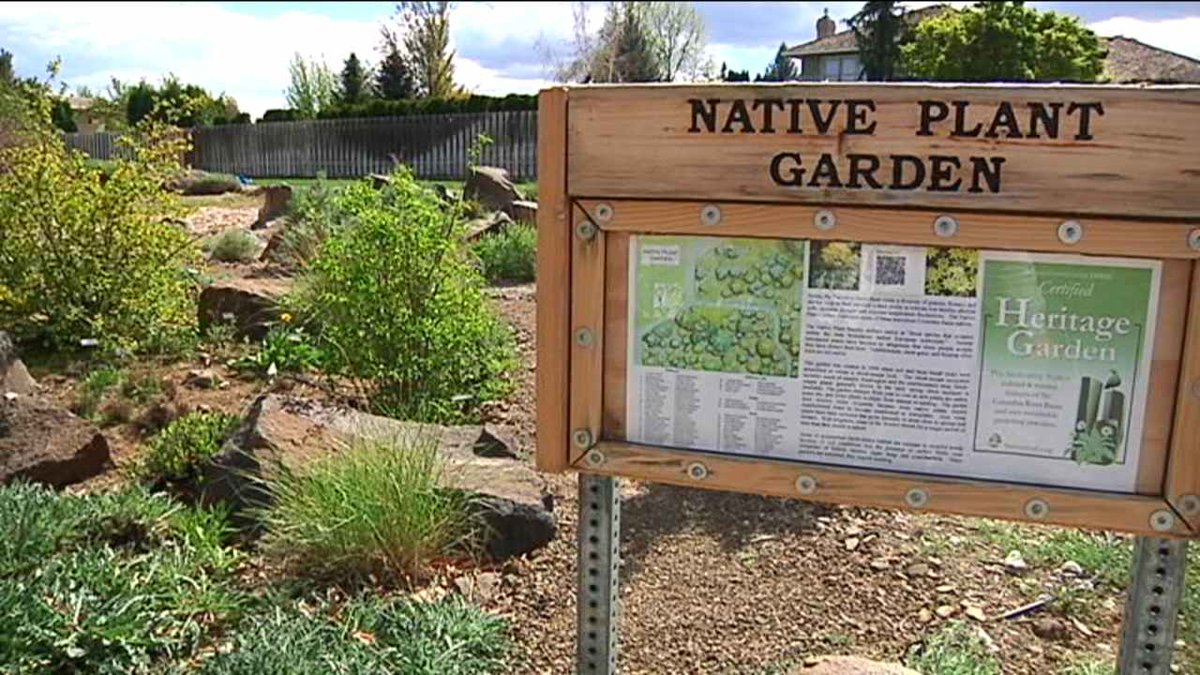
Benton Conservation District Native Plant Garden

How many of us have walked across a soggy field or seen sprinklers watering the sidewalk? How many of us are ‘keeping up with the Jones’ in our yards? I know I’m guilty.

Consider making yours a heritage garden of low-water and native plants that will add beauty and help to respond to drought now and in the future.

This can be a positive experience and not a rude wake-up call. Y’all let’s get on board! Learn more at EPA WaterSense


>> see the Drought collection

Monday, June 15, 2015

Snowpack at zero percent of normal; record lows for stream flows

But our partners in drought response are restoring streams in midst of drought 


by Dan Partridge, communications manager, Water Resources Program 

It’s official: the snowpack in Washington state is gone.
Statewide, the average snowpack is zero percent of normal.  That’s right, you read that correctly – zero.
Although some snow remains at very high elevations -- and embedded in glaciers -- that isn’t counted in the calculation of total snowpack.  Compare zero percent of normal to some of the snowpack figures from this time in 2014:  105 percent of normal  on the Olympic Peninsula, 138 percent of normal in North Puget Sound, 113 percent of normal in the Lower Yakima and 175 percent of normal in the Spokane River Basin!

Early snowmelt leaves no runoff for rivers and streams    

Snowpack is the primary water supply for most of Washington’s rivers.  In a normal year, snow accumulates over the winter and then slowly melts in the spring and summer with the runoff feeding our rivers and streams.  This year, because of the lack of snowpack over the winter and higher-than-normal temperatures in late winter and spring, the early snowmelt means we will begin summer with nothing left to run off.
The zero snowpack is leading to equally concerning stream flow numbers:  84 percent of Washington’s rivers are flowing below normal levels; 66 percent of rivers are at flow levels typically experienced less than once a decade; and 27 percent of river flows are at all-time record lows.
Communities and irrigators pull water out of streams and rivers for water supplies, and fish rely on streams for habitat.  The flows we are seeing the first half of June are what we would usually expect to see in August.

An early success story in stream flow restoration 

Although stream flows are at risk, it is encouraging to know that federal and state agencies and irrigation districts are working together to relieve hardships from drought.
That happened last  week in Kittitas County when the Kittitas Reclamation District (KRD) came to the rescue of Manastash Creek.
KRD has turned on siphons and water gates in its canals that provide flows to Manastash Creek and five other upstream Yakima River tributaries.  Under an agreement with the U.S. Bureau of Reclamation, Ecology, the Yakama Nation and in consultation with the state Department of Fish & Wildlife, Yakima Project water is being routed through KRD canals on its way to downstream diverters and passed through these small creeks.  It then flows back to the same river it came from and it is available for diversions further down the Yakima River.  This is being done in a manner that has no impact on the total water supply and still improves flow, fish habitat and vegetation lining creek banks. 
 
Manastash Creek at Cove Road: On June 1, with depleted flow (left); and on June 11 with flow being restored.

Water in canals transferred into streams  

This action is part of a drought mitigation strategy developed by Reclamation, Ecology and the Yakama Nation to maintain stream health during a drought.  The strategy is being implemented this year because of improvements to KRD’s infrastructure made possible through the Yakima Basin Integrated Plan and Ecology’s drought program -- paid for in part with state funds -- that allow water in the canals to be transferred into streams and then returned to the Yakima River.  Back in the river, the water travels downstream to irrigation customers with no negative impact on their supplies from this rerouting.    
This water routing system is significantly improving flows in the Manastash.  The creek had declined to flows of only three or four cubic feet per second and was essentially dry where it crosses Cove Road. 
With a summer forecast of warmer-than-normal temperatures and less-than-normal rainfall, it’s likely we will see more streams in stress like Manastash Creek.  Some small streams may even go dry. But it’s good to know that our strategies to restore streams can be successful when we work together.         


Wednesday, May 15, 2013

Voices For The Yakima Basin: "The Future We Want"

By Tim Hill, Office of Columbia River

We asked Michael Garrity of American Rivers and Trout Unlimited's Lisa Pelly to share their thoughts about the Yakima Basin Integrated Water Resource Management Plan (YBIP). Here's what they had to say:
First returning sockeye from the Yakama Nation's reintroduction project spawning in the Cle Elum River. The Plan's fish passage element is essential to restoring this run that was lost a century ago.The Yakima Basin Integrated Plan is a big deal. For farmers and river flows, certainly, ensuring water reliability as the climate warms and snowpack shrinks and as what’s left of it melts off sooner. For fish, definitely, bringing back what may be the largest sockeye run outside of Canada and Alaska. And for families, without a doubt, the wild places that we love so well will be enjoyed and protected by future generations.

Both of us have explored, hiked, camped, bird watched, rafted and fished the rivers and streams of the upper Yakima basin for most of our lives. We’ve also put a lot of blood, sweat and tears into the negotiations that will, we hope, bring the YBIP to fruition. So today, as the prospects for an initial round of funding look good, what really gets us excited is imaging the upper Yakima Basin ten years from today, when the plan is well underway.

In the beautiful Cooper and Waptus river watersheds, we have spent hours watching sockeye salmon spawning for the first time in nearly a century. With permanent fish passage constructed at the Cle Elum dam, we’ll be seeing a lot more of them making their way back to high valleys of the north central Cascades.  We’ll also see happier, fatter trout in those rivers, and both of us are looking forward to hooking them on a fly. And its not just a fish story – salmon will serve as food for other fish and wildlife.  Spawning salmon will help trees and forests grow stronger, taller and older as the fish bring fresh nutrients up river again. 

Then there’s the crown jewel – the Teanaway Valley – the largest single public land acquisition in 45 years in Washington, that the YBIP will make possible. Wolves and wolverines have already returned, but the restoration of a robust salmon run and restored meadows and floodplains will create a wilder ecosystem there than has been seen in decades, if not a century. Instead of worrying about future development there, we’ll be able to camp, hike and fish to our hearts’ content.  

The YBIP’s benefits are profound, and will stretch from the Cascades to the Columbia – we’ve only mentioned a few here, focusing just on the upper Yakima. We both feel very blessed to be part of helping to shape a more sustainable Yakima Basin in the coming years, and are looking forward to many more adventures up and down its rivers and streams.
...

Michael Garrity is the Washington State Conservation Director for American Rivers. Lisa Pelly is the Director of the Washington Water Project for Trout Unlimited.

In future posts, we'll ask farmers, municipal water managers, and members of the Yakama Nation to share their thoughts about the Integrated Plan.


Tuesday, October 4, 2011

New Tool Helps Ecology Help Fish

By Tim Hill, Office of Columbia River

Ecology’s Office of Columbia River (OCR) has a new tool to help us find the streamflow improvement projects that provide the most benefits to fish. Created with the help of the Washington Department of Fish and Wildlife, the “Columbia River Instream Atlas ” identifies where fish may be struggling and why and where we might have the most success with our streamflow investments.

We look at three important factors when making streamflow enhancement decisions: habitat, streamflows, and the amount of fish in a stream. The Atlas scores each of the factors for portions of streams, called reaches, located in eight of the most “fish critical” watersheds in eastern Washington. The scores allow us to tailor projects to make needed improvements and maximize returns.

A good candidate for water enhancement might be a reach that scores low in fish utilization, poor in streamflows, and fair or good in habitat. A little extra water in that reach would provide a lot of benefit to fish.

Alternatively, a reach that scores poor in habitat, low in fish utilization, and poor or fair in streamflows would likely require habitat restoration before streamflow issues are tackled.

But before OCR funds any instream flow project, it must find a new water supply nearby to provide the water. It’s a tough job, but OCR is working hard to do it. The Office has developed nearly 150,000 ac-ft of new supply since 2006.

The Atlas is part of a larger “Columbia River Basin Long-Term Water Supply and Demand Forecast” (Forecast) OCR will publish in November. Both documents are currently available in draft form. You can download them here. OCR is accepting comments on the Atlas and the Forecast though October 31st.

The Legislature created OCR in 2006 and tasked it with finding new water supplies to meet instream and out-of-stream water needs.